水产养殖

Search documents
A股60只个股涨停,浙江东日12天7板领涨,海洋经济板块全线爆发
Jin Rong Jie· 2025-07-02 08:06
Group 1 - The A-share market showed a mixed pattern on July 2, with a total of 60 stocks hitting the daily limit up, and the overall success rate of limit-up stocks was 79% [1] - The focus of the market was on several strong-performing stocks, including Zhejiang Dongri in the brain-computer interface sector, which achieved its 7th limit-up in 12 days [1] - The marine economy sector performed notably well, with stocks like Shenwater Haina and Kelaite reaching their limit-up, while the aquaculture sector saw multiple stocks, including Guolian Aquatic and Zhangzidao, also hitting limit-up [1] Group 2 - The photovoltaic equipment sector received a net inflow of 4.491 billion yuan from main funds, ranking first among all industries [2] - Traditional industries such as steel, food and beverage, and energy metals also attracted significant attention from funds [2] - In contrast, the semiconductor sector faced a net outflow of 6.792 billion yuan from main funds, along with other tech sectors like communication equipment and software development experiencing outflow pressure [2]




A股收评:军工股降温,水产养殖、钢铁股逆势大爆发
Ge Long Hui· 2025-07-02 07:39
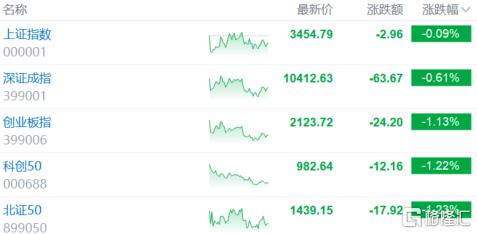
Market Overview - The A-share market experienced a decline with the Shanghai Composite Index falling by 0.09% to 3454 points, the Shenzhen Component down by 0.61%, and the ChiNext Index decreasing by 1.13% [1][2] - Total trading volume for the day was 1.41 trillion yuan, a decrease of 914 billion yuan compared to the previous trading day, with nearly 3300 stocks declining [1] Sector Performance - The aquaculture sector saw significant gains, with stocks like Guolian Aquatic and Zhanzi Island hitting their daily limits [8] - Steel and photovoltaic equipment sectors also experienced substantial increases, with companies like Chongqing Steel and LiuGao Co. reaching their daily limits [9][10] - Conversely, sectors such as aerospace, communication equipment, and semiconductor-related stocks faced declines, with notable drops in companies like Beifang Changlong and Neimenggu Yijian [4][6] Notable Stocks - In the aquaculture sector, Guolian Aquatic rose by 20.11%, Zhanzi Island by 10.03%, and Tongwei Co. by 10.01% [8] - In the steel sector, Shengde Jiatai increased by 17.00%, and LiuGao Co. and Zhijian Steel both rose by over 10% [9] - In the photovoltaic sector, Daqo New Energy surged by over 15%, with several other stocks also hitting their daily limits [10] Future Outlook - UBS analysts suggest that A-share earnings may gradually recover throughout the year, with potential for market growth in the medium to long term [11] - Structural reforms in China, including lowering foreign investment barriers and enhancing the vitality of private enterprises, are expected to improve the investment environment [11]

突然爆了!多股涨停!
中国基金报· 2025-07-02 02:57
一起来看下最新的市场情况及资讯。 7月2日早盘,A股市场震荡调整,创业板指数一度跌超1% 。 截至发稿,沪指跌0.19%,深成指跌0.52%,创业板指跌0.85%。 【导读】深海科技板块强势拉升,多股涨停 中国基金报记者 李智 | 上证指数 | | 深证成指 | 北证50 | | --- | --- | --- | --- | | 3451.30 | | 10421.56 | 1437.86 | | -6.45 | -0.19% | -54.73 -0.52% | -19.21 -1.32% | | 科创50 | | 创业板指 | 万得全A | | 987.35 | | 2129.66 | 5311.20 | | -7.45 | -0.75% | -18.26 -0.85% | -17.86 -0.34% | 板块上来看, 深海科技概念股走强, 工程机械、能源设备、贵金属等板块涨幅居前;而教育、先进封装、通信设备等板块跌幅较大。 | | | Wind热门概念指数 | | | | | Wind中国行业指致 | | | | --- | --- | --- | --- | --- | --- | --- | --- ...



水产养殖概念股震荡走强 中水渔业、开创国际双双涨停
news flash· 2025-07-02 01:53
Group 1 - The marine economy concept stocks are experiencing a strong upward trend, leading to a significant rise in the aquaculture sector [1] - Zhongshui Fishery and Kaichuang International both reached the daily limit increase, indicating strong market interest [1] - Guolian Aquatic Products rose over 10%, with other companies like Haodangjia, Zhangzidao, Dahu Co., and Jinhai Biological also seeing gains [1]


水产养殖板块异动拉升,开创国际、中水渔业涨停
news flash· 2025-07-02 01:50
Group 1 - The aquaculture sector has experienced significant upward movement, with companies such as Kaichuang International (600097) and Zhongshui Fishery (000798) hitting the daily limit up, while Guolian Aquatic (300094) increased by over 8% [1] - Other companies in the sector, including Zhangzidao (002069) and Dahu Co. (600257), also saw gains, indicating a broader positive trend in the aquaculture industry [1] Group 2 - There is a notable influx of dark pool funds into these stocks, suggesting increased investor interest and potential for further price movements [2]
亚太区域60余位高级别代表在沪共商水产养殖可持续未来
Zhong Guo Xin Wen Wang· 2025-07-01 17:00
Core Viewpoint - The third high-level meeting on aquaculture transformation in the Asia-Pacific region aims to promote sustainable and intensive development of aquaculture, aligning with FAO's "2022-2030 Blue Transformation Roadmap" [1][2]. Group 1: Meeting Objectives - The meeting involved over 60 high-level representatives from the Asia-Pacific region discussing three core objectives: sharing regional transformation assessment results, discussing investment and partnership priorities for scaling up, and establishing new partnerships to enhance regional cooperation in aquaculture [1]. - Multiple potential cooperation projects and partnerships emerged during the meeting, opening new pathways for regional collaboration [1]. Group 2: Key Outcomes - A series of important outcomes were achieved, providing clear guidance for future work, with representatives expressing a strong commitment to aquaculture transformation [2]. - FAO and NACA proposed a conceptual framework for key issues discussed at the meeting, laying the groundwork for future policy formulation and project implementation [2]. Group 3: Statements from Officials - The President of Shanghai Ocean University emphasized the institution's commitment to enhancing cooperation and expanding its technological service radius in the Asia-Pacific region [2]. - The Deputy Director of the Fisheries and Fishery Administration Bureau highlighted the Asia-Pacific region as a crucial engine for global aquaculture, advocating for innovation-driven development, blue transformation for sustainability, and mutually beneficial trade and investment [2].
金融赋能夏耘时 交行助力绘丰景
Xin Hua Wang· 2025-07-01 09:57
Core Viewpoint - The article emphasizes the importance of summer farming activities in agriculture, highlighting the role of financial support from the Bank of Communications in facilitating these activities and promoting rural revitalization strategies [1]. Group 1: Financial Support for Agricultural Enterprises - The Bank of Communications is actively optimizing credit services to meet the urgent funding needs of agricultural enterprises during the summer farming season [2]. - A high-tech seed research company in Hefei received an 8 million yuan loan from the bank to address cash flow issues and support seed breeding during a critical period [2]. - The bank's "Shennong e-loan" product enabled a Shanghai-based agricultural technology company to quickly obtain loans for purchasing necessary agricultural supplies, showcasing the integration of financial technology in agriculture [3]. Group 2: Innovative Financing Models - The Bank of Communications has developed innovative financing models to support local aquaculture industries, such as a 300 million yuan loan to a sea cucumber seedling base in Guangdong, addressing challenges like lack of collateral and low credit limits [4]. - The bank collaborates with local agricultural guarantee companies to provide favorable financing conditions, including low guarantee fees, to enhance access to capital for farmers [4]. - In addition to direct financial support, the bank is investing in rural infrastructure, particularly in irrigation facilities, to ensure sufficient water supply for agricultural production [4].

从挪威到青海:中国如何让三文鱼走下神坛?
3 6 Ke· 2025-07-01 07:49
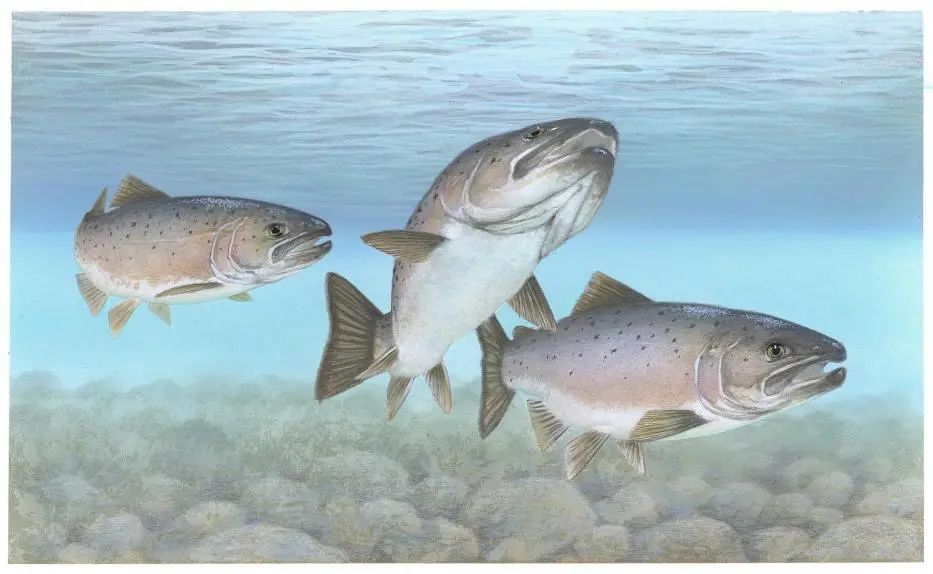
Core Insights - The article highlights the growing popularity of salmon in China, which has become the largest export market for Norwegian fresh salmon in Asia, surpassing Japan and South Korea for the first time in 2023 [1][2] - The demand for salmon in China is driven by its nutritional value, as it is recognized as a high-quality protein source in the 2022 Dietary Guidelines for Chinese Residents [1][3] - Norway has established itself as a leading exporter of salmon, with significant production and export figures, while facing challenges related to environmental sustainability and health concerns in salmon farming [11][24] Group 1: Market Dynamics - In 2022, China consumed approximately 120,000 tons of salmon but only produced 40,000 tons, leading to a significant import gap of 80,000 tons [1] - By April 2025, China's import of fresh salmon exceeded 40,000 tons, marking a year-on-year increase of 38% [1] - Norway's salmon exports reached a historical high in 2023, with 120,000 tons valued at approximately $12.1 billion, accounting for 71% of all seafood exports [11] Group 2: Production and Farming Practices - The Atlantic salmon, primarily farmed in Norway, thrives in cold, clean waters, which contribute to its quality and taste [4][6] - Norway's salmon farming industry has evolved significantly since the late 1960s, transitioning from wild catch to commercial farming, with production increasing from 46 tons in 1972 to 120,000 tons in 2023 [10][11] - The industry has faced issues such as overproduction and environmental concerns, leading to the implementation of management systems to control salmon farming practices [24][25] Group 3: Environmental and Health Concerns - The intensive farming of salmon has raised concerns about the use of antibiotics, pesticides, and the impact of sea lice, which have led to significant mortality rates among farmed salmon [20][21][23] - Reports indicate that 19% of Norwegian farmed salmon died due to sea lice infestations in the 2015-2016 period, prompting the industry to seek solutions to manage these challenges [21][24] - The Norwegian government has introduced regulations to reduce the use of harmful substances in salmon farming, although challenges remain in effectively managing environmental impacts [25][24] Group 4: China's Salmon Industry - China primarily cultivates rainbow trout, which is often marketed as salmon, and has been expanding its aquaculture since 1959 [26][28] - The environmental risks associated with freshwater farming are lower compared to marine farming, with recent advancements in feed technology reducing costs by 21% [30][32] - The production of rainbow trout in Qinghai Province has seen significant growth, with output increasing from over 500 tons in 2010 to nearly 15,000 tons in 2023 [32]
新质生产力入海,广东正奏响蓝色狂飙曲
Nan Fang Nong Cun Bao· 2025-06-30 09:32
Core Viewpoint - Guangdong is advancing its modern marine ranching strategy through innovative seedling technology and sustainable practices, aiming to enhance marine productivity and ecological protection [10][50]. Group 1: Modern Marine Ranching Development - The Guangdong Provincial Agricultural Technology Promotion Center is actively involved in the cultivation of valuable marine species such as the red-spotted grouper and the tiger grouper, contributing to the establishment of modern marine ranches [2][3]. - The "Million Seedlings" project is a key initiative that supports the "Hundred Million Project" and aims to enhance the core technology of suitable species for modern marine ranching [6][10]. - Guangdong has become a national leader in deep-sea aquaculture species reserves, with an annual production of over 1.3 trillion aquatic seedlings, accounting for more than 40% of the national marine fish seedlings [33][34]. Group 2: Technological Innovations and Achievements - Over the past year, 63 research teams have worked on 28 suitable species, achieving significant breakthroughs in breeding technologies, including successful artificial breeding of various fish species [18][20]. - The project has led to the successful domestication of wild populations of species such as the large yellow croaker and the red drum, and the first-ever artificial spawning of bluefin tuna in land-based systems [21][22]. - The initiative has facilitated the transfer of over 10 million seedlings of various species to coastal cities, enhancing local marine ranching capabilities [28][30]. Group 3: Ecological and Economic Impact - The project aligns with Guangdong's commitment to ecological civilization and marine environmental protection, emphasizing the importance of restoring fishery resources and promoting biodiversity [45][47]. - The modern marine ranching initiative is seen as a crucial step towards achieving rural revitalization and sustainable food production, with significant implications for local economies [49][50]. - The government is fostering a collaborative model that integrates research, market operations, and community engagement to ensure the benefits of scientific advancements reach local populations [39][40].

沙漠里也能养螃蟹?一大批“沙漠海鲜”正在上市→
Yang Shi Xin Wen Ke Hu Duan· 2025-06-30 05:56
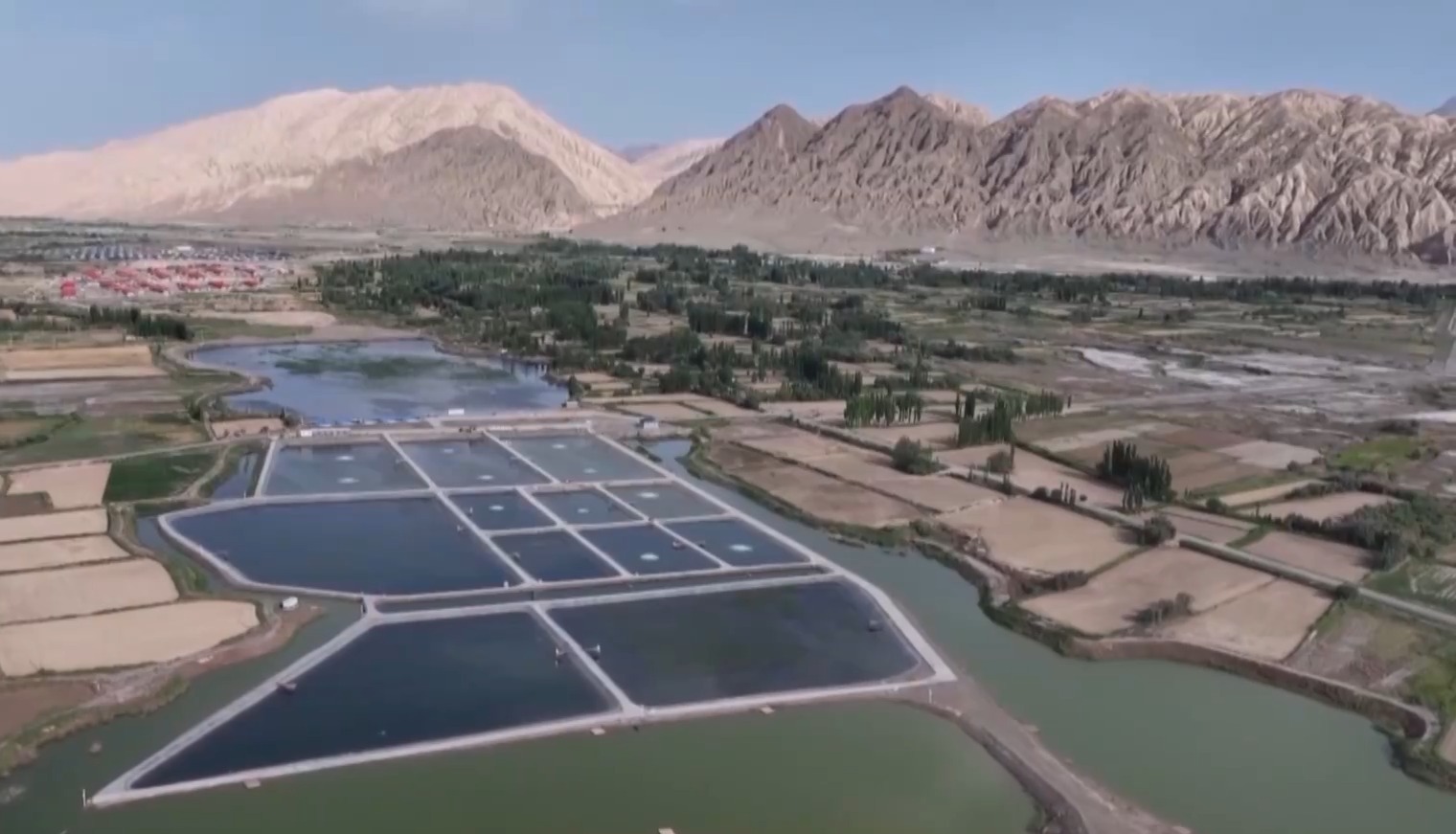
Core Insights - The article highlights the innovative practice of fish farming in the Taklamakan Desert, Xinjiang, where "artificial seawater" is created to cultivate seafood like tilapia and salmon [1][3][5] - Xinjiang's seafood production has reached 196,500 tons last year, making it the leading region in the northwest of China [8] Group 1: Fish Farming Innovations - The use of saline-alkaline water, which resembles seawater, allows for the successful cultivation of various seafood products [5] - Techniques such as "sea shrimp brackish farming" have been implemented to adapt marine shrimp to freshwater environments [5] Group 2: Market Demand and Export - The high-quality South American white shrimp from Xinjiang is well-received by consumers and has a strong export market, including countries like Russia and Spain [7][10] - The seafood products from Xinjiang are not only distributed nationwide but also have significant international demand [10]