
天然气

Search documents
胜通能源:公司股价严重偏离基本面,未来存在快速下跌风险
Bei Ke Cai Jing· 2025-12-22 03:53
新京报贝壳财经讯 12月21日,胜通能源发布公告称,公司股票自12月12日以来连续6个交易日涨停,累 计涨幅达到77.22%,显著偏离大盘指数和行业指数,短期波动幅度较大,已明显偏离市场走势,存在 较高的炒作风险,目前公司股价已严重偏离上市公司基本面,未来存在快速下跌的风险。公司控股股 东、实控人签署了关于公司的股份转让协议。截至目前,公司主营业务仍为液化天然气采购、运输及销 售,未发生重大变化,收购方不存在未来12个月内的资产重组计划,不存在未来36个月内通过上市公司 借壳上市的计划或安排。 12月22日早盘,胜通能源股价再次涨停,报28.75元/股。 ...
破案了!北溪真相大白,凶手是乌克兰人,泽连斯基再难有翻身之日
Sou Hu Cai Jing· 2025-12-22 03:52
Core Insights - The Nord Stream pipeline incident, a significant event in European energy security, was revealed to be a military sabotage operation orchestrated by the Ukrainian military, leading to heightened tensions in Europe and political ramifications for Ukrainian President Zelensky [1][3]. Group 1: Incident Overview - The Nord Stream pipeline is a crucial conduit for Russian natural gas to Europe, with Germany heavily reliant on its stable energy supply [4]. - The underwater operation to sabotage the pipeline was complex, involving military-grade equipment and explosives placed at depths of 70 to 80 meters, executed by a specialized team from Ukraine [6]. Group 2: Investigation and Legal Proceedings - Following the explosion, investigations by Germany, Sweden, and Denmark were initiated, but major findings remain undisclosed, leading to the termination of investigations due to lack of evidence [9]. - An individual linked to the Ukrainian military was arrested in Italy, marking the first significant legal action related to the incident, with Germany seeking extradition for trial [10]. Group 3: Political and Public Reactions - Initial denials from the Ukrainian government shifted to acknowledgment of the operation being state-sanctioned, causing political backlash in Germany, where public opinion turned against continued military support for Ukraine [12][14]. - A significant portion of the German population, over 60%, expressed opposition to ongoing military aid to Ukraine, reflecting a shift in public sentiment amid rising domestic economic pressures [14]. Group 4: Broader Implications - The incident has led to a reevaluation of U.S. support for Ukraine, with reports suggesting a decrease in military aid and a shift in diplomatic engagement [16]. - As the war situation evolves, Ukraine's role has become increasingly uncertain, with President Zelensky facing challenges in balancing the demands of war and peace negotiations [18].


赣榆LNG接收站首座储罐升顶
Ren Min Wang· 2025-12-22 03:32
北京12月21日电 据中国华电消息,日前,作为国家天然气基础设施互联互通重点工程,国内首个由电 力央企主导的LNG接收站项目——江苏华电赣榆LNG接收站首座储罐成功升顶。该项目将增强区域供 气灵活性与可靠性,完善国家天然气"一张网"布局,优化长三角能源结构,为区域绿色转型注入动能。 据介绍,项目规划建设3座22万立方米LNG储罐,由华电江苏能源有限公司联合多国企业共同投资建 设。 "我们要把面积相当于1座足球场、重量相当于近700辆家用轿车的钢铁帽子,稳稳戴到50余米高LNG储 罐上,靠的是自主研发的气压顶升技术。"作为承建方的中核五公司项目经理胡克梧表示,通过4台大功 率专用风机持续输出稳定气流,用气压把近千吨的大家伙顶起来,最终实现毫米级精准就位。 "该项目投产后,每年将外输天然气42亿立方米,相当于江苏省年天然气消费量的13.7%,可满足相当 于江苏省居民约一个月用气需求。"江苏华电赣榆液化天然气有限公司相关负责人表示,项目每年减少 二氧化碳排放超3000万吨,相当于植树8000万棵,带动港口、航运、工程建设、装备制造等上下游产业 发展,为赣榆临港产业区石化等产业提供稳定的清洁能源支撑。 ...

贵州天然气供应保障能力稳步提升
Xin Lang Cai Jing· 2025-12-22 03:32
如,中贵线55#阀室上下载管道联通工程临时下载项目的建成投产,联通了中贵线管道与温水至习水天 然气输气管道,让仁怀、习水地区白酒产业实现双向天然气供应,解决了仁怀酒企错时生产用气问题。 又如,位于贵州安顺的百灵"天然气直供管道及分布式能源站"项目,企业通过建设燃气轮机组、余热锅 炉、蒸汽锅炉及配套辅助设备等,为厂区供电、供热、供冷,将天然气由过去单一的燃烧供能,转化为 阶梯式利用供能,能源综合利用效率从过去的35%提高到了82%,可实现年减排二氧化碳约3.37万吨, 年节约标煤0.76万吨。 目前,贵州已建成天然气管道4104公里,长输管道覆盖65个县(市、区),贯通9个市(州),年输气 能力突破50亿立方米。《贵州省城镇燃气和天然气基础设施建设攻坚行动方案(2024—2027年)》(以 下简称《方案》),明确到2027年,全省88个县级城区实现管道天然气"县县通",重点园区实现管道天 然气全覆盖。 从12月18日举行的国家管网集团西南管道公司2025年媒体公众开放活动上获悉,截至目前,国家管网集 团西南管道公司已累计向贵州省内输送天然气155亿多立方米,占贵州全省天然气市场供应量的八成以 上,有力服务了地方 ...
公用环保-2026年年度策略:聚焦优质标的基本面优化与分红提升,“精挑细选”正当时
2025-12-22 01:45
Summary of Key Points from Conference Call Records Industry Overview - The focus is on the public utility and environmental protection sectors, particularly in the context of coal-fired power, renewable energy, and waste-to-energy industries [1][6][10]. Core Insights and Arguments Coal-Fired Power Sector - In 2025, the coal-fired power sector is expected to perform well with a growth rate of approximately 13.3%, primarily due to declining coal prices [2]. - The flexibility and scarcity value of coal-fired power are highlighted, especially in regions with a high proportion of renewable energy [2][3]. - By 2026, the power supply-demand relationship is anticipated to shift towards structural looseness, leading to pressure on coal-fired utilization hours and market prices [1][3]. - New coal-fired power units are projected to peak in 2025-2026, with an annual addition of about 70 GW, increasing revenue pressure due to rising renewable energy installations [3]. Investment Strategies - Investment strategies should focus on companies with controllable electricity price declines, new quality asset additions, or high dividend yields, such as Inner Mongolia Huadian and Huaneng International [1][3]. - Recommended stocks include national players like Huaneng International, Datang Power, and local companies like Inner Mongolia Haitan and Shaanxi Energy [3]. Renewable Energy Sector - The renewable energy sector is characterized by low valuations among Hong Kong-listed wind power operators, benefiting from reduced capital expenditure expectations and accelerated government subsidy recoveries [1][4]. - The cancellation of VAT refund policies in 2025 is expected to lead to more cautious capital expenditures among renewable energy operators [16]. - The sector is projected to see a significant increase in installed capacity, with annual additions expected to be between 150-200 GW over the next decade [16]. Waste-to-Energy and Biomass Diesel - The waste-to-energy sector is highlighted as a key emerging area for 2026, with significant growth potential and policy support [1][5]. - The industry has seen a substantial increase in the number of waste incineration facilities, with capacity rising from 25.59 million tons/day in 2016 to 115 million tons/day by 2024 [8]. - The sector's capital expenditure peaked in 2020 at 22.3 billion yuan, declining to 10.742 billion yuan by 2024, while free cash flow turned positive for the first time in 2024 [8]. Financial Performance and Market Dynamics - The public utility sector overall saw a 3.6% increase in 2025, outperforming the CSI 300 index by 12.8 percentage points, while the environmental sector rose by 16.1% [6]. - Concerns regarding subsidy delays and accounts receivable are gradually easing, with companies exploring new business models to enhance profitability [7][10]. Other Important Insights - The SAF (Sustainable Aviation Fuel) industry is entering a growth phase, with demand expected to rise significantly due to EU regulations [21][22]. - The supply of Yoko (waste cooking oil) is limited, but its price has stabilized, and demand is expected to increase, benefiting companies with expansion plans [23]. - The waste-to-energy sector is also exploring international opportunities, such as projects in Indonesia, which could provide significant growth avenues for Chinese companies [9]. Recommended Companies - Key companies to watch include: - Waste-to-energy: Weiming Environmental, Huaneng International, and Longyuan Power [10][24]. - Gas sector: Hong Kong gas companies like Towngas and integrated gas companies in A-shares [13][24]. - Biomass diesel: Companies with scarce Yoko resources like Shanhai Environmental and Jiaao Environmental [24].
晚间公告丨12月21日这些公告有看头
Di Yi Cai Jing· 2025-12-21 15:45
Group 1 - Guanshang Technology is planning to issue shares to acquire assets and will suspend trading from December 22, 2025, with a transaction plan expected to be disclosed within 10 trading days [1] - *ST Dongyi's restructuring plan has been approved by the Beijing First Intermediate People's Court, entering the execution phase, which may improve the company's financial structure and impact its 2025 financial data [1] - Victory Energy's stock has hit the limit up for six consecutive trading days, with a total increase of 77.22%, indicating a significant deviation from market trends and a high risk of rapid decline [1] Group 2 - Shangfeng Cement's investee company, Yuexin Semiconductor, has received approval for its IPO application on the ChiNext board [2] - Jindalai plans to invest 30 million yuan in Zhongke Hongtai Medical Technology, acquiring a 10% stake in the company, which specializes in medical robotics [2] - Lianchuang Electronics is planning a change of control, leading to continued suspension of its stock from December 22, 2025 [3] Group 3 - Health元's subsidiary has received approval for clinical trials of NS-041 tablets for treating depression, marking a significant development in the KCNQ2/3 targeted drug market [3] - Xihua Technology will be listed on the Shanghai Stock Exchange on December 23, 2025, with an initial public offering of 100 million shares [4] - *ST Mingjia has completed a capital reserve transfer to increase its share capital by 730 million shares, with its stock resuming trading on December 22, 2025 [4] Group 4 - Kerryde's major shareholder plans to reduce its stake by up to 3%, amounting to a maximum of 11.03 million shares [4] - Delinhai's vice chairman intends to reduce his holdings by up to 196,000 shares, representing no more than 0.17% of the total share capital [5] - Zhongchuang Zhiling's chairman and vice presidents plan to reduce their shares by specified amounts [6] Group 5 - Mercury Home Textiles' actual controller and board members plan to reduce their holdings by up to 1.72% of the total shares, with specific amounts outlined for each individual [7]

如果欧洲没收俄2100亿欧元,后果有多严重?
Sou Hu Cai Jing· 2025-12-21 14:54
Group 1 - The core issue is the European Union's struggle to provide financial aid to Ukraine amidst internal divisions and external pressures, leading to a reliance on joint debt rather than utilizing frozen Russian assets [1][3][7] - Initially, the EU aimed to use €210 billion of frozen Russian assets to support Ukraine, but faced strong opposition from Russia, which labeled the plan as "robbery" and warned of severe consequences [3][5] - After lengthy negotiations, the EU ultimately decided to raise €900 million through joint debt, bypassing Hungary's opposition by excluding it from financial contributions [7][8] Group 2 - The EU's internal divisions are evident, with member states split into three factions: those advocating for strong action against Russia, like the Baltic states and Poland; the hesitant major powers like Germany; and those opposed, such as Hungary and Slovakia [10][12][15] - Hungary's reliance on Russian gas makes it resistant to sanctions, highlighting the conflict between national interests and collective EU action [15][17] - The EU's decision-making process, which requires unanimous consent, complicates collective action and exposes the weaknesses in its governance structure [17][19] Group 3 - The EU's perceived strength is undermined by its inability to act cohesively, as seen in its response to the U.S. Inflation Reduction Act, where member states prioritize their own industries over collective interests [19][21] - Internal divisions and a lack of consensus among EU countries hinder its ability to respond effectively to external pressures, revealing a fundamental issue of fragmented interests [25][27] - The EU's aspiration to become a significant independent global player is challenged by its current inability to unify and act decisively, raising questions about its future effectiveness [27]
6连板大牛股,最新公告!
Xin Lang Cai Jing· 2025-12-21 13:15
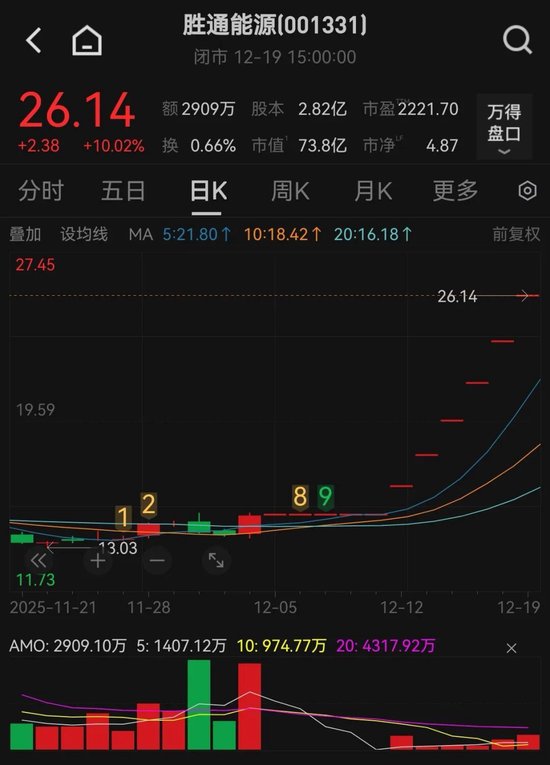
胜通能源(001331)12月21日晚间公告,公司股票自12月12日以来连续6个交易日涨停,累计涨幅达到 77.22%,显著偏离大盘指数和行业指数,短期波动幅度较大,已明显偏离市场走势,存在较高的炒作 风险,目前公司股价已严重偏离上市公司基本面,未来存在快速下跌的风险。 此前,公司控股股东、实控人签署了关于公司的股份转让协议,涉及公司控制权变更。截至目前,公司 主营业务仍为液化天然气采购、运输及销售,未发生重大变化,收购方不存在未来12个月内的资产重组 计划,不存在未来36个月内通过上市公司借壳上市的计划或安排。 公司股价12月以来累计大涨82.54%。 公司股价12月以来累计大涨82.54%。 胜通能源(001331)12月21日晚间公告,公司股票自12月12日以来连续6个交易日涨停,累计涨幅达到 77.22%,显著偏离大盘指数和行业指数,短期波动幅度较大,已明显偏离市场走势,存在较高的炒作 风险,目前公司股价已严重偏离上市公司基本面,未来存在快速下跌的风险。 此前,公司控股股东、实控人签署了关于公司的股份转让协议,涉及公司控制权变更。截至目前,公司 主营业务仍为液化天然气采购、运输及销售,未发生重大变化, ...
超1亿立方米!
中国能源报· 2025-12-21 10:16
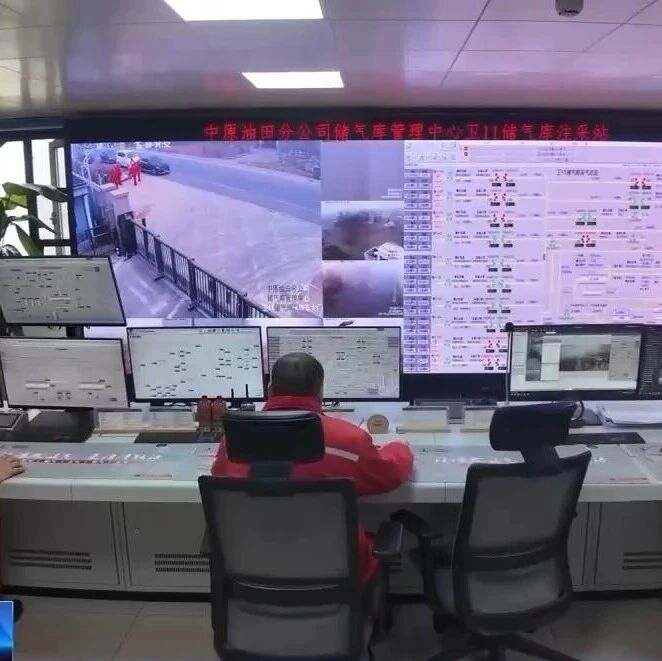
Core Viewpoint - The Zhongyuan Oilfield gas storage facility has supplied over 100 million cubic meters of natural gas during the current winter heating season, highlighting its critical role in ensuring gas supply in North China [1][3]. Group 1: Gas Supply and Storage Capacity - The Zhongyuan Oilfield gas storage facility, the largest underground gas storage in North China, has a total capacity exceeding 3.196 billion cubic meters [1]. - Since December, the gas storage facility has entered the gas extraction phase, with peak daily gas extraction reaching 6.5 million cubic meters [1]. Group 2: Operational Management - During the peak gas usage period, the management team is on duty 24 hours a day, increasing inspection frequency and strictly controlling equipment conditions to ensure reliable gas supply for residents in Beijing, Tianjin, and Xiong'an New Area [3].
胜通能源:公司股票连续6个交易日涨停 未来存在快速下跌风险
Ge Long Hui· 2025-12-21 08:51
格隆汇12月21日|胜通能源公告称,公司股票自2025年12月12日以来连续6个交易日涨停,累计涨幅达 到77.22%,显著偏离大盘指数和行业指数,短期波动幅度较大,已明显偏离市场走势,存在较高的炒 作风险,目前公司股价已严重偏离上市公司基本面,未来存在快速下跌的风险。截至目前,公司主营业 务仍为液化天然气采购、运输及销售,未发生重大变化,收购方不存在未来十二个月内的资产重组计 划,收购方不存在未来12个月内对上市公司及其子公司的资产和业务进行出售、合并、与他人合资或合 作的计划,或上市公司拟购买或置换资产的重组计划,收购方不存在未来36个月内通过上市公司借壳上 市的计划或安排。 ...