专用汽车

Search documents
量化大势研判202603:3月核心推荐预期成长风格
Guolian Minsheng Securities· 2026-03-04 07:27
Quantitative Models and Construction Methods - **Model Name**: Quantitative Market Trend Judgment Framework **Model Construction Idea**: The model aims to identify the dominant market style by comparing asset characteristics and prioritizing superior assets based on their intrinsic attributes. It incorporates a bottom-up quantitative approach to analyze the lifecycle of industries and their corresponding asset styles[6][10][17] **Model Construction Process**: 1. Define five asset style stages: external growth, quality growth, quality dividend, value dividend, and bankruptcy value[6] 2. Use a priority framework of $g > ROE > D$ to evaluate assets based on growth expectations, profitability, and dividend yield[6][7] 3. Compare mainstream assets (expected growth, actual growth, and profitability) and secondary assets (quality dividend, value dividend, and bankruptcy value) based on their crowding levels and fundamental factors[10][17] 4. Allocate industries using equal weights within each strategy, selecting five industries per strategy per period[17] **Model Evaluation**: The framework has demonstrated strong explanatory power for A-share market style rotations since 2009, achieving an annualized return of 27.81%[17] Quantitative Factors and Construction Methods - **Factor Name**: Expected Growth ($gf$) **Factor Construction Idea**: Measures the expected growth rate of industries based on analysts' forecasts, regardless of the lifecycle stage[7] **Factor Construction Process**: 1. Calculate the expected net profit growth rate ($g_{f,ttm}$) for each industry 2. Rank industries based on $g_{f,ttm}$ and select the top-performing ones[7][23] **Factor Evaluation**: The factor has shown consistent performance in identifying high-growth industries, with significant excess returns since 2019[37] - **Factor Name**: Actual Growth ($g$) **Factor Construction Idea**: Focuses on industries with the highest performance momentum ($\Delta g$), particularly during transition and growth phases[7] **Factor Construction Process**: 1. Calculate the actual net profit growth rate ($g_{ttm}$) for each industry 2. Identify industries with the highest $\Delta g$ values[7][27] **Factor Evaluation**: The factor has delivered strong excess returns in growth-dominated environments[38] - **Factor Name**: Profitability (ROE) **Factor Construction Idea**: Targets industries with high ROE and low valuation under the PB-ROE framework, focusing on mature phases[7] **Factor Construction Process**: 1. Calculate the PB-ROE residuals for each industry 2. Rank industries based on residuals and select the top-performing ones[7][41] **Factor Evaluation**: The factor performed well from 2016 to 2020 but weakened from 2021 to mid-2024[41] - **Factor Name**: Quality Dividend (DP+ROE) **Factor Construction Idea**: Combines dividend yield (DP) and ROE to identify high-quality industries, focusing on mature phases[7] **Factor Construction Process**: 1. Calculate DP and ROE for each industry 2. Combine the two metrics into a composite score and rank industries[7][44] **Factor Evaluation**: The factor has shown significant excess returns in 2016, 2017, and 2023[44] - **Factor Name**: Value Dividend (DP+BP) **Factor Construction Idea**: Combines dividend yield (DP) and book-to-price ratio (BP) to identify undervalued industries, focusing on mature phases[7] **Factor Construction Process**: 1. Calculate DP and BP for each industry 2. Combine the two metrics into a composite score and rank industries[7][47] **Factor Evaluation**: The factor has delivered strong excess returns in 2009, 2017, and 2021-2023[47] - **Factor Name**: Bankruptcy Value (PB+SIZE) **Factor Construction Idea**: Targets industries with low PB and small size, focusing on stagnation and recession phases[7] **Factor Construction Process**: 1. Calculate PB and SIZE for each industry 2. Combine the two metrics into a composite score and rank industries[7][50] **Factor Evaluation**: The factor has shown significant excess returns in 2015-2016 and 2021-2023[50] Model Backtesting Results - **Quantitative Market Trend Judgment Framework**: - Annualized return: 27.81% since 2009 - Significant excess returns in 2017, 2020, 2021, and 2022[17][20] Factor Backtesting Results - **Expected Growth ($gf$)**: - Recent performance: Top industries include automotive sales, lithium battery equipment, and tungsten, with mixed returns over the past three months (e.g., -4.47% for automotive sales, +0.25% for lithium battery equipment)[37] - **Actual Growth ($g$)**: - Recent performance: Top industries include photovoltaic equipment and insurance, with mixed returns over the past three months (e.g., -8.92% for photovoltaic equipment, -6.04% for insurance)[39] - **Profitability (ROE)**: - Recent performance: Top industries include agriculture and garden engineering, with mixed returns over the past three months (e.g., -4.19% for agriculture, -2.07% for garden engineering)[41] - **Quality Dividend (DP+ROE)**: - Recent performance: Top industries include forestry and lithium battery equipment, with mixed returns over the past three months (e.g., +1.21% for forestry, +0.25% for lithium battery equipment)[44] - **Value Dividend (DP+BP)**: - Recent performance: Top industries include security and buses, with mixed returns over the past three months (e.g., +6.09% for security, +12.65% for buses)[47] - **Bankruptcy Value (PB+SIZE)**: - Recent performance: Top industries include automotive sales and textile products, with mixed returns over the past three months (e.g., -4.47% for automotive sales, +4.09% for textile products)[50]
量化大势研判202602:市场△gf继续保持扩张
Guolian Minsheng Securities· 2026-02-04 05:29
- The report introduces a quantitative model framework for market trend analysis, focusing on five asset style stages: external growth, quality growth, quality dividend, value dividend, and bankruptcy value. The model evaluates assets based on their intrinsic attributes and prioritizes them using the sequence of g > ROE > D, analyzing whether there are "good assets" and whether they are "expensive" [5][8][9] - The model incorporates key factors such as expected growth (gf), actual growth (g), profitability (ROE), high dividend (D), and bankruptcy value (B/P). Each factor is associated with specific market phases, e.g., expected growth is relevant across all phases, while profitability is emphasized during maturity phases [9][12] - The quantitative model has demonstrated strong historical performance, achieving an annualized return of 27.67% since 2009. It has shown consistent excess returns in most years, particularly post-2017, with limited effectiveness in years like 2011, 2012, and 2016 [19][22] - The model's backtesting results for specific years include notable excess returns, such as 51% in 2009, 36% in 2013, and 62% in 2022. However, it also recorded underperformance in years like 2011 (-11%) and 2014 (-4%) [22] - The report details six specific strategies derived from the model, each focusing on different factors: - **Expected Growth Strategy**: Selects industries with the highest analyst-forecasted growth rates. Recent recommendations include sectors like automotive sales, lithium equipment, and tungsten [38][39] - **Actual Growth Strategy**: Focuses on industries with the highest unexpected growth (△g). Current recommendations include photovoltaic equipment, insurance, and coal chemical sectors [40][41] - **Profitability Strategy**: Targets high-ROE industries with low valuations under the PB-ROE framework. Recommended sectors include copper, liquor, and non-dairy beverages [43][44] - **Quality Dividend Strategy**: Utilizes a DP+ROE scoring system to identify industries. Current recommendations include forestry, lithium equipment, and fiberglass [46][47] - **Value Dividend Strategy**: Employs a DP+BP scoring system. Recommended sectors include security, daily chemicals, and buses [49][50] - **Bankruptcy Value Strategy**: Focuses on industries with the lowest PB+SIZE scores. Current recommendations include automotive sales, ceramics, and cotton textiles [53][54]





2025年11月中国专用汽车出口数量和出口金额分别为5386辆和3.79亿美元
Chan Ye Xin Xi Wang· 2026-01-09 03:19
Core Insights - The report by Zhiyan Consulting analyzes the competitive landscape and investment development in China's special vehicle industry from 2026 to 2032 [1] Export Performance - In November 2025, China's special vehicle exports reached 5,386 units, marking a year-on-year increase of 35.1% [1] - The export value for the same period was $37.9 million, which represents a year-on-year growth of 23.5% [1] Industry Analysis - Zhiyan Consulting is recognized as a leading industry consulting firm in China, specializing in in-depth industry research reports, business plans, feasibility studies, and customized services [1] - The firm emphasizes its commitment to providing comprehensive industry solutions to empower investment decisions through professional insights and market acumen [1]


2025年10月中国专用汽车出口数量和出口金额分别为4992辆和3.63亿美元
Chan Ye Xin Xi Wang· 2025-12-13 02:55
Core Insights - The report by Zhiyan Consulting analyzes the competitive landscape and investment development in China's specialized vehicle industry from 2026 to 2032 [1] Export Data Summary - In October 2025, China exported 4,992 specialized vehicles, marking a year-on-year increase of 9% [1] - The export value for the same period was $36.3 million, which represents a year-on-year decrease of 2.4% [1] Company Profile - Zhiyan Consulting is recognized as a leading industry consulting firm in China, with over a decade of experience in industry research [1] - The company offers comprehensive industry research reports, business plans, feasibility studies, and customized services, focusing on providing complete industry solutions to empower investment decisions [1]

专用车产业迎来从“规模致胜”到“价值引领”关键转折
Zhong Guo Qi Che Bao Wang· 2025-11-17 03:43
Core Insights - The specialized vehicle industry is crucial for rural revitalization, national economic construction, and public safety, undergoing significant transformations in product management, industry structure, and market environment [1] - The 2025 Specialized Vehicle Industry Development Forum highlighted the themes of "collaboration, reshaping, and win-win" for the industry [1] Group 1: Trends in the Industry - The industry is experiencing three major trends: electrification, intelligence, and internationalization, with a focus on long-term governance, standard revisions, and access regulations [3][4] - By 2024, China's sales of new energy specialized vehicles are expected to exceed 300,000 units, with a penetration rate of nearly 30%, and projections indicate that by the end of the 14th Five-Year Plan, some public sectors may exceed a 70% penetration rate for electric vehicles [4] - In terms of internationalization, China's specialized vehicle exports are projected to reach 52,100 units in 2024, marking a year-on-year increase of 44.6%, with a shift from low-value to high-value products [4] Group 2: Challenges and Opportunities - The specialized vehicle industry faces challenges such as intensified competition and the need for transformation, requiring a shift from "scale cost" to "value innovation" and from "selling products" to "providing services" [7] - The market demand for specialized vehicles is stabilizing at a low level after years of rapid growth, with a shift from "scale construction" to "refined operation" in urban development [7] - The industry is expected to integrate deeply into the "smart city" development strategy, focusing on data interaction, intelligent decision-making, and unmanned operations [7] Group 3: Future Directions - Companies are encouraged to transition products towards cleanliness, intelligence, and platformization, evolving specialized vehicles from mere tools to mobile service platforms [7] - The industry must collectively promote innovation-driven growth, moving from price competition to value creation, and achieving an upgrade from "many weak" to "few strong" players [7][8] - The automation application in the specialized vehicle industry faces challenges due to diverse market demands, necessitating solutions for efficient production line adjustments [10]

2025年9月中国专用汽车出口数量和出口金额分别为5355辆和3.75亿美元
Chan Ye Xin Xi Wang· 2025-11-10 03:48
Core Insights - The report by Zhiyan Consulting highlights the competitive landscape and investment development in China's specialized vehicle industry from 2026 to 2032 [1] Export Performance - In September 2025, China's specialized vehicle exports reached 5,355 units, marking a year-on-year increase of 20.9% [1] - The export value for the same period was $37.5 million, reflecting a year-on-year growth of 14.6% [1] Industry Analysis - Zhiyan Consulting is recognized as a leading industry consulting firm in China, specializing in in-depth industry research reports, business plans, feasibility studies, and customized services [1] - The firm emphasizes its professional approach, quality services, and keen market insights to provide comprehensive industry solutions that empower investment decisions [1]

2025年8月中国专用汽车出口数量和出口金额分别为5111辆和3.79亿美元
Chan Ye Xin Xi Wang· 2025-10-26 02:25
Core Insights - The report by Zhiyan Consulting highlights the competitive landscape and investment development in China's specialized vehicle industry from 2026 to 2032 [1] Export Performance - In August 2025, China's specialized vehicle exports reached 5,111 units, marking a year-on-year increase of 27.8% [1] - The export value for the same period was $378 million, reflecting a year-on-year growth of 31.8% [1] Industry Analysis - Zhiyan Consulting is recognized as a leading industry consulting firm in China, with over a decade of experience in industry research [1] - The firm provides comprehensive industry research reports, business plans, feasibility studies, and customized services, focusing on delivering complete industry solutions to empower investment decisions [1]

2025年4月中国专用汽车进出口数量分别为1辆和5401辆
Chan Ye Xin Xi Wang· 2025-10-21 01:12
Core Insights - The report by Zhiyan Consulting highlights significant changes in China's specialized vehicle import and export market for April 2025, indicating a sharp decline in imports and a modest increase in exports [1] Import Data - In April 2025, China imported only 1 specialized vehicle, representing a year-on-year decrease of 88.9% [1] - The import value for the same month was $0 million, reflecting a year-on-year decline of 95.6% [1] Export Data - In contrast, China exported 5,401 specialized vehicles in April 2025, which is an increase of 11.5% compared to the previous year [1] - The export value reached $39.2 million, marking a year-on-year growth of 9.7% [1] Industry Overview - Zhiyan Consulting is recognized as a leading industry consulting firm in China, specializing in in-depth industry research and providing comprehensive consulting services for investment decisions [1]

“集聚效应”释放强劲动能,威海市发展改革委推动服务业提质增效
Qi Lu Wan Bao Wang· 2025-10-11 09:12
Core Insights - Weihai City has established a clear economic development direction, enhancing the quality and efficiency of the service industry through planning, policy support, and cultivation of service platforms [1][2][3] Planning and Development - The city has implemented the "14th Five-Year" planning framework, focusing on consumption enhancement, openness, and optimization of the business environment, leading to a steady growth in service industry value added, averaging a 5.5% annual increase since the start of the plan [1] - In the first half of this year, the service industry value added grew by 7.4%, ranking first in the province [1] Enterprise Support - A comprehensive service network has been established to support enterprises, addressing challenges faced by key businesses in retail, accommodation, and service sectors [2] - Over 300 enterprises have received funding support from the development and reform sector, stimulating business vitality [2] Industry Integration - The city promotes the integration of advanced manufacturing and modern services, encouraging manufacturing firms to extend into service-oriented manufacturing, achieving differentiated competition [2] - Weihai has created 15 provincial-level integration pilot units, maintaining the top position in the province for six consecutive years [2] Industrial Clusters - The city focuses on spatial concentration and resource integration to develop clusters in modern commerce, cross-border e-commerce, and cultural tourism, resulting in the establishment of nine provincial modern service industry clusters [3] - A total of 14,000 enterprises have settled in these clusters, creating 262,000 jobs and becoming significant growth drivers for the regional service industry [3] Project Development - The city prioritizes project development, with over 271 service industry projects planned, totaling an investment of 152.41 billion yuan, aimed at enhancing industrial growth [3] - Key projects include the Hai Port City Complex and the digital platform for Disang Textile and Apparel, which are expected to inject strong momentum into the industry [3] Future Directions - The Weihai Development and Reform Commission plans to continue enhancing collaboration among departments and districts, focusing on policy implementation, project construction, and maintaining the leading position of the service industry in the province [3]
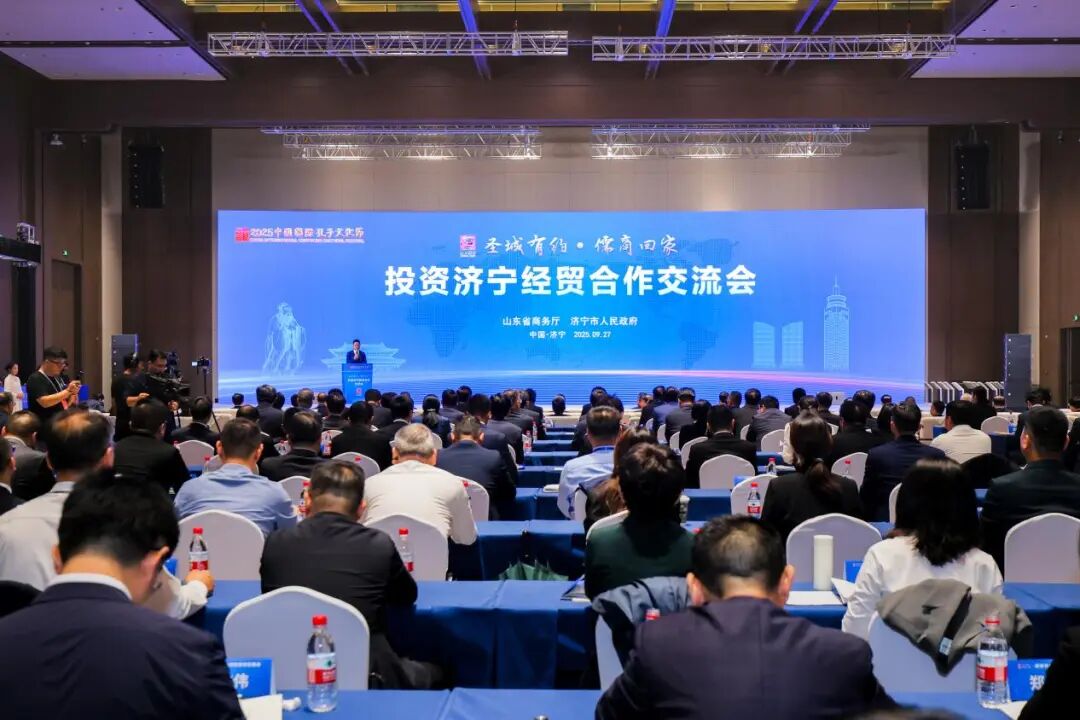
济宁:圣城有约 儒商回家
Shang Hai Zheng Quan Bao· 2025-10-02 06:45
Core Viewpoint - The "Shengcheng Invitation: Confucian Businessmen Return Home" investment and economic cooperation exchange meeting was held in Jining, highlighting the region's economic growth and investment opportunities, particularly in advanced manufacturing and green development [1][4][6]. Group 1: Economic Performance - Shandong Province's GDP grew by 5.6% in the first half of the year, surpassing the national average by 0.3 percentage points [4]. - From January to August, industrial output, consumption, and imports/exports increased by 7.8%, 5.7%, and 5.8% respectively, all above the national averages [4]. Group 2: Investment Opportunities - Jining is recognized as a national advanced manufacturing city with 58 Fortune 500 companies investing in the region, establishing multiple national-level industrial bases [6]. - The city is currently focusing on green, low-carbon, and high-quality development, with significant projects like the 116 billion yuan investment by Changcheng Heavy Industry for a new energy machinery production base [12]. Group 3: Cultural and Historical Significance - Jining, known as the birthplace of Confucius, embodies a rich cultural heritage that influences its business environment, promoting values such as integrity and social responsibility [10][14]. - The "Confucian Business Spirit" emphasizes the integration of moral values with economic pursuits, advocating for ethical business practices and social responsibility [14]. Group 4: Key Projects and Collaborations - The meeting included a signing ceremony for key projects, injecting new momentum into Jining's industrial development [18]. - Notable companies like China National Building Material and Shun Cheng Group are among those that signed agreements to invest in Jining [18].