
专精特新中小企业

Search documents
蓝皮书:北京高质量发展指数全国领先 经济与创新等贡献较高
Zhong Guo Xin Wen Wang· 2025-11-29 04:50
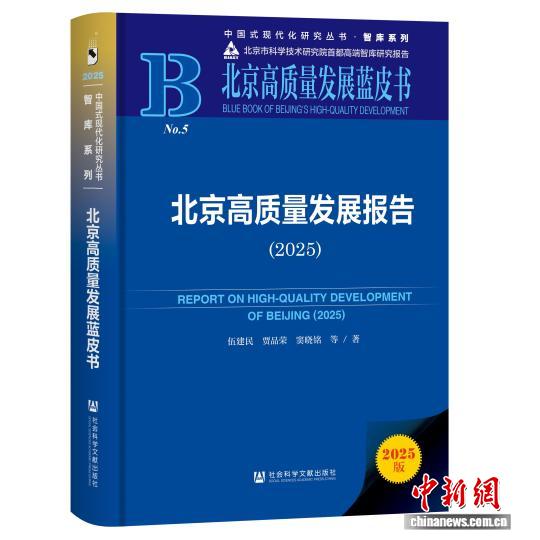
Group 1 - The "Beijing High-Quality Development Blue Book" indicates that Beijing's high-quality development index is leading nationwide, showing a steady upward trend from 0.710 in 2017 to 0.860 in 2023, representing a growth of 21.13% with an average annual growth rate of 3.25% [1][3] - Economic, innovation, and governance dimensions significantly contribute to Beijing's high-quality development, providing strong support for its advancement [1][3] - The blue book emphasizes that new productive forces are effective supports for high-quality development, with technological innovation being the key driver [3] Group 2 - "Specialized, Refined, Characteristic, and Innovative" small and medium-sized enterprises (SMEs) play a crucial role in promoting high-quality economic development in Beijing, acting as leaders in technological innovation and drivers of industrial upgrading [5] - Over 40% of these SMEs in Beijing allocate more than 15% of their expenses to research and development, contributing significantly to the city's technological innovation landscape [5]

报告:政府补贴对北京“专精特新”创新绩效激励显著
Zhong Guo Jing Ying Bao· 2025-11-28 12:37
Core Viewpoint - Technological innovation is a crucial source of economic growth and a key factor for enhancing competitiveness, improving living standards, and achieving sustainable development in a country or region. The innovative development of "specialized, refined, distinctive, and innovative" small and medium-sized enterprises (SMEs) serves as a model for the transformation and upgrading of SMEs in China, significantly contributing to product iteration and technological advancement [1]. Group 1: Government Policies and Support - The research report titled "Beijing High-Quality Development Blue Book: Beijing High-Quality Development Report (2025)" indicates that government R&D subsidy policies have a positive incentive effect on the innovation performance of Beijing's "specialized, refined, distinctive, and innovative" small giant enterprises [1]. - The empirical results of the study have passed robustness verification through placebo tests and a double-difference model with propensity score matching, reflecting the significant incentive effect of the current R&D subsidy policies on the innovation performance of "specialized, refined, distinctive, and innovative" small giant enterprises in Beijing [1]. Group 2: Recommendations for Policy Enhancement - Based on the findings, the blue book suggests that Beijing should introduce supporting policies for the innovative development of "specialized, refined, distinctive, and innovative" SMEs, continuing to increase the intensity and amount of R&D subsidies [1]. - The report emphasizes the need to effectively reduce and share the R&D risks and innovation barriers faced by SMEs, promote increased self-investment in R&D, and actively guide social capital investment to alleviate the financing difficulties of SMEs [1]. - Additionally, it recommends implementing tax incentives and other financial support policies to encourage "specialized, refined, distinctive, and innovative" SMEs to continuously enhance their R&D efficiency [1].
政策红利释放 专精特新中小企业加速发展
Jing Ji Wang· 2025-11-20 02:59
Core Viewpoint - The development of specialized, refined, unique, and innovative (referred to as "专精特新") small and medium-sized enterprises (SMEs) is crucial for advancing new industrialization and enhancing new productivity in China [2][3]. Group 1: Current Status of SMEs - As of now, China has cultivated over 600,000 technology and innovation SMEs, more than 140,000 specialized and innovative SMEs, and over 17,600 national-level "little giant" enterprises [1][2]. - By the end of 2024, the number of registered SMEs in China is expected to exceed 60 million, contributing over 60% of GDP, over 70% of technological innovation, and over 80% of urban employment [3]. Group 2: Policy and Support - The government is actively promoting the development of specialized and innovative SMEs through favorable policies, including the formulation of the "14th Five-Year Plan" for SME development [2][5]. - The establishment of national-level innovation platforms and specialized empowerment centers is underway to enhance the core technological capabilities of SMEs [4][6]. Group 3: Financial Support and Capital Empowerment - A comprehensive service system has been established to address the financing challenges faced by specialized and innovative SMEs, including government, financial institutions, and market players [6][7]. - As of October 2023, approximately 1,800 specialized and innovative enterprises are listed on the Shanghai and Shenzhen stock exchanges, accounting for 35% of listed companies, with IPO financing reaching about 1.5 trillion yuan, representing 30% of total IPO financing [7][8]. Group 4: Innovation and Technology Development - Specialized and innovative SMEs focus on strategic emerging industries and are dedicated to overcoming key technological challenges, contributing to the stability of industrial and supply chains [4][5]. - These enterprises have a 75.3% share of independently developed effective invention patents, indicating a strong emphasis on technological innovation [4].
新闻1+1丨专精特新“小巨人”,如何释放“大能量”?
Yang Shi Wang· 2025-11-13 22:22
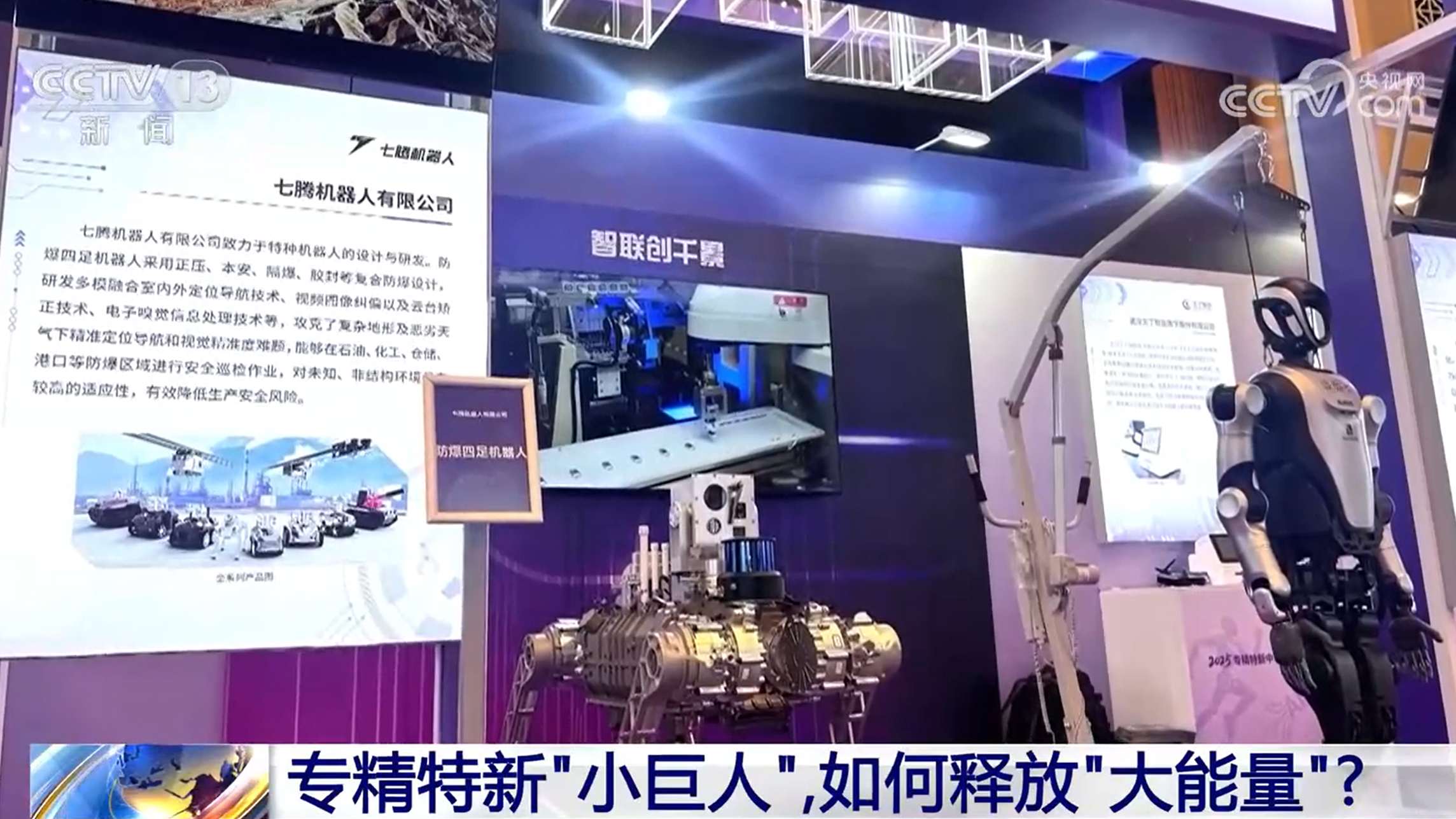
Core Insights - The rapid growth of specialized, refined, and innovative small and medium-sized enterprises (SMEs) in China, with over 17,600 national-level "little giant" enterprises and more than 140,000 specialized SMEs, highlights the need to transform quantity into quality and competitiveness [1][3]. Group 1: Importance of Specialized SMEs - The ongoing development of specialized SMEs is crucial for maintaining resilience and security in the industrial system amid global supply chain challenges [3][4]. - Specialized SMEs serve as both a "ballast stone" and a "sharp knife unit" in the industrial chain, emphasizing their indispensable role in strategic security [3][4]. Group 2: Highlights of the Conference - The conference focused on empowering enterprises by providing resource scenarios [6]. - There was a strong emphasis on targeted support through regional equity markets and specialized investment institutions aimed at specialized SMEs, akin to precision irrigation [6]. - The conference encouraged specialized SMEs to enhance their influence in setting standards and rules, marking a significant shift from merely following existing standards [6]. Group 3: Advantages and Challenges of Going Global - Specialized SMEs are shifting from competing on low costs to leveraging core technologies and unique skills for international expansion [8]. - Government support is essential for these enterprises to adapt to local standards, markets, and cultures in order to thrive in international competition [8]. Group 4: Future Development Strategies - The growth of specialized SMEs will require a collaborative effort from the government, enterprises, and capital markets to ensure sustainable development [10]. - The government should act as a patient gardener, providing substantial support in terms of environment and resources [10]. - Capital markets need to adopt a long-term investment approach to support the growth of these enterprises [10].
城市24小时 | 这座一线城市,也要加码打“餐饮牌”
Mei Ri Jing Ji Xin Wen· 2025-09-03 15:34
Group 1: Core Insights - Shanghai aims to enhance its dining supply chain quality and attract global brands like Sodexo to support its international consumption center development [1][2] - The city plans to invest 5 billion yuan in service consumption vouchers, with 3.6 billion yuan allocated specifically for the dining sector to stimulate consumption [6] Group 2: Industry Performance - Shanghai has 9,793 dining establishments, reflecting a 4.17% year-on-year increase, solidifying its status as a "dining capital" [2] - However, the dining industry in first-tier cities is facing challenges, with a decline in restaurant revenues; Shanghai's total social consumption reached 955.18 billion yuan from January to July, growing only 2.5% year-on-year, while dining revenue fell by 2.9% [2] Group 3: Strategic Initiatives - Shanghai's government is implementing policies to support new restaurant openings and renovations, aiming to create renowned dining landmarks and enhance the overall dining experience [6] - Beijing is also focusing on attracting global dining brands, with plans to establish 30 "late-night dining" streets and introduce around 500 well-known food brands by 2025 [6]

收评:创业板指涨2.23%创2022年2月8日以来收盘新高 电池股及金属股涨幅靠前
Xin Hua Cai Jing· 2025-08-29 07:39
Market Performance - The Shanghai Composite Index and Shenzhen Component Index opened slightly lower, while the ChiNext Index opened slightly higher, with the ChiNext Index reaching a peak increase of approximately 3.78% during the session [1] - The ChiNext Index closed at 2890.13 points, marking a new closing high since February 8, 2022 [1] - The Shanghai Composite Index closed at 3857.93 points with a gain of 0.37%, the Shenzhen Component Index closed at 12696.15 points with a gain of 0.99%, and the ChiNext Index closed at 2890.13 points with a gain of 2.23% [1] Monthly Index Performance - In August, the Shanghai Composite Index increased by 7.97%, the Shenzhen Component Index by 15.32%, the ChiNext Index by 24.13%, the Sci-Tech 50 Index by 28.00%, the CSI 300 Index by 10.33%, and the North Securities 50 Index by 10.64% [2] Institutional Insights - Market sentiment is expected to remain strong in early September, with a focus on structural opportunities in consumption recovery, technology innovation, and policy benefits [3] - The non-bank financial sector is highlighted as having significant investment opportunities due to performance elasticity, with an emphasis on the ongoing bull market characteristics [3] Policy Developments - The National Development and Reform Commission emphasizes that the next 1-2 years are critical for the implementation of artificial intelligence, aiming for widespread integration with six key sectors by 2027 [4] - Guangzhou has introduced measures to support specialized and innovative small and medium-sized enterprises, focusing on financial support, innovation stimulation, and enhancing overall competitiveness [5]

广东约1.7亿元奖补专精特新企业 单企最高贴息100万元
Nan Fang Du Shi Bao· 2025-07-24 11:48
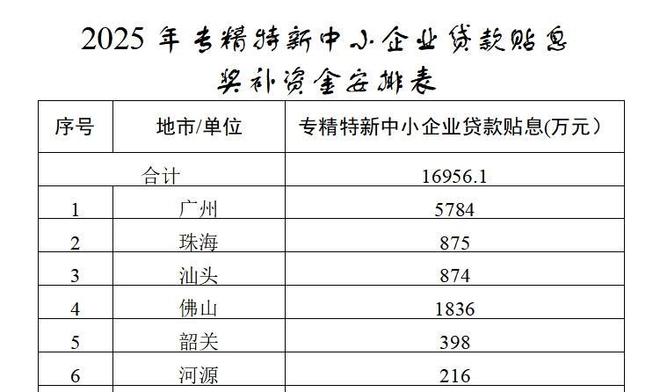
Core Viewpoint - Guangdong Province has announced a loan interest subsidy plan for specialized and innovative small and medium-sized enterprises (SMEs) for 2025, with a total subsidy amount of 169.561 million yuan allocated to various cities, excluding Shenzhen [1][3]. Summary by Relevant Sections Loan Subsidy Allocation - The total loan interest subsidy for specialized and innovative SMEs in Guangdong is 169.561 million yuan [3]. - Guangzhou receives the highest allocation of 57.84 million yuan, followed by Dongguan with 23.18 million yuan and Foshan with 18.36 million yuan [3]. Implementation Standards - The subsidy applies to eligible loans taken by provincial specialized and innovative SMEs from May 1, 2023, to April 30, 2024, with a reimbursement method based on post-funding [3][4]. - The maximum subsidy for a single enterprise is capped at 50% of the interest paid, with a maximum amount of 1 million yuan [3][4]. Target Enterprises - The task list indicates that Guangzhou has 290 eligible enterprises, while Foshan has 63, Dongguan 79, and other cities like Zhuhai, Zhongshan, and Shantou have fewer than 30 each [4]. - On average, each enterprise in Guangzhou will receive approximately 199,000 yuan, while those in Foshan and Dongguan will receive around 290,000 yuan each [4]. Monitoring and Compliance - Local authorities are required to closely monitor the usage of funds, ensure timely disbursement according to the Budget Law, and report on the progress of fund utilization monthly [5].
政策协同支持专精特新企业发展
Sou Hu Cai Jing· 2025-07-15 23:00
Group 1 - Specialized and innovative small and medium-sized enterprises (SMEs) are crucial for technological innovation and economic development, with over 141,000 provincial-level specialized SMEs and 14,600 "little giant" enterprises cultivated by the end of 2024 [1] - Fiscal and financial policies play a significant role in supporting the development of specialized SMEs, requiring enhanced policy coordination to boost confidence and capabilities amid complex internal and external challenges [1][2] - The collaboration between fiscal and financial policies can create a multiplier effect that stabilizes the economy, promotes employment, and supports enterprise development, with fiscal policy focusing on demand management and structural adjustment, while financial policy emphasizes liquidity management [1][2] Group 2 - Recent efforts by central and local fiscal and financial departments have focused on supporting specialized SMEs, exploring collaborative models, and providing essential resources through various financing services [3] - Despite progress, specialized SMEs face challenges such as an incomplete innovation ecosystem and imbalanced digital transformation, necessitating a broader perspective and expanded space for fiscal and financial policy collaboration [4] - There is a need to optimize tax support policies to enhance innovation autonomy, including increasing the deductibility of R&D expenses and expanding tax incentives for technology transfer [5] Group 3 - Improving the financial service system is essential for enhancing the effectiveness of enterprise financing, with a focus on long-term and patient capital to support specialized SMEs involved in major technological tasks [6] - The capital market's role should be leveraged to deepen comprehensive reforms in investment and financing, facilitating the entry of long-term funds and enhancing the adaptability of capital market systems [6] - Support for the digital transformation of specialized SMEs should be increased through various financial mechanisms, promoting the application of technologies like artificial intelligence and big data in innovation processes [6]
《四川品牌发展报告2025》发布 四川品牌矩阵规模持续壮大
Si Chuan Ri Bao· 2025-05-12 07:13
Core Insights - The report titled "Sichuan Brand Development Report 2025" was released during the "Charming Tianfu Brand Night" event, highlighting the achievements and strategies for brand development in Sichuan province [1][2] - Sichuan's six major advantageous industries, high-tech manufacturing, and green low-carbon industries saw value-added growth rates of 6.9%, 8.4%, and 10.2% respectively, with emerging industries like artificial intelligence and biotechnology growing over 20% [1] - The province's retail sales of consumer goods ranked fifth nationwide, and its import-export total grew by 9.4%, returning to a scale of over 1 trillion yuan [1] Industry Development - Sichuan's brand matrix is expanding, with the establishment of three trillion-yuan industry clusters, three national strategic emerging industry clusters, five advanced manufacturing clusters, and 15 national-level characteristic industry clusters for small and medium enterprises [2] - The province is home to three local Fortune Global 500 companies, 19 Chinese Fortune 500 companies, 486 national-level specialized and innovative "little giant" enterprises, and 29 manufacturing "single champion" enterprises [2] - The development of brands in Sichuan is expected to benefit from a golden window period, particularly with the rise of artificial intelligence as a leading technology [2]