住建

Search documents
今年省政府民生实事新提出项目占比历年最高小切口全链条,更重“投资于人”
Xin Hua Ri Bao· 2026-02-10 00:16
Core Viewpoint - The Jiangsu provincial government is focusing on enhancing the well-being of its citizens through a comprehensive plan for 2026, which includes 12 categories and 45 projects, with a record high of new proposals and a financial commitment of approximately 18.3 billion yuan [1][3]. Group 1: Funding and Project Framework - The 2026 civil affairs projects will maintain a framework of 12 categories and 45 projects, with over half being new proposals, the highest proportion in history [2]. - The provincial government has allocated around 18.3 billion yuan to ensure funding for these projects, with a focus on systematic planning and collaboration among departments [3]. Group 2: Education Initiatives - The provincial education department will lead and participate in eight civil affairs projects in 2026, focusing on both hardware improvements and soft skill enhancements, including mental health initiatives for youth [4]. Group 3: Transportation and Safety - The provincial public security department will address road safety and congestion through targeted measures, including the identification and management of hazardous road segments and the optimization of emergency response systems [5]. Group 4: Housing and Urban Development - The housing and urban development department will implement safety measures for gas and water supply, including extensive safety checks and infrastructure upgrades to ensure secure living conditions for residents [6]. Group 5: Employment and Skills Development - The government will introduce "Talent Night Markets" and "Skill Night Schools" to facilitate employment opportunities and skills training, aiming to host over 3,000 events and 1,000 training programs throughout the year [7]. Group 6: Health and Welfare - The health department will enhance childcare services and mental health support, including the establishment of new community childcare points and a unified psychological assistance hotline, while also expanding chronic disease screening centers [8].
辽宁小吏大贪八年贪1600多万
第一财经· 2026-02-08 02:40
Core Viewpoint - The article highlights the severe corruption issues within the construction sector in Liaoning Province, exemplified by a case where a civil servant collected over 16.14 million yuan in bribes over eight years, raising concerns about systemic corruption and the need for comprehensive reforms [3][5]. Group 1: Corruption Case Details - A civil servant in Liaoning's construction department was found to have received bribes totaling 16.14 million yuan over eight years, averaging over 2 million yuan annually [3][5]. - The case was uncovered during a special inspection by the provincial inspection team, which revealed 5,573 issues and 1,310 problem leads across the construction sector [5]. Group 2: Implications and Recommendations - The case serves as a reminder that anti-corruption efforts must address the entire chain of corruption, from grassroots to higher levels, emphasizing the need to tackle both major and minor corrupt practices [6]. - It is crucial for individuals to report corrupt practices rather than remain silent, as the exposure of such cases often relies on whistleblowers [7]. - The province plans to implement 384 regulatory measures to strengthen administrative approvals, bidding processes, and internal management to prevent similar corruption in the future [8].


四中全会精神在基层丨山东潍坊:打造解纷“老窑匠” 勇啃基层治理“硬骨头”
Xin Hua Wang· 2025-12-17 06:30
Core Viewpoint - The article highlights the innovative dispute resolution mechanism in Weifang, Shandong Province, particularly through the "Old Craftsman" mediation center, which has effectively addressed complex housing disputes and improved grassroots governance [1][2]. Group 1: Dispute Resolution Mechanism - The "Old Craftsman" mediation center has successfully resolved over 1,500 cases in the housing construction sector, involving a total amount exceeding 3 billion yuan, saving over 60 million yuan in litigation costs for the parties involved [2]. - The mediation approach combines the efforts of the court, local government, and specialized mediation teams to create a multi-faceted dispute resolution framework [2][3]. Group 2: Challenges and Support - The "Old Craftsman" center faces financial challenges, as it operates as a non-profit entity with a fee structure that charges 20% of the litigation costs, but does not charge if mediation fails, leading to budget deficits [3]. - There is a call for increased support and funding for mediation institutions to enhance their operational capabilities and ensure sustainable service delivery in social governance [3].
省委十四届十次全会精神在社会发展和民生保障领域引发热烈反响——厚植为民底色 绘就幸福图景
Xin Hua Ri Bao· 2025-12-03 23:34
Group 1 - The core idea of the article emphasizes the importance of improving the quality of life for the people of Jiangsu, focusing on high-quality development and effective governance [1][5] - Jiangsu aims to empower economic and social development through cultural initiatives, with a high standard for building a culturally strong province [2][4] - The cultural resources are being integrated into rural areas, enhancing community engagement and promoting local cultural spaces [3] Group 2 - The article highlights the commitment to ensuring common prosperity by improving living standards and social welfare systems [5][6] - Employment is identified as a key aspect of improving people's lives, with initiatives in place to support job creation and skills development [7] - The agricultural sector is also emphasized, with efforts to modernize grain distribution and enhance food security for farmers [8] Group 3 - The focus on high-quality living includes urban renewal projects that have significantly increased resident satisfaction [9] - Smart city initiatives are being implemented to enhance urban infrastructure and safety, with extensive data collection and monitoring systems in place [9][10] - The construction sector is set to develop detailed plans for urban infrastructure improvements, ensuring the stability and functionality of cities [10]
浙江省住建领域“人工智能+”工作方案发布!
Xin Lang Cai Jing· 2025-12-03 13:20
Core Viewpoint - The Zhejiang Provincial Department of Housing and Urban-Rural Development has issued the "Artificial Intelligence + Housing and Urban-Rural Construction Work Plan (2025-2027)" to accelerate the application of artificial intelligence in the construction sector, aiming to foster new productive forces, promote industrial transformation, and enhance the high-quality development of housing and urban-rural construction in the province [1][13]. Overall Requirements - The plan focuses on key areas and critical links in the construction industry, proposing the implementation of "Artificial Intelligence + Construction" actions, establishing a "512N" work system that includes five major fields, twelve key application scenarios, and numerous innovative practice cases to support the modernization of governance capabilities and systems in the construction industry [2][14]. Timeline Goals - By 2025, a unified data foundation for the construction industry will be established, with innovative practice cases emerging in urban renewal, intelligent Q&A for construction, intelligent services for housing provident funds, intelligent monitoring of water quality, intelligent early warning for urban flooding, and intelligent home design [3][14]. - By 2026, standards, resource directories, and corpus systems will be established, achieving preliminary results in the application of artificial intelligence across the five major fields and twelve key application scenarios [4][14]. - By 2027, significant achievements will be made in key application scenarios, forming an ecosystem for "Artificial Intelligence + Construction," including policy standards, technological collaboration, and innovative mechanisms [5][14]. Key Tasks - The plan outlines five major areas and thirteen specific measures, including smart city construction, intelligent building development, smart community creation, enhanced intelligent supervision, and the development of intelligent services [6][15]. Smart City Construction - Implementation of intelligent municipal infrastructure construction and renovation, focusing on issues such as water supply, sewage, gas, urban flooding, and bridge structures, with the aim of enhancing perception capabilities through IoT monitoring facilities [7][16]. - Establishment of an intelligent safety warning system for urban operations, utilizing AI for water quality analysis, gas cylinder flow analysis, and sewage system operation monitoring by 2027 [7][16]. - Achieving comprehensive use of AI in urban governance for categories such as construction waste, household waste, sanitation, and city appearance supervision by 2027 [7][16]. Intelligent Building Development - Promotion of intelligent auxiliary design, transitioning from traditional 2D CAD to 3D BIM design, with an AI-assisted review rate for fire safety and structural safety regulations reaching 80% by 2027 [8][16]. - Development of intelligent engineering cost estimation tools, with over five application scenarios for intelligent Q&A, data analysis, and report generation achieved by 2026 [8][16]. - Promotion of intelligent construction practices, with over 90% of key prefabricated component production enterprises adopting intelligent construction technologies by 2027 [8][16]. Smart Community Creation - Development and promotion of smart home technologies, aiming for a 50% coverage rate in the home design industry by 2027, and the establishment of over 100 model smart home scenarios [9][17]. - Upgrading community intelligence, integrating smart community services, and creating over 1,000 "smart property service scenario" communities by the end of 2027 [9][17]. Enhanced Intelligent Supervision - Deepening intelligent supervision in the construction market, including compliance checks for bidding documents and real-time credit monitoring for enterprises [10][18]. - Implementing intelligent supervision for ongoing construction projects, with a focus on high-risk projects and the use of smart wearable devices for real-time monitoring by 2027 [10][18]. - Promoting intelligent management of rural housing and pollution, establishing IoT networks for pollution treatment facilities by 2027 [10][18]. Development of Intelligent Services - Optimizing intelligent government services, with full coverage of intelligent customer service at housing provident fund centers by 2026 and 50% coverage of provincial approval matters by 2027 [11][19]. - Promoting intelligent archive management, encouraging the establishment of intelligent services for engineering archives, and automating the review of archive utilization materials [11][20]. Key Application Scenarios - The plan identifies twelve key application scenarios, including intelligent Q&A services in construction, intelligent review of construction drawings, intelligent auxiliary design, smart home design, intelligent engineering cost estimation, safety warning systems for urban lifelines, intelligent services for housing provident funds, intelligent management of construction archives, smart city management, intelligent management of rural housing and pollution, intelligent construction practices, and intelligent supervision of construction safety [12][20].
北京国际城市设计大会召开 北京城市更新研究院揭牌
Zhong Guo Xin Wen Wang· 2025-11-23 13:22
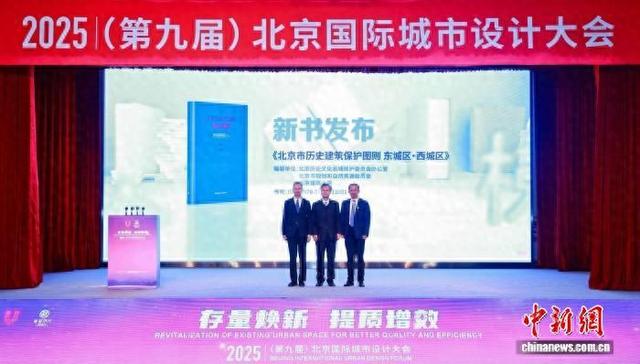
Core Insights - The 2025 Beijing International Urban Design Conference focuses on "Renewal of Existing Stock for Quality Improvement and Efficiency Enhancement" and aims to explore new mechanisms, technologies, and pathways for high-quality urban development in the context of existing urban environments [1][3][13] Group 1: Conference Overview - The conference is hosted by Beijing University of Civil Engineering and Architecture, along with several architectural and cultural organizations, featuring a series of activities including keynote speeches, parallel events, and thematic forums [1][3] - Keynote speaker Qin Haixiang emphasized the importance of urban renewal and modern city construction, urging experts to enhance their sense of responsibility and mission in urban work [3][4] Group 2: Urban Development Focus - Beijing, as China's first mega-city focusing on reduction development, is actively exploring urban renewal practices to enhance development quality, optimize spatial value, and modernize governance capabilities [4][6] - The establishment of the Beijing Urban Renewal Research Institute aims to create a collaborative platform for addressing key challenges in urban renewal, ultimately forming a replicable "Beijing model" for urban development [9] Group 3: Educational Initiatives - The establishment of the "Excellence Engineer Training Alliance" aims to integrate education, industry, and research to address talent cultivation in urban renewal, smart construction, and green development [6][7] - The Beijing University of Civil Engineering and Architecture is committed to serving national housing and urban development needs, leveraging the conference platform to enhance urban governance and quality of life [4][7] Group 4: Historical Preservation - The release of the book "Beijing Historical Building Protection Map: Dongcheng District and Xicheng District" highlights the significance of historical architecture in Beijing, with 655 out of 1056 historical buildings located in these districts [9][10] - The conference also commemorates the 90th anniversary of Professor Cao Xun, showcasing his contributions to architectural history and culture [10] Group 5: Student Engagement - The conference includes a student exchange workshop aimed at fostering collaboration among universities and exploring new urban design concepts, focusing on revitalizing everyday neighborhoods [11][12] - Students from nine universities participated in design research, addressing real-world issues in historical districts, showcasing a successful integration of academic learning and community service [12]
长沙启动住建领域数智化通用型技术和平台“揭榜挂帅”工作
Chang Sha Wan Bao· 2025-10-07 00:31
Core Insights - The initiative launched by Changsha's housing and urban-rural development bureau, in collaboration with other governmental departments, aims to promote digital transformation in the construction industry, aligning with national strategies for high-quality urban development and "Artificial Intelligence+" actions [1][2] - The project focuses on ten key technology areas that cover the entire lifecycle of construction and critical urban operation processes, establishing a robust framework for digital transformation in the construction sector [1] Group 1 - The initiative is a significant step towards transforming the construction industry in Changsha, aiming to position the city as a leader in digital construction and intelligent building [1] - The core objectives include improving quality and efficiency, ensuring safety, promoting green and smart technologies, and upgrading the industry [1] - The ten technology areas range from digital construction collaborative design platforms to intelligent property management platforms, forming a comprehensive support structure for the sector [1] Group 2 - The initiative will reduce the blind spots and cost risks associated with independent R&D for enterprises, effectively empowering and alleviating burdens on businesses [2] - Successful applicants will receive the title of "Changsha Research and Promotion Center" and will benefit from market promotion, policy support, and application scenarios to ensure the practical implementation of their innovations [2] - The application deadline is set for October 24, and the ongoing efforts are expected to create an innovative ecosystem that attracts global resources and showcases the transformative potential of "Artificial Intelligence+" in Changsha's construction industry [2]
湖北14项住建民生项目马力全开 推进民生实事如期完成
Chang Jiang Shang Bao· 2025-08-26 07:28
Core Points - The Hubei Provincial Government has committed to implementing 55 livelihood projects to enhance the well-being of its citizens by 2025 [1] - As of July 2025, significant progress has been made in various housing and infrastructure projects, with many targets either met or exceeded [2][3][4] Group 1: Housing and Infrastructure Development - The Hubei Provincial Housing and Urban-Rural Development Department aims to transition from "everyone has a house" to "everyone lives in a good house" [2] - The annual targets include the construction of 70,000 new affordable housing units, with 72,000 units completed by July, exceeding the target by 2.9% [2] - 40,500 units of urban village renovation housing have been initiated, achieving 81.1% of the annual goal [2] - 170 pocket parks have been established, reaching 77.3% of the annual target [3] - 1,649 old community renovation projects have been initiated, achieving 82.5% of the annual goal [3] - 1,927 elevators have been installed in existing residential buildings, reaching 96% of the annual target [3] Group 2: Urban Infrastructure and Environmental Management - The province has completed the rectification of 8,919.66 kilometers of problematic gas pipelines and 888.4 kilometers of water supply pipelines [3] - 1,129.5 kilometers of municipal sewage pipelines have been newly constructed or renovated, with no signs of water quality deterioration reported [8] - 44 historical cultural districts and 4,455 historical buildings have been officially recognized, achieving a 100% registration rate [8] Group 3: Community and Social Support Initiatives - The government has provided housing subsidies to 4,667 families with two or three children, ensuring all eligible families receive support [6] - A total of 81,500 new public parking spaces have been created, achieving 95.9% of the annual target [7] - 10,350 rural construction craftsmen have been trained, reaching 86.3% of the annual goal [4]
山东实施六大工程打造“数字住建”
Qi Lu Wan Bao· 2025-08-21 23:20
Core Insights - Shandong province is implementing a comprehensive "Digital Construction" initiative to enhance urban governance and development through digitalization [1][2][3] Group 1: Digital Construction Framework - The initiative includes six major projects: Digital City, Digital Housing, Digital Construction, Digital Villages, Digital Governance, and Digital Foundation [2][3] - A unified, high-level "Digital Construction" system will be established to improve urban management, ensure housing security, drive industrial transformation, and optimize government services [2][3] Group 2: Digital City and Housing - The Digital City project aims to create a digital foundation for cities, enhancing smart city management and ensuring urban safety [2] - The Digital Housing project focuses on the entire lifecycle of building safety regulation, promoting smart community services, and improving emergency response capabilities [3] Group 3: Digital Construction and Villages - The Digital Construction initiative will develop an internet platform for the construction industry, enhancing digital design and promoting smart construction sites [3] - The Digital Villages project will advance "Digital Farmhouse" construction, utilizing lightweight BIM or 3D models for design dissemination and support for rural revitalization [4] Group 4: Digital Governance and Foundation - The Digital Governance project will enhance lifecycle management of construction projects and improve government service efficiency through digital means [4] - The Digital Foundation project will focus on strengthening data governance and analysis, ensuring cybersecurity within the digital construction framework [4]
书记谈丨深化整治住建领域群众身边不正之风和腐败问题
Zhong Yang Ji Wei Guo Jia Jian Wei Wang Zhan· 2025-07-10 00:19
Core Points - The emphasis on addressing corruption and misconduct in the housing and urban construction sector is crucial for safeguarding public interests and maintaining the Party's governance foundation [1][2] - The central role of the housing and urban construction department in addressing public concerns and enhancing living standards is highlighted, with a focus on issues like housing quality and safety [2][3] - The need for innovative methods and collaborative efforts between the Central Commission for Discipline Inspection and the Ministry of Housing and Urban-Rural Development to improve the effectiveness of anti-corruption measures is stressed [3][4] Group 1: Addressing Public Concerns - The importance of tackling issues that directly affect the public, such as housing quality, gas safety, and property services, is underscored [2][7] - The commitment to ensuring that anti-corruption efforts resonate with the public's needs and enhance their sense of security and well-being is emphasized [2][5] Group 2: Innovative Approaches - The Central Commission for Discipline Inspection is adopting a systematic approach to enhance the quality and effectiveness of its work, focusing on key issues and innovative solutions [3][4] - Collaborative efforts between the Central Commission and the Ministry of Housing aim to create a unified strategy for addressing corruption and improving governance in the housing sector [4][5] Group 3: Specific Issues Addressed - The focus on gas safety management and the need for comprehensive inspections and updates to aging infrastructure is highlighted as a priority [7][8] - The initiative to resolve wage arrears for sanitation workers through thorough investigations and the establishment of dedicated funds is outlined [8][9] - The commitment to improving property service delivery and ensuring accountability in managing public resources is detailed, with a focus on regulatory compliance and transparency [9]