
安全韧性

Search documents
全面打造“公园城市、安逸家园”
Xin Lang Cai Jing· 2026-01-12 18:00
Core Viewpoint - Sichuan Province has released an implementation opinion aimed at promoting high-quality urban development, focusing on building modern cities characterized by innovation, livability, beauty, resilience, civilization, and intelligence, with a target to achieve significant progress by 2030 and establish a modern urban framework by 2035 [1][2]. Group 1: Urban Development Strategy - The opinion outlines a comprehensive urban spatial layout, emphasizing the development of the Chengdu-Chongqing urban axis and other key urban development belts, while adhering to principles like "one city, one policy" [2]. - Support for Chengdu includes establishing it as a model park city and enhancing its core functions, while also promoting the integration of the Chengdu metropolitan area [2][3]. - Regional cities like Mianyang and Yibin are encouraged to attract major productivity layouts, enhancing their economic growth potential [2]. Group 2: Technological Innovation and Industry Integration - The opinion emphasizes the importance of technological innovation and industry-city integration, proposing the establishment of key innovation zones and collaborative innovation frameworks [3]. - It advocates for the application of advanced technologies such as AI and clean energy in urban development, fostering new economic models and consumption scenarios [3]. Group 3: Quality of Life and Infrastructure - The opinion addresses housing security by promoting a new real estate development model and a tiered housing supply system [4]. - It outlines plans for enhancing public services, including education and healthcare, and improving community infrastructure [4][5]. - The focus on green transformation includes initiatives for pollution reduction, green building development, and waste classification [5]. Group 4: Safety and Governance - The opinion stresses the establishment of safety management systems for buildings and infrastructure, alongside measures to enhance urban resilience against extreme weather [5]. - It proposes the creation of a unified digital urban governance framework to improve service delivery and operational efficiency [5].
重庆发布保障性住房“好房子”标准
Xin Lang Cai Jing· 2025-12-12 08:48
Core Viewpoint - Chongqing's "Technical Guidelines for Good Housing (Affordable Housing)" will be implemented on December 15, 2025, establishing new standards for affordable housing construction focusing on safety resilience, comfort, green low-carbon, and smart convenience [1] Group 1: Safety Resilience - Chongqing encourages the adoption of seismic measures that exceed standard requirements in critical areas [1] - A comprehensive fire protection system will be established, with enhanced fire safety facilities in key areas such as electric bicycle charging zones [1] Group 2: Comfort and Livability - The guidelines propose three types of housing units ("60, 90, 120") to accommodate families of different sizes, with a minimum ceiling height of 3 meters to ensure spaciousness [1] - Quantitative requirements for indoor lighting, ventilation, and sound insulation are specified to improve the physical living environment [1] Group 3: Green Low-Carbon - Chongqing mandates that the use of green building materials must not be less than 70% [1] - The promotion of energy-saving technologies such as solar photovoltaic power generation and sponge city facilities is emphasized [1]
日本被曝昼夜赶建军事基地!现场曝光
Mei Ri Jing Ji Xin Wen· 2025-12-03 07:17
Core Points - Japan is enhancing its military capabilities, particularly in the southwestern islands, with a focus on Amami Oshima and Mako Island, which are strategically important [1] - A new runway of approximately 2000 meters is planned on Mako Island for U.S. aircraft carrier operations, with construction ongoing to meet a completion deadline of March 2030 [4] - Japan's defense budget for the fiscal year 2025 is set to reach approximately 11 trillion yen (about 498.2 billion RMB), marking a significant increase and a departure from the historical limit of defense spending being under 1% of GDP [8] Military Developments - Japan's military preparations are becoming more practical and detailed, indicating a shift towards a more proactive defense strategy in response to potential regional conflicts, particularly concerning Taiwan [6] - The Japanese government is investing in various defense-related initiatives, including the development of "universal plasma" and legal frameworks for wartime scenarios, reflecting a comprehensive approach to national security [6] Budgetary Changes - The approved supplementary budget for defense in 2025 includes 1.1 trillion yen (approximately 49.8 billion RMB), contributing to a total defense expenditure that will account for about 2% of Japan's GDP [8] - Japan's defense spending has seen a continuous increase for 13 consecutive years, indicating a significant shift in defense policy since 2012 [8] International Reactions - China's Foreign Ministry has expressed concerns over Japan's military expansion and changes to its defense policies, warning against a return to militarism and the potential disruption of post-war international order [10]

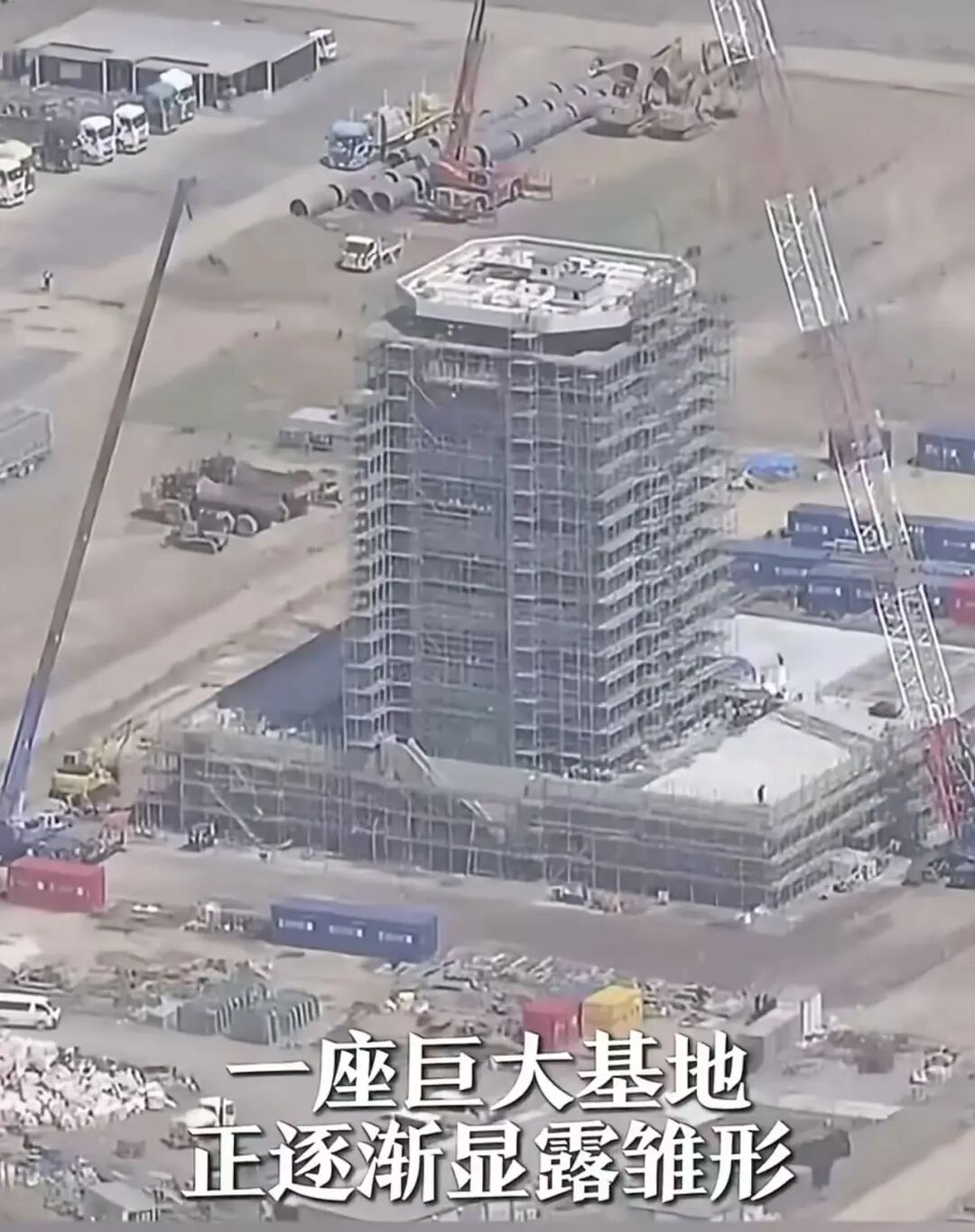
日本战争准备曝光
中国基金报· 2025-12-03 01:36
Core Viewpoint - Japan is significantly increasing its military preparedness, reflecting a shift towards a more proactive and practical defense strategy, particularly in response to potential conflicts in the Taiwan Strait [1][4]. Group 1: Military Spending and Policy Changes - Japan's defense budget has been on the rise for 13 consecutive years, with a notable increase from fiscal year 2012 to fiscal year 2025 [3]. - The Japanese cabinet approved a supplementary budget for fiscal year 2025 that includes defense-related expenses of 1.1 trillion yen (approximately 49.8 billion yuan), bringing the total defense spending for that year to about 11 trillion yen (approximately 498.2 billion yuan), which constitutes 2% of GDP [4]. - The new "security three documents" emphasize a fundamental strengthening of defense capabilities and the development of "counter-strike capabilities," which undermines Japan's principle of "defensive defense" [4]. Group 2: International Reactions and Concerns - China's Ministry of Foreign Affairs has expressed strong opposition to Japan's militaristic tendencies, viewing them as a revival of militarism [5][6]. - The Chinese government has criticized Japan's recent military policy changes, including the loosening of weapon export restrictions and the pursuit of collective self-defense, as violations of post-war international agreements [6].

日本军事准备细节曝光
财联社· 2025-12-02 10:59
Core Viewpoint - Japan is enhancing its military preparedness by investing in "security resilience" initiatives, indicating a shift towards deeper and more practical military readiness in response to potential regional conflicts, particularly regarding the Taiwan Strait [1] Group 1: Military Preparedness Initiatives - Japan is allocating part of its defense budget to develop "universal plasma" and establish detailed wartime laws, including provisions for the treatment of prisoners of war [1] - The transformation of civilian ports into "dual-use" facilities is part of Japan's strategy to bolster its military capabilities [1] Group 2: Strategic Implications - International experts suggest that Japan is treating the possibility of conflict in the Taiwan Strait as a real and imminent threat, leading to meticulous preparations [1]

日本战争准备曝光
第一财经· 2025-12-02 10:24
Core Viewpoint - Japan is increasingly investing in defense capabilities, focusing on "security resilience" measures, indicating a shift towards deeper and more practical military preparations in response to potential regional conflicts, particularly concerning Taiwan Strait tensions [3]. Group 1 - Japan is allocating part of its defense budget to develop "universal blood plasma" and establish detailed wartime laws regarding "prisoner handling" [3]. - The transformation of civilian ports into "dual-use" facilities is part of Japan's broader military readiness strategy [3]. - International issues expert Lu Hao emphasizes that Japan is treating the possibility of conflict in the Taiwan Strait as a real and imminent threat, leading to meticulous preparations [3].

北京国际城市设计大会召开 北京城市更新研究院揭牌
Zhong Guo Xin Wen Wang· 2025-11-23 13:22
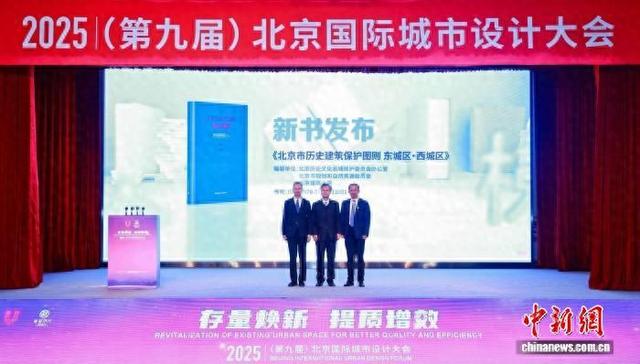
Core Insights - The 2025 Beijing International Urban Design Conference focuses on "Renewal of Existing Stock for Quality Improvement and Efficiency Enhancement" and aims to explore new mechanisms, technologies, and pathways for high-quality urban development in the context of existing urban environments [1][3][13] Group 1: Conference Overview - The conference is hosted by Beijing University of Civil Engineering and Architecture, along with several architectural and cultural organizations, featuring a series of activities including keynote speeches, parallel events, and thematic forums [1][3] - Keynote speaker Qin Haixiang emphasized the importance of urban renewal and modern city construction, urging experts to enhance their sense of responsibility and mission in urban work [3][4] Group 2: Urban Development Focus - Beijing, as China's first mega-city focusing on reduction development, is actively exploring urban renewal practices to enhance development quality, optimize spatial value, and modernize governance capabilities [4][6] - The establishment of the Beijing Urban Renewal Research Institute aims to create a collaborative platform for addressing key challenges in urban renewal, ultimately forming a replicable "Beijing model" for urban development [9] Group 3: Educational Initiatives - The establishment of the "Excellence Engineer Training Alliance" aims to integrate education, industry, and research to address talent cultivation in urban renewal, smart construction, and green development [6][7] - The Beijing University of Civil Engineering and Architecture is committed to serving national housing and urban development needs, leveraging the conference platform to enhance urban governance and quality of life [4][7] Group 4: Historical Preservation - The release of the book "Beijing Historical Building Protection Map: Dongcheng District and Xicheng District" highlights the significance of historical architecture in Beijing, with 655 out of 1056 historical buildings located in these districts [9][10] - The conference also commemorates the 90th anniversary of Professor Cao Xun, showcasing his contributions to architectural history and culture [10] Group 5: Student Engagement - The conference includes a student exchange workshop aimed at fostering collaboration among universities and exploring new urban design concepts, focusing on revitalizing everyday neighborhoods [11][12] - Students from nine universities participated in design research, addressing real-world issues in historical districts, showcasing a successful integration of academic learning and community service [12]
能源保供迎寒潮“大考” 多能互补共筑温暖防线
Xin Hua She· 2025-11-16 14:47
Core Viewpoint - The article emphasizes the importance of a multi-energy supply system to ensure stable energy provision during the upcoming cold wave, highlighting the proactive measures taken by various energy sectors to meet increased heating demands and maintain industrial production stability [1][8]. Group 1: Energy Supply Measures - The National Energy Administration has laid out strategies to ensure sufficient supply of coal and natural gas, optimize electricity dispatch, and enhance the efficiency of new energy utilization to create a comprehensive energy supply system [1][8]. - The average daily coal dispatch in China has remained above 12.3 million tons since October, with coal stockpiles at power plants reaching 227 million tons, sufficient for 35 days of use [3]. Group 2: Infrastructure and Technology Enhancements - Significant investments in power grid infrastructure have been made, with 113 new projects of 500 kV and above completed this year, enhancing cross-regional transmission capacity [2]. - The application of new technologies such as AI and digital twins in energy systems has improved operational efficiency and reliability, exemplified by proactive fault detection systems that have reduced repair times by over 30% [4]. Group 3: Renewable Energy Integration - Renewable energy generation has seen substantial growth, with a 15.5% year-on-year increase in total renewable energy output, accounting for approximately 40% of total electricity generation [5]. - The integration of coal and renewable energy projects, such as the 2 million kW coal power and 6.1 million kW renewable energy project in Xinjiang, is set to enhance energy supply capabilities [5]. Group 4: Oil and Gas Supply Security - The National Pipeline Network Group has completed significant upgrades to natural gas infrastructure, ensuring adequate supply for winter heating needs [7]. - Major oil and gas companies are ramping up production and storage capabilities to meet peak demand, with efforts to secure long-term contracts and optimize LNG procurement [7].
逆全球化浪潮下的财富新地图:你的投资,还在旧航道上吗?
Sou Hu Cai Jing· 2025-10-05 06:50
Core Insights - The article discusses the shift from globalization to "de-globalization," driven by geopolitical conflicts, trade protectionism, and supply chain disruptions due to the pandemic, leading to a focus on regionalization and security resilience [1][3] Group 1: Disruption of Old Models - The core driver of de-globalization is the pursuit of "security resilience" by businesses and governments, which sacrifices some efficiency and cost [3] - Companies that previously relied on low-cost, long supply chains for high profits are facing challenges, while those offering localized, high-security, and resilient solutions are poised for growth [4] Group 2: New Investment Opportunities - Wealth is being re-consolidated into economies with high regional collaboration capabilities [4] - Opportunities include: - **Reshoring and Upgrading of Domestic Manufacturing**: Companies utilizing automation, AI, and green energy for local or regional re-manufacturing will benefit, such as industrial automation equipment providers and smart logistics service companies [4][5] - **Beneficiaries of Regional Trade Agreements**: Companies in countries benefiting from trade agreements (e.g., RCEP, USMCA) will gain from tariff advantages and supply chain integration, with emerging economies like Southeast Asia and Mexico becoming new manufacturing hubs [5] - **Accumulation of Key Resources and Self-Sufficiency**: The rise in resource sovereignty awareness will increase the value of energy, critical minerals, and high-tech research, making investments in companies ensuring stable energy supply or possessing self-sufficient technologies attractive [7] Group 3: Strategies for Adaptation - Companies must regularly review their portfolio logic, questioning the security of their supply chains and the risks of regional trade barriers [7] - Diversifying country allocations is essential to mitigate geopolitical and trade risks, suggesting that core assets should be spread across different regional index funds [7]

勇担国家中心城市使命 谱写人民城市郑州新篇
Zheng Zhou Ri Bao· 2025-09-12 00:39
Core Viewpoint - Zhengzhou aims to implement the spirit of the Central Urban Work Conference by enhancing urban resilience, improving citizen happiness, promoting historical and cultural heritage, stimulating innovation and entrepreneurship, increasing openness, and refining smart governance systems, contributing to China's modernization efforts [1][2]. Group 1: Urban Resilience - Zhengzhou is committed to enhancing urban safety by learning from past disasters, such as the "7·20" heavy rain, and is advancing infrastructure projects to improve disaster response capabilities [3]. - The city is focusing on a comprehensive public safety network and strict law enforcement to maintain social stability and safety [3]. Group 2: Citizen Happiness - The city prioritizes public services in education, healthcare, and elderly care, aiming for equitable distribution and improved service quality [4]. - Initiatives include the establishment of a 100 billion yuan youth innovation and entrepreneurship fund and a plan to retain one million university graduates over five years [5]. Group 3: Cultural Heritage - Zhengzhou, as one of China's ancient capitals, is enhancing its cultural heritage through the development of a comprehensive museum and archaeological park system [6]. - The city aims to creatively transform and develop traditional culture, ensuring historical resources are preserved and integrated into modern life [6]. Group 4: Innovation and Entrepreneurship - The city is focusing on innovation-driven development, with significant growth in high-tech industries and a robust research and development ecosystem [7]. - Zhengzhou plans to deepen the integration of education, technology, and talent to foster a conducive environment for innovation [7]. Group 5: Openness - Zhengzhou is positioned as a major transportation hub, with significant achievements in international trade and logistics, including a high ranking in cargo throughput at its airport [8]. - The city is enhancing its cross-border e-commerce capabilities and aims to become a national innovation demonstration zone [8]. Group 6: Smart Governance - The city is implementing a "党建+网格+大数据" governance model to improve efficiency and responsiveness in public service delivery [9][10]. - Since the introduction of a unified platform for governance, over 7.2 million events have been processed, enhancing public satisfaction and trust in local governance [10]. Group 7: Regional Development - Zhengzhou is leveraging its role as a central city to drive regional development through integrated urban planning and collaboration with surrounding areas [11].