
出版业

Search documents
微信读书1月月度书单
Xin Lang Cai Jing· 2026-02-10 21:07
Group 1 - The monthly reading list of WeChat Reading is generated based on the reading big data of the month [1] - The book "Return to the Wolf Pack" by Li Weiyi and Hong Juan has the fastest growth in readership [2] - The most searched book is "Twilight is Coming" by Diana Asher [2] - The highest recommended book is "The Grapes of Wrath" (Volumes 1 and 2) by John Steinbeck [2] - High subscription books include "Seven Brief Lessons on Physics" by Carlo Rovelli, "Blossoms" by Jin Yucheng, "Today Store Closed" by Sakamoto Kenichi, and "The Art of Money" by Morgan Housel [2] - New notable works include "The Alley Family" (the original work of the same name) and "How to Quickly Understand an Industry" by Xiao Jing [2] Group 2 - The "Songyang Translator's Home" features a curated library list showcasing signed works by resident translators and books donated by various publishers [2] - The Macmillan Century Children's Book selection focuses on high-quality children's books for ages 0-18, established in 2012 [2] - Notable titles include "The Little Prince" by Antoine de Saint-Exupéry, illustrated by Chris Riddell, and translated by Huang Hong [3] - Other highlighted works include "The Fountain of Youth" by Natalie Babbitt and "My Friend Zachary" by Kim W. Holt [3]
南京星临科技有限公司成立,注册资本2000万人民币
Sou Hu Cai Jing· 2026-02-06 20:31
Core Viewpoint - Nanjing Xinglin Technology Co., Ltd. has been established with a registered capital of 20 million RMB, fully owned by Nanjing Luocheng Cultural Media Co., Ltd. [1] Company Overview - Company Name: Nanjing Xinglin Technology Co., Ltd. [1] - Legal Representative: Zhang Shoucai [1] - Registered Capital: 20 million RMB [1] - Company Type: Limited Liability Company (wholly owned by a natural person) [1] - Business Duration: Until February 6, 2026, with no fixed term thereafter [1] - Registration Authority: Nanjing Jiangbei New District Management Committee Administrative Approval Bureau [1] Shareholding Structure - Shareholder: Nanjing Luocheng Cultural Media Co., Ltd. holds 100% of the shares [1] Business Scope - The business scope includes: - Second-class value-added telecommunications services - Network cultural operations - Retail and wholesale of publications - Internet sales of publications - Production and replication of electronic publications - Broadcasting and television program production and operation - Performance brokerage (subject to approval) - Software development - Organization of cultural and artistic exchange activities - Professional design services - Digital content production services (excluding publication and distribution) - Office services (design and production of signs, trophies, medals, etc.) - Advertising production - Graphic design and production - Technical services, development, consulting, exchange, transfer, and promotion - Digital technology services - Cultural and creative software development - Development of artificial intelligence basic software - Development of network and information security software - Animation and game development - Other cultural and artistic agency services - Retail of computer software and hardware and auxiliary equipment (subject to legal approval) [1]
86%创作者生计受AI影响,英国作家协会呼吁政府采取行动
Xin Jing Bao· 2026-02-03 12:53
Core Insights - The report highlights the urgent need for a new regulatory framework to protect the livelihoods of creators in the creative industries, as 86% of authors report income reductions due to generative AI [1][2] - A significant portion of creators, including 72% of respondents, indicate a decrease in job opportunities, with 57% struggling to sustain their careers [1][2] Group 1: Impact of Generative AI - 86% of authors have experienced income reductions attributed to generative AI, with 43% of literary translators reporting significant impacts [1] - 72% of surveyed creators noted a reduction in job opportunities, while 57% expressed difficulties in sustaining their careers [1] - 43% of literary translators and 37% of illustrators reported sharp declines in income due to generative AI, with 26% of illustrators and 36% of literary translators stating that previously commissioned projects were canceled or altered [1] Group 2: Call for Regulatory Action - The UK Writers' Association calls for the government to implement a clear regulatory framework for AI, which includes prohibiting the use of works for training generative AI without explicit consent [2] - Proposed measures include establishing a statutory licensing scheme for AI developers to legally access works, ensuring authors receive payment and attribution [2] - The report emphasizes the need for enforceable ethical standards in data management and accountability regarding the use of copyrighted works [2] Group 3: Underlying Issues in the Publishing Industry - The report identifies a deeper issue within the publishing industry, where control has shifted to executives focused on finance, copyright, and sales, leading to a commodification of creativity [3] - Generative AI is seen as automating a pre-existing logic in the industry, where works are treated as interchangeable content, and authors are viewed as disposable suppliers [3] - The analysis suggests that the publishing industry must prioritize attribution, origin, and creative honor as structural necessities rather than mere sentiments to effectively address the challenges posed by generative AI [3]
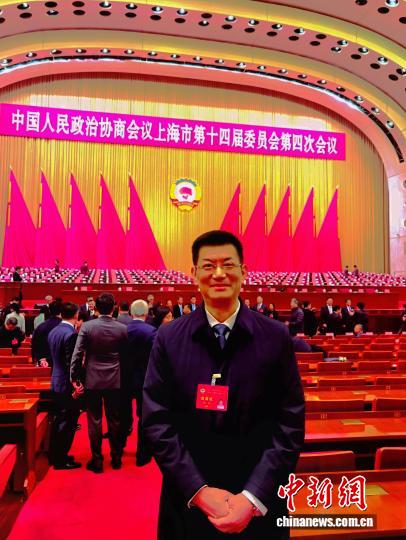
上海市政协委员关注出版业变革:“内容+人才”双轮驱动 、多方发力
Zhong Guo Xin Wen Wang· 2026-02-02 06:19
Core Viewpoint - The publishing industry in Shanghai is undergoing significant transformation, shifting from "form iteration" to "ecological reconstruction," with a focus on "content + talent" as the dual driving force for high-quality development [1][2]. Group 1: Industry Challenges - The Shanghai publishing industry faces multiple challenges, including content supply, talent reserve, and ecological construction [3]. - Many publishing institutions are still in the initial stage of "paper content digitization," lacking interactive, immersive, and multimodal content to meet the demands of "Generation Z" users [3][4]. - There is a severe homogenization of content in areas like online literature and micro-short dramas, with a scarcity of original quality works [3][4]. Group 2: Recommendations for Development - Shanghai should focus on "content as king" to activate the entire value chain, supporting three main directions: creation of reality-based materials, revitalization of traditional culture, and development of multimodal quality works in the digital age [4][5]. - The publishing industry should shift from a "product thinking" approach to a "knowledge service thinking" approach, integrating text, audio, video, and virtual scenes [4][5]. Group 3: Talent Development - A three-pronged talent cultivation system is recommended, combining "institutional training + enterprise practice + policy incentives" to address the shortage of composite talents who understand content, technology, and operations [5][6]. - Vocational schools should optimize their curriculum to include cutting-edge courses like "AI content review" and "digital copyright protection," and collaborate with leading enterprises to establish training bases [5][6]. Group 4: Technological Integration - Establishing an industry-level technology sharing platform is suggested, led by the government and involving major enterprises, to develop adaptable models and digital copyright systems [6]. - A dual-layer review mechanism combining "AI initial screening + human final review" is proposed to clarify the ownership and citation norms of AI-generated content [6].

《全民阅读促进条例》实施,如何接住阅读“红利”链接书香社会
Xin Lang Cai Jing· 2026-02-01 08:58
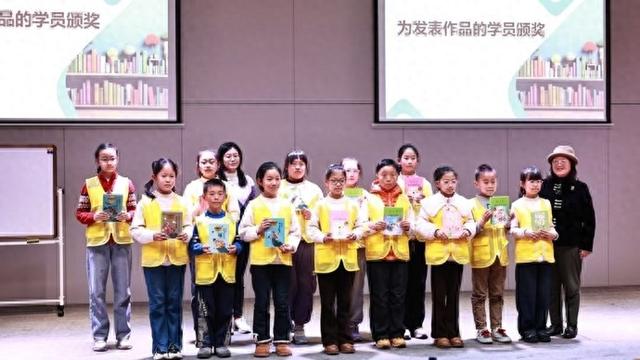
Core Viewpoint - The implementation of the "National Reading Promotion Regulations" marks a significant shift in China's reading culture from advocacy and policy guidance to legal support, transforming reading into a public right backed by the legal system [4] Group 1: Industry Impact - The new regulations are expected to provide stronger confidence for industry practitioners, while also presenting challenges in capturing attention in an increasingly accessible reading environment [5] - The regulations aim to create a comprehensive and efficient national reading promotion system, emphasizing public welfare, equality, and convenience [7] - The promotion of reading will increasingly integrate with commercial spaces and community life, as seen in various innovative initiatives like literary exhibitions in subway stations and community reading shelves [7] Group 2: Technological Empowerment - The regulations encourage the planning of reading facilities and the supply of quality digital reading content, prompting industry players to leverage technology for a more connected content ecosystem [10] - Companies like CITIC Publishing are utilizing AI technology to enhance their services, creating platforms for interactive reading experiences and knowledge sharing [10] Group 3: Inclusive Reading Initiatives - The regulations specifically address the reading needs of vulnerable groups, including minors, the disabled, and the elderly, providing clearer guidelines for reading promoters [11] - The establishment of accessible reading facilities is highlighted, with examples of bookstores catering to visually impaired individuals, promoting an inclusive reading environment [16] Group 4: Community Engagement - The rise of "book partners" in promoting reading reflects a broader societal engagement, with various individuals and influencers contributing to the reading culture through social media and community initiatives [16] - The collective effort in promoting reading is seen as a way to enrich societal knowledge and cultural depth, fostering a more harmonious community [16]
从单打独斗到多方协同,《全民阅读促进条例》能否成为行业“强心针”?
经济观察报· 2026-01-31 11:00
Core Viewpoint - The "National Reading Promotion Regulation" is expected to revitalize the publishing industry and promote a reading culture in the context of declining physical book sales and fragmented attention spans [2][4]. Group 1: Industry Challenges - The publishing industry is currently facing a downturn, with physical book sales declining and the rise of digital content and AI impacting traditional publishing models [4][5]. - The market is experiencing a shift in sales channels, with e-commerce and live-streaming sales affecting profit margins for publishers [4]. - The reading habits of the public are concerning, with the average adult reading only 4.79 physical books and 3.52 e-books per year, and spending just 24.41 minutes daily on physical reading [4]. Group 2: Opportunities from the Regulation - The "National Reading Promotion Regulation" aims to clarify government responsibilities in promoting reading facilities and resources, encouraging social participation in reading activities [2][6]. - The regulation is seen as a potential catalyst for the publishing industry to shift focus from quantity to quality, aligning with the industry's strategic goals [8]. - The regulation encourages the development of physical bookstores, providing a framework for collaboration between local governments and publishers to create cultural spaces [9][10]. Group 3: Content Quality and Channel Innovation - The emphasis on high-quality content and innovative distribution channels is crucial for the industry's future, as highlighted by the regulation's focus on excellent publications [8][11]. - Publishers are encouraged to enhance their offerings by diversifying content and improving the supply of quality books to meet changing consumer demands [10][11]. - The regulation supports the integration of digital and traditional reading, prompting publishers to develop advanced platforms for knowledge services [10][11]. Group 4: Collaborative Efforts and Implementation - The regulation requires collaboration among various government departments, marking a shift from the previous isolated efforts of the publishing industry [14]. - The implementation of the regulation will depend on local governments' flexibility and the ability to address specific regional needs [14][15]. - Organizations like the Tao Fen Foundation are committed to supporting the regulation's goals through funding and community engagement initiatives [14][15].

从单打独斗到多方协同,《全民阅读促进条例》能否成为行业“强心针”?
Sou Hu Cai Jing· 2026-01-31 09:29
Core Viewpoint - The recent approval of the "National Reading Promotion Regulation" is seen as a potential turning point for the publishing industry, with hopes for revitalizing bookstores and promoting reading culture in China [2][3]. Group 1: Industry Challenges - The publishing industry is currently facing a downturn, with declining sales of physical books and increasing competition from digital content and alternative sales channels [4]. - The market is experiencing a significant presence of pirated books, with estimates suggesting that for every legitimate book sold, there are approximately 40 pirated copies available [4]. - The average reading habits of Chinese adults are concerning, with only 4.79 physical books and 3.52 e-books read per person annually, and an average daily reading time of just 24.41 minutes [4]. Group 2: Regulatory Impact - The "National Reading Promotion Regulation" aims to systematically promote reading through government-led initiatives, emphasizing the responsibilities of various government levels in enhancing reading facilities and resources [2][5]. - The regulation encourages social participation in reading activities, with the ultimate goal of fostering a reading habit among the populace and enhancing social civilization [2][5]. - The regulation is expected to provide indirect but fundamental support to the publishing industry by optimizing the market environment and improving the quality of published content [6][9]. Group 3: Opportunities for Bookstores - The regulation explicitly supports the development of physical bookstores, which have been struggling in recent years due to high operational costs and declining foot traffic [8]. - There is a potential for collaboration between bookstores and local governments or enterprises to create cultural spaces that enhance community engagement and promote reading [8]. - The regulation opens up opportunities for bookstores to innovate their business models, such as the "Bookstore Cooperation 2.0" model proposed by a leading publishing group [8]. Group 4: Content Quality and Innovation - The focus on high-quality content and innovative distribution channels is seen as essential for the future of the publishing industry, aligning with the regulation's emphasis on excellent publications [7][9]. - Publishing companies are encouraged to enhance their content offerings and adapt to changing consumer preferences, including the integration of digital and traditional reading experiences [8][9]. - The regulation also highlights the need for diverse reading materials catering to different demographics, which can guide publishers in their selection processes [9]. Group 5: Collaborative Efforts - The successful implementation of the regulation will require collaboration among various stakeholders, including government agencies, cultural organizations, and the publishing industry [11]. - The regulation emphasizes the need for coordinated efforts across different departments to effectively promote reading and support the publishing ecosystem [11]. - Initiatives such as the "National Reading Promotion Ambassador" program aim to engage both prominent authors and the general public in promoting reading culture [12].

请问地下管线的路径方案信息和数据库信息在自然资源部的哪个职能部门
Xin Lang Cai Jing· 2026-01-30 11:28
Core Viewpoint - The inquiry pertains to the department within the Ministry of Natural Resources responsible for underground pipeline path scheme information and database information, along with technical standards and risk prevention requirements [1] Group 1 - The "Underground Pipeline Data Acquisition Specification" (GB/T 35644-2017) was published on December 29, 2017, and implemented on July 1, 2018 [1] - The standard was proposed by the former National Administration of Surveying, Mapping and Geoinformation and is overseen by the National Geographic Information Standardization Technical Committee (TC230) [1] - The standard outlines the technical preparations, data collection, data processing, quality inspection and assessment, as well as the acceptance and submission of results related to underground pipeline data acquisition [1] Group 2 - The standard can be purchased in print from the China Standards Press and is also available for online browsing or downloading on the Natural Resources Standardization Information Service Platform [1]
AI生成图片竟成人像摄影指南 出版物的AI标识该如何规范
Xin Lang Cai Jing· 2026-01-17 19:45
Core Viewpoint - The emergence of AI-generated content in published materials raises concerns about quality and authenticity, particularly in educational books where accuracy is crucial [3][7][8] Group 1: Issues with AI-Generated Content - A reader reported that a photography book contained AI-generated images with multiple flaws, including models with six fingers and distorted body parts, leading to a response from the publisher offering unconditional refunds [3][5] - Another book, described as a "fantasy humanistic art atlas," was criticized for lacking logical human creativity, featuring over 240 non-existent "fantasy species" without proper disclosure of AI involvement [5][7] Group 2: Legal and Ethical Considerations - Experts emphasize that the use of AI content in educational materials should be approached with caution, as it can mislead consumers who expect human-created works [7][8] - According to intellectual property lawyers, publishers have a responsibility to ensure transparency regarding AI-generated content, and failure to do so could be considered deceptive under consumer protection laws [8][9] Group 3: Regulatory Framework - The "Artificial Intelligence Generated Synthetic Content Identification Measures" implemented in September 2022 mandates that AI-generated content must be clearly labeled [5][9] - Publishers are encouraged to adopt both visible and hidden identification methods for AI-generated images to maintain consumer trust and uphold the integrity of the publishing industry [9]

2026民营书业(峰会)年度盛典聚焦数字经济时代的转型路径
Xin Lang Cai Jing· 2026-01-10 13:16
Core Insights - The 2026 Private Publishing Industry Summit highlighted the transformation paths for the private publishing sector under the digital economy context [1] - The private publishing industry is at a crossroads of policy opportunities and transformation challenges as it enters the 15th Five-Year Plan period [1] - Digital technology is reshaping the publishing ecosystem, presenting both severe challenges and opportunities for the private publishing sector [1] Group 1: Industry Challenges and Opportunities - The private publishing industry has been a core driver of industry development due to its flexible mechanisms and keen market insights [1] - Traditional distribution channels are experiencing stagnation, while new business models are still being explored, posing significant challenges [1] - The introduction of AI technology, particularly AI smartphones, is expected to reconstruct the entire industry chain and create substantial development opportunities [1] Group 2: Key Factors for Transformation - The digital transformation of the publishing industry hinges on three key factors: corporate culture, business innovation, and technological innovation [2] - Leadership commitment, strategic planning, and the integration of technology with business operations are essential for successful transformation [2] - The summit recognized influential figures and entities in the private publishing sector, promoting the development of the industry [2]