
AI生成内容标识

Search documents
AI生成图片竟成人像摄影指南 出版物的AI标识该如何规范
Xin Lang Cai Jing· 2026-01-17 19:45
Core Viewpoint - The emergence of AI-generated content in published materials raises concerns about quality and authenticity, particularly in educational books where accuracy is crucial [3][7][8] Group 1: Issues with AI-Generated Content - A reader reported that a photography book contained AI-generated images with multiple flaws, including models with six fingers and distorted body parts, leading to a response from the publisher offering unconditional refunds [3][5] - Another book, described as a "fantasy humanistic art atlas," was criticized for lacking logical human creativity, featuring over 240 non-existent "fantasy species" without proper disclosure of AI involvement [5][7] Group 2: Legal and Ethical Considerations - Experts emphasize that the use of AI content in educational materials should be approached with caution, as it can mislead consumers who expect human-created works [7][8] - According to intellectual property lawyers, publishers have a responsibility to ensure transparency regarding AI-generated content, and failure to do so could be considered deceptive under consumer protection laws [8][9] Group 3: Regulatory Framework - The "Artificial Intelligence Generated Synthetic Content Identification Measures" implemented in September 2022 mandates that AI-generated content must be clearly labeled [5][9] - Publishers are encouraged to adopt both visible and hidden identification methods for AI-generated images to maintain consumer trust and uphold the integrity of the publishing industry [9]


经参调查“去水印”绕过监管 “反标识”生意红火 AI生成内容“持证上岗”为何难落地
Xin Hua She· 2026-01-13 06:58
Core Viewpoint - The implementation of the "Artificial Intelligence Generated Synthetic Content Identification Measures" on September 1, 2025, marks the beginning of a regulated era for AI-generated content in China, requiring explicit identification for such content [1][3]. Group 1: Implementation and Impact of AI Identification Policy - The AI identification policy has been in effect for over 100 days, with many platforms launching identification features and management measures, yet challenges remain in execution, as many AI-generated contents still lack clear identification [1][3]. - The user base for generative AI in China reached 515 million by June 2025, an increase of 266 million from December 2024, indicating a rapid growth in AI content consumption [3]. - Various platforms, including Douyin and Kuaishou, have established unique AI identification mechanisms, allowing users to declare AI-generated content, which is then marked accordingly [4]. Group 2: Challenges and Issues in AI Content Identification - Despite the introduction of the identification policy, AI forgery remains prevalent, with more sophisticated techniques emerging, creating a challenging environment for identification governance [8]. - A survey from a university AI governance team indicated a 40% increase in users' skepticism towards unknown content following the policy's implementation, and the time to trace AI-generated false news has decreased from 72 hours to 12 hours due to implicit identification [7]. - The emergence of a black market for "anti-identification" services, including tools to remove AI watermarks, has been noted, with prices ranging from tens to thousands of yuan [9][10]. Group 3: Recommendations for Strengthening AI Governance - Experts suggest enhancing the technical standards for AI identification to prevent tampering and ensure traceability, as current regulatory technologies have weaknesses [11]. - There is a call for clearer delineation of responsibilities among content generators, platforms, and distributors, along with stricter penalties for violations related to identification [11][12]. - A collaborative governance model involving government, public, and platforms is recommended to improve reporting and oversight mechanisms, encouraging public participation in AI content governance [12][13].
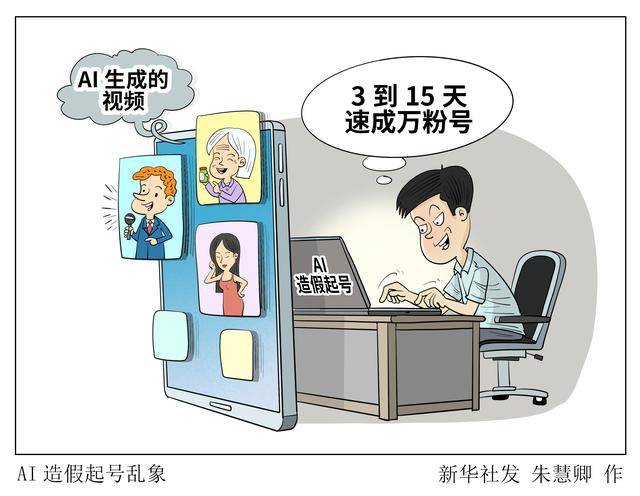
骗了全网流量的“吃豆包”图背后:AI虚拟内容传播怎么治?
Nan Fang Du Shi Bao· 2025-12-21 05:08
Core Viewpoint - The incident involving a purported "Alibaba Qianwen all-hands meeting" image, which was later confirmed to be AI-generated, highlights the growing concerns over the dissemination of AI-generated fake images and the challenges in managing this issue [1][3][6]. Group 1: Incident Overview - A viral image claimed to show Alibaba Qianwen employees at a meeting holding up "bean bags" with a slogan "kill the bean bags," which sparked discussions due to the competitive relationship between Alibaba's Qianwen and ByteDance's bean bag AI applications [3]. - Alibaba's internal sources and the official Qianwen account confirmed the image was AI-generated, pointing out multiple inaccuracies such as incorrect badges and logos, and implausible crowd behavior [3][6]. Group 2: Broader Context of AI-Generated Content - The proliferation of AI-generated images has led to various negative social impacts, including misleading visuals related to natural disasters and other significant events, which can easily mislead public perception and stir social emotions [6]. - The issue of AI-generated content has drawn national attention, with the Central Cyberspace Administration of China launching initiatives to regulate and manage AI-generated content, emphasizing the need for clear identification of such content [7][8]. Group 3: Regulatory Measures - New regulations, effective from September 1, require all AI-generated content, including text, images, and videos, to be clearly marked to prevent the spread of false information [7]. - The regulatory framework aims to enhance the management of AI technologies and information content, focusing on the identification of generated content and combating the misuse of AI for disseminating false information [7][9]. Group 4: Governance and Future Directions - Experts suggest a multi-faceted approach to governance, including source governance, traceability mechanisms, and public education to address the challenges posed by AI-generated content [9]. - The South Data Research Institute has been actively researching the risks associated with generative AI and has proposed a collaborative governance model to ensure the safe development of AI technologies [9].

15款大模型透明度测评:两款允许用户撤回数据不投喂AI
Nan Fang Du Shi Bao· 2025-12-19 01:28
Core Insights - The report highlights a significant lack of transparency among 15 tested domestic AI models, with only DeepSeek disclosing the general source of its training data [1][3] - The report emphasizes the importance of enhancing transparency in AI services to ensure fairness, avoid bias, and meet legal compliance requirements [2][10] Group 1: Transparency and Data Disclosure - Among the 15 AI models tested, only DeepSeek provided information about its training data sources, which include publicly available information and data obtained through third-party collaborations [3][4] - The average transparency score for the AI models was 60.2, indicating a need for improvement in areas such as training data sources, user data withdrawal mechanisms, and copyright protection [3][10] - The report calls for continuous enhancement of transparency in AI models to facilitate compliance assessments by external stakeholders [3][10] Group 2: User Empowerment and Data Management - Two models, DeepSeek and Tencent Yuanbao, offer users an "opt-out" switch, allowing them to choose whether their data can be used for model training [5][6] - Five models provide mechanisms for users to withdraw consent for their data to be used in model optimization, although technical challenges exist in completely erasing data once it has been integrated into model parameters [5][6] - The report suggests that user empowerment and respect for user rights should be prioritized, drawing inspiration from successful international models [8][10] Group 3: AI Content Generation and Identification - All tested models have implemented AI-generated content identification, marking a significant improvement from previous assessments [9][10] - The report notes that while models have improved in disclosing content sources, there is still a lack of features like "rest reminders" for prolonged interactions, which are present in some international models [12][13] - The report advocates for responsible and phased disclosures to enhance service transparency and educate users about generative AI [13]
调查|当AI学会造假:实测一张“魔改图”,如何打败商家
Bei Ke Cai Jing· 2025-12-03 01:46
Core Viewpoint - The misuse of AI technology for generating fake damage images has emerged as a significant issue in e-commerce, leading to fraudulent refund requests and undermining trust in online transactions [1][11][20]. Group 1: Incidents of Fraud - A seller encountered a refund request accompanied by an AI-generated image of a damaged plush toy, which the buyer claimed was defective [2][4]. - The seller initially suspected misuse but later confirmed the image was AI-generated after using detection tools [4][10]. - Other sellers reported similar experiences, recognizing AI-generated images as fraudulent evidence for refund claims [7][9]. Group 2: Seller Responses and Strategies - Sellers have begun developing "anti-fraud" guidelines to identify AI-generated images, focusing on inconsistencies in damage representation and requesting multiple angles or videos as proof [10][18]. - Many sellers reported being able to visually identify AI-generated images due to their unrealistic characteristics [9][10]. Group 3: E-commerce Platform Reactions - Major e-commerce platforms like JD.com, Pinduoduo, and Taobao are aware of the issue and are implementing measures to combat fraudulent refund requests [20][21]. - JD.com is developing AI capabilities to identify fake images and plans to launch these features by the end of the year [20]. - Platforms are tightening refund policies and enhancing verification processes to protect sellers from fraudulent claims [21][22]. Group 4: Legal and Regulatory Context - The use of AI to create fake evidence for refunds is considered a form of fraud, potentially violating civil and criminal laws [19][23]. - New regulations are being introduced to address the misuse of AI-generated content, emphasizing the need for clear identification and penalties for fraudulent activities [19][23]. Group 5: Broader Implications for the Industry - The rise of AI-generated fraud is disrupting the balance of rights between consumers and sellers, leading to increased costs for businesses and potential price hikes for consumers [22][23]. - The ongoing challenge of distinguishing between real and AI-generated images may erode consumer trust in e-commerce platforms [18][23].



AI生成内容标识既是“防火墙”也是“护航者”
Xiao Fei Ri Bao Wang· 2025-09-08 02:59
Core Viewpoint - The implementation of the "Identification Method for AI-Generated Synthetic Content" by the National Internet Information Office and other departments aims to ensure that AI-generated content is clearly labeled, addressing public concerns about information authenticity and transparency while establishing necessary boundaries for the healthy development of the AI industry [1][2]. Group 1: Significance of the New Regulation - The regulation serves three main purposes: maintaining information authenticity and public right to know, which helps users remain vigilant against misleading content, especially in critical fields like finance, healthcare, and law [2] - It promotes industry norms and fair competition by clarifying the distinction between human and machine-generated content, thereby protecting the rights of content creators and establishing reasonable industry standards [2] - The regulation enhances national governance capabilities and international discourse power, aligning with global digital governance efforts and increasing China's participation in the global AI governance system [2] Group 2: Implementation and Future Considerations - Effective implementation requires both technological and institutional safeguards, including the establishment of robust tracing mechanisms and automatic identification tools by platforms to prevent tampering with labels [3] - Regulatory bodies need to strengthen enforcement to ensure compliance with the new rules, while the public should improve media literacy to correctly understand and utilize AI-generated content [3] - The labeling requirement is seen as a critical institutional innovation that acts as a "firewall" to protect social trust and public safety, while also serving as a "navigator" for the AI industry towards high-quality development [3]
宇树科技宣布将在四季度提交IPO申请;马斯克称xAI代码库被盗 涉案员工已跳槽OpenAI丨数智早参
Mei Ri Jing Ji Xin Wen· 2025-09-02 23:18
Group 1 - Yushu Technology plans to submit an IPO application between October and December 2025, with operational data to be disclosed at that time [1] - In 2024, sales of quadruped robots, humanoid robots, and component products are expected to account for approximately 65%, 30%, and 5% of total sales, respectively [1] - About 80% of quadruped robots are used in research, education, and consumer fields, while the remaining 20% are utilized in industrial applications such as inspection and firefighting [1] Group 2 - xAI has filed a lawsuit against a former employee for allegedly stealing the entire codebase before joining OpenAI [2] - The former employee resigned from xAI on July 28, 2023, and uploaded relevant data to a personal system three days prior to leaving [2] Group 3 - SenseTime has announced that all generative synthesis services provided to the public will include explicit and implicit identifiers to comply with regulatory policies [3] - Users of SenseTime's AI service platform are prohibited from maliciously deleting, altering, or concealing identifier information from AI-generated content [3]
9月起一批新规将施行 涵盖幼儿园缴费、交通出行等多个民生热点话题
Yang Shi Wang· 2025-08-29 02:53
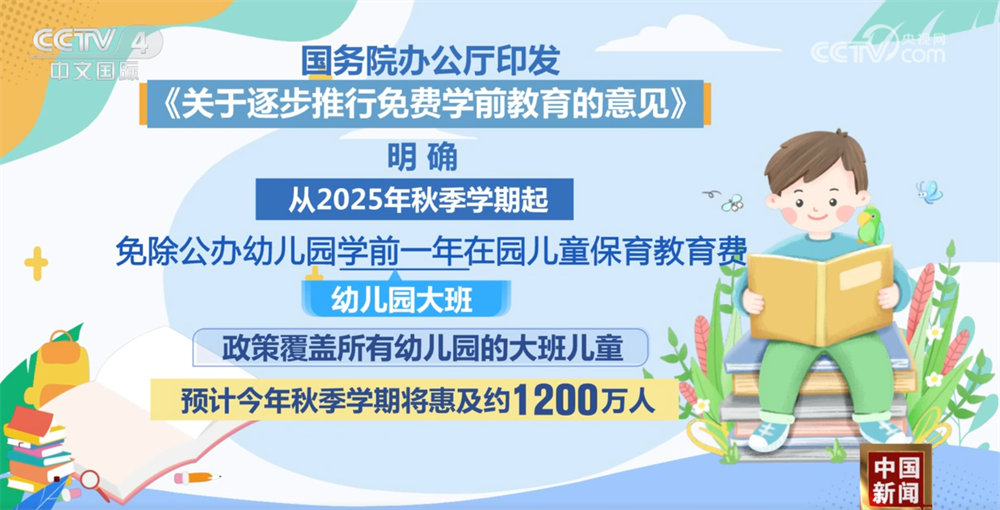
Group 1 - The government will implement a policy to exempt public kindergarten tuition fees for the last year of preschool education starting from the fall semester of 2025, benefiting approximately 12 million children this year [2] - Private kindergartens will also follow the exemption standards set by local public kindergartens for eligible children [2] Group 2 - A new national standard for electric bicycles will take effect on September 1, enhancing safety requirements including fire resistance and limiting the use of plastic materials [4] - The new standard mandates that electric bicycles must include features such as Beidou positioning and dynamic safety monitoring [4] - Existing electric bicycles that do not meet the new standards will not be forcibly eliminated, allowing local governments to implement policies for upgrades [6] Group 3 - Starting September 6, students will benefit from optimized ticket purchasing options, allowing four one-way discounted tickets per academic year, with expanded applicability to various train classes [7][9] - The discount for student tickets will be calculated at 75% of the standard fare [8] Group 4 - A new regulation requiring all AI-generated content to be clearly labeled will come into effect on September 1, ensuring transparency in digital content [10][12]
涉及消费贷贴息、电动自行车新国标等 9月起一批新规将实施
Yang Shi Xin Wen· 2025-08-28 01:37
Group 1: Military and Defense Regulations - The "Important Military Facility Protection Regulations" will be implemented on September 15, 2025, aimed at ensuring the safety and operational efficiency of critical military facilities [2] - The regulations consist of 7 chapters and 51 articles, detailing the scope of important military facilities, responsibilities of various parties, and protective measures [2] Group 2: Education and Childcare - Starting from the fall semester of 2025, public kindergartens will waive the childcare education fees for children in their final year, benefiting approximately 12 million children [3] - Private kindergartens will also reduce fees in accordance with the standards set by local public kindergartens [3] Group 3: Transportation and Travel - The railway department will implement a new student ticket discount policy starting September 6, allowing students to use four one-way discounted tickets per academic year, with a fare reduction to 75% of the standard price [4][5] Group 4: Financial Policies - A new fiscal subsidy policy for personal consumption loans will take effect from September 1, 2025, allowing residents to receive interest subsidies on loans used for specific consumption purposes [8] - The subsidy applies to loans under 50,000 yuan for various consumer categories, including home appliances and education [8] Group 5: Labor and Social Security - A new judicial interpretation effective September 1, 2025, states that any agreement to not pay social insurance is invalid, reinforcing the legal rights of workers [10] Group 6: Housing and Rental Regulations - The "Housing Rental Regulations" will come into effect on September 15, 2025, focusing on the rights of tenants and establishing clear guidelines for rental agreements [12][11] - The regulations will enforce standards for rental properties and improve contract management between landlords and tenants [13] Group 7: Safety Standards - A new national standard for electric bicycles will be implemented on September 1, 2025, requiring all newly produced electric bicycles to comply with updated safety specifications [14][17] Group 8: Administrative Regulations - The "Administrative Division Code Management Measures" will be officially implemented on September 1, 2025, standardizing the management of administrative codes that are crucial for various public services [16] Group 9: AI Content Regulation - The "Artificial Intelligence Generated Content Identification Measures" will take effect on September 1, 2025, mandating that all AI-generated content must include explicit identification [18]

显式标&隐式标:AI生成内容如何“亮身份”?专家详解新规
Zhong Guo Jing Ji Wang· 2025-03-19 06:11
Core Points - The "Identification Method for AI-Generated Synthetic Content" will officially implement on September 1, 2023, requiring explicit and implicit identification for all AI-generated content [1][4] - The method outlines responsibilities for service providers, distribution platforms, and individual users regarding content identification [1][2] - The implementation aims to enhance the authenticity of digital content and reduce the spread of misinformation [3][4] Group 1: Responsibilities and Requirements - Service providers must ensure complete identification during content generation, dissemination, and downloading [1] - Internet application distribution platforms are required to verify compliance with identification standards [1] - Individual users must declare when publishing AI-generated content, especially if it mimics others or could mislead the public [2] Group 2: Impact on Industry and Users - The identification requirement will help intercept the large-scale unauthorized use of AI-generated content, providing clearer compliance guidelines for content platforms [3] - The user base for generative AI products in China has reached 230 million, indicating significant market engagement [3] - The implementation of the identification method is expected to promote the authenticity of content in the digital space and encourage responsible use of AI technologies by self-media [3][4] Group 3: Fair Competition and Management - Mandatory identification will protect traditional content industries and mitigate the impact of AI technologies [4] - Identification will allow tracing the source of AI-generated content, reducing issues related to infringement and fraud [4] - The combination of the "Identification Method" and the national standard for AI-generated content will enhance regulatory measures in the AI sector [4]