地图导航与生活服务

Search documents
高德飞行街景助力春节消费:超100万商家预约,首批商家营收已提升23%
Cai Jing Wang· 2026-02-09 06:19
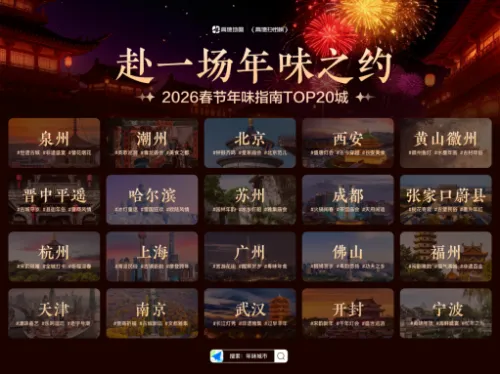
Core Insights - The upcoming "longest Spring Festival holiday" is expected to boost offline consumption, with a 9-day holiday in 2026 encouraging more consumers to choose "traveling for the New Year" [1] - Gaode has launched a "2026 Spring Festival Flavor Guide TOP 20 Cities" to help consumers plan their holiday experiences, focusing on popular cities like Beijing, Xi'an, and Harbin [1][3] - The "Flying Street View" feature introduced by Gaode is enhancing customer acquisition for offline merchants, with first batch merchants seeing a daily transaction increase of over 23% [1][5] Group 1: Consumer Trends - The report indicates a shift in consumer preferences towards travel during the Spring Festival, with destinations like ancient cities and islands gaining popularity [1] - The "Flavor Guide" provides real-time insights into local cultural experiences and dining options, enhancing the holiday experience for users [3] Group 2: Business Impact - Over 100,000 merchants have booked the "Flying Street View" feature, which has led to a 40% increase in daily traffic and a 23% increase in daily transaction volume for the first batch of merchants [5] - The integration of digital technology with real-life services is expected to support the growth of offline businesses during the holiday season [5][6] Group 3: Future Outlook - Gaode plans to continue deepening the integration of digital technology with lifestyle services to enhance the vitality of the "smoky economy" in the digital wave [6]

高德扫街榜百日之变 AI世界模型能否撑起下一个超级入口?
Zhong Guo Jing Ying Bao· 2026-01-09 00:33
Core Insights - The article discusses the launch and impact of Gaode's "Flying Street View" feature, which allows users to virtually explore restaurants and attractions, enhancing the local service experience [1][6] - Gaode's "Street View Ranking" has surpassed 660 million users and achieved a 330% increase in merchant orders within 100 days of its launch, indicating strong market traction [1][6] - The integration of AI-driven world models into the local service sector represents a significant technological advancement, aiming to bridge the gap between real experiences and digital representations [2][4] Group 1: Product Features and Innovations - The "Flying Street View" feature utilizes Gaode's self-developed world model technology, which scored the highest in international benchmarks, showcasing its capability to transform local service experiences [2][3] - This technology allows merchants to create realistic digital storefronts with minimal effort, using just a smartphone to capture video, which AI then processes into immersive experiences [1][4] - The transition from traditional 3D modeling to AI-driven industrial production marks a significant shift in how local businesses can present themselves online [2][3] Group 2: Market Position and Strategy - Gaode aims to evolve from a navigation tool to a critical decision-making platform for users in unfamiliar environments, enhancing its role in the local service ecosystem [6][7] - The company is focused on building a trust system through the integration of behavior and credit data, which is essential for creating a reliable local service network [6][7] - Gaode's strategy includes providing free access to the "Flying Street View" feature for 1 million small businesses, promoting inclusivity and reducing barriers to digital representation [2][5] Group 3: Challenges and Future Outlook - Gaode faces challenges in maintaining real-time updates of digital representations to match the dynamic nature of physical storefronts and customer interactions [7] - The company is currently adopting a non-commercial approach to the "Street View Ranking," prioritizing trust over immediate monetization, which may require balancing with other revenue-generating business segments [7] - The success of Gaode's transition to a "super entrance" for local services will depend on its ability to sustain the authenticity of its rankings and navigate the complexities of commercialization [7]
受够了网红滤镜的6亿人,为何涌入高德?
虎嗅APP· 2026-01-07 10:11
Core Viewpoint - Gaode has evolved from a navigation tool to a life service hub, effectively answering the question of "where to go" rather than just "how to get there" [2][22] Group 1: Gaode's Transformation - The launch of the "Gaode Street Ranking 2026" marks a significant upgrade, introducing a dynamic ranking system based on user behavior and AI technology [2][19] - Within 100 days of its launch, the Gaode Street Ranking accumulated over 660 million users, with participating merchants seeing revenue growth of over 270% and order volume growth exceeding 330% [2][22] - The app's monthly active users increased by 46 million in a single month, reaching a total of 996 million [2] Group 2: User Engagement and Trust - The ranking system operates on a "real behavior" basis, where rankings are generated from actual user visits rather than paid promotions, enhancing its credibility [6][20] - The daily active users of the Street Ranking surpassed 70 million, indicating a shift in user habits towards relying on Gaode for real-time recommendations [6][20] - Users are now more inclined to explore local, authentic dining options rather than chasing trendy spots, reflecting a deeper trust in the platform [6][20] Group 3: Expanding Features and Personalization - The Street Ranking has expanded beyond dining to include various seasonal and regional activities, creating a dynamic ranking system that resonates with users' lifestyles [8][15] - The integration of social recommendations allows users to see ratings from friends and peers, enhancing the decision-making process [11][15] - The "My Ranking" feature enables users to create and share personalized lists, further enriching the platform's community aspect [15] Group 4: Bridging Online and Offline Experiences - The introduction of the "World Model" and "Flying Street View" aims to bridge the gap between online information and offline experiences, allowing users to visualize locations before visiting [17][19] - This immersive experience transforms decision-making from guesswork to informed choices, enhancing user confidence in their selections [19][20] - The combination of real behavior data and AI technology positions Gaode as a comprehensive life service platform, effectively connecting users with their real-world needs [23]

用户规模突破6.6亿 高德升级扫街榜 首推飞行实景探店
Bei Jing Shang Bao· 2026-01-07 08:15
Core Insights - Gaode's user base for the "Street View Ranking" has surpassed 660 million, with the app adding 46 million monthly active users in a single month, bringing the total to 996 million [1][3] Group 1: Product Upgrades - The "Street View Ranking" has been upgraded to include the world's first "Flying Street View," allowing users to view real-life scenes from street level to inside stores [3] - A dynamic lifestyle service ranking has been launched, which generates seasonal and location-based lists based on user behavior data from 1 billion users and 290 million daily actions [3] - The "Flying Street View" feature has been made available for 1 million small businesses for free, and the Palace Museum's "Flying Street View" has also been officially launched [3] Group 2: User Engagement and Features - The new ranking system includes 6,553 seasonal lists and 1,550 category lists to cater to diverse user interests, covering activities like hiking, fishing, and camping [3][4] - A recommendation mechanism based on trust relationships has been introduced, allowing users to see friends' activities, ratings, and reviews first [4] - The platform has attracted 860,000 new merchants within 100 days, with merchant order volume increasing by over 330% and revenue growing by over 270% [4]

引流超1亿,高德扫街榜发布《2025国庆中秋长假出行消费报告》
Sou Hu Cai Jing· 2025-10-10 06:52
Group 1 - The report from Gaode's Street Ranking indicates that during the 8-day holiday, the platform attracted over 100 million visitors to offline dining establishments, with its user count surpassing 400 million within 23 days [1] - The average consumer spending in the top 100 restaurants nationwide is 83 yuan, with the top-ranked restaurant, Yueliang Xiaochu in Beihai, Guangxi, having an average spending of only 98 yuan, highlighting the consumer preference for "delicious yet affordable" options [1] - The top three restaurants favored by tourists during the holiday include Tian Shui's Ha Hai Ying Spicy Hot Pot, Zibo's Ba Da Ju Barbecue, and Hong Kong's Hua Sao Ice Room, showing a strong alignment between local residents' preferences and those of external visitors [1] Group 2 - Ten cities, including Lijiang and Leshan, were selected for the "Firewood City Ranking," while Chengdu and Chongqing dominated the top 20 in the "Food Attraction City Ranking," with a 75% overlap with the "Scenic Attraction City Ranking," indicating that "food and scenery" are key decision factors for travelers [3] - During the holiday, Gaode APP reached a peak of 360 million daily active users, with total navigation mileage exceeding 9 billion kilometers, and the "Eagle Eye Guardian" system issued 1.74 billion safety alerts [5] - The number of new energy vehicles traveling over 1,000 kilometers increased by 640% year-on-year, and smart services supported 2.432 billion cross-regional movements, demonstrating the deep integration of travel services and consumption scenarios [5]

《2025国庆中秋长假出行消费报告》发布 高德为线下餐饮店带去超1亿客流
Zhong Guo Jing Ji Wang· 2025-10-09 05:27
Core Insights - The "Gaode Street Ranking" report indicates a significant increase in travel and consumption during the National Day and Mid-Autumn Festival holidays, with active users on the Gaode app surpassing 360 million on October 1, setting a historical record [1][7] Group 1: Food and Dining - The Gaode Street Ranking, launched on September 10, has driven over 100 million foot traffic to offline dining establishments during the holiday [2] - The average per capita spending at the top 100 restaurants listed in the Gaode Street Ranking is 83 yuan, with a 300% increase in traffic for "smoky small shops" on October 1 [2] - The local dining industry saw a 150% year-on-year increase in order volume during the holiday period [2] Group 2: Tourism Trends - Major cities remain the preferred travel destinations, with the top 20 cities for tourist attractions predominantly being first and second-tier cities [3] - There is a rising trend of "reverse travel," where younger individuals are opting for less popular county-level destinations, seeking unique cultural and natural experiences at lower costs [3][4] Group 3: Family and Child-Friendly Activities - The holiday saw a surge in family-oriented travel, with zoos and museums being popular destinations, leading to increased consumption in these sectors [5] - The top ten family-friendly driving destinations include major attractions like Shanghai Disneyland and Zhengzhou Yinji Animal Kingdom [5] Group 4: Public Infrastructure and Services - An average of approximately 304 million trips were made daily during the holiday, testing the capacity of public facilities such as restrooms and parks [6] - The cities with the highest density of public restrooms and mother-baby rooms include Shenzhen, Shanghai, and Xiamen, indicating a focus on enhancing visitor experience [6] Group 5: New Energy Infrastructure - The number of public charging stations has reached over 300,000, surpassing the number of gas stations by 2.5 times, with a 300% increase since 2021 [7] - The average navigation distance for new energy vehicles is now comparable to that of fuel vehicles, with a 640% increase in trips exceeding 1,000 kilometers during the holiday [7] Group 6: Safety and Emergency Management - The "Eagle Eye Guardian" warning system was launched to provide real-time alerts to drivers about significant incidents, with over 1.74 billion warnings issued during the holiday [8]
半月“三连发”加码中秋国庆市场,高德打造线下服务消费新场景
Bei Jing Shang Bao· 2025-09-26 12:08
Core Insights - Gaode has launched multiple initiatives to enhance offline service industries, including the Gaode Street Ranking, which has significantly increased foot traffic and revenue for participating restaurants [1][2][4] - The Gaode Street Ranking utilizes real navigation behavior and AI technology to create a new evaluation system for restaurants, effectively curbing fraudulent ratings [1][6] - The company has introduced a one-year waiver of entry fees for all restaurants, leading to a 631% increase in new restaurant sign-ups on the day of the announcement [3][4] Group 1: Gaode Street Ranking - The Gaode Street Ranking was launched on September 10, becoming the largest food and lifestyle ranking in China with over 40 million users on its first day [3] - The ranking includes unique categories such as "Local Favorites" and "Repeat Customers," and has led to a 187% increase in traffic for featured small restaurants [3][4] - The ranking's methodology incorporates real user behaviors, such as navigation and visits, to ensure the authenticity of ratings and prevent manipulation [6][7] Group 2: Support for Restaurants - Gaode's initiatives, including the "Smoke Fire Good Store Support Plan," provide over 1 billion in travel and consumption subsidies to users [2][4] - The waiver of entry fees is aimed at reducing the financial burden on restaurants, allowing them to focus on quality service and food preparation [7][8] - The new ranking system offers restaurants a broader exposure channel, potentially increasing customer discovery opportunities [7][8] Group 3: Consumer Engagement and Market Impact - Gaode's strategies are timed to coincide with peak consumption periods, such as the upcoming Mid-Autumn Festival and National Day, to maximize user engagement [8][10] - The integration of dining and tourism is expected to stimulate spontaneous consumer spending, enhancing the overall dining experience for tourists [10] - The collaboration between dining and travel sectors is anticipated to improve service levels and promote regional culinary specialties, contributing to high-quality industry development [10]

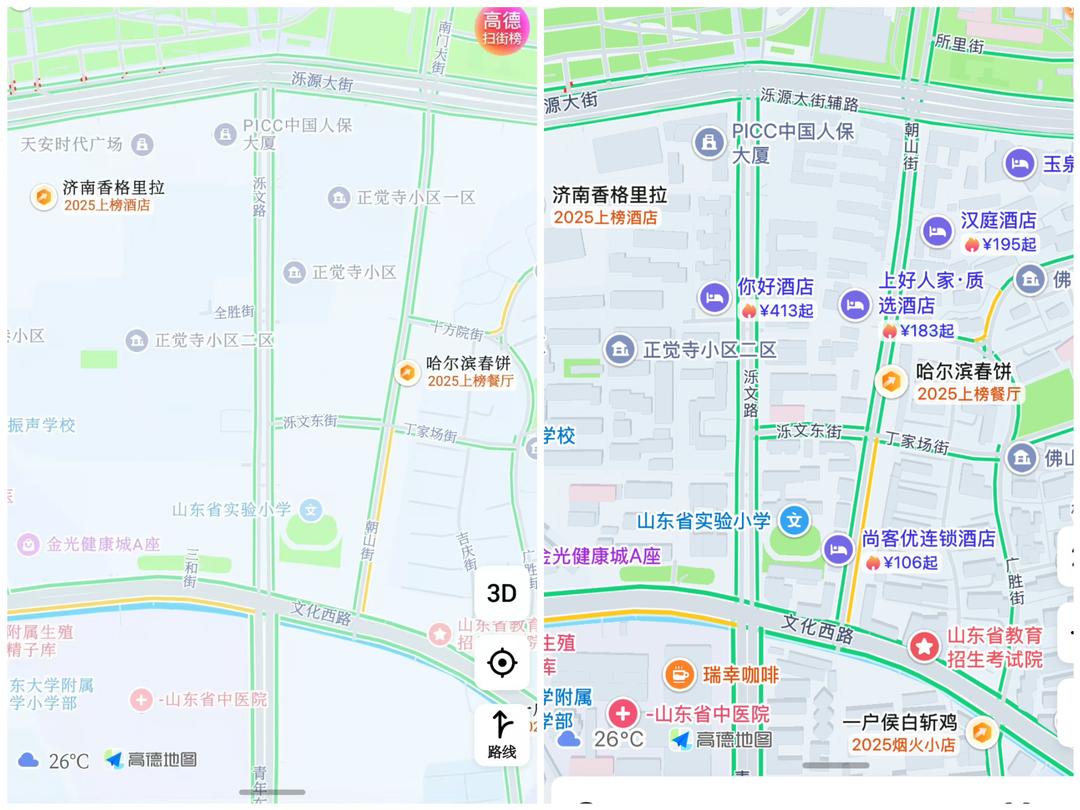
“扫街榜”上线后咋满屏都是饭店,高德地图界面变了?
Qi Lu Wan Bao Wang· 2025-09-12 08:27
Core Viewpoint - Gaode Map's launch of the "Street Scanning List" has generated significant user interest, with over 40 million users utilizing the feature on its first day, but it has also sparked controversy regarding changes to the app's homepage interface [1][4]. User Experience - Many users have expressed dissatisfaction with the new homepage layout, which prominently features restaurant and lifestyle service information, making it confusing for those who primarily use the app for navigation [1][3]. - Some users have reported inconsistencies in the app's interface, such as differing displays of hotel pricing information among users with the same app version [3]. - While some users appreciate the convenience of the "Street Scanning List," others feel that the app's core value of providing precise navigation is being compromised by the clutter of lifestyle service information [3][4]. Business Strategy - The introduction of the "Street Scanning List" is part of Gaode Map's strategy to integrate navigation services with local lifestyle services, aiming to compete in a rapidly growing market dominated by platforms like Meituan and Dianping [4]. - This model could potentially increase foot traffic and customer acquisition for offline businesses, particularly smaller establishments lacking online promotion resources, while also allowing Gaode Map to explore diversified revenue streams through partnerships with businesses [4]. Challenges - Gaode Map faces the challenge of balancing commercial development with user experience, as an overemphasis on lifestyle services could alienate core navigation users [5]. - Ensuring the accuracy and fairness of the "Street Scanning List" is another critical issue, as the potential for fraudulent activities like fake reviews could undermine user trust and damage the brand's reputation [5].