基金等

Search documents
超500亿元,“跑了”
Zhong Guo Ji Jin Bao· 2026-01-21 06:10
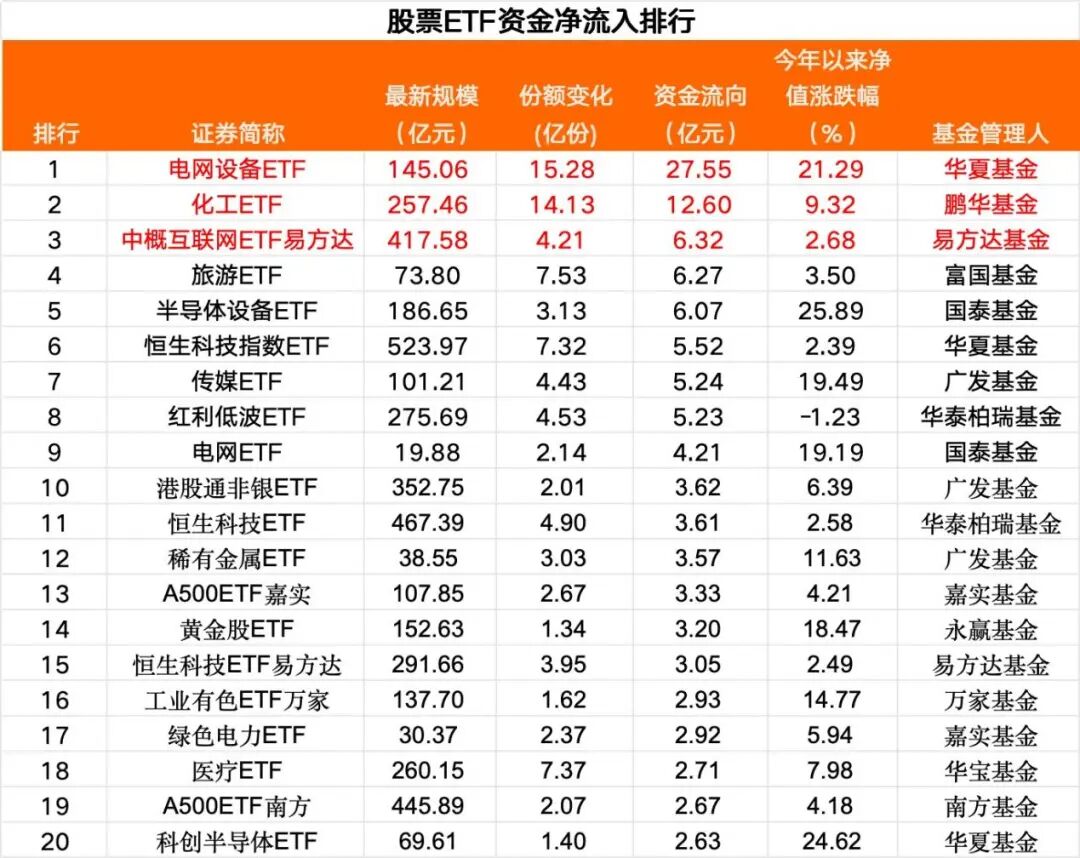
Group 1 - On January 20, the A-share market experienced a decline, with all three major indices falling, and over 500 billion yuan in net outflows from stock ETFs [1][2] - In the past four trading days, the total net outflow from stock ETFs exceeded 240 billion yuan, with over 920 billion yuan in net outflows in the first two days of the week [2] - The total scale of stock ETFs in the market reached 4.75 trillion yuan as of January 20, 2026, with a trading volume of 3.13 trillion yuan on that day [3] Group 2 - The building materials and real estate sectors led the gains among stock ETFs, with the top three performing ETFs all from the building materials sector, each rising over 3.3% [4] - The worst-performing ETFs included those related to satellites, aviation, and communication equipment, with many experiencing declines exceeding 3% [4] - On January 20, the net outflow from stock ETFs was approximately 505 billion yuan, with 51 ETFs seeing inflows of over 100 million yuan [5] Group 3 - The top five inflow sectors included new energy (net inflow of 2.91 billion yuan), gold (2.75 billion yuan), and petrochemical (1.87 billion yuan) [5] - The leading ETFs by net inflow included the Electric Grid Equipment ETF with a net inflow of 2.755 billion yuan, followed by the KI ETF and the China Concept Internet ETF [6] - The top outflow ETFs included the CSI 300 ETF from Huatai-PineBridge, which saw a net outflow of 10.984 billion yuan, and the CSI 500 ETF with a net outflow of 9.143 billion yuan [7] Group 4 - Major public fund companies continue to see inflows into their ETFs, with E Fund's China Concept Internet ETF attracting 640 million yuan and the Gold ETF attracting 360 million yuan on January 20 [8] - The market is expected to remain stable due to supportive monetary policy and positive macroeconomic data, with a potential spring rally anticipated [8] - Short-term market fluctuations may occur due to regulatory measures aimed at preventing excessive volatility, but a spring rally is expected to resume around the Chinese New Year [9]

山东金融监管局 山东省地方金融管理局 中国人民银行山东省分行 山东证监局联合开展2025年金融教育宣传周活动
Qi Lu Wan Bao· 2025-09-16 02:10
Core Viewpoint - The article discusses the launch of the Shandong 2025 Financial Education Promotion Week, aimed at enhancing financial literacy among the public and protecting the rights of financial consumers and investors [1][2]. Group 1: Event Overview - The event is organized by multiple financial regulatory bodies in Shandong, including the Shandong Financial Regulatory Bureau and the People's Bank of China Shandong Branch, with the slogan "Protect Financial Rights, Assist a Better Life" [1]. - The initiative focuses on educating the public about financial products and services, helping them avoid fraud and illegal financial activities [1]. Group 2: Objectives and Strategies - The campaign aims to improve public access to financial knowledge and enhance the quality of financial services, ensuring that the financial sector meets the needs of the people [1]. - It emphasizes the importance of collaboration among local governments, social organizations, and media to create diverse and engaging educational activities [2]. - The initiative includes targeted actions such as "Risk Alerts Delivered to Your Door," which aims to provide tailored financial knowledge to different community groups [2]. Group 3: Launch Ceremony Highlights - The launch ceremony featured speeches from key officials, including representatives from the Shandong Financial Regulatory Bureau and the Shandong Securities Regulatory Commission [3]. - Various financial institutions participated in the "Golden Horn: Financial Market" event, showcasing engaging and informative exhibits to promote financial education [3]. - Leaders from multiple government departments and financial associations attended the ceremony, highlighting the collaborative effort in promoting financial literacy [3].
W122市场观察:盈利质量交易活跃度有所回暖
Changjiang Securities· 2025-08-24 23:30
Market Overview - The market continued to expand, with the Shanghai Composite Index reaching 3800 points[2] - The growth sector showed active performance, particularly in the electronics industry, which saw a significant increase in congestion levels[2][5] Institutional Performance - The fund-heavy 50 index led the institutional heavy positions, indicating a strong profit effect for institutions[5][22] - Since August 2025, the fund-heavy index has rebounded, outperforming the CSI 300 index year-to-date[23] Industry Analysis - The TMT (Technology, Media, and Telecommunications) sector has sustained its rebound, with leading stocks outperforming dividend stocks[5][28] - The electronics industry recorded a congestion level of 82.9%, up from 42.9% the previous week, indicating increased investor interest[20] Style Tracking - The growth style continues to show advantages, with the "Growth+" category performing well[5][31] - Growth indices have consistently outperformed the small-cap index year-to-date[31] Thematic Trends - The "Specialized, Refined, Unique, and New" index led the thematic trends with a return of 9.91%[35] - The central state-owned enterprises' high-quality development index also performed well, with a return of 5.17%[35]
全球视角下的资本市场投资价值比较
Shang Hai Zheng Quan Bao· 2025-05-25 17:51
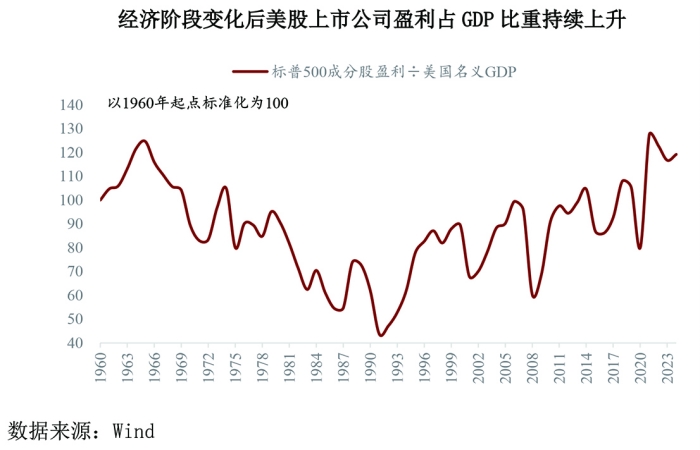
Group 1 - The long-term investment returns in the stock market are influenced by three factors: corporate earnings, valuation changes, and dividend yields [4][6][10] - Corporate earnings growth and the digestion of early high valuations are crucial for the long-term investment returns of the A-share market, closely linked to the economic development stage [4][10][14] - The A-share market is expected to see systematic increases in long-term investment returns due to improving company quality, increasing dividends and buybacks, and the inflow of patient capital [4][16][22] Group 2 - The annualized total return performance of major global indices from 2011 to 2024 shows that the S&P 500, Nikkei 225, and NIFTY 50 indices have outperformed others, with annualized returns of 13.8%, 12.4%, and 11.5% respectively [5][7] - The A-share market, represented by the CSI 300 index, has a relatively low annualized return of 3.9%, indicating a need for improvement in corporate earnings growth [5][7][14] - The contribution of corporate earnings growth to total returns in major capital markets is significant, with the S&P 500's earnings growth contributing 7.6% to its total return [7][8][14] Group 3 - Valuation changes have had a negative impact on the returns of several capital markets, including the CSI 300, which has seen a valuation change contributing -1.2% to its annualized return [8][15] - Dividend yields have been a consistent source of returns across various markets, with the A-share market's dividend yield at around 2%, which is moderate compared to other major markets [8][18][19] - The increasing focus on dividends and buybacks among A-share companies is expected to enhance investor returns significantly [18][19][20] Group 4 - The relationship between stock market returns and economic development stages shows a "U" shaped trend, where corporate earnings and valuations initially decline before rising again as economies mature [10][11][12] - The ongoing transition of the Chinese economy towards high-quality development is anticipated to improve the overall profitability and valuation of listed companies [14][22] - The growth of patient capital in the Chinese market, including insurance and pension funds, is expected to support the long-term health of the capital market [20][21]