
砷化镓太阳能电池

Search documents
乾照光电20260329
2026-03-30 05:15
Summary of Qianzhao Optoelectronics Conference Call Company Overview - **Company**: Qianzhao Optoelectronics - **Year**: 2025 - **Revenue**: 3.401 billion (up 39.78%) - **Net Profit**: 115 million (up 19.32%) - **GaAs Solar Cell Shipment**: Ranked first globally [2][3] Core Business Insights - **LED Business**: - Entered a mature development phase, focusing on high-end market and product structure optimization. - Revenue from main business slightly declined due to cautious capacity expansion and credit risk management [3][4]. - **Commercial Aerospace**: - Rapid growth with GaAs battery technology leading the market. - Expected overseas business growth of 2-3 times by 2026, with flexible battery solutions to be scaled in the second half of 2026 [2][6]. - **VCSEL Business**: - Shifted focus from sensing to optical communication and AI. - Mid-speed products have been sampled, with automotive products undergoing validation in Q2 2026 [2][6]. - **MiniLED and MicroLED**: - MiniLED production capacity reached 10,000KK/month, with expected growth exceeding 100% in 2026. - MicroLED technology expected to clarify by Q3 2026, with significant growth anticipated in small-screen applications [2][7][8]. Industry Dynamics - **LED Industry**: - Mature but with structural opportunities in high-end applications like automotive and commercial displays. - New demands in MiniLED and MicroLED segments are emerging, providing avenues for competitive enhancement [4][5]. - **Commercial Aerospace**: - Key challenges include achieving low costs through innovations like reusable rockets and standardized satellite production. - Anticipated growth in satellite manufacturing and launch demand, with GaAs technology expected to maintain dominance despite competition from other technologies [5][6]. - **Optical Communication**: - Expansion driven by the ongoing shift from copper to optical solutions, with VCSEL chips poised for growth in data centers [5][6]. Financial Performance and Projections - **2025 Financials**: - Revenue: 3.401 billion (up 39.78%) - Net Profit: 115 million (up 19.32%) - Cash Flow: 560 million (up 2.56%) [3][6]. - **2026 Projections**: - LED business expected to grow by double digits. - Battery business projected to grow 2-3 times overseas. - VCSEL business anticipated to expand significantly with new automotive applications [15]. Strategic Collaborations - **Partnership with Hisense**: - Enhanced collaboration in LED backlight and AI data communication sectors. - Development of RGB backlight chips and expansion into automotive applications [6][7]. Cost Management Strategies - **Cost Reduction**: - MOCVD equipment upgrades and automation to lower costs by 30%-50%. - Flexible battery solutions using GaAs to reduce material costs significantly [11][12]. Market Opportunities and Risks - **GaAs Technology**: - Dominant in space photovoltaic applications, with strong demand expected from European markets. - Concerns about potential oversupply in the future, but high entry barriers mitigate risks [9][10][13]. - **Supply Chain Dynamics**: - Tight supply for traditional optical components may accelerate the adoption of MicroLED technologies [8][10]. Conclusion - **Outlook**: - Confidence in achieving better performance in 2026 based on current orders and market conditions. - Continuous focus on optimizing product and customer structures to enhance operational quality [15].

太空算力升维之战:从地面“内卷”到太空“新战场”
GOLDEN SUN SECURITIES· 2026-02-24 00:45
Investment Rating - The report maintains an "Increase" rating for the industry [4]. Core Insights - The space computing sector is emerging as a new battleground for technology giants and national powers, with China leveraging its advantages in satellite networking and laser communication to establish a foothold in this domain [1]. - The transition of computing power to space is driven by the need to overcome three major bottlenecks in terrestrial computing: energy costs, transmission efficiency, and service coverage [2]. - The global competition in space computing is primarily led by the US and China, each focusing on different technological paths and stages of development [3]. Summary by Sections 1. Space Computing Landscape - Near-Earth orbit is becoming a "clean land" for computing power due to its abundant solar energy and low-temperature environment, which presents a historic opportunity for the related industry chain [1]. 2. Drivers for Space Computing - Energy costs can potentially be reduced by over 70% as space offers nearly unlimited solar energy and a near-absolute zero environment, eliminating significant cooling costs [2]. - The efficiency of data transmission is revolutionized by in-orbit computing, allowing satellites to process data on-site and only send results back to Earth, significantly improving response times for critical applications [2]. - A network of thousands of computing satellites will create a global, borderless computing service, enabling seamless access in remote areas and for future technologies like IoT and autonomous driving [2]. 3. Global Competition - The US is pursuing a "single-point breakthrough" model, focusing on maximizing the performance of individual satellites, while China is developing a comprehensive industry chain from satellite manufacturing to application services [3]. - China is leading in scale with plans to deploy 2,800 computing satellites, achieving a computing power of 5 Peta Operations Per Second (POPS) [3]. - China has made significant technological advancements, particularly in inter-satellite laser communication, achieving speeds of 100 Gbps [3]. 4. Commercialization and Applications - China has integrated low-orbit satellite constellations into its "new infrastructure" strategy, with clear market applications in areas like smart cities and vehicle networking [5]. - Recent breakthroughs include the successful on-orbit computation of AI models and the development of robots connected to low-orbit satellites, marking significant progress in integrated intelligent collaboration [5]. 5. Investment Opportunities - The rise of the space computing industry will lead to a reevaluation of the entire value chain, with key investment lines including satellite manufacturing, onboard computing and communication, ground operations, and space energy solutions [7]. - Companies involved in satellite platform manufacturing are expected to benefit significantly from the demand for scalable satellite networks [7]. - The development of high-performance computing chips and laser communication systems is crucial for enhancing satellite intelligence and interconnectivity [8]. - Ground operations and system integration companies will play a vital role in managing satellite constellations and providing computing services across various industries [10].
马斯克团队调研中国头部光伏企业!“太空光伏”概念股再爆发
Sou Hu Cai Jing· 2026-02-04 13:17
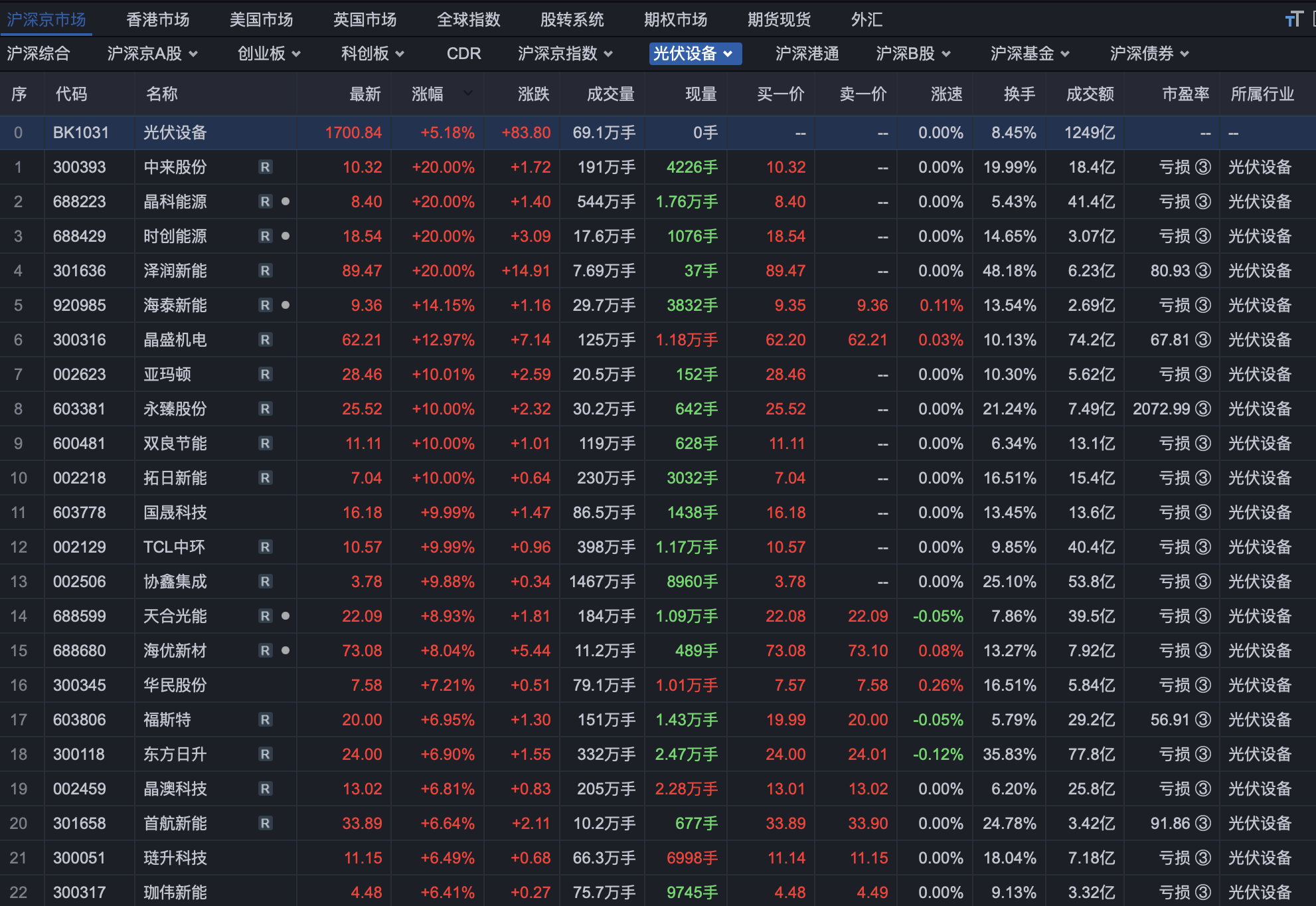
Core Viewpoint - The "space photovoltaic" concept stocks have seen a resurgence, driven by market speculation regarding Elon Musk's team visiting Chinese photovoltaic companies to explore potential collaborations in advanced solar technologies [1][3]. Group 1: Market Performance - As of February 4, the photovoltaic ETF (515790) closed at 1.157, with a gain of 3.12%, marking two consecutive days of significant increases, including a rise of over 6% on February 3 [1]. - Several photovoltaic stocks, including JinkoSolar (688223.SH) and GCL-Poly Energy (002506.SZ), reached their daily price limits [1][2]. Group 2: Technological Developments - Elon Musk has expressed strong support for space photovoltaics, revealing a target of achieving an annual solar manufacturing capacity of 100GW within three years [3]. - The current battery technology routes for space photovoltaics include crystalline silicon solar cells, gallium arsenide solar cells, and perovskite technology, with gallium arsenide currently dominating the market [4]. Group 3: Future Market Potential - According to research from China International Capital Corporation (CICC), the demand for space photovoltaics is expected to grow significantly, with market size projected to range from hundreds of billions to trillions of yuan by 2030 [4]. - Analysts predict that perovskite technology may achieve over 50% market penetration in the long term, while gallium arsenide's market share may decline [4][7]. Group 4: Company Strategies - Shanghai Portway (605598.SH) is actively developing space perovskite batteries, while other companies like Maiwei Co. (300751.SZ) and Trina Solar (688599.SH) are also focusing on perovskite technology and related supply contracts [7]. - Despite the current downturn in the photovoltaic industry, firms like JinkoSolar are expected to face significant losses, with projections indicating a net loss of 59 billion to 69 billion yuan by 2025 [9][10]. Group 5: Investment Outlook - Despite the challenges, institutions like Guosheng Securities and CICC remain optimistic about the future of space photovoltaics, viewing it as a potential growth area driven by increasing global space energy demand and supply chain restructuring [11].


太空能源-砷化镓专家交流
2026-02-04 02:27
Summary of Key Points from the Conference Call on Gallium Arsenide Solar Cells Industry Overview - Gallium arsenide (GaAs) solar cells play a crucial role in the commercial aerospace sector, particularly in high-reliability space environments, outperforming silicon-based and perovskite cells, thus becoming the mainstream choice [1][4] - Major companies in this field include Gan Zhao Company, which previously held an 80% market share in the commercial aerospace sector [2] Core Insights and Arguments - The actual conversion efficiency of GaAs rigid and flexible solar cells can reach over 43.5%, significantly higher than the approximately 38% efficiency for ground applications [1][5] - Future development directions include simulating full-spectrum light and developing corresponding epitaxial structures to enhance absorption range and conversion efficiency, with theoretical efficiency limits potentially reaching 60%-70% [1][9] - Multi-junction GaAs solar cells can achieve around 43% light absorption conversion rate by targeting more wavelengths, with ongoing efforts to expand absorption into blue and infrared regions [1][8] Cost Structure and Reduction Strategies - The cost structure of GaAs solar cells consists mainly of substrates, epitaxial layers, and devices, with substrate costs decreasing due to domestic production of MO sources [2] - Key cost reduction strategies include increasing the domestic production ratio of equipment and materials, enhancing overall technology levels, and improving automation, which could lower graphite component costs by 50%, labor costs by 30%, and material costs by 30% [1][14] - Current chip prices range from 2,000 to 3,000 yuan, with potential reductions to around 1,500 yuan as commercial aerospace develops, indicating a 30%-50% decrease [3][17] Technological Developments and Challenges - The current mature product in the industry is the triple-junction GaAs solar cell, with future iterations focusing on expanding the design to cover more wavelengths for improved performance [7] - The production process from substrate to chip involves complex steps, including the procurement of substrates and the growth of epitaxial structures [6] - Domestic suppliers like Beifang Huachuang and Jing Sheng Jidian are working on MOCVD equipment, but challenges remain in high-end applications requiring rare metals [12] Market Dynamics and Competitive Landscape - The market is characterized by significant competition, with domestic companies like Qian Zhao, Kai Xun, and Dehua leading in GaAs solar cell research and development [27] - The integration of downstream processes poses challenges due to the aging verification cycle of chips, which can take 2-3 years [19] Additional Important Insights - GaAs solar cells exhibit superior radiation resistance compared to silicon-based cells, making them suitable for high-altitude applications [25] - Flexible GaAs solar wings are seen as a necessary trend for future applications requiring high power output, with designs allowing for increased flexibility and power density [26] - The use of X-ray and Vico equipment in production varies significantly, impacting the choice of technology based on the specific requirements of solar cell production [24]
光伏领域取得新突破!太空光伏或成下一个增长蓝海(附概念股)
Zhi Tong Cai Jing· 2026-02-04 00:43
Group 1 - The collaboration between Jinan University and Shanghai Jiao Tong University has led to the development of flexible perovskite solar cells with a conversion efficiency of 24.52% and 92.5% efficiency retention after 10,000 bends [1] - Current mainstream solar cell technology includes gallium arsenide, P-type HJT, and P-type HJT/perovskite tandem cells, with gallium arsenide being the most prevalent due to its high efficiency and durability, despite its high cost [1] - Perovskite solar cells offer significant advantages such as high power density, low cost, and flexibility, making them a potential long-term solution for space photovoltaics [1] Group 2 - The market for perovskite-silicon tandem solar cells in space applications is expected to grow significantly, driven by government policies, capital investment, and diverse enterprises, with a commercial breakthrough anticipated between 2028 and 2030 [2] - SpaceX's plan to launch up to 1 million satellites aims to create a "space data center," leveraging solar energy for low operational costs and revolutionary energy efficiency [2] - The International Telecommunication Union projects that by the end of 2025, over 100,000 low Earth orbit satellites will be registered, indicating a strong demand for satellite launches [2] Group 3 - The demand for space photovoltaics is expected to surge, with UBS predicting a rise from 0.3 GW in 2026 to 115 GW by 2035, indicating a growth of over 300 times in a decade [3] - Several listed companies are actively investing in the perovskite sector, with Trina Solar revealing its long-term strategy in crystalline silicon and perovskite tandem cells, achieving significant R&D results [3] - Companies like Dike Co. and Shanghai Port Bay are expanding their focus on space photovoltaic applications, with Dike Co. planning to extend its product offerings to include space solar energy systems [3] Group 4 - Chinese photovoltaic companies with aerospace certification and delivery capabilities are transitioning from ground support to space-based solutions, positioning space photovoltaics as a potential growth area [4] - The increasing number of satellite launches and the shift from communication satellites to more power-intensive computing satellites are expected to drive continuous growth in space energy demand [4] Group 5 - Companies such as Junda Co. and GCL-Poly are making strategic investments in low Earth orbit and space photovoltaics, with Junda Co. acquiring a stake in a space energy firm and GCL-Poly achieving breakthroughs in perovskite technology [6] - Aerospace Holdings is involved in satellite manufacturing and energy systems, while Fuyao Glass is positioned to benefit from the growing demand for space photovoltaic components [6]
港股概念追踪 | 光伏领域取得新突破!太空光伏或成下一个增长蓝海(附概念股)
智通财经网· 2026-02-03 23:35
Group 1 - Jinan University and Shanghai Jiao Tong University teams achieved a flexible perovskite solar cell with a conversion efficiency of 24.52% and maintained 92.5% of its initial efficiency after 10,000 bends [1] - The current mainstream solar cell technology is gallium arsenide, which has advantages such as high temperature resistance and high conversion efficiency, but its high cost (15-20% of satellite manufacturing costs) limits large-scale applications [1] - Perovskite solar cells have a power density of 23W/s, significantly higher than gallium arsenide, and can reduce equipment depreciation by eliminating high-value TCO glass [1] Group 2 - The perovskite-silicon tandem solar cells are seen as a promising niche market for space applications, driven by clear national policies and diversified enterprises, with expectations for commercial breakthroughs between 2028 and 2030 [2] - SpaceX plans to launch up to 1 million satellites to create an "orbital data center," which could revolutionize energy efficiency by utilizing solar energy in space [2] - The International Telecommunication Union predicts that by the end of 2025, over 100,000 low-Earth orbit satellites will be registered, indicating a strong demand for satellite launches [2] Group 3 - UBS predicts that global demand for space photovoltaics will rise from 0.3 GW in 2026 to 115 GW by 2035, representing a growth of over 300 times in ten years [3] - Several listed companies are actively investing in the perovskite sector, with Trina Solar revealing its long-term layout in crystalline silicon batteries and perovskite tandem batteries [3] - Companies like Dike Co. and Shanghai Port Bay are expanding into space photovoltaic applications, with Dike focusing on electronic paste and Shanghai Port Bay's subsidiary working on satellite energy systems [3] Group 4 - Guosheng Securities notes that Chinese photovoltaic companies with aerospace certification and delivery capabilities are transitioning from ground support to core space applications, indicating a potential growth area in space photovoltaics [4] - Guohai Securities highlights the increasing demand for space photovoltaics, driven by the rise in satellite launches and the shift from communication satellites to more power-intensive computing satellites [4] Group 5 - JunDa Co. is entering the low Earth orbit and space photovoltaic market by investing 30 million yuan for a 16.67% stake in Shanghai Xingyi Xinneng [6] - GCL-Poly achieved a breakthrough in GTC perovskite tandem battery technology with a conversion efficiency of 33.31% and is applying for patents to enhance battery performance [6] - Aerospace Holdings is involved in satellite manufacturing and space energy, possessing relevant technology reserves for satellite energy systems [6]



商业航天产业化提速引爆太空光伏概念,明阳智能等多股涨停!多家上市公司披露最新进展
Jin Rong Jie· 2026-01-26 05:01
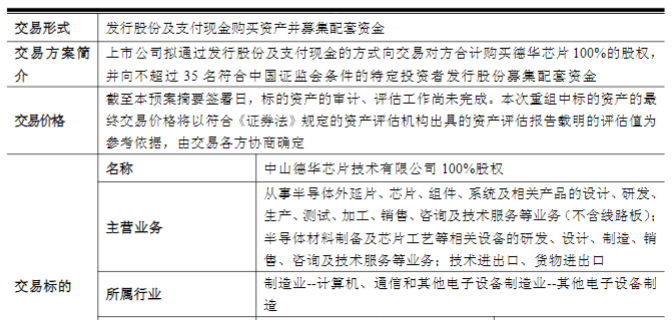
Group 1: Industry Overview - The space photovoltaic sector is gaining momentum, driven by the rapid rise of China's commercial aerospace industry, which is transitioning into a new phase of scale and commercialization [2] - The demand for low Earth orbit satellite constellations is increasing, leading to a significant rise in the need for reliable energy systems, with space photovoltaics becoming a focal point due to its advantages [2] - Predictions indicate that the global annual satellite launch quantity will increase from 5,000 to 50,000 between 2025 and 2040, with the total demand for photovoltaic cells expected to rise from 0.024 GW to 1.8 GW [3] Group 2: Company Strategies - Several A-share listed companies are actively positioning themselves in the space photovoltaic market through diversified strategies, including traditional aerospace companies focusing on high-efficiency batteries and lightweight components [4] - Mingyang Smart Energy plans to acquire control of Zhongshan Dehua Chip Technology Co., which specializes in gallium arsenide space solar cells, as part of its strategy to extend into the space photovoltaic sector [4] - Junda Co. announced a cash investment of 30 million yuan to acquire a stake in Shanghai Xingyi Chip Energy Technology Co., marking its strategic extension from terrestrial to space photovoltaics [6] Group 3: Technological Developments - Qian Zhao Optoelectronics is a leading supplier of gallium arsenide solar cells, with products already in use in large commercial satellite constellations, and is expanding its international market presence [7] - Lens Technology has overcome key technical challenges in developing aerospace-grade UTG flexible glass for space photovoltaic applications and is currently in deep technical validation with clients [8] - Zhonglai Co. is developing backplane products for space photovoltaic module packaging and is working on perovskite and silicon tandem products for diverse applications [10]


【公告全知道】商业航天+卫星互联网+国产芯片+光模块+第三代半导体!公司研发的光伏电池目前主要用于航天领域的空间电源
财联社· 2026-01-25 15:42
Group 1 - The article highlights significant announcements in the stock market, including "suspensions and resumption of trading, shareholding changes, investment wins, acquisitions, performance reports, unlocks, and high transfers" to help investors identify investment hotspots and mitigate risks [1] - A company involved in commercial aerospace, photovoltaic technology, satellite internet, domestic chips, optical modules, and third-generation semiconductors has successfully applied gallium arsenide solar cell products in domestic large-scale commercial aerospace satellite constellations [1] - Another company is deeply engaged in the "Spark One" project, with total orders related to magnets and other components amounting to approximately 5 billion yuan [1] - A company has achieved a comprehensive layout of semiconductor storage device testing equipment, focusing on robotics, storage chips, computing power, and semiconductor equipment [1]

上市公司纷纷布局太空光伏 “追光者”实力参差不齐
Shang Hai Zheng Quan Bao· 2026-01-23 18:12
Group 1 - The core viewpoint of the article highlights the growing interest and investment in space photovoltaic technology among various companies, despite some facing significant losses in the traditional photovoltaic sector [2][3] - Several companies in the photovoltaic industry are actively pursuing space photovoltaic opportunities through investments, acquisitions, and self-research, with some already having products in mass production [2] - The market has seen a surge in stock prices for companies involved in space photovoltaic, such as Optec, JinkoSolar, and others, indicating a renewed optimism in this segment [2] Group 2 - Mingyang Smart Energy is making a strategic move by acquiring control of Zhongshan Dehua Chip Technology Co., which specializes in high-end compound semiconductor technology, to extend its reach into the space photovoltaic sector [4] - Gallium arsenide solar cells are identified as a mature solution for space photovoltaic applications, with Qianzhao Optoelectronics being the leading supplier of gallium arsenide solar cell epitaxial wafers in China [4] - The P-type ultra-thin heterojunction (HJT) battery technology is viewed as a key cost-reduction strategy for satellite solar wings, with companies like Dongfang Risen capable of mass delivery of HJT products [5] Group 3 - Some companies have issued risk warnings regarding their involvement in space photovoltaic, indicating that their products or technologies are not yet applicable in this field [6] - JunDa Co. has highlighted several risks associated with its investment in space photovoltaic, including technical, business, and market uncertainties, emphasizing that its current focus remains on ground photovoltaic applications [6] - Other companies, such as Solar Energy and Yamaton, have stated that their business does not currently involve space photovoltaic technology, focusing instead on their respective core areas [7]

上证早知道|央行官宣:结构性降息;优惠政策延续 两部门发文;钨价 持续走高
Shang Hai Zheng Quan Bao· 2026-01-15 22:58
Industry Events - The 2026 Nuclear Fusion Energy Technology and Industry Conference will be held in Hefei, Anhui from January 16 to 17, 2026 [1] - The first "AI + Traditional Industry" Practical Application Development Forum will take place on January 16 [1] Monetary Policy - The People's Bank of China will lower various structural monetary policy tool rates by 0.25 percentage points, with the one-year re-lending rate decreasing from 1.5% to 1.25% [2] Tax Policy - The Ministry of Finance and the State Administration of Taxation announced the extension of the VAT exemption policy for foreign institutions investing in national bonds and local government bonds from August 8, 2025, to December 31, 2027 [2] Semiconductor Industry - TSMC reported Q4 2025 revenue of $33.73 billion, a 25.5% year-on-year increase, driven by strong demand for high-end chips due to AI computing [4] - TSMC's capital expenditure for 2026 is projected to reach $52 billion to $56 billion, indicating robust future AI computing demand [4] Tungsten Products - Prices for tungsten products have increased, with black tungsten concentrate and white tungsten concentrate rising by 5,000 yuan/ton, and tungsten iron and ammonium paratungstate increasing by 10,000 yuan/ton [5] - Global tungsten supply growth is limited, with a projected compound annual growth rate of 2.57% from 2023 to 2028 for raw tungsten supply [5] Aerospace Industry - The Beijing Rocket Street project has completed construction and is now entering the delivery phase, becoming the first commercial aerospace research and production base in China [6] - The project will provide various shared services to support the full chain development of commercial aerospace [6] Company News - Xinghua New Materials plans to acquire at least 51% of Hangzhou Tiankuan Technology, which focuses on AI computing center construction and operation [7] - Zhenghai Magnetic Materials expects a net profit of 310 million to 380 million yuan for 2025, a year-on-year increase of 235.72% to 311.52% [7] - Sanmei Co. anticipates a net profit of 1.99 billion to 2.15 billion yuan for 2025, reflecting a growth of 155.66% to 176.11% [8] Investment Activity - Multiple broad-based ETFs saw significant trading volume increases, with the Southern CSI 500 ETF reaching a record high turnover of 26.3 billion yuan on January 15 [10] - Institutional investors net bought shares in aerospace electrical equipment companies, indicating strong interest in the sector [11]