
房地产租赁经营

Search documents
房地产租赁经营行业2026年度信用风险展望(2025年12月)
Lian He Zi Xin· 2026-01-05 11:48
Investment Rating - The report does not explicitly state an investment rating for the real estate leasing industry Core Insights - The macroeconomic stability in 2025 supports the recovery of the real estate leasing industry, but cautious consumer expectations continue to pressure the operating environment [5][10] - The industry is experiencing a significant adjustment phase, with investment shrinking and sales showing initial signs of stabilization [5][10] - The competitive landscape is shifting towards a focus on asset management and property operation capabilities, with a low market concentration [5][46] - Revenue growth for the industry is expected to slow in 2026 due to macroeconomic factors and market supply-demand dynamics [5][50] - The credit status of the industry remains stable, with manageable debt repayment risks [5][61] Industry Fundamentals - The real estate leasing industry is closely tied to macroeconomic performance, population growth, urbanization, and social consumption capacity [7] - The industry has shown strong correlation with economic cycles, indicating significant cyclicality [7] Policy and Regulatory Environment - Recent policies aim to stabilize the rental market and promote sustainable development through operational and service-oriented models [11][12] - The introduction of the Housing Leasing Regulations and the pilot of commercial real estate REITs are expected to enhance market structure and provide exit channels for enterprises [11][13] Industry Operating Conditions Development Investment - In the first ten months of 2025, commercial property development investment decreased by 14.7%, with commercial and office building investments showing significant declines [14][50] - The commercial property development investment completed amounted to 5210.77 billion, down 11.20% year-on-year [14] Sales Performance - Sales of commercial properties reached 3947.68 billion, a decrease of 12.30%, while office building sales were 2233.71 billion, down 9.20% [18][19] - The overall sales decline is moderating as consumer recovery expectations strengthen [18] Supply and Demand Dynamics - The supply of new commercial properties is at a historical low, indicating a potential improvement in supply-demand relationships in the future [20] - The market is currently in a phase of inventory digestion, with significant pressure on supply and demand balance [20] Key City Performance Beijing - Retail properties show a slight increase in vacancy rates to 7.7%, with rents declining to 30.6 yuan/sqm/day [24] - Office vacancy rates have decreased to 19.7%, but rental prices continue to decline [24] Shanghai - Retail property vacancy rates remain stable at 8.8%, with rents at 31.7 yuan/sqm/day [28] - Office vacancy rates have risen to 22.4%, with ongoing downward pressure on rents [28] Guangzhou - Retail properties maintain a vacancy rate of 7.0%, with rents declining to 21.4 yuan/sqm/day [32] - Office vacancy rates have surged to 21.6%, the highest in nearly a decade [32] Shenzhen - Retail properties exhibit resilience with a low vacancy rate of 4.6%, but rents have adjusted to 18.0 yuan/sqm/day [37] - Office vacancy rates have increased to 23.1%, indicating significant operational challenges [37] Competitive Landscape - The industry is characterized by low concentration and intense competition, shifting towards multi-dimensional competition focused on asset management and operational capabilities [46][45] - The market is evolving with a focus on full lifecycle services and specialized operators in niche markets [46][45] Financial Performance Growth Metrics - Revenue and profit for the industry showed year-on-year growth in 2025, but growth is expected to slow in 2026 due to various economic pressures [50] - The industry has a cyclical nature, heavily influenced by macroeconomic conditions [50] Leverage Levels - The leverage levels in the industry are stable, but there are risks associated with declining asset valuations [56] - The industry is expected to maintain stable leverage levels in 2026 as investment strategies become more cautious [56] Debt Servicing Capability - The industry's debt servicing ability is showing significant divergence, with overall capacity expected to weaken slightly [60] - The rental levels and occupancy rates in key segments remain under pressure, impacting long-term debt servicing capabilities [60]
税收数据显示:“十四五”青海消费市场韧性增强
Sou Hu Cai Jing· 2025-11-18 14:19
Core Insights - The consumption market in Qinghai Province has shown a trend of high-quality development with structural optimization since the start of the 14th Five-Year Plan, indicating a steady enhancement of the domestic demand engine [1][3]. Group 1: Consumption Growth - From 2021 to 2024, the annual average growth rate of invoiced sales revenue in the consumption sector in Qinghai is 2%, outpacing the overall provincial growth rate, with its share increasing from 23.8% to 25.1% [1]. - In the first three quarters of 2025, the relevant sales revenue saw a year-on-year growth of 7%, further increasing its share to 26.1%, reflecting strong resilience and growth potential in the consumption market [1]. Group 2: Basic Living Consumption - Basic living consumption related to residents' daily needs has maintained steady growth, with annual growth rates in sectors such as textile and clothing retail, food wholesale, and public transportation services ranging from 3.3% to 8.8% [3]. - In the first three quarters of 2025, these sectors continued to show a year-on-year growth of 3.2% [3]. Group 3: Upgraded Consumption - Upgraded consumption has become a new growth engine, driven by policy incentives and market vitality, with significant growth in sectors like automotive and home appliances, showing annual growth rates between 6.1% and 9.8% [3]. - In the first three quarters of 2025, invoiced sales for new cars and home appliances increased by 24.7% and 53.8% year-on-year, respectively [3]. Group 4: E-commerce and Agricultural Products - "Qinghao" agricultural products have gained national traction through e-commerce, with the internet wholesale and retail sector experiencing an annual growth rate of 25.9%, and a staggering year-on-year increase of 99.9% in the first three quarters of 2025 [3]. Group 5: Emerging Industries - Emerging sectors such as cultural arts, sports leisure, and camping services have rapidly grown, with annual growth rates of 30.8% and 48.8% in cultural arts and camping services, respectively [4].

招商基金蛇口租赁住房REIT: 招商基金招商蛇口租赁住房封闭式基础设施证券投资基金2025年中期报告
Zheng Quan Zhi Xing· 2025-08-27 11:32
Core Viewpoint - The report provides an overview of the performance and operational status of the招商基金招商蛇口租赁住房封闭式基础设施证券投资基金 for the first half of 2025, highlighting its financial metrics, asset management strategies, and the current state of the rental housing market in Shenzhen. Fund Overview - Fund Name: 招商基金招商蛇口租赁住房封闭式基础设施证券投资基金 - Fund Management Company: 招商基金管理有限公司 - Fund Custodian: 兴业银行股份有限公司 - Total Fund Shares at Period End: 500 million shares - Fund Contract Duration: 52 years - Fund's Main Investment: Over 80% of assets in infrastructure asset-backed securities [2][3] Financial Performance - Total Income for the Period: 38,085,751.15 RMB - Net Profit for the Period: -748,749.08 RMB - Net Cash Flow from Operating Activities: 20,169,677.90 RMB - Total Fund Assets at Period End: 1,576,636,847.26 RMB - Total Fund Net Assets at Period End: 1,349,466,578.66 RMB [3][4] Asset Project Information - The fund holds two rental housing projects in Shenzhen's Nanshan District, comprising 927 rental units and 15 commercial units, with a total rental area of 65,253.27 square meters. - The overall average occupancy rate for the projects is 88.51%, with the 林下项目 at 85.62% and the 太子湾项目 at 92.90% [4][5][6]. Market Context - The rental housing market in China is experiencing rapid growth, driven by government policies supporting the development of affordable rental housing. - The market is characterized by a dual-track system of affordable and market-oriented rental housing, with significant government backing for the former [6][8][10]. - The average rental price in Shenzhen is approximately 3.84 RMB per square meter per day, with a healthy overall rental rate above 90% [11][12]. Regulatory Environment - Recent government initiatives aim to enhance the supply of affordable housing and improve the rental market's operational standards, including the introduction of the Housing Rental Regulations effective from September 15, 2025 [8][9][10]. - Local policies in Shenzhen are focused on increasing the availability of affordable rental housing, particularly for new residents and young people [9][10][12]. Competitive Landscape - The rental housing sector is seeing increased competition with diverse market participants, including state-owned enterprises and specialized operators focusing on market-oriented operations [5][6]. - The fund's projects are positioned favorably due to their quality and strategic location, with limited competition in the immediate area [7].

欣贺股份:关于对外出租闲置厂房的公告
Zheng Quan Ri Bao· 2025-08-18 12:39
Core Viewpoint - Xinhai Co., Ltd. has approved the leasing of idle factory space to enhance asset utilization and operational efficiency [2] Group 1: Company Actions - The company held its 11th meeting of the 5th Board of Directors on August 18, 2025, where it approved the proposal to lease idle factory space [2] - The idle factory, located at 95 Huli Avenue, Huli District, Xiamen, will be leased to Xiamen Yulixin Property Co., Ltd. [2] - The total leased area is 20,336.38 square meters, with a lease term from August 18, 2025, to March 9, 2032 [2] Group 2: Financial Details - The total rental amount for the lease is approximately 30.0635 million yuan, including tax [2] - This transaction amount falls within the approval authority of the Board of Directors and does not require shareholder approval [2]

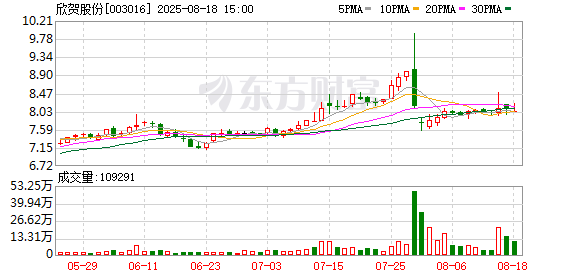
南京公租房智慧化升级:安居颐和以科技筑牢民生保障底线
Zhong Guo Chan Ye Jing Ji Xin Xi Wang· 2025-06-30 06:43
Group 1 - The core viewpoint emphasizes the importance of public rental housing in urban high-quality development and its direct impact on people's well-being, with Nanjing Anju Yihe Asset Management Co., Ltd. focusing on "people's livelihood protection" through technological innovation in public rental housing management [1] - The company has initiated an elevator upgrade project in pilot communities to address issues of aging and high failure rates, resulting in a 30% reduction in waiting time, an 80% decrease in fault response time, and a 35% reduction in maintenance costs [2] - The digital management system has expanded its functionality, with over 14,000 registered users on the "Nanjing Public Rental Housing" WeChat mini-program, achieving a user satisfaction rate of 95% [3] Group 2 - New features such as "administrator posting" and "points redemption" have been introduced to enhance tenant engagement, creating an interactive community ecosystem [4] - The company aims to reshape public rental housing governance through digital means, striving to transform from "housing security" to "livable housing" and establish itself as a national benchmark for public rental housing [5]
城投宽庭落子“徐汇” 以REITs创新打造存量资产盘活新标杆
Xin Hua Cai Jing· 2025-05-16 12:49
Core Viewpoint - The launch of the Chengtou Kuan Ting Xuhui Community highlights the confidence in policy support for the development of affordable rental housing and demonstrates the potential of innovative financial tools to revitalize the real economy [2][3] Group 1: Project Overview - Chengtou Kuan Ting Xuhui Community is a collaboration among three state-owned enterprises: Shanghai Chengtou, Yidian Group, and Guosheng Group, marking the first acquisition and revitalization project of R4 land in Shanghai [3] - The project aims to respond to the national housing policy of promoting both rental and sales, while expanding the company's rental housing operation scale and enhancing the "Chengtou Kuan Ting" brand influence [3] Group 2: Financial Strategy - The project serves as a model for sustainable development by revitalizing state-owned assets and is seen as a reserve asset for future fundraising [3] - The company plans to combine "heavy asset" and "light asset operation" strategies to expand investment and operational scale, facilitating a virtuous cycle of "development-operation-exit-reinvestment" [3][4] Group 3: Community Features - The community is strategically located near Metro Line 1 and Line 12, providing convenient access to commercial and recreational areas [4] - It includes 1,283 housing units, with the first batch of 546 units featuring one to two-bedroom layouts, fully furnished and ready for immediate occupancy [4] - The community will also offer approximately 600 square meters of commercial space and various social amenities to enhance residents' quality of life [4]
