
办公楼

Search documents
克拉科夫-房地产市场2026
莱坊· 2026-03-05 13:20
Investment Rating - The report indicates a positive investment outlook for the Krakow real estate market, particularly in the office, retail, and hotel sectors, driven by strong demand and limited supply [5][28][50]. Core Insights - Krakow is evolving into a hub for high-skilled jobs and R&D activities, moving away from simple process-based models, which enhances its attractiveness for businesses [4]. - The office market in Krakow is characterized by a total stock of 1.84 million square meters, making it the largest office market in Poland outside Warsaw, with a historical peak in demand expected by 2025 [14][28]. - The retail market is experiencing steady growth, supported by rising private consumption and low vacancy rates, with a current vacancy rate of only 2.6% [31][39]. - The hotel market remains robust, with Krakow being a leading tourist destination, recording significant increases in visitor numbers and hotel occupancy rates [54][60]. Summary by Sections Office Market - Krakow's office market has a total stock of 1.84 million square meters, with a vacancy rate of 18.4% and a limited new supply of only 12,000 square meters expected in 2025, the lowest in two decades [9][17]. - The demand for office space is driven primarily by IT and BSS sectors, which accounted for 26% and 15% of total leasing activity in 2025, respectively [19][25]. - The preference for high-quality, future-proof assets remains strong, with 85% of leasing transactions occurring in green-certified buildings [19][21]. Retail Market - The retail market in Krakow is characterized by a low vacancy rate of 2.6%, reflecting strong fundamentals and increasing foot traffic in shopping centers [31][39]. - Major retail projects include Bonarka City Center and Galeria Bronowice, contributing to a total retail stock of approximately 658,000 square meters [32][36]. - The market is expected to see a slight increase in new retail supply after two years of stagnation, with a focus on high-density shopping formats [30][32]. Warehouse Market - The warehouse market in Krakow is relatively small but stable, with a total inventory of over 1.2 million square meters and a low vacancy rate of 2.8% [41][43]. - The demand for logistics services is growing, supported by a strong economic foundation and limited land availability for new developments [41][42]. - The market is expected to face a significant slowdown in new supply, with only 8,000 square meters under construction by the end of 2025 [43][45]. Hotel Market - Krakow's hotel market features 196 hotels with approximately 14,300 rooms, making it the largest hotel market in Poland by number of establishments [50][51]. - The market is driven by a diverse mix of leisure and business travel, with a significant increase in hotel occupancy rates, reaching levels close to pre-pandemic figures [60][65]. - New hotel developments are focused on high-end and luxury segments, with several projects underway, including a Nobu hotel and a Le Méridien [58][71].
强大的城市吸引力,办公楼市场,人力资源趋势
莱坊· 2026-03-05 03:17
1. Report Industry Investment Rating - The report does not mention the industry investment rating [1-37] 2. Core Viewpoints - Poznań is an attractive city in Central and Eastern Europe, with high investment potential and a high - quality living environment. The office market in Poznań shows certain characteristics in supply, demand, vacancy rate, and rent. The Polish energy labor market is undergoing a transformation, with strong demand for high - quality professionals in the renewable energy sector [6][8][14] 3. Summary by Relevant Catalogs City Overview - Poznań has an area of 261.9 square kilometers and a population of 716,800 (as of January 2025). The number of companies is 135,737 (as of May 2025), the unemployment rate is 1.4% (as of August 2025), GDP growth is 11%, per - capita GDP is PLN 155,265, and the average salary in the business field is PLN 10,100.82 (as of May 2025) [6] - It ranks highly in multiple investment - related rankings and has various investment incentives, including project managers, cooperation with special economic zones, and promotion of real - estate projects [6] - In terms of quality of life, it is the only Polish city on the Forbes list of the 20 most suitable European cities for Americans to live, invest, and work. It has won the Smart City Award, has a Michelin - starred restaurant, and offers rich cultural and leisure facilities [8] Office Market - As of the end of 2025, the total office inventory in Poznań is 678,000 square meters, ranking sixth in the Polish office market. The office demand in 2025 slightly increased to over 72,000 square meters, and the renegotiation ratio significantly rose, accounting for over 53% of the total transactions [11] - The supply situation: With 678,000 square meters of modern office space, Poznań accounts for over 5% of the total office space in Poland. Only about 5,000 square meters of modern office space was delivered in 2025, and about 78,000 square meters is under construction, ranking first among regional cities in Poland [12][13] - The demand situation: The office space demand in Poznań in 2025 was strong, with a total area of nearly 72,000 square meters, a year - on - year increase of 8%. Renegotiation became the main transaction type, accounting for 53% of the total, new leases accounted for 37%, and expansion accounted for 10% [14][15] - The vacancy rate: As of the end of the fourth quarter of 2025, the vacancy rate was 13.9%, a slight increase of 0.3 percentage points compared to the previous quarter and 0.5 percentage points compared to the same period last year [16] - The rent: As of the end of the fourth quarter of 2025, the rent in Poznań remained stable, usually between 11.50 and 16.00 euros per square meter per month, and the service fee was usually between 17.00 and 29.00 Polish zlotys per square meter per month [17] Labor Market in the Energy Sector - According to Michael Page's "2026 Salary Guide", the Polish energy labor market is accelerating development, with strong demand for professionals in renewable energy, energy storage, and offshore projects. The market is candidate - led for those with unique technical expertise and project experience [24] - The demand for engineers is the highest, and different positions have different salary ranges. For example, installation designers, grid connection experts, etc. in Warsaw have salaries ranging from about 14,000 - 15,000 Polish zlotys (gross income) to 19,000 - 21,000 Polish zlotys (senior positions) [24] - The education system in Poland lags behind the energy transition, resulting in a skills gap. It is difficult to find universities that prepare students for the energy industry, especially offshore renewable energy, outside of three major cities and Szczecin [31] - The salary in the renewable energy industry has stabilized. Employers are increasingly competing for talent through comprehensive welfare packages in addition to salary, such as flexible work models, work - life balance, and additional benefits [28]
第一太平戴维斯:2026年中国房地产市场展望报告
Sou Hu Cai Jing· 2026-02-06 08:27
Core Insights - The Chinese real estate market is in a deep reassessment phase, transitioning from a growth model based on scale and price increases to a structural transformation, with a focus on breaking the cycle of cost reduction and service decline [1][7] - The macroeconomic outlook for 2026-2027 indicates a relatively stable growth trajectory, although the growth rate is expected to be lower than in 2025, with a "slow recovery" pattern emerging [1][9] - The industry is characterized by a "three-speed economy," where traditional sectors like real estate are in a slow adjustment lane, necessitating a redefinition of their roles to align with new development orders [1][14] Market Segmentation - The office market is shifting towards quality and efficiency, adopting a "less is more" strategy, focusing on multifunctional spaces and optimizing value through stock renovation and intensive management [2][18] - The retail market shows stable overall data but increasing differentiation among segments, with traditional core business districts losing their advantages, while regional projects and unique operators are rising [2][26] - The logistics market is closely tied to the real economy, with high-quality assets demonstrating resilience, and the industry is transitioning towards "quality asset holding + refined operations" [2][33] - The residential market is stabilizing at low levels, with sales steady but confidence fragile, emphasizing quality delivery and livability as key competitive factors [2][40] Investment Market Outlook - The investment market is likely to remain sluggish in 2026, but structural opportunities are emerging, with a preference for high-quality assets with stable cash flows [2][48] - The financialization of the industry is accelerating, with an increase in public REITs and holding-type ABS issuance, pushing the industry towards a "hold and operate" model [2][56] - Long-term capital is gradually entering the market, with a shift in valuation systems rewarding discipline and operational capability, making transparent pricing and precise positioning crucial for asset differentiation [2][53] Key Opportunities - The core opportunity for the real estate industry in 2026 lies in aligning with economic transformation and reshaping asset value logic, focusing on quality upgrades, operational optimization, and innovative models [3][8] - Each segment must return to its essence: offices focusing on collaboration efficiency, retail enhancing emotional connections, logistics adapting to supply chain upgrades, and residential emphasizing livability [3][40]



雅戈尔:截至2025年6月30日公司固定资产、投资性房地产科目下的房屋及建筑物期末账面价值约114.2亿元
Zheng Quan Ri Bao Zhi Sheng· 2026-01-29 13:45
Group 1 - The company stated that its fixed assets and investment properties mainly consist of buildings and structures, including self-owned stores and office buildings, which are accounted for using the cost model [1] - As of June 30, 2025, the book value of the company's buildings and structures under fixed assets and investment properties is approximately 11.42 billion yuan, with a cumulative depreciation balance of about 6.2 billion yuan [1]

谁在接盘大宗房地产?
第一财经· 2026-01-25 12:07
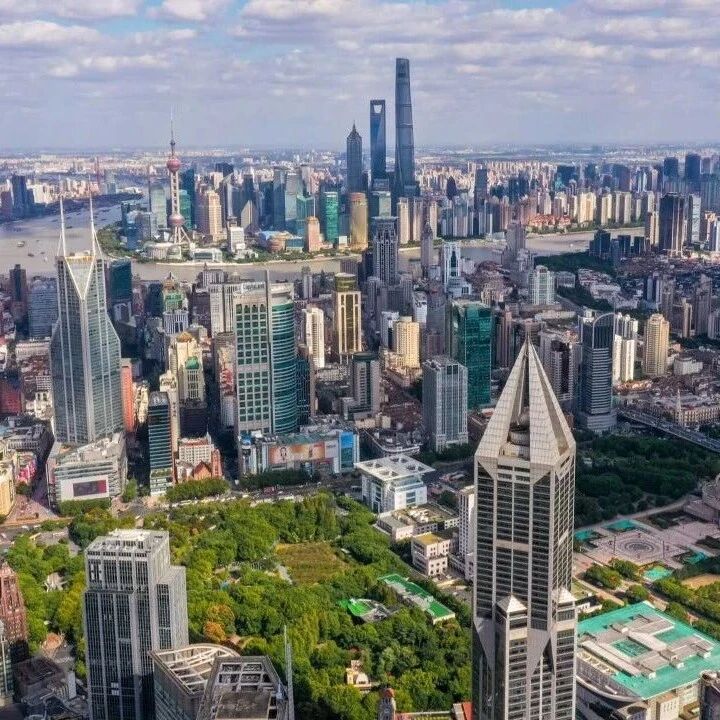
Core Viewpoint - The Shanghai bulk real estate market has undergone a structural adjustment due to continuous price corrections, leading to a shift in buyer composition and transaction types, with smaller projects becoming dominant and non-traditional buyers increasing their participation [3][4]. Buyer Composition - Small to medium-sized projects priced below 500 million yuan and even 300 million yuan are becoming the main force in the market, with a notable increase in participation from private enterprises rather than traditional institutional and foreign investors [3][5]. - Domestic buyers have firmly established their dominance in the Shanghai bulk real estate market, accounting for 97% of transaction value in 2025, while foreign buyers completed only three acquisitions [7]. Transaction Trends - In 2025, the Shanghai real estate market recorded 75 bulk transactions totaling approximately 42.4 billion yuan, with over half of these transactions being below 300 million yuan [6]. - The trend indicates a preference for medium-sized, manageable projects with shorter decision-making cycles, contrasting with the previous focus on large-scale transactions [6][8]. Market Dynamics - The increase in self-use transactions among domestic buyers is significant, with about 26% of transaction value coming from companies purchasing office spaces or apartments for their own use [7]. - Judicial auction transactions accounted for about 25% of the total transaction volume, reflecting both debt pressure on existing assets and a faster pace of bad asset disposal [7]. Future Outlook - In 2026, domestic state-owned enterprises and strong private enterprises are expected to have a financing advantage, further motivating them to acquire quality cash flow assets, particularly those priced below 300 million yuan [8]. - Core properties in first-tier cities like Shanghai will continue to attract capital, with investment logic shifting towards deep operation and value reconstruction rather than solely financial returns [9].

商业地产库存压力对比研究
Lian He Zi Xin· 2026-01-20 05:20
Investment Rating - The report indicates a cautious outlook on the commercial real estate sector in China, highlighting significant inventory pressure and credit risks for certain companies [2]. Core Insights - The commercial real estate market in China has experienced severe inventory pressure compared to the residential market, with the inventory multiple for commercial properties exceeding 12 times as of November 2025, indicating a significant imbalance in supply and demand [5][7]. - The report emphasizes the need for a transformation in commercial real estate companies towards lower leverage, specialization, and differentiation, particularly for those with high asset constraints and non-core area investments [2]. - The recovery of the retail property market is supported by the resilience of consumer spending in China, while the office market faces substantial challenges due to oversupply and prolonged inventory adjustments [2][12]. Summary by Sections 1. Inventory Pressure in Commercial Real Estate - The inventory multiple for commercial properties has been on the rise, reaching over 12 times by November 2025, compared to residential properties which have also seen an increase to nearly 7 times [5][7]. - The office sector specifically shows a troubling inventory multiple nearing 15 times, indicating a significant oversupply situation [11]. 2. Price Dynamics and Supply-Demand Balance - The report discusses how asset prices in cities like Beijing and Shanghai have deviated from fundamentals, leading to high inventory multiples, while cities like Chongqing have maintained more stable prices and inventory levels [12][21]. - The historical context of Japan's real estate bubble is referenced, drawing parallels to the current situation in China, where rapid price increases have led to significant market imbalances [22][23]. 3. Recovery Path for Commercial Real Estate - The report outlines that the recovery of the commercial real estate market in China will require a prolonged period of inventory reduction and supply control, similar to Japan's experience post-bubble [29][41]. - It highlights that while Japan's retail market faced a prolonged downturn, China's retail sector shows signs of resilience, with consumer spending still holding up despite challenges [30][37]. 4. Corporate Strategies and Market Dynamics - The report notes that many residential developers have ventured into commercial real estate, leading to a mixed performance in the sector as companies face pressures to adapt to changing market conditions [53]. - It emphasizes the importance of learning from Japan's real estate recovery strategies, particularly the role of financial instruments like J-REITs in stabilizing the market [67].
2025北京市场:办公楼空置率连降,大吉巷等项目撑起商业增量
3 6 Ke· 2026-01-14 02:28
Core Insights - The 2025 Beijing real estate market shows signs of resilience despite challenges, with office vacancy rates declining for four consecutive quarters and retail properties benefiting from urban renewal initiatives [1] Office Market - The office market in Beijing experienced a historical low in new supply, with only 180,000 square meters added in 2025, alleviating market de-stocking pressure [2] - New leasing demand showed a "high-middle-weak" trend throughout the year, with relocation needs dominating at 76% of transactions, while the area of relocation transactions decreased compared to the previous year [2][3] - The net absorption for the year reached 438,000 square meters, leading to a year-on-year vacancy rate decrease of 1.9 percentage points to 19.1% [3] - Average rental prices in the city fell by 2.7% year-on-year to 228.5 yuan per square meter, with a total annual decline of 10.7% [4] Retail Market - The retail property market saw a total new supply of 534,000 square meters, all from urban renewal projects, indicating a shift towards "old for new" strategies [6] - The overall retail sales in Beijing decreased by 3.1% year-on-year, but the decline rate has narrowed, suggesting signs of market stabilization [7] - The average rent for shopping centers decreased by 1.0% to 30.0 yuan per square meter, with an annual decline of 2.4% [8] Warehouse and Logistics Market - The warehouse and logistics market faced a supply peak with 1.4 million square meters added, resulting in a record high vacancy rate of 40.7% [10] - The demand shifted from third-party logistics to manufacturing, with new leasing demand driven by sectors like automotive parts and pharmaceuticals, accounting for 40% of new leases [10][11] - Average rents in Beijing fell to 37.1 yuan per square meter, marking a 14.8% annual decline [11] Business Park Market - The business park market welcomed seven new projects, primarily in the life sciences sector, totaling 598,000 square meters [12] - The net absorption for the year was 465,000 square meters, with the strongest demand observed in the Yizhuang Economic Development Zone [13] - Average rents in the business park sector decreased by 2.4% year-on-year, with an annual decline of 10.9% [14] Investment Market - The Beijing investment market recorded 40 transactions totaling 23.27 billion yuan, with a notable increase in transaction volume in the fourth quarter [16] - Corporate buyers accounted for 71% of transactions, indicating a strong interest in core assets despite a decline in transaction value [17] - Office assets dominated the market, comprising 64% of total transaction value, reflecting a continued preference for core area properties [18]

新城控股集团股份有限公司2025年12月份及第四季度经营简报
Shang Hai Zheng Quan Bao· 2026-01-09 19:56
Group 1 - The company achieved a total commercial operating revenue of approximately 1.238 billion yuan in December 2025, representing a year-on-year increase of 6.44%. For the entire year of 2025, the total commercial operating revenue reached approximately 14.09 billion yuan, an increase of 10.00% compared to the previous year [1][2] - The rental income includes rent, management fees, parking fees, and other miscellaneous management fee income, with the total commercial operating revenue for 2025 being 14.09 billion yuan, which includes taxable rental income [2] - The occupancy rate is based on the commercial property rental situation as of December 31, 2025 [3] Group 2 - In December 2025, the company realized a contract sales amount of approximately 1.354 billion yuan, a decrease of 57.80% year-on-year, with a sales area of approximately 184,300 square meters, down 51.34% year-on-year [4] - For the entire year of 2025, the cumulative contract sales amount was approximately 19.27 billion yuan, a decrease of 52.03%, with a cumulative contract sales area of approximately 2.5358 million square meters, down 52.94% year-on-year [4] Group 3 - In the fourth quarter of 2025, the company repaid 3.788 billion yuan of bonds in the domestic and overseas public markets [5] - As of December 31, 2025, the company's joint ventures had a total interest-bearing debt of 2.385 billion yuan [6]

2025年上海房地产市场回顾
CBRE· 2026-01-09 11:08
Investment Rating - The report indicates a stable investment outlook for the Shanghai real estate market, with a focus on the resilience of the TMT sector and emerging consumer trends [4][14]. Core Insights - The Shanghai office market saw a net absorption of approximately 390,000 square meters in 2025, a year-on-year increase of 76.6%, driven primarily by the TMT sector, which accounted for 20% of the demand [7][14]. - The retail market experienced a total net absorption of 678,000 square meters, with fashion and outdoor brands leading the growth, while the logistics sector achieved a historical high in net absorption at 1.07 million square meters [17][26]. - The investment market showed signs of recovery with 97 transactions recorded, totaling 47.4 billion RMB, despite a year-on-year decline in transaction volume and value [43][49]. Office Market Summary - In 2025, the Shanghai office market recorded 11 new projects with a total area of 792,000 square meters, but the overall pre-leasing rate was below 10%, leading to a vacancy rate increase of 1.2 percentage points to 23.3% [7][9]. - The TMT sector surpassed the financial industry in demand, with significant contributions from gaming, e-commerce, and AI companies [7][10]. - Major districts such as Lujiazui and Wujiaochang showed strong demand, with Lujiazui accounting for 7.8% of the market share [8][11]. Retail Market Summary - The retail market saw 708,000 square meters of new supply, with fashion apparel driving 43.4% of the demand, particularly from outdoor and Korean brands [17][18]. - The dining sector maintained a steady demand, accounting for 21% of the market, with a notable rise in health-oriented food options [18][19]. - The market is expected to see over 1.29 million square meters of new supply in 2026, driven by policies promoting smart experiences and health consumption [22]. Logistics Market Summary - The logistics market continued its high supply trend with 9 new projects totaling 899,000 square meters, despite a 43% year-on-year decrease in new supply [26]. - Net absorption reached a historical high of 1.07 million square meters, primarily driven by e-commerce and third-party logistics [26][27]. - The average rental price in the logistics sector decreased by 17.3% to 1.19 RMB per square meter per day [28]. Investment Market Summary - The investment market recorded a total of 97 transactions in 2025, with a total value of 47.4 billion RMB, reflecting a 26% year-on-year decline [43][49]. - Institutional investors led the market with a 40% share of transaction value, focusing on both office and rental residential assets [44]. - The market is transitioning towards a more refined focus on asset quality, with the introduction of commercial real estate REITs enhancing liquidity [49].
房地产租赁经营行业2026年度信用风险展望(2025年12月)
Lian He Zi Xin· 2026-01-05 11:48
Investment Rating - The report does not explicitly state an investment rating for the real estate leasing industry Core Insights - The macroeconomic stability in 2025 supports the recovery of the real estate leasing industry, but cautious consumer expectations continue to pressure the operating environment [5][10] - The industry is experiencing a significant adjustment phase, with investment shrinking and sales showing initial signs of stabilization [5][10] - The competitive landscape is shifting towards a focus on asset management and property operation capabilities, with a low market concentration [5][46] - Revenue growth for the industry is expected to slow in 2026 due to macroeconomic factors and market supply-demand dynamics [5][50] - The credit status of the industry remains stable, with manageable debt repayment risks [5][61] Industry Fundamentals - The real estate leasing industry is closely tied to macroeconomic performance, population growth, urbanization, and social consumption capacity [7] - The industry has shown strong correlation with economic cycles, indicating significant cyclicality [7] Policy and Regulatory Environment - Recent policies aim to stabilize the rental market and promote sustainable development through operational and service-oriented models [11][12] - The introduction of the Housing Leasing Regulations and the pilot of commercial real estate REITs are expected to enhance market structure and provide exit channels for enterprises [11][13] Industry Operating Conditions Development Investment - In the first ten months of 2025, commercial property development investment decreased by 14.7%, with commercial and office building investments showing significant declines [14][50] - The commercial property development investment completed amounted to 5210.77 billion, down 11.20% year-on-year [14] Sales Performance - Sales of commercial properties reached 3947.68 billion, a decrease of 12.30%, while office building sales were 2233.71 billion, down 9.20% [18][19] - The overall sales decline is moderating as consumer recovery expectations strengthen [18] Supply and Demand Dynamics - The supply of new commercial properties is at a historical low, indicating a potential improvement in supply-demand relationships in the future [20] - The market is currently in a phase of inventory digestion, with significant pressure on supply and demand balance [20] Key City Performance Beijing - Retail properties show a slight increase in vacancy rates to 7.7%, with rents declining to 30.6 yuan/sqm/day [24] - Office vacancy rates have decreased to 19.7%, but rental prices continue to decline [24] Shanghai - Retail property vacancy rates remain stable at 8.8%, with rents at 31.7 yuan/sqm/day [28] - Office vacancy rates have risen to 22.4%, with ongoing downward pressure on rents [28] Guangzhou - Retail properties maintain a vacancy rate of 7.0%, with rents declining to 21.4 yuan/sqm/day [32] - Office vacancy rates have surged to 21.6%, the highest in nearly a decade [32] Shenzhen - Retail properties exhibit resilience with a low vacancy rate of 4.6%, but rents have adjusted to 18.0 yuan/sqm/day [37] - Office vacancy rates have increased to 23.1%, indicating significant operational challenges [37] Competitive Landscape - The industry is characterized by low concentration and intense competition, shifting towards multi-dimensional competition focused on asset management and operational capabilities [46][45] - The market is evolving with a focus on full lifecycle services and specialized operators in niche markets [46][45] Financial Performance Growth Metrics - Revenue and profit for the industry showed year-on-year growth in 2025, but growth is expected to slow in 2026 due to various economic pressures [50] - The industry has a cyclical nature, heavily influenced by macroeconomic conditions [50] Leverage Levels - The leverage levels in the industry are stable, but there are risks associated with declining asset valuations [56] - The industry is expected to maintain stable leverage levels in 2026 as investment strategies become more cautious [56] Debt Servicing Capability - The industry's debt servicing ability is showing significant divergence, with overall capacity expected to weaken slightly [60] - The rental levels and occupancy rates in key segments remain under pressure, impacting long-term debt servicing capabilities [60]