生物基化学品

Search documents
用工业废气“吐”出高值化学品,生物制造企业「食气生化」完成超亿元融资
synbio新材料· 2026-03-25 04:00
Core Viewpoint - Nanjing Shiqi Biochemical Technology Co., Ltd. has completed over 100 million RMB in Series A financing, which will be used for the construction of a demonstration project at the ton level, facilitating the company's transition from pilot testing to industrialization [2]. Group 1: Company Overview - Shiqi Biochemical focuses on one-carbon bioconversion and gas fermentation technology, utilizing genetically modified Clostridium to convert industrial waste gases (CO, CO₂, or gasified gas) into high-value chemicals, fuels, or single-cell proteins [2]. - The company has nearly 20 years of experience in gene manipulation of Clostridium and possesses the capability to synthesize over 30 products, with butanol being the first product launched alongside alternative proteins [2]. Group 2: Industrialization and Business Model - Starting in 2024, the company will establish pilot plants of 100 tons and 500 tons, with a total operational time exceeding 10,000 hours, and has developed a flexible production process package for ton-level alcohol-protein [3]. - The company adopts a "joint factory construction + technology licensing" business model and plans to expand into the carbon capture, utilization, and conversion (CCU) market, aiming for dual-driven growth through product sales and carbon asset revenue [3]. Group 3: Strategic Importance - The recent financing and industrialization projects position Shiqi Biochemical as a benchmark enterprise in the one-carbon gas fermentation field in China, providing feasible and economically reasonable solutions for industrial waste gas resource utilization, bulk product import substitution, and achieving dual carbon goals [4]. - The Chinese government's 2026 target to reduce carbon emissions per unit of GDP by approximately 3.8% marks a shift from long-term strategy to annual binding constraints, emphasizing the need for self-sufficiency in energy and protein raw materials due to increased reliance on imports amid international geopolitical conflicts [3].


募资6.6亿!非粮生物基双冠军官宣冲刺上市
合成生物学与绿色生物制造· 2026-03-13 03:14
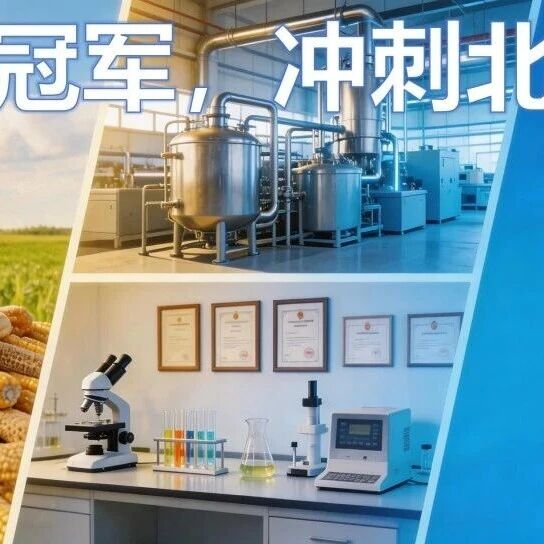
Core Viewpoint - Shandong Yinuo Biochemical Materials Co., Ltd. (Yinuo Biotech) is advancing its initial public offering (IPO) application on the Beijing Stock Exchange, aiming to raise 658 million yuan for three key projects in the bio-based materials sector [2][6]. Group 1: Company Overview - Yinuo Biotech, established in 2015, utilizes non-grain biomass, specifically corn cobs, to create a complete industrial system for bio-based materials, achieving an annual conversion of 2 million tons of agricultural and forestry waste with a resource utilization rate of 98% and a reduction of 3.6 million tons of CO2 emissions annually [3][5]. Group 2: Product and Achievements - The company holds dual titles as a national and provincial manufacturing champion in the bio-based sector, with its furfural product recognized as a national manufacturing single champion [5][6]. - Yinuo Biotech's subsidiary, Haosen Biotech, has developed a continuous production process using non-grain biomass (furfural) to produce bio-based 1,5-pentanediol, significantly reducing production costs compared to traditional methods [8]. Group 3: IPO Fund Allocation - The IPO proceeds will be allocated to three projects: 1. Development of furfural series compounds from corn cobs with an investment of 296 million yuan [7]. 2. High-performance green aerospace fuel LGR-01 project with a total investment of 150 million yuan, aligning with national low-carbon transition initiatives [8]. 3. Establishment of a research and development center with an investment of 212 million yuan to strengthen core technologies in the non-grain bio-based field [9]. Group 4: Market Potential - The demand for sustainable aviation fuel (SAF) in China is projected to reach 3.1 million tons by 2030 and 86.1 million tons by 2050, with current production concentrated in the HEFA route, which relies on waste oils [8][9]. - Yinuo Biotech's potential entry into the SAF market could leverage its existing technology and biomass resources, positioning the company favorably in a growing sector [9].
生物基材料龙头,进军CASE领域(涂层/粘合剂/密封剂/弹性体)
DT新材料· 2026-03-01 16:05
Core Viewpoint - Avantium is advancing its biobased FDCA (2,5-furandicarboxylic acid) initiative, expanding its applications into the CASE (Coatings, Adhesives, Sealants, and Elastomers) sector, which is crucial for various industries including construction, automotive, and electronics [6][8][16]. Group 1: Avantium's Collaborations and Developments - Avantium has partnered with Will & Co, a European specialty biobased chemical distributor, to promote FDCA in the CASE sector, marking a significant expansion beyond its previous focus on packaging and textiles [6][8]. - The FDCA flagship plant, with an annual capacity of 5,000 tons, is expected to commence production by mid-2026, with over 20 pre-sale agreements totaling more than €100 million [6][8][16]. Group 2: Applications of FDCA in CASE - FDCA is being explored for its potential in polyurethane, a core material in CASE applications, due to its adjustable properties and wide-ranging uses in coatings, adhesives, sealants, and elastomers [6][8][10]. - The main research directions for furan-based compounds in polyurethane include the development of furan-based polyols, isocyanates, and chain extenders, which enhance the performance and sustainability of polyurethane products [9][10][11][14][16]. Group 3: Upcoming Events and Industry Insights - The Bio-based 2026 conference, scheduled for May 20-22 in Shanghai, will feature discussions on FDCA's industrialization progress and biobased chemicals in the CASE sector, providing a platform for industry leaders to share insights [5][16][17]. - Key industry players, including Avantium and various international companies, will participate in the conference, offering opportunities for networking and knowledge exchange [17].
投资7亿元!热门生物基聚合单体FDCA项目备案
DT新材料· 2026-01-09 16:06
Core Viewpoint - The article discusses the advancements and strategic significance of the bio-based platform compounds project by Saierke, focusing on the production of glucose dicarboxylic acid (GA) and 2,5-furandicarboxylic acid (FDCA), which are essential for the bio-based materials market and have the potential to replace petroleum-based products [4][10][19]. Group 1: Project Overview - The Saierke bio-based platform compound project has completed its first phase in Jiande, Zhejiang, with an investment of 700 million yuan, aiming for an annual production of 5,000 tons of FDCA and 50 tons of GA, expected to commence production by mid-2027 [4][6][19]. - The project will occupy an area of 60 acres and is designed to process 10,000 tons of glucose annually, with a projected annual sales revenue of 500 million yuan and tax revenue of 30 million yuan once fully operational [6][19]. Group 2: Technological Advantages - Saierke's choice of glucose over traditional fructose for production leads to a significant cost advantage, as crystallized glucose prices are only 1/3 to 1/2 of fructose prices, with global production capacity for glucose at 15 million tons per year [7][9]. - The production process achieves a purity of 99.997% for FDCA, with high yields of over 60% from glucose to GA and over 90% from GA to FDCA, while maintaining low physical losses and allowing for catalyst recycling [9][10]. Group 3: Market Potential - GA and FDCA are identified as two of the twelve most valuable platform compounds by the U.S. Department of Energy, each having independent and expansive market opportunities [10][12]. - The FDCA market is projected to transition from a specialty chemical to a bulk chemical market as production costs decrease to 10,000-20,000 yuan per ton by 2025, with Saierke targeting a cost of 1,000-1,500 yuan per ton at a scale of 500,000 tons [15][19]. Group 4: Industry Recognition and Future Plans - Saierke's project has gained industry recognition, winning the "Most Commercially Valuable Award" at the third DT New Leaf Awards, highlighting its significant commercialization potential [17]. - The company plans to establish a flagship factory with a production capacity of 5,000 tons per year by mid-2027, marking a critical step towards large-scale production and accelerating the shift from petroleum-based to bio-based materials [16][19].
欧洲最大规模生物基化学品项目投产
Sou Hu Cai Jing· 2025-12-29 04:36
Core Viewpoint - UPM has launched a commercial production facility for wood-based chemicals in Germany, marking a significant investment in the bio-based industry, particularly focusing on high-value products derived from lignin and sugars [2][10]. Group 1: Investment and Production - UPM's bio-refinery in Leuna represents an investment of €1.3 billion (approximately 10.7 billion RMB) with an annual capacity of 220,000 tons, making it the largest bio-chemical industrial investment project in Europe [2]. - The facility aims to produce four main products: bio-based ethylene glycol, bio-based propylene glycol, lignin-based functional fillers, and industrial sugars [2]. Group 2: Market Potential - The global lignin market is projected to grow from $1.13 billion in 2024 to $1.62 billion by 2032, with a compound annual growth rate (CAGR) of 4.1% [3]. - Bio-based ethylene glycol is expected to see significant growth, with its market size forecasted to increase from $3.1 billion in 2024 to $9.2 billion by 2033, reflecting a CAGR of 14.2% [3]. Group 3: Resource Utilization Challenges - The traditional paper industry faces challenges in resource utilization, as only 70% of a tree is used for pulp, while the remaining 30% is often burned for energy [5]. - Lignin, a byproduct of the pulping process, is typically discarded or burned, leading to significant waste in the industry [6]. Group 4: Technological and Market Challenges - High-value utilization of lignin faces technical and cost barriers, as traditional methods damage its structure, making it difficult to convert into valuable chemicals [8]. - Historical attempts by major chemical companies to develop cellulose-based ethanol have largely failed, highlighting the need for accurate market assessments and customer willingness to pay for green products [9]. Group 5: UPM's Strategic Focus - UPM's strategy focuses on producing high-value chemicals rather than fuel ethanol, targeting the growing market for bio-based ethylene glycol and propylene glycol [10][15]. - The bio-refinery employs advanced techniques to extract sugars and separate lignin, converting them into renewable chemicals that can replace fossil-based products [12]. Group 6: Product Advantages - UPM's bio-based ethylene glycol has a negative carbon footprint of -0.3 kg CO2e/kg, significantly lower than fossil-based alternatives, which emit 3.0-3.7 kg CO2e/kg [17]. - The renewable functional filler derived from lignin can replace carbon black and silica in rubber and plastics, offering a carbon footprint reduction of 48-58% [21]. Group 7: Future Outlook - UPM plans to launch more commercial products from the Leuna facility in the first half of 2026, with full operational capacity expected to reach 220,000 tons of advanced bio-chemicals annually [23]. - The Chinese market, with its vast lignin resources, is also exploring similar transformations from waste to valuable chemicals, potentially leading to competitive advancements in the bio-based sector [25].
欧洲最大规模生物基化学品项目投产
DT新材料· 2025-12-28 16:05
Core Viewpoint - UPM's investment in a biorefinery in Germany represents a strategic shift towards high-value biochemicals, particularly lignin and bio-based glycols, amidst a declining traditional paper industry [4][11]. Group 1: Investment and Market Potential - UPM's biorefinery in Leuna, Germany, has an investment of €1.3 billion (approximately 10.7 billion RMB) and an annual capacity of 220,000 tons, making it the largest biochemicals industrial investment project in Europe [4]. - The global lignin market is projected to grow from $1.13 billion in 2024 to $1.62 billion by 2032, with a compound annual growth rate (CAGR) of 4.1% [4]. - The bio-based ethylene glycol market is expected to expand from $3 billion in 2024 to $9.2 billion by 2033, with a CAGR of 14.2% [5]. Group 2: Resource Utilization Challenges - The traditional paper industry faces a resource utilization dilemma, where only 70% of a tree is used for pulp, leaving 30% (branches) underutilized, primarily burned for energy [7]. - During the pulping process, lignin is removed, leading to significant waste, as it is typically incinerated for heat recovery [8][9]. Group 3: High-Value Utilization Challenges - The high-value utilization of lignin faces three main challenges: technical and cost barriers, market feasibility, and the need for precise market assessments [10]. - UPM's strategy focuses on converting lignin and sugars into high-value chemicals rather than biofuels, targeting the chemical market instead [11]. Group 4: Product Development and Market Strategy - UPM's biorefinery will produce bio-based ethylene glycol and functional fillers, with a focus on market growth and sustainability [14]. - Bio-based ethylene glycol has a negative carbon footprint of -0.3 kg CO2e/kg, significantly lower than fossil-based alternatives [18]. - The renewable functional filler can replace carbon black and silica in rubber and plastics, offering a carbon footprint reduction of 48-58% [23]. Group 5: Commercialization and Future Outlook - The Leuna biorefinery is set to start commercial production in December 2025, with plans for additional products to be launched in the first half of 2026 [26]. - Chinese companies are encouraged to follow UPM's model to transform lignin from waste to valuable chemicals, leveraging the country's vast agricultural waste resources [28].
4.5万吨生物基丁二酸和丁二醇项目公示
DT新材料· 2025-12-16 14:05
Core Viewpoint - The article discusses the recent re-approval of two significant projects by Shandong Tianyi Hongda Biotechnology Co., Ltd., focusing on the production of bio-based succinic acid and 1,4-butanediol, highlighting their investment details and potential applications in various industries [2][3][4][5]. Investment and Project Details - The bio-based succinic acid project has a total investment of 50.483 million yuan, with 1.5 million yuan allocated for environmental protection, accounting for 2.97% of the total investment. The project covers an area of 223.22 acres (148,814.08 m²), with the specific project area being 152.22 acres (101,480.51 m²) [3]. - The 1,4-butanediol production project has a total investment of 19.703 million yuan, with 1.5 million yuan for environmental protection, which constitutes 7.61% of the total investment. This project occupies 71 acres (47,333.57 m²) and is located in the Changyi Chemical Industry Park in Weifang City, Shandong Province [4]. Applications of Products - Succinic acid can be utilized in the production of plastics, resins, and rubber, serving as a plasticizer, modifier, coating agent, and adhesive. It also acts as an intermediate in pharmaceuticals for synthesizing certain drugs and can be used as a food additive, flavoring agent, preservative, and acidulant [3]. Company Overview - Shandong Tianyi Hongda Biotechnology Co., Ltd. was established on March 21, 2024, with a registered capital of 10 million yuan. The company is located in the Changyi Chemical Industry Park and focuses on bioengineering and bio-based chemicals, integrating research and development, production, and sales [5].
【参会通知+参会名单】2大院士领衔! 近50场报告!第五届非粮生物质高值化利用论坛,11.27-29,杭州!
合成生物学与绿色生物制造· 2025-11-21 15:52
Core Points - The "2025 (Fifth) Non-Grain Biomass High-Value Utilization Forum" will be held from November 27-29, 2025, in Hangzhou, Zhejiang, focusing on innovations and commercialization in the non-grain biomass sector [2] - The forum aims to promote large-scale applications of non-grain biomass utilization to support carbon neutrality goals [2] Event Details - The forum will feature nearly 50 presentations discussing key strategic areas such as green pretreatment of biomass, non-grain sugars, biomass-based chemicals and materials, and biomass energy including methanol, fuel ethanol, biogas, and sustainable aviation fuel (SAF) [2] - Registration and check-in will occur on November 27 from 12:00 to 20:00, with various activities scheduled throughout the event [4][9] Organizing Institutions - The forum is co-hosted by DT New Materials and the National Key Laboratory of Biomass Transportation Fuel Technology, with notable figures from various academic and research institutions involved [8][6] Agenda Highlights - The agenda includes a youth forum on non-grain biomass innovations, a SAF industry exchange meeting, and thematic forums on biomass chemicals, materials, and energy [9][30] - Keynote speakers include prominent researchers and industry leaders discussing advancements in biomass utilization and sustainable fuel technologies [23][30] Supporting Units - The event is supported by several academic institutions and associations, including Zhejiang University and various research laboratories focused on biomass materials and technologies [8][6]

议程首发!50场报告!第五届非粮生物质高值化利用论坛(11.27-29,杭州)
合成生物学与绿色生物制造· 2025-11-03 15:49
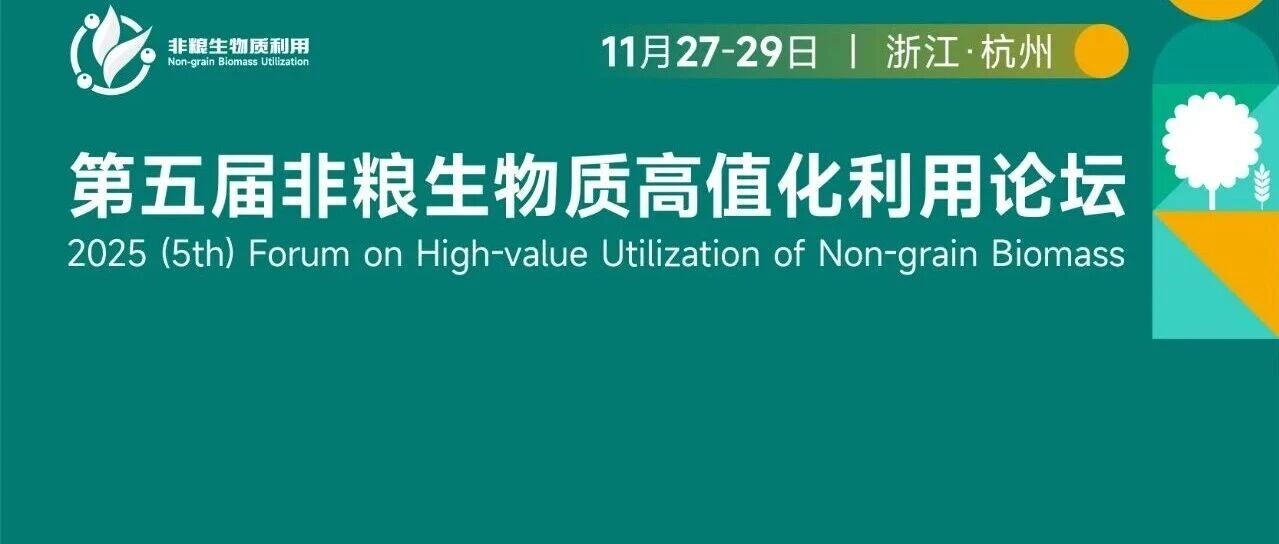
Core Viewpoint - The "NFUCon 2025" forum will focus on innovations and commercialization in the non-grain biomass sector, aiming to promote large-scale applications of biomass and support carbon neutrality goals [2][3]. Group 1: Event Overview - The forum will take place from November 27-29, 2025, in Hangzhou, Zhejiang, and is co-hosted by DT New Materials and the National Key Laboratory of Bio-based Transportation Fuel Technology [2]. - The theme of the forum is "Gathering Talents from All Directions, Assisting Non-Grain Initiatives" [2]. Group 2: Organizing Institutions - The forum is organized by DT New Materials and the National Key Laboratory of Bio-based Transportation Fuel Technology, with key figures such as Zhu Jin and Li Zhenglong serving as co-chairs [3]. - Supporting institutions include Zhejiang University and various research and industry associations [4]. Group 3: Forum Agenda - The agenda includes presentations on innovative processes for producing bio-based chemicals and materials, as well as discussions on biomass energy applications [6][9]. - A special session will focus on sustainable aviation fuel (SAF), inviting over 20 industry representatives to discuss trends and technological routes [7][10]. Group 4: Technology and Innovation - The forum will showcase 50 innovative projects in biomass utilization with commercial potential, facilitating industry-academia collaboration [11]. - Key topics include the development of bio-based materials, clean and efficient biomass pretreatment technologies, and advancements in biofuel production [9][10]. Group 5: Industry Participation - Notable companies and organizations such as China National Aviation Corporation and Boeing (China) are expected to participate in discussions on SAF and its industrialization [7][10]. - The event aims to foster collaboration among government, academia, and industry to advance the bio-based economy [2][3].
第一波大咖嘉宾揭晓!2025(第五届)非粮生物质高值化利用论坛将于11月杭州启程
合成生物学与绿色生物制造· 2025-10-24 15:46
Core Viewpoint - The NFUCon 2025 forum will focus on the innovative research and commercial feasibility in the non-grain biomass sector, aiming to promote large-scale applications of non-grain biomass and support carbon neutrality goals [2]. Group 1: Event Overview - The NFUCon 2025 will be held from November 27 to 29, 2025, in Hangzhou, Zhejiang, under the theme "Top Talent Gathering, Industry Symbiosis" [2]. - The forum will invite representatives from government, enterprises, and experts to discuss key strategic directions such as biomass green pretreatment, non-grain sugars, biomass-based chemicals and materials, and biomass energy [2]. Group 2: Organizing Institutions - The forum is organized by Ningbo Detaizhong Research Information Technology Co., Ltd. and the National Key Laboratory of Biomass Transportation Fuel Technology [3]. - Key figures include Zhu Jin, Li Zhenglong, and Zhang Xinghong, who hold significant positions in relevant research institutions and laboratories [3][4][5]. Group 3: Guest Speakers - Notable speakers include Zhu Jin, who has achieved multiple industrialization results in heat-resistant polylactic acid foaming materials and other biomass materials [4]. - Li Zhenglong focuses on the conversion and utilization of low-carbon resources, particularly in renewable aviation fuel and biomass high-value utilization [5]. - Zhang Xinghong is involved in polymer synthesis research and CO2-based polycarbonate technology [6]. Group 4: Forum Agenda - The forum will feature various activities, including a youth forum on non-grain biomass, a sustainable aviation fuel industry exchange, and thematic discussions on biomass chemicals and energy [15][16]. - A technology achievement display area will be set up to showcase 50 innovative results and projects with commercial potential in biomass utilization [17]. Group 5: Laboratory Focus - The National Key Laboratory of Biomass Transportation Fuel Technology focuses on four core areas: fiber ethanol technology, bio-aviation fuel technology, CO2-based polycarbonate technology, and biofuel evaluation standards [22].