
金融地产

Search documents
美股市场速览:盘带头回撤,资金加速流出
Guoxin Securities· 2026-02-01 09:13
Market Performance - S&P 500 increased by 0.3% while Nasdaq decreased by 0.2% this week[1] - Small-cap stocks led the decline with Russell 2000 value down by 1.0% and Russell 2000 growth down by 3.1%[1] - 13 sectors saw gains, while 10 sectors experienced losses, with telecommunications leading at +9.0%[1] Fund Flows - Estimated fund flow for S&P 500 components was -$84.1 million this week, down from +$5.6 million last week[2] - Major inflows were seen in technology hardware (+$40.3 million) and media & entertainment (+$39.5 million)[2] - Significant outflows occurred in software & services (-$106.0 million) and healthcare equipment & services (-$57.7 million)[2] Earnings Forecast - S&P 500's forward 12-month EPS expectation increased by 0.8% this week, up from 0.2% last week[3] - 21 sectors had upward revisions, with technology hardware & equipment seeing the largest increase at +5.6%[3] - Energy sector saw a downward revision of -2.7%[3] Risks - Economic fundamentals, international political situations, U.S. fiscal policies, and Federal Reserve monetary policies present uncertainties[3]




ETF基金周度跟踪(0112-0116):A股TMT涨幅靠前,资金主要流入软件、有色ETF-20260117
CMS· 2026-01-17 12:19
1. Report Industry Investment Rating No relevant content provided. 2. Core Viewpoints of the Report The report focuses on the performance of the ETF fund market from January 12th to January 16th, summarizing the performance and fund flows of the overall ETF market, different popular segmented ETF funds, and innovative theme and segmented industry ETF funds [1]. 3. Summary by Relevant Catalogs 3.1 ETF Market Overall Performance - **Market Performance**: Stock ETFs showed mixed performance. Hong Kong, Shanghai, and Shenzhen theme ETFs and A-share TMT ETFs led the gains, with above-scale funds rising by an average of 6.30% and 4.03% respectively. Conversely, A-share financial real estate and A-share consumption declined, with above-scale funds falling by an average of 2.68% and 1.80% respectively [2][5]. - **Fund Flows**: Funds flowed significantly into A-share TMT ETFs and A-share cyclical ETFs, with net inflows of 39.604 billion yuan and 19.838 billion yuan respectively throughout the week. In contrast, A-share large-cap ETFs and A-share dual innovation ETFs had net outflows of 126.355 billion yuan and 45.115 billion yuan respectively [3][7]. 3.2 Different Popular Segmented Type ETF Fund Market Performance - **A-share ETFs**: Different segmented A-share ETFs, including broad-based indices, industries, SmartBeta, themes, etc., showed various performance in terms of fund scale, weekly fund flows, weekly returns, and trading volumes. For example, in the TMT industry, the weekly returns of some semiconductor material and equipment theme ETFs were relatively high [11][19]. - **Hong Kong Stock ETFs**: Similar to A-share ETFs, Hong Kong stock ETFs in different segments also had diverse performance. For instance, in the TMT industry, some Hong Kong stock technology ETFs had certain positive returns [31]. - **Shanghai-Hong Kong-Shenzhen ETFs**: ETFs in this category also showed different performance in different industries and themes, such as the innovation drug and cloud computing industries [35]. - **US Stock ETFs**: US stock ETFs in broad-based indices and industries also had their own performance characteristics, with some showing slight declines and others showing slight increases [37][38]. - **Other QDII-ETFs**: These ETFs, including those related to South Korea, overseas Internet, and Japan, also had various performance [39]. - **Bond ETFs**: Different bond ETFs had different fund flows and returns, with some showing positive returns and others showing slight changes [40]. - **Commodity ETFs**: Commodity ETFs, such as gold and non-ferrous metals, also had their own performance, with gold ETFs generally showing positive returns [41]. 3.3 Innovative Theme and Segmented Industry ETF Fund Market Performance - **TMT Innovation Themes**: Software, cloud computing big data, and other themes showed relatively high weekly returns and year-to-date returns. For example, the software theme had a weekly return of 7.11% and a year-to-date return of 16.55% [43]. - **Consumption Segmented Industries**: Industries such as household appliances and food and beverage showed different performance, with some industries showing slight increases and others showing declines [44]. - **Pharmaceutical Segmented Industries**: The performance of different pharmaceutical segments was also diverse, with some segments such as medical devices showing slight declines and others such as medical care showing slight increases [45]. - **New Energy Themes**: Themes such as photovoltaic industry and new energy showed positive performance, with the photovoltaic industry having a weekly return of 3.94% and a year-to-date return of 9.91% [46]. - **Central and State-Owned Enterprise Themes**: Different central and state-owned enterprise themes had different performance, with some themes such as central enterprise science and technology leading showing positive returns and others such as central enterprise innovation showing declines [47]. - **Stable Growth Themes**: Industries such as non-ferrous metals and chemical industries showed different performance, with non-ferrous metals having a relatively high weekly return and real estate showing a decline [48]. - **Shanghai-Hong Kong-Shenzhen/Hong Kong Stock Connect Segmented Industries**: Different industries in this category also had various performance, with Hong Kong stock connect Internet and Shanghai-Hong Kong-Shenzhen Internet showing relatively high returns [49]. - **Dividend/Dividend Low Volatility Index Families**: Different indices in this family showed declines to varying degrees, with some indices having relatively large declines [50]. - **Science and Technology Innovation/Growth Enterprise Market Index Families**: Indices in this family generally showed positive performance, with the science and technology innovation 100 index having a relatively high weekly return [51].
美股市场速览:大盘趋势淡化,资金持续流入半导体
Guoxin Securities· 2026-01-03 13:09
Investment Rating - The report maintains a "weaker than the market" rating for the U.S. stock market [4] Core Insights - The overall market trend is fading, with continued capital inflow into the semiconductor sector [2] - The S&P 500 index decreased by 1.0% this week, while the Nasdaq fell by 1.5% [1] - Energy sector showed the best performance with a gain of 3.3%, while the automotive sector saw the largest decline at -7.0% [1] Summary by Sections 2.1 Investment Returns - Energy sector recorded a weekly return of 3.3%, while the automotive sector experienced a decline of 7.0% [13] - The capital goods sector increased by 1.1%, and the semiconductor products and equipment sector had a slight gain of 0.2% [13] 2.2 Capital Flows - The estimated net capital inflow for the semiconductor products and equipment sector was $2.061 billion this week [15] - The automotive sector faced significant outflows, with a net capital outflow of $2.562 billion [15] - The capital goods sector saw a net inflow of $394 million [15] 2.3 Earnings Forecast - The earnings per share (EPS) forecast for the semiconductor products and equipment sector was adjusted upward by 0.5% this week [16] - The automotive sector's EPS forecast was increased by 0.7% [16] - Overall, the EPS expectations for all 24 sectors have risen [3] 2.4 Valuation Levels - The report does not provide specific valuation levels in the provided content [18]



【光大研究每日速递】20251223
光大证券研究· 2025-12-22 23:05
Group 1: Fund Market Overview - Financial and real estate themed funds performed well, while TMT themed funds saw a net value decline [5] - A total of 40 new funds were established in the domestic market, with a combined issuance of 18.321 billion units [5] - Stock ETFs experienced significant inflows, particularly in large-cap broad-based ETFs, Hong Kong stock ETFs, and TMT themed ETFs [5] Group 2: Real Estate Market Insights - From January to November 2025, the transaction area of residential land in 100 cities decreased by 15.1% year-on-year, totaling 221 million square meters [5] - The average transaction floor price increased by 9.4% year-on-year to 6,295 yuan per square meter, with first-tier cities seeing a 29.5% increase [5] Group 3: Steel Industry Analysis - The price gap between hot-rolled and rebar steel is at its lowest level in six years [6] - High furnace capacity utilization rates have been below last year's levels for three consecutive weeks [6] - The price of tungsten concentrate reached a new high since 2012, while the capacity utilization rate for electrolytic aluminum hit a historical high [6] Group 4: Oil and Gas Sector Performance - China National Offshore Oil Corporation (CNOOC) received an "AA" rating in ESG, ranking 10th among 527 companies in the petrochemical sector [7] - The company has improved its board independence and risk management, actively addressing climate change and implementing carbon reduction measures [7] Group 5: Public Utilities Sector Update - In November, electricity generation increased by 2.7% year-on-year, with marginal improvements in the growth rates of nuclear, photovoltaic, and wind power [8] - The SW public utilities sector index fell by 0.59%, ranking 25th among 31 SW primary sectors [8] Group 6: Pharmaceutical and AI Integration - Ant Group rebranded its AI health application to "Ant Ai Fu," which saw a surge in downloads shortly after launch [8] - The product iteration transforms low-frequency medical visits into high-frequency health management, creating a digital closed loop from consultation to insurance claims [8] Group 7: Automotive Industry Developments - Botai Carlink, established in 2009, went public in September 2025, ranking third in China's passenger car intelligent cockpit domain control suppliers with a market share of 7.3% [8] - In the first five months of 2025, the company ranked second in the new energy passenger car cockpit domain control market with a market share of 13.11% [8]

美股市场速览:格快速修复,业绩预期平稳
Guoxin Securities· 2025-11-30 11:34
Market Performance - The S&P 500 index closed at 6,849, reflecting a weekly increase of 3.7% and a year-to-date increase of 16.4%[6] - The Nasdaq 100 index reached 25,435, with a weekly rise of 4.9% and a year-to-date increase of 21.0%[6] - The Dow Jones Industrial Average increased by 3.2% this week, with a year-to-date growth of 12.2%[6] Sector Analysis - The automotive and auto parts sector saw a significant weekly increase of 9.3% and a year-to-date increase of 9.9%[9] - The information technology sector reported a weekly rise of 4.6% and a year-to-date increase of 32.8%[9] - The healthcare sector experienced a weekly increase of 1.9% and a year-to-date increase of 21.0%[9] Fund Flows - The energy sector recorded a net inflow of $48 million this week, with a total of $572 million over the past 52 weeks[11] - The materials sector faced a net outflow of $290 million this week, totaling a negative $3.344 billion over the past 52 weeks[11] - The financial sector had a net inflow of $2.106 billion this week, with a total outflow of $6.723 billion over the past 52 weeks[11] Earnings Forecast - The overall EPS adjustment for the energy sector was 0.3% this week, with a year-to-date adjustment of -7.4%[14] - The materials sector saw an EPS adjustment of 0.6% this week, with a year-to-date adjustment of 4.9%[14] - The information technology sector's EPS adjustment was 0.6% this week, with a year-to-date adjustment of 28.0%[14]
美股市场速览:贸易冲突再起,全风格恐慌下跌
Guoxin Securities· 2025-10-12 05:14
Investment Rating - The report maintains a "Weaker than Market" rating for the U.S. stock market [1] Core Insights - The report highlights a significant market downturn due to renewed trade conflicts, with the S&P 500 dropping by 2.4% and the Nasdaq by 2.5% [3] - Only three sectors experienced gains, while 21 sectors saw declines, indicating widespread market fear [3] - The semiconductor sector attracted substantial capital inflows, contrasting with the overall outflow from the market [4] Summary by Sections Price Trends - The S&P 500 fell by 2.4%, and the Nasdaq decreased by 2.5% due to trade tensions [3] - The performance of sectors varied, with the Food, Beverage & Tobacco sector increasing by 1.7%, while Durable Goods & Apparel dropped by 8.4% [3] Capital Flows - The estimated capital flow for S&P 500 components was -$40.6 billion, indicating a significant outflow compared to the previous week [4] - The semiconductor products and equipment sector saw a capital inflow of $83.2 million, while the automotive sector experienced a $25.7 million outflow [4] Earnings Forecast - The report indicates a 0.3% upward adjustment in the earnings per share (EPS) forecast for S&P 500 components, with 21 sectors seeing an increase in earnings expectations [5] - The materials sector led the upward revisions with a 1.0% increase, while the energy sector faced a downward adjustment of 0.5% [5]

【金工】股票ETF资金转为净流入,科技板块基金净值涨幅优势延续——基金市场与ESG产品周报20250922(祁嫣然/马元心)
光大证券研究· 2025-09-23 23:06
Market Performance Overview - The domestic equity market indices showed mixed performance during the week of September 15-19, 2025, with the ChiNext Index rising by 2.34% [4] - In terms of sectors, coal, power equipment, and electronics industries had the highest gains, while banking, non-ferrous metals, and non-bank financial sectors experienced the largest declines [4] Fund Product Issuance - The domestic new fund market saw increased activity, with 63 new funds established, totaling 748.28 billion units issued. This included 27 bond funds, 27 equity funds, 7 mixed funds, 1 international (QDII) fund, and 1 REIT [5] - A total of 31 new funds were issued across the market, with 21 being equity funds, 4 FOF funds, 4 mixed funds, 1 bond fund, and 1 international (QDII) fund [5] Fund Product Performance Tracking - Various industry-themed funds exhibited volatile and divergent performance, with TMT theme funds continuing to show a net value increase of 2.56%, while financial and real estate theme funds saw a notable decline [6] - As of September 19, 2025, the performance of different themed funds was as follows: New Energy (2.07%), National Defense and Military Industry (1.50%), Balanced Industry (0.92%), Rotation Industry (0.49%), Consumption (-0.53%), Cyclical (-1.63%), Pharmaceutical (-2.41%), and Financial Real Estate (-2.68%) [6] ETF Market Tracking - Domestic stock ETFs experienced a net inflow of funds, while Hong Kong stock ETFs maintained significant inflows. Specifically, stock ETFs had a median return of 0.03% with a net inflow of 77.93 billion yuan [7] - Hong Kong stock ETFs recorded a median return of 0.84% with a net inflow of 166.52 billion yuan, and cross-border ETFs had a median return of 1.56% with a net inflow of 1.227 billion yuan [8] Fund Positioning Monitoring - The estimated equity positioning of actively managed funds decreased by 0.27 percentage points compared to the previous week. Increased allocations were observed in the automotive, electronics, and basic chemicals sectors, while banking, pharmaceutical, and agriculture sectors saw reduced allocations [9] ESG Financial Products Tracking - A total of 34 new green bonds were issued this week, with a cumulative issuance scale of 379.48 billion yuan. The domestic green bond market has steadily developed, with a total issuance scale of 4.82 trillion yuan and 4,153 bonds issued as of September 19, 2025 [10] - The median net value changes for ESG funds were as follows: active equity funds (1.42%), passive equity index funds (0.21%), and bond ESG funds (0.04%). Funds focused on climate change, low-carbon economy, and carbon neutrality showed significant performance advantages [10]

信达地产“非标准化代建”
3 6 Ke· 2025-09-23 02:02
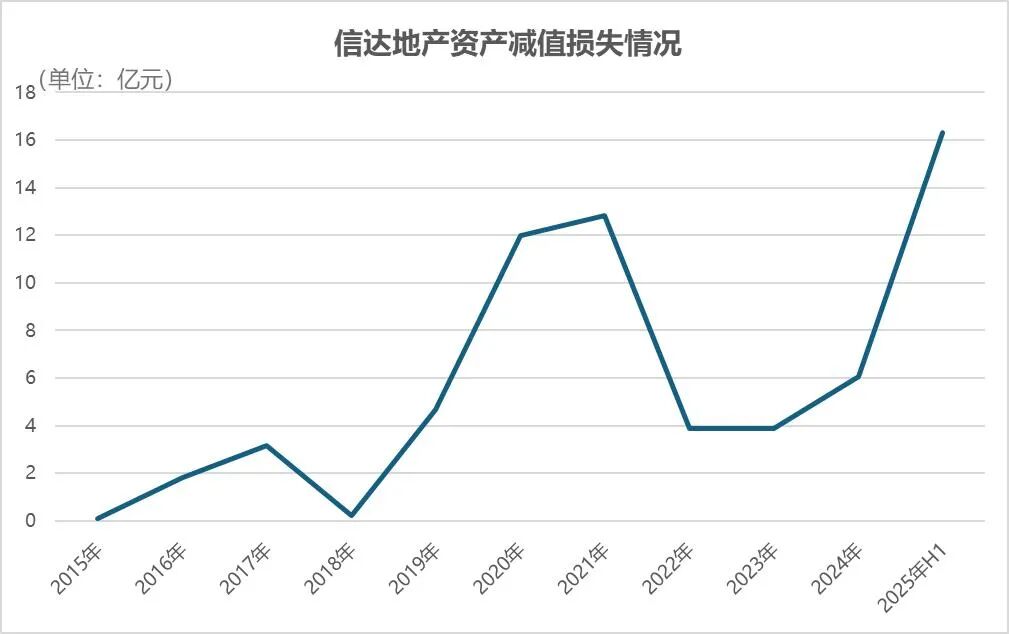
Core Viewpoint - The article discusses the unique position of Xinda Real Estate in the real estate industry, highlighting its transition from a high-priced land acquisition strategy to a focus on light asset operations and project rescue services amid industry downturns [1][3][10]. Historical Context - Ten years ago, Xinda Real Estate, backed by China Xinda, established a "financial real estate" strategy to rapidly expand its market presence, achieving a scale of over 100 billion [2][4]. - The company gained notoriety by acquiring several high-priced land parcels, including a record-breaking purchase in Hangzhou for 12.318 billion yuan, leading to a total expenditure of 43.956 billion yuan on eight land parcels [4][5]. - However, since 2017, the real estate sector has faced stringent regulations, leading to challenges in selling high-priced properties and ongoing performance pressure from these acquisitions [5][6]. Financial Performance - Xinda Real Estate has seen a significant increase in asset impairment losses, with a reported 4.67 billion yuan in 2019, a 1955.92% increase year-on-year, and 11.98 billion yuan in 2020, a 156.53% increase [6][8]. - In the first half of 2025, the company reported a revenue of 1.778 billion yuan, a 29.78% decrease year-on-year, and a net loss of 3.69 billion yuan compared to a profit of 106 million yuan in the same period of 2024 [9]. Shift in Business Model - In response to the challenges posed by high-priced land, Xinda Real Estate has shifted its focus away from acquiring expensive land and has increasingly engaged in providing construction and management services for distressed projects [10][12]. - The company has reported a growing contribution from its construction services, with 11.89 billion yuan in sales from this segment in the first half of 2025, accounting for 22.32% of total sales [12][14]. - Despite the increase in construction services, the profit margins have been declining, with the gross margin for real estate operations dropping to 4.19% in the first half of 2025, a decrease of 7.36 percentage points [14]. Future Outlook - Xinda Real Estate is restructuring its construction business model to integrate investment, construction, and operation, aiming for sustainable performance [16][17]. - The company has established a 20 billion yuan fund to assist troubled enterprises and projects, indicating a strategic shift towards a more integrated approach in its operations [17].

基金市场与ESG产品周报:权益、债券型基金表现分化,各类行业主题基金普遍上涨-20250818
EBSCN· 2025-08-18 08:47
- The report does not include any quantitative models or factor construction details related to quantitative finance[1][2][3] - The content primarily focuses on fund performance, market trends, and ESG product tracking without discussing quantitative models or factors[4][5][6] - No specific formulas, construction processes, or backtesting results for quantitative models or factors are provided in the report[7][34][45]