粤菜餐饮

Search documents
680+门店的最大粤菜连锁竟然不是广东人开的
虎嗅APP· 2026-03-22 03:12
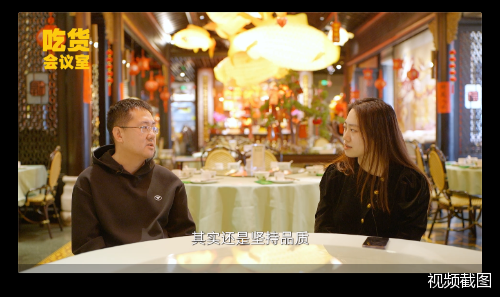
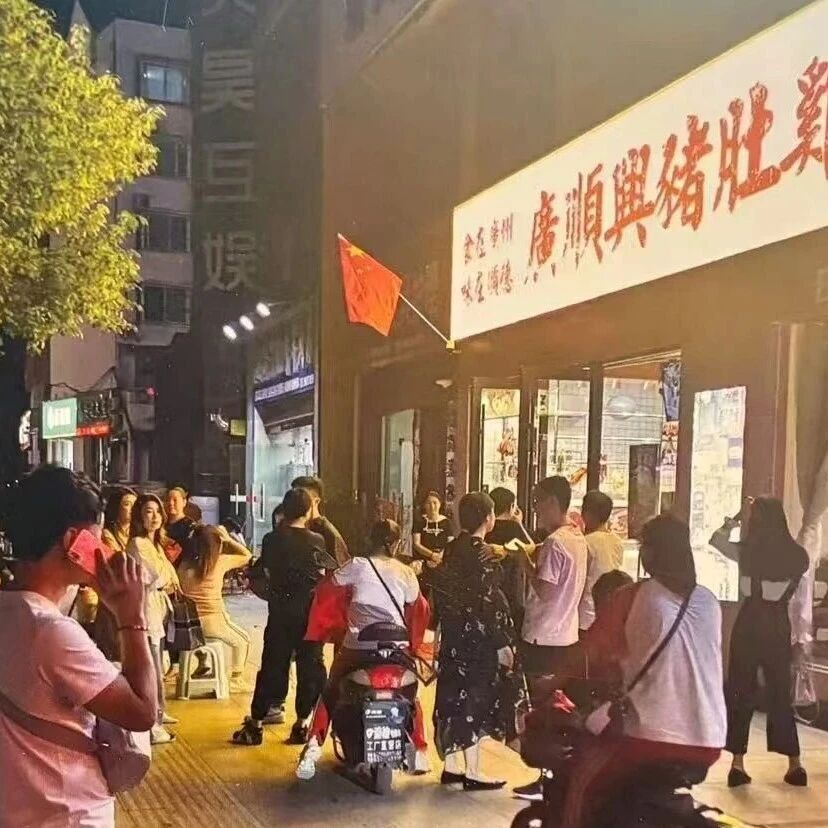
Core Viewpoint - The article discusses the rise of Guangshunxing, a Cantonese restaurant chain founded by Zhao Peng, a non-Cantonese entrepreneur, who has successfully expanded the brand to over 680 locations across China, focusing on making Cantonese cuisine more accessible to the masses [4][5][6]. Group 1: Company Background - Guangshunxing has become the leader in the number of Cantonese restaurant locations in China, with an average customer spending of around 80 yuan, targeting the high-end Cantonese market in lower-tier cities [5]. - Zhao Peng, the founder, started his culinary journey at the age of 14 and has faced numerous challenges, including a failed restaurant venture during the SARS outbreak in 2003, before successfully establishing Guangshunxing [10][11]. Group 2: Market Insights - The traditional perception of Cantonese cuisine as high-end and expensive has limited its accessibility, but Zhao Peng identified a market gap for affordable Cantonese food, particularly in non-Cantonese regions [12][13]. - The introduction of the "light Cantonese" concept, which combines various popular Cantonese dishes in a casual dining environment, has resonated with consumers, especially in areas where there were few options for Cantonese cuisine [13][14]. Group 3: Business Strategy - Guangshunxing's growth strategy involved careful site selection, focusing on second to fourth-tier cities, and avoiding high-rent areas, which allowed for cost-effective operations [13][15]. - The company adopted a franchise model that emphasizes brand control and operational efficiency, with a focus on long-term partnerships with franchisees rather than quick expansion [19][20]. Group 4: Future Challenges and Opportunities - Zhao Peng acknowledges that Guangshunxing's current model only addresses 5% of the market demand, indicating a need for further innovation and adaptation to changing consumer preferences, particularly among younger generations [22][23]. - The company plans to evolve its offerings to cater to a broader range of consumer needs, including aesthetics and convenience, as well as to enhance its brand identity beyond traditional Cantonese cuisine [23][24].

老字号点都德上海试水“早茶夜酒”新店型
Bei Jing Shang Bao· 2025-12-14 11:18
Group 1 - The core idea of the article is that the traditional Cantonese brand Dian Dou De has opened a new bistro-style restaurant in Shanghai, which operates with a dual concept of serving dim sum during the day and cocktails at night [1] - The new bistro's average spending per customer is 114 yuan, with operating hours from 10 AM to 11 PM [1] - The restaurant focuses on a variety of Cantonese dishes and dim sum during the day, while offering six special cocktails priced between 28 yuan and 38 yuan in the evening [1] Group 2 - Dian Dou De is a well-known Cantonese brand from Guangzhou, primarily serving traditional Cantonese dim sum, and has nearly 100 direct-operated stores across the country [1]
翠园广州门店被质疑收“白开水费”不合理
Bei Jing Shang Bao· 2025-07-03 02:57
Company Overview - The restaurant involved, Cuiyuan (Taikoo Hui branch), is a brand under the Hong Kong Maxim's Group, established in 1971, specializing in Cantonese cuisine [2]. Pricing Controversy - A recent incident highlighted a pricing issue where two customers were charged 11 yuan for plain water in addition to the cost of tea and a service fee of 10% [1]. - The restaurant's staff clarified that the plain water charge of 11 yuan per person is standard, and the tea price only covers one person's tea service [1]. Regulatory Compliance - The Guangzhou Tianhe District Market Supervision Administration stated that as long as the restaurant clearly marks the price of plain water, the charging practice is considered normal and compliant [2]. - Consumers are advised to check for any pricing indications before ordering, and if there is no clear pricing, they can file a complaint [2].
嘉士伯中国牵手廣順興,拓展高品质粤菜餐酒新场景
Di Yi Cai Jing· 2025-06-19 09:40
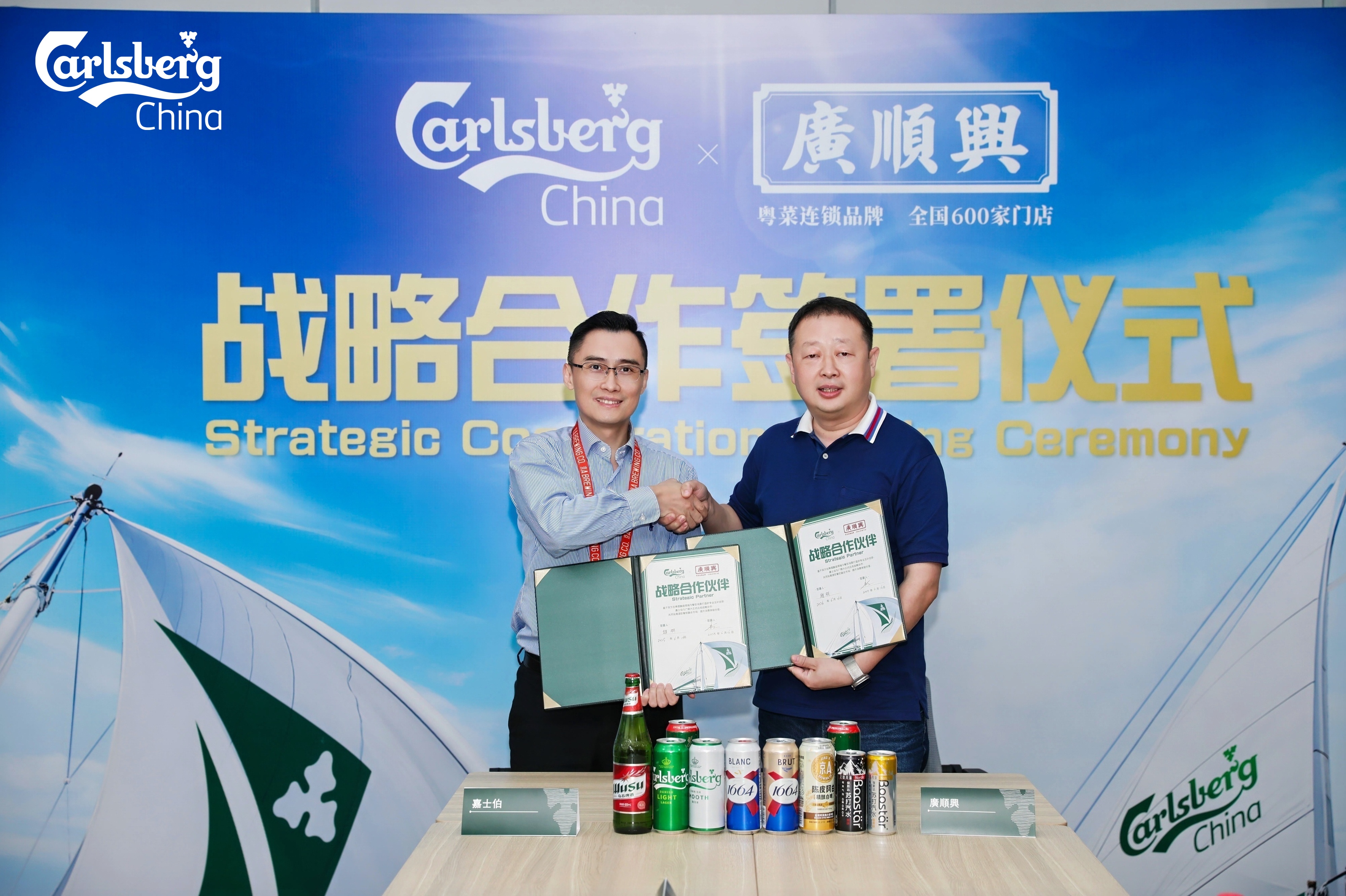
Core Insights - Carlsberg China has signed a strategic cooperation agreement with Guangshunxing, a top 100 restaurant company in China, to establish a deep partnership aimed at enhancing market penetration of Carlsberg's brands in high-quality Cantonese dining channels [1][4] - The collaboration will focus on product synergy, scene creation, and marketing linkage, aiming to provide a more quality-driven and scenario-based dining experience [1][4] Group 1: Partnership Details - Carlsberg China will become the core beer supplier for Guangshunxing's nationwide stores, covering a diverse brand portfolio including Carlsberg, Lebo, 1664, Wusu, and Jing A [4] - The partnership will leverage star IP collaborations, customized meal packages, seasonal menus, and co-created dining experiences to enhance various dining scenarios such as formal meals, late-night snacks, and social gatherings [4][7] Group 2: Strategic Goals - The cooperation is seen as a significant move for resource complementarity and mutual benefits, with Carlsberg aiming to create more enjoyable moments for consumers by integrating beer culture with culinary experiences [4][7] - Future plans include deepening the partnership through consumer experience, brand influence, and product innovation, with a commitment to invest high-quality resources and professional teams [4][7] Group 3: Company Backgrounds - Guangshunxing, founded in 2017, has expanded to 650 stores nationwide and aims to be a leading brand in Cantonese cuisine, focusing on fresh, healthy, and high-quality dining experiences [7] - Carlsberg China is one of the top five beer companies in China, operating a network of 27 breweries and a comprehensive market sales network, offering a mix of local and international brands to meet diverse consumer needs [7]


听Ta说|对话北京行运餐饮管理股份有限公司董事霍然:从追风口到贴合消费造风口
Bei Jing Shang Bao· 2025-04-02 13:33
Core Viewpoint - The company is transitioning from its previous brand, Hangyun Dabianlu, to a new concept, Hangyun Seafood Food Collection, in response to changing market demands and consumer preferences [2][4][9] Group 1: Brand Transition - Hangyun Dabianlu, once a popular hotpot brand, is being replaced by Hangyun Seafood Food Collection, which offers a more cost-effective dining experience with an average spend reduced from 250 yuan to around 150 yuan [2][9] - The new brand retains classic broth options while introducing a "seafood selection + DIY broth" model to enhance consumer engagement [2][9] - The decision to rebrand was influenced by market research indicating that consumers prioritize value for money over traditional dining experiences [9][12] Group 2: Market Strategy - The company aims to diversify its offerings with multiple brands, including Feifufu Restaurant and Zhongjiufu Changfen Wang, to cater to different segments of the Cantonese cuisine market [4][8] - Feifufu Restaurant has become a key brand, achieving high customer demand with wait times exceeding 100 tables during peak periods, attributed to its focus on differentiated offerings [5][10] - The company emphasizes high-quality ingredients and a unique dining experience, with a significant investment in maintaining food freshness and authenticity [5][10] Group 3: Operational Insights - The operational model of Feifufu Restaurant involves a high initial investment and a focus on quality, with food costs accounting for 40%-60% of revenue, which is higher than the industry average [6][10] - The company believes in the importance of maintaining quality over pursuing low-cost strategies, rejecting the trend of price wars in the industry [6][11] - The restaurant's approach includes a strong emphasis on customer experience, integrating cultural elements like traditional performances to enhance emotional value for diners [12]