钻石加工

Search documents
拥抱RCEP四年,鲁企如何“链”全球
Feng Huang Wang Cai Jing· 2026-01-04 00:04
Group 1 - RCEP has officially come into effect, leading to significant tariff reductions and enhanced utilization of origin accumulation rules by companies, particularly in Shandong province [1][2] - The total trade value between China and ASEAN reached 6.82 trillion yuan, with an 8.5% increase, making ASEAN China's largest foreign trade market [1] - Companies like Linyi Shansong Biological Products Co., Ltd. have benefited from a 5% tariff reduction on soybean protein exports to ASEAN countries, resulting in a steady increase in export orders [2] Group 2 - RCEP has introduced various trade facilitation measures, including self-declaration of origin by approved exporters and expedited customs clearance, which have lowered trade costs and barriers [3][4] - Qingdao Jiaodong International Airport has become a key hub for diamond imports, with companies like Linyi Blue Rose Huaxing Diamond Jewelry Co., Ltd. utilizing RCEP channels to import 607,000 carats of rough diamonds [3][4] - The integration of RCEP with existing bilateral trade agreements has expanded the scope of origin accumulation, facilitating higher quality regional trade [5] Group 3 - Companies such as Qingdao Kaichuang Food Co., Ltd. have leveraged RCEP's origin accumulation rules to avoid a 5% import tariff on canned fruit exports to Australia, resulting in a 27.6% increase in imports from ASEAN countries [6] - The textile industry has seen cross-border supply chain integration due to RCEP, allowing domestic textile materials to be supplied to overseas processing plants in Southeast Asia [6] - Qingdao Customs has actively promoted RCEP policies to 1,766 companies, helping 173 import enterprises achieve tariff benefits for the first time [6] Group 4 - From 2022 to November 2025, customs in Qingdao and Jinan have applied RCEP tariff rates to imported goods worth 20.94 billion yuan, resulting in a tax reduction of 840 million yuan [7]
A股午评:沪指跌0.09%、创业板指跌0.5%,商业航天及煤炭概念股走高,福建板块活跃
Sou Hu Cai Jing· 2025-12-03 03:45
Market Overview - The A-share market experienced a downward trend with major indices declining, including the Shanghai Composite Index down 0.09% to 3894.22 points, the Shenzhen Component down 0.19% to 13031.26 points, and the ChiNext down 0.5% to 3055.92 points, with a total trading volume of 1.07 trillion yuan [1] Sector Performance - The commercial aerospace sector rebounded, with Aerospace Power hitting the upper limit and Shunhao Co. achieving four consecutive trading limit-ups [1] - The coal sector saw a rapid increase, with Antai Group achieving two consecutive limit-ups, and Dayou Energy and New Dazhou A hitting the upper limit [1] - The Fujian sector was active, with Hai Xin Food achieving six consecutive limit-ups and Sun Cable achieving two consecutive limit-ups [1] - The superhard materials concept strengthened, with Huanghe Xuanfeng reaching the upper limit [1] - The AI application sector collectively weakened, with Fushi Holdings dropping over 11% [1] Popular Sectors - The airport and shipping sector saw a short-term rise, with stocks like Huaxia Airlines and Juneyao Airlines increasing in value. This was driven by a joint announcement from two departments to promote the integration of aviation and tourism, aiming to significantly improve tourism service levels by 2027 [2] - The pharmaceutical sector continued to perform strongly, with Haiwang Bio achieving six consecutive limit-ups and Ruikang Pharmaceutical also performing well. The China CDC indicated a peak in flu cases is likely in mid-December, which may drive demand in the pharmaceutical sector [3] Emerging Trends - Cultivated diamond stocks experienced a broad increase, led by Sifangda, with other companies like World and Huifeng Diamond rising by 5%. The upcoming 2025 Cultivated Diamond Industry Conference is expected to boost interest in this sector [4] Institutional Insights - Dongfang Caifu noted a strong expectation for RMB appreciation, which may accelerate foreign capital allocation to the A-share market. The recent strengthening of the RMB against the USD is attributed to several factors, including Fed rate cut expectations and improved Sino-US relations [5] - Xinda Securities outlined three conditions for index breakthroughs, emphasizing the importance of policy changes from the Central Economic Work Conference, economic data improvement, and significant inflows of resident funds [6][7]

50%关税生效 印度钻石业将受重创
Di Yi Cai Jing· 2025-08-27 16:03
Core Viewpoint - The introduction of a 50% tariff on Indian products by the United States is expected to severely impact India's diamond processing industry, which is already facing challenges due to declining global demand for diamonds [1]. Group 1: Impact on Indian Diamond Industry - India is the largest natural diamond processing country, handling approximately 90% of the world's diamond cutting and polishing [1]. - The new tariff will exacerbate the already struggling Indian diamond export business, which is projected to generate around $32 billion in jewelry exports for the fiscal year 2023-2024, with the U.S. accounting for about one-third of this market, approximately $9 billion [1]. - The chairman of the Gem and Jewellery Export Promotion Council (GJEPC) expressed significant concern over the impact of the tariffs on the entire value chain of the industry [1]. Group 2: Response from Indian Businesses - Due to the new tariffs, U.S. clients have begun canceling orders, leading to operational difficulties for many local factories in India [1]. - Some diamond processing factories are reducing raw diamond purchases, lowering inventory, cutting working hours to maintain cash flow, and even significantly lowering prices to stay operational [1]. - There are plans among several factories to shift processing operations to countries with lower tariffs imposed by the U.S. [1]. Group 3: Market Dynamics and Consumer Behavior - The tariff increase is expected to raise procurement costs for U.S. importers, potentially leading to a 5%-10% increase in retail prices for natural diamonds, which may drive consumers towards more cost-effective options like lab-grown diamonds or second-hand jewelry [2]. - There is uncertainty regarding whether Indian diamond merchants will return to the Chinese market, as the transition of production capabilities is complex and time-consuming [3]. - Some analysts suggest that Indian companies might resort to "third-country transshipment" (e.g., through Dubai or Israel) to circumvent tariffs, although this could increase logistics costs and delivery times, thereby reshaping the global diamond supply chain [3].
印度面临特朗普高关税冲击 出口与就业承压
Sou Hu Cai Jing· 2025-08-27 15:44
Core Viewpoint - The imposition of high tariffs by the U.S. on Indian goods has significantly strained U.S.-India relations, impacting various sectors of India's export industry and threatening economic growth [3][4]. Group 1: Tariff Impact - Starting Wednesday, the U.S. has raised tariffs on Indian imports to 50%, which includes a 25% retaliatory tariff and an additional 25% due to India's oil purchases from Russia [3]. - The global trade research initiative estimates that affected exports account for two-thirds of India's $90 billion exports to the U.S., potentially reducing annual export value by nearly $40 billion, which could lower India's economic growth rate by nearly 1 percentage point for the fiscal year ending March 2026 [3]. Group 2: Affected Industries - The tariff increase severely impacts labor-intensive sectors such as textiles, apparel, furniture, shrimp farming, and diamond processing, with significant employment risks for workers in these industries [3]. - Indian textile industry representatives have raised concerns about existing orders and who will bear the cost of the tariffs, noting that tariffs on U.S. imports of Indian apparel have now exceeded 60%, far higher than competitors like Vietnam and Bangladesh [3]. Group 3: Government Response - Prime Minister Modi emphasized the importance of not sacrificing the interests of farmers, livestock owners, and fishermen, urging citizens to support local products and promote national self-reliance [3]. - Despite government efforts, there are fears within the export sector that India's market share in the U.S. will rapidly decline [3][4].

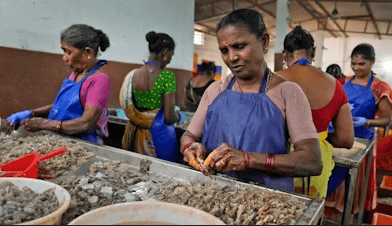
美国对印度输美产品开征50%关税,印度多个行业遭严重冲击
Sou Hu Cai Jing· 2025-08-27 09:52
Group 1 - The United States has officially imposed a 50% tariff on products imported from India, severely impacting industries such as leather and diamond processing [1][3] - Many American clients have begun canceling orders, leading to factory shutdowns in Kanpur, a major leather processing center in India, which heavily relies on the U.S. market [3][9] - The diamond processing industry is also affected, with the U.S. accounting for one-third of India's annual gem and jewelry exports, amounting to approximately $9 billion [5][7] Group 2 - Over 80% of raw diamonds are cut and polished in Surat, Gujarat, India, and the new tariffs exacerbate an already sluggish diamond export business, prompting factories to reduce raw diamond purchases and cut inventory [7][9] - The Indian Export Organization has indicated that the higher tariffs will put about 55% of products exported to the U.S. at a "price disadvantage," particularly affecting labor-intensive sectors like leather, chemicals, and handicrafts, leading to significant job losses [9]
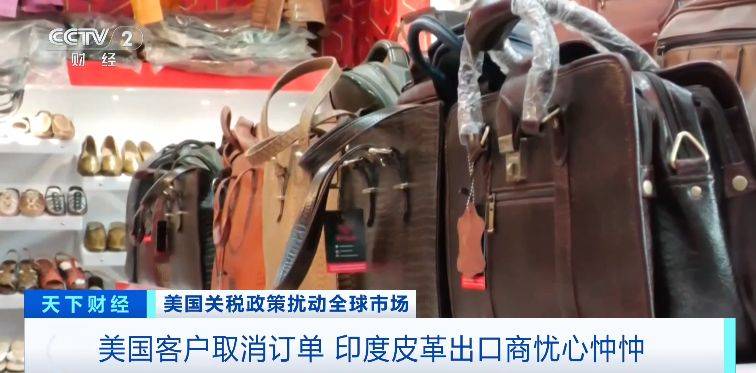
50%关税,正式生效!印度部分工厂“停工”
证券时报· 2025-08-27 07:47
Core Viewpoint - The United States has officially imposed a 50% tariff on products imported from India, significantly impacting industries such as leather and diamond processing, leading to order cancellations and operational difficulties for many factories [1][3][11]. Group 1: Impact on Leather Industry - Kanpur, a major leather processing center in India, has seen numerous American clients cancel orders, resulting in factory shutdowns and a shift towards local sales or exports to other countries [3][5]. - Exporters in Kanpur report that all orders with American clients have been rendered void, with one exporter stating that a client has halted supply until the tariff issue is resolved [5]. Group 2: Impact on Diamond Industry - The diamond processing sector is also severely affected, with the U.S. accounting for one-third of India's annual gem and jewelry exports, approximately $9 billion [7]. - The new tariff policy exacerbates an already sluggish diamond export business, prompting some factories to reduce raw diamond purchases, cut inventory, and lower working hours to maintain cash flow [9]. Group 3: Broader Economic Implications - The Federation of Indian Export Organizations has indicated that the increased tariffs will put about 55% of goods exported to the U.S. at a "price disadvantage," particularly affecting labor-intensive sectors like leather, chemicals, and handicrafts, leading to significant job losses [11].
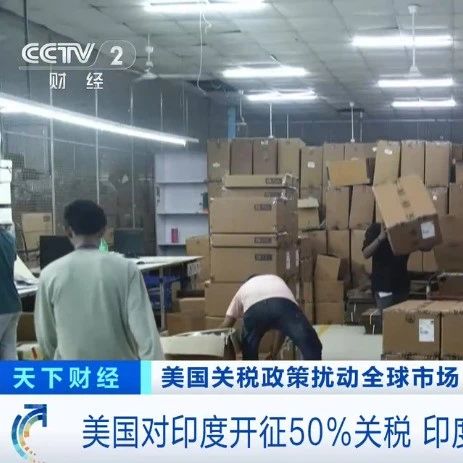
世界最大钻石交易所遭破坏
证券时报· 2025-06-20 04:23
Core Viewpoint - The missile attack by Iran on June 19 has significant implications for Israel's diamond industry, particularly affecting the world's largest diamond exchange located in Ramat Gan, which is a major manufacturing and financial hub in the Tel Aviv metropolitan area [1]. Group 1 - The missile strike directly hit near the Israeli Diamond Exchange, causing extensive damage to nearby buildings, including shattered glass facades [1]. - The attack on the diamond trading center may impact Israel's diamond industry, which is a monopolistic sector for the country [1]. - Ramat Gan is identified as a key manufacturing center in Israel, housing numerous financial institutions and serving as the largest satellite city of Tel Aviv [1].