
防卫

Search documents
欧盟与澳大利亚达成FTA,脱美贸易圈在扩大
日经中文网· 2026-03-25 06:18
Group 1 - The EU and Australia have reached a compromise on a Free Trade Agreement (FTA), which will eliminate tariffs on 99% of EU products and 98% of Australian products [2][8] - The FTA is expected to create a free trade area covering nearly 500 million people and accounting for about 20% of the world's GDP [4] - The agreement aims to reduce Australia's trade dependency on China, especially after tensions arose due to Australia's call for an independent investigation into the origins of COVID-19 [9] Group 2 - The EU has been actively expanding its free trade network beyond the US, having recently signed FTAs with Mercosur and India, and is looking to establish new trade rules in collaboration with CPTPP [4][11] - The FTA negotiations included concessions from both sides, with the EU making some compromises on geographical indications (GI) and Australia opening its financial services and government procurement markets [8] - The EU plans to accelerate policy coordination with the Indo-Pacific region, focusing on security and defense partnerships, similar to agreements established with Japan [11]


日股“狂热”还得日本经济埋单
Xin Lang Cai Jing· 2026-02-12 22:40
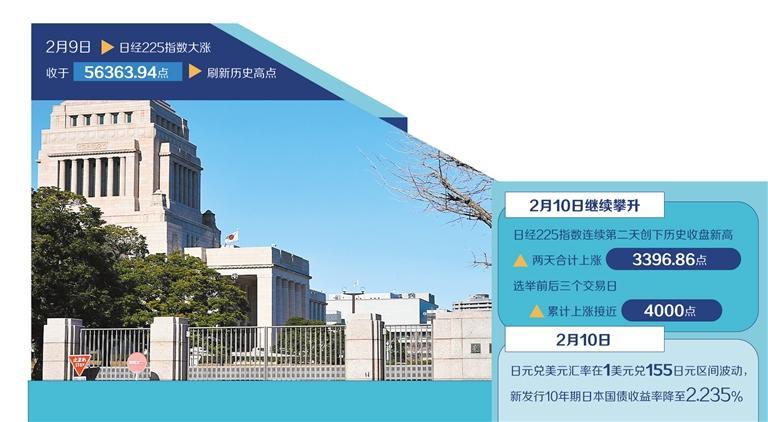
Group 1 - The core viewpoint of the articles highlights the significant market reaction following the Liberal Democratic Party's victory in the House of Representatives election, leading to a surge in the Nikkei 225 index, which reached historical highs [2][3]. - The election results are seen as providing policy certainty, with Prime Minister Kishi Sanae signaling strong fiscal stimulus measures, including a proposal to reduce the consumption tax on food and beverages to zero [3][4]. - The market's enthusiasm is driven by expectations of increased policy momentum, particularly in sectors like semiconductors and artificial intelligence, which are prioritized for investment [3][4]. Group 2 - The proposed reduction of the consumption tax is estimated to result in an annual revenue loss of approximately 5 trillion yen, raising concerns about how to fill this fiscal gap [4][5]. - There are warnings that the market has not fully absorbed the implications of the tax cuts, which could lead to rising interest rates and yen depreciation if not adequately supported [4][5]. - The transition to a "tax credit + welfare" system, intended to follow the tax cuts, may face significant implementation challenges, potentially leading to fiscal uncertainty [5][6]. Group 3 - The behavior of market participants is shifting, with retail investors becoming more active and adopting trend-following strategies, which could lead to market volatility [5][6]. - The yen is under pressure, with expectations of depreciation in the medium to long term, as the new government's willingness to intervene in currency markets is questioned [6][7]. - The bond market is experiencing upward pressure on interest rates, with the yield on newly issued 10-year Japanese government bonds dropping to 2.235%, indicating ongoing concerns about fiscal sustainability [6][7]. Group 4 - There are differing opinions on the future of the Nikkei index, with some brokerages raising year-end forecasts to 61,000 points, while others emphasize the need for clear policy execution and economic growth strategies [7][8]. - The current market enthusiasm is viewed as a potential overextension based on expectations of policy effectiveness and continued foreign investment, with unresolved fiscal challenges posing risks [7][8].
日经突破5万点 “早苗经济学”推动行情
日经中文网· 2025-10-27 03:38
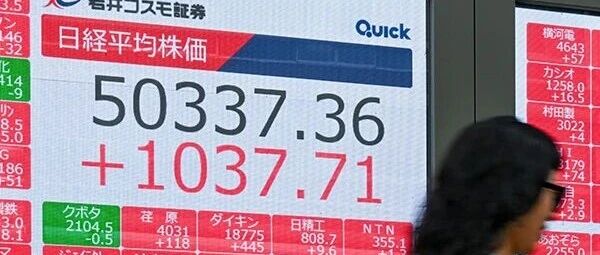
Group 1 - The Nikkei average index rose significantly, reaching 50,337.36 points, marking a historic breakthrough above 50,000 points, driven by expectations surrounding the economic policies of the new Kishida administration and external factors like anticipated interest rate cuts in the US and the expansion of the AI market [2][4]. - The Kishida administration's approval rating stands at 74%, significantly higher than the previous administration's 51%, which is perceived positively by the market as it suggests greater stability for the government [4]. - The "Japan Weeks" event highlighted the shift from savings to investment in Japan, with Finance Minister Shunichi Suzuki noting that the proportion of cash and deposits in personal financial assets remains high compared to the US, indicating substantial room for change [4]. Group 2 - AI and semiconductor-related stocks, such as Advantest and SoftBank Group, contributed to the market's upward movement, while defense-related stocks saw increased buying ahead of the upcoming US-Japan summit [5]. - The Bank of Japan is expected to maintain its current interest rates during the upcoming monetary policy meeting, with market consensus suggesting potential rate hikes could occur in January or as early as December [5]. - The external environment is favorable, with the US CPI for September coming in below expectations, raising the likelihood of interest rate cuts in the US, and easing trade tensions between the US and China, which supports investor sentiment [6].
日经平均股指大跌2.58%
日经中文网· 2025-10-14 08:00
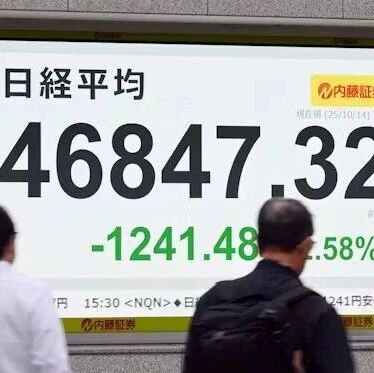
Market Overview - The Nikkei average index closed at 46,847 points on October 14, down 1,241 points (2.58%) from the previous weekend, primarily due to political uncertainty following the Komeito party's exit from the ruling coalition with the Liberal Democratic Party (LDP) and concerns over US-China tensions [2][4]. Political Impact - The exit of the Komeito party has led to increased political uncertainty, causing investors to withdraw from the market. The volatility index (Nikkei Volatility Index, VI) reached around 34, the highest level since April 22, indicating heightened market anxiety [4]. - Analysts express concerns about the potential for a change in government if opposition parties unite, which could lead to a lack of clarity in policy execution and delays in investments in growth sectors, further impacting the Japanese stock market [4]. Stock Performance - Stocks that were previously bought during the "Takaichi trade" following the appointment of LDP President Sanae Takaichi saw significant declines, with defense-related IHI shares dropping over 3% and cybersecurity stocks like NEC falling more than 4% [4]. - Despite the overall market decline, some stocks showed resilience, with Yaskawa Electric rising by 7% amid speculation that the exit of the Komeito party would not significantly impact corporate performance [5]. Market Sentiment - There is a prevailing market assumption that the LDP will continue to govern as a minority party, leading to expectations of limited market declines despite potential operational gridlock [5]. - Some analysts noted stronger-than-expected buying demand, suggesting that the broader fiscal expansion framework would remain unchanged even after the Komeito's exit from the coalition [5].
普来仕:日本股票估值吸引 仍存在重大投资机遇
Zhi Tong Cai Jing· 2025-09-01 05:06
Group 1 - Japan's stock market has seen significant gains since the end of April, driven primarily by a trade agreement with the United States that sets tariffs at 15%, much lower than the previously threatened 25% [1] - The market is optimistic about the Federal Reserve potentially lowering interest rates this fall, which is expected to benefit risk assets, including Japan's open and cyclical economy [1] - Japan's domestic economy is moving away from a prolonged period of zero inflation and growth, with increasing inflationary pressures and accelerating economic growth, prompting a shift of assets from cash and fixed-income instruments to the stock market [1] Group 2 - Corporate governance reforms are impacting various sectors of the stock market, with some industries showing a stronger intent to reform, which is crucial for identifying investment opportunities [2] - Financial stocks are expected to benefit from a high-interest environment as Japan emerges from three decades of deflation, with the financial sector likely to gain from higher interest rates and a steeper yield curve [2] - Industrial stocks are poised to benefit from corporate governance reforms and strong global economic growth, as well as increased government spending and investment, particularly in defense-related companies due to commitments from NATO member countries like Japan and Australia [2]