AI相关产业

Search documents
明年经济工作怎么干?中央政治局会议释放六大信号
2 1 Shi Ji Jing Ji Bao Dao· 2025-12-08 11:59
Group 1 - The core viewpoint of the meeting is to maintain a stable yet progressive economic approach, emphasizing the need for proactive fiscal and monetary policies to enhance macroeconomic governance and address current economic challenges [1][5][9] - The meeting highlighted the importance of expanding domestic demand and optimizing supply, with a focus on developing new productive forces tailored to local conditions and advancing the construction of a unified national market [6][7][8] - The meeting underscored the necessity of innovation-driven growth, aiming to cultivate new economic drivers and enhance the quality of development through increased investment in technology and manufacturing [8][9] Group 2 - The meeting called for the implementation of more proactive fiscal policies and moderately loose monetary policies, continuing the approach established in previous meetings [5][6] - It was noted that the macroeconomic policy environment for 2026 is expected to maintain a "wide fiscal, wide monetary" framework, with fiscal policy playing a crucial role in stabilizing growth and structural adjustments [6][7] - The meeting emphasized the need to address key risks in specific sectors, including real estate and local government debt, while ensuring the stability of employment, enterprises, markets, and expectations [9][10]


恐慌指数飙升!美股平静期结束了?普通人还能上车吗?
Sou Hu Cai Jing· 2025-10-20 03:14
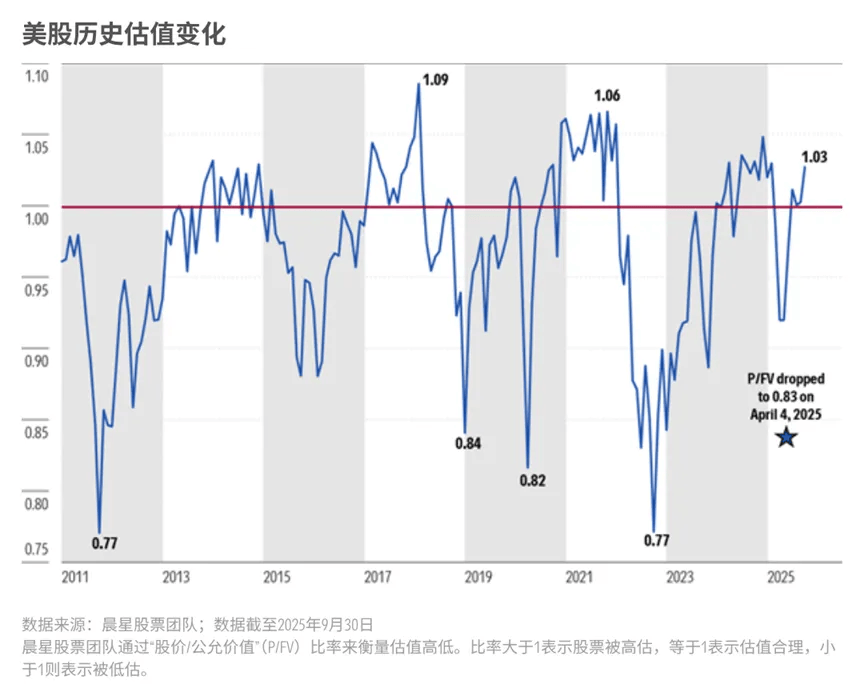
Group 1 - The U.S. stock market experienced a significant drop due to Trump's tariff threats, with major indices hitting a one-month low and the Dow facing its first five-day losing streak in two months [1] - Nearly 40% of the U.S. stock market's value is concentrated in 10 large-cap stocks, primarily in the AI sector, which carries high expectations for growth [7] - The overall valuation of the U.S. stock market is currently overvalued by 3% compared to fair value, a situation that has occurred only about 15% of the time since 2010 [4] Group 2 - The growth momentum driven by AI and related investments is providing new support for the U.S. economy, while expectations of two interest rate cuts by the Federal Reserve by year-end may mitigate macroeconomic headwinds [11] - Economic pressures such as slowing consumer spending, weak new home construction, and diminishing fiscal stimulus effects pose challenges for the U.S. economy in the coming months [11] - Historical data indicates that commodities typically rise by an average of 3% in the nine months following the first interest rate cut, with specific patterns observed in commodity price movements [12][13] Group 3 - The performance of commodities during interest rate cut cycles varies significantly based on the economic context, with strong returns in healthy economic conditions and declines during recessionary periods [15] - Energy and precious metals tend to perform well during rate cut cycles, with average increases of 10% and 7% respectively, while industrial metals lag behind with an average decline of 4% [15] - The current state of the U.S. stock market suggests that if it weakens, there may be a surge in profit-taking, while commodities could present more certain investment opportunities under the backdrop of rate cuts [15]