
AI Healthcare

Search documents
Is Tempus AI (TEM) The Best AI Healthcare Stock in Cathie Wood’s Portfolio?
Yahoo Finance· 2026-03-17 13:58
Core Insights - Tempus AI (NASDAQ:TEM) is recognized as one of the top stocks to buy in Cathie Wood's 2026 Portfolio, leveraging AI to enhance patient treatment through data analysis [1] - The company has seen a significant increase in hedge fund interest, with 41 out of 1041 tracked hedge funds holding stakes in Tempus AI by the end of last year, up from 32 funds in September [1] - Tempus AI's stock has appreciated approximately 17% over the past year, driven by rising demand for its genomic testing and data tools [2] Financial Performance - In Q4, Tempus AI reported a revenue increase of over 80% year-over-year, with adjusted EBITDA turning positive [2] - The revenue outlook for 2026 indicates a growth rate of 25%, which, while slower than the previous year, still exceeds Wall Street's expectations [2] Market Position - Tempus AI's platform is now integrated with over 5,000 healthcare providers across the U.S., reflecting its expanding market presence [2]

13 Best Penny Stocks Under $1 to Buy Right Now
Insider Monkey· 2026-02-25 03:01
Group 1: Small-Cap Stocks Outlook - Small-cap stocks are gaining traction, with the Russell 2000 index up over 3% in 2026 and outperforming the S&P 500 by approximately 400 basis points since April of the previous year, indicating a leadership shift in the market [1][2] - The end of a two-year earnings recession for small-cap companies has contributed to this positive trend, with current valuations at 25-year lows relative to large caps, presenting a significant long-term investment opportunity [1][2] Group 2: Interest Rates and Economic Environment - Approximately 40% of the debt in the Russell 2000 is variable, suggesting that previous Federal Reserve interest rate hikes have already been factored into the market [2] - The earnings potential of small-cap companies is expected to outweigh concerns regarding interest rates, particularly with the 10-year Treasury yield being monitored at the 4.5% level [2] Group 3: X3 Holdings Co. Ltd. (NASDAQ:XTKG) - X3 Holdings has entered the AI healthcare sector by partnering to manage global operations of an AI-powered healthcare smartwatch, aiming to shift healthcare from passive treatment to proactive management [7][10] - The smartwatch is designed to monitor and regulate emotional and neurological balance, utilizing a non-invasive brainwave sensing chip and cloud-based AI analytics to create a closed-loop system for health management [8][9] - X3 Holdings anticipates generating revenue from its first service contract under this agreement starting in March 2026 [10] Group 4: Wheels Up Experience Inc. (NYSE:UP) - Wheels Up Experience reported its first positive Adjusted EBITDAR of $37 million for Q4 2025, marking a 67% year-over-year improvement in net loss, despite total revenue remaining flat at $184 million [12] - The company achieved a 99% completion rate and 91% on-time performance, supported by a sale-leaseback transaction that generated $30 million in net cash proceeds [13] - Wheels Up is enhancing passenger experience by installing high-speed satellite Wi-Fi across its aircraft, with nearly full fleet coverage expected by the end of 2026 [14]




AI健康应用爆发 大模型“看病”是否靠谱?我们进行了实测
Xin Jing Bao· 2026-01-23 13:08
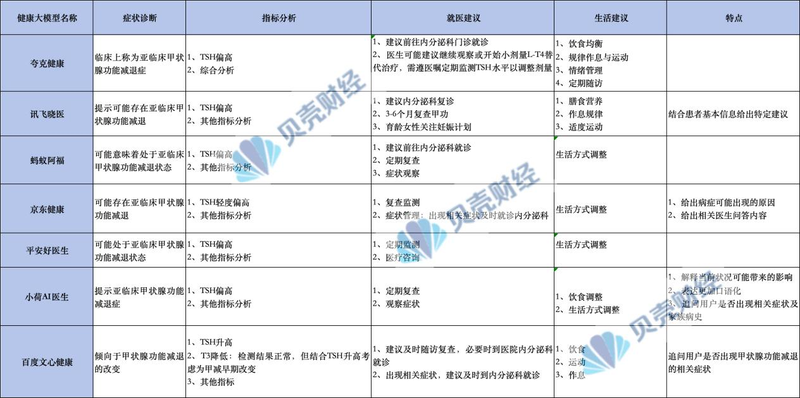
Core Insights - The AI health sector is experiencing a surge, marked by significant product launches from major companies like Ant Group, Baidu, OpenAI, and JD Health, indicating a growing interest and competition in AI healthcare applications [1][10] - Despite the advancements, AI applications exhibit cautious behavior in interpreting health data, with some instances of misinterpretation, highlighting the need for careful usage and potential limitations of AI in medical contexts [2][5] Group 1: AI Health Application Developments - Major AI health applications such as "Antifuku," "Wenxin Health Manager," and "ChatGPT Health" have been launched or upgraded, reflecting a trend towards integrating AI into healthcare [1][10] - The applications tested include features like photo recognition for health reports, AI consultations, and personalized health advice, showcasing their capabilities [2][3] Group 2: Performance and Limitations of AI Models - The evaluation of seven AI health applications revealed a cautious approach in symptom diagnosis, often using tentative language like "may" or "suggests," indicating a conservative stance on health assessments [2][4] - Instances of misinterpretation were noted, such as confusing TSH (Thyroid-Stimulating Hormone) with HCG (Human Chorionic Gonadotropin), which raises concerns about the reliability of AI health applications [5][6] Group 3: Regulatory Environment and Industry Response - Regulatory bodies are beginning to establish guidelines for AI in healthcare, emphasizing the importance of collaboration between medical professionals and AI technologies to ensure patient safety [6][10] - The emergence of AI health applications has prompted hospitals to advise patients against over-reliance on AI for medical advice, stressing the importance of professional medical consultation [6][7] Group 4: User Interaction and Market Trends - Users perceive AI health applications as supplementary tools rather than replacements for medical professionals, often using them for reassurance on minor health concerns [7][8] - The competitive landscape is evolving, with companies aiming to create "Super Apps" that integrate multiple functionalities, enhancing user engagement and retention [11][12]
讯飞医疗科技(02506.HK)深度报告:AI医疗龙头 GBC全场景贯通&中试基地卡位明确 规模化落地有望加速
Ge Long Hui· 2026-01-20 14:31
Group 1 - The core viewpoint of the articles highlights the significant advancements and strategic positioning of iFlytek Medical Technology in the AI healthcare sector, emphasizing its comprehensive service offerings and strong data accumulation capabilities [1][2] - iFlytek Medical, established in 2016, integrates AI technology across the entire healthcare service cycle, from health risk warning to chronic disease management, leveraging its strong R&D focus and clear ownership structure [1] - The company has established a robust data foundation through early strategic positioning and partnerships with top hospitals, creating a data flywheel effect that enhances its market influence and operational efficiency [1] Group 2 - The challenges faced by the AI healthcare industry include high application costs, difficulty in establishing commercial viability, and resistance to new technologies, which have historically hindered growth [2] - iFlytek Medical's establishment of a pilot base in Hefei aims to address these challenges by integrating resources and setting industry standards, thereby facilitating the practical implementation of AI in healthcare [2] - The company is expected to see significant revenue growth, with projections of 920 million, 1.18 billion, and 1.47 billion RMB for 2025-2027, reflecting year-on-year growth rates of 25.6%, 27.6%, and 25.0% respectively, supported by a strong demand for digital and intelligent solutions in healthcare [2]
JPM医疗年会:37家AI医疗公司,谁在拿到确定性溢价
GLP1减重宝典· 2026-01-14 15:14
Core Viewpoint - The article discusses the evolving landscape of AI in healthcare, emphasizing the need for AI technologies to integrate into clinical workflows and payment systems to create sustainable revenue streams and improve efficiency [5][38]. Group 1: AI in Drug Development and Research - AI is transitioning from a standalone tool to an integral part of the drug development pipeline, focusing on producing clinically viable molecules and breaking down uncertainties through milestone-based collaborations [8]. - Companies like Recursion Pharma are leveraging AI to transform computational power and data into quantifiable assets, with significant investments such as a $50 million partnership with NVIDIA [9][10]. - Insitro exemplifies a transactional approach by embedding machine learning directly into drug discovery, with collaborations that include milestone payments to manage research timelines [12]. Group 2: AI in Medical Devices and Imaging - The competition in AI medical devices is shifting from algorithm strength to the integration of algorithms into clinical pathways and reimbursement systems, aiming to shorten decision-making and operational chains for physicians [13]. - Companies like HeartFlow and Butterfly Network are focusing on embedding AI into clinical decision-making processes, with HeartFlow's products receiving regulatory approval and Butterfly's portable ultrasound devices emphasizing software and service models [15][17]. Group 3: AI in Diagnostics and Precision Medicine - AI diagnostics and precision medicine are the largest segments, connecting the testing needs of doctors and patients with pharmaceutical companies' demands for real-world data and companion diagnostics [18]. - Tempus, a leader in this space, reported a total contract value exceeding $1.1 billion and a revenue growth of approximately 31% in data and application services [20]. Group 4: AI in Digital Health and Clinical Workflows - The digital health market is evolving towards quantifiable time-saving and cost-control solutions, with products that integrate into daily workflows being more likely to secure budgets [23]. - Companies like Abridge and Omada Health are focusing on automating clinical documentation and chronic disease management, respectively, to enhance operational efficiency and patient engagement [26]. Group 5: AI Infrastructure and Medical IT Platforms - Companies that control distribution channels and have established customer relationships are positioned to leverage AI as a tool for revenue growth, rather than starting from scratch [28]. - Innovaccer and Modernizing Medicine are examples of platforms that enhance patient access and workflow efficiency, indicating that administrative and process efficiency is often the first area where AI is adopted [31]. Group 6: AI in Payment and Medical Services - The payment and medical services sector is focused on reducing errors and management costs, with a strong emphasis on auditability and traceability of AI solutions [32]. - Companies like Labcorp are integrating AI into their operational frameworks to enhance efficiency and quality control, indicating that AI is viewed as an operational upgrade rather than a standalone product [35].

OpenAI上线健康助理,每周2.3亿人AI“看病”背后
Jing Ji Guan Cha Wang· 2026-01-10 00:58
Group 1 - OpenAI has launched ChatGPT Health, a dedicated health assistant that connects users' medical records and health applications for personalized responses [2] - The global digital health market is valued at hundreds of billions, with over 230 million users seeking health information weekly [2] - The AI healthcare market is projected to exceed $500 billion by 2032, driven by innovations in health data integration, conversational interfaces, and real-time data analysis [2] Group 2 - The new health assistant employs an independent data storage mechanism to ensure the security of medical information and can interface with electronic medical records and wearable devices [3] - In China, numerous AI health products are competing, with significant market enthusiasm reflected in stock price surges for AI healthcare companies [3] - The industry anticipates 2026 as a pivotal year for AI health management, with advancements in federated learning and multi-omics analysis expected to enhance personalized preventive medicine [3]

“蚂蚁阿福”+诊断政策支持,AI医疗蓄势待发
NORTHEAST SECURITIES· 2025-12-23 07:47
Investment Rating - The report assigns an "Outperform" rating for the industry, indicating that the industry index is expected to exceed market benchmarks in the next six months [5]. Core Insights - The recent upgrade of Ant Group's AI health assistant to "Antifufu" focuses on health Q&A, companionship, and services, indicating a strong push in AI healthcare applications [2]. - The National Healthcare Security Administration has included "AI-assisted diagnosis" in the pricing structure for pathological diagnosis, which is expected to enhance the application of AI in medical diagnostics [3]. - Antifufu has achieved a remarkable 83.4% monthly active user growth rate, making it the leading health application in the AI native application sector in China [2]. - The integration of AI solutions into healthcare services is expected to create a comprehensive ecosystem, enhancing user engagement and service delivery [2]. Summary by Sections Industry Overview - The AI health application sector is rapidly evolving, with Antifufu being a key player, leveraging a large user base and partnerships to enhance service offerings [2]. - The report highlights the significant growth potential in AI-assisted diagnostics, driven by recent policy support and technological advancements [3]. Market Data - The industry comprises 336 constituent stocks with a total market capitalization of 45,834 billion, and a circulating market value of 25,851 billion [7]. - The overall revenue of constituent stocks stands at 12,390 billion, with a net profit of 154 billion, indicating a robust financial landscape [7].
A股主要股指走势分化 创业板指大幅回落
Mei Ri Shang Bao· 2025-12-18 23:05
Market Overview - A-shares showed significant divergence with the Shanghai Composite Index rising by 0.16% to 3876.37 points, while the Shenzhen Component Index fell by 1.29% and the ChiNext Index dropped by 2.17% [1] - Total trading volume in the Shanghai and Shenzhen markets reached 16,770 billion, a decrease of 1,575 billion from the previous day [1] Banking Sector - The banking sector experienced a collective rebound, with major banks like Shanghai Bank and Chongqing Rural Commercial Bank rising over 3%, and others like Agricultural Bank and Industrial and Commercial Bank increasing by more than 2% [2] - The Central Economic Work Conference has set a favorable environment for banks to expand their balance sheets and provide long-term loans, while emphasizing the need to manage local and real estate risks [2] - According to CICC, listed banks are expected to see improved revenue and profit growth rates in 2026 and 2027 due to reduced net interest margin pressure and stable growth in fee income [2] - The average dividend yield for the banking sector is currently at 5.2%, significantly higher than the 10-year government bond yield, indicating a shift towards a "high dividend + high quality" investment cycle [2] AI Healthcare Sector - The AI healthcare sector saw strong gains, with stocks like Jiahe Meikang and Huaren Health hitting the daily limit of 20% increase, and others like Weining Health rising over 11% [3] - The Ant Group's AI health application "Antifufu" has seen a surge in downloads, reaching over 15 million monthly active users, indicating strong market interest [3] - The AI healthcare market in China has grown from 2 billion in 2019 to 6.4 billion in 2023, with projections to reach 224.4 billion by 2033, reflecting a compound annual growth rate of 43.1% [4] Commercial Aerospace Sector - The commercial aerospace sector experienced a surge, with companies like Xingchen Technology and Xice Testing hitting their daily limit, and others like Shunhao Co. and Tianjian Technology also seeing significant gains [5] - Xingchen Technology has reported successful delivery of products for commercial space applications, with plans for mass production starting in 2026 to meet increasing demand from private aerospace companies [6] - Recent policies and technological advancements are expected to accelerate the development of the commercial aerospace industry, with the National Space Administration promoting high-quality and safe development [7]



大厂竞逐,健康AI率先跑出一个阿福
雷峰网· 2025-12-17 04:12
Core Viewpoint - The AI health sector is rapidly evolving, with significant advancements in technology and user engagement, particularly in rural areas where AI applications are improving healthcare access and management [2][3][8]. Group 1: Market Dynamics - The integration of AI into the health sector is accelerating faster than anticipated, with notable examples such as a young village doctor using AI to create health records for over 200 elderly residents [2][3]. - Major companies, including Ant Group and Huawei, are entering the AI health space, indicating a growing recognition of its potential despite previous limitations in model accuracy and data availability [5][6]. - The AI health application "Antifufu" has achieved over 15 million monthly active users within six months of launch, answering over 5 million health inquiries daily, with 55% of users from lower-tier cities [7][8]. Group 2: Growth Potential - The market for AI in healthcare in China is projected to grow from 8.8 billion yuan in 2023 to 315.7 billion yuan by 2033, highlighting the sector's vast potential [8]. - The rapid growth of AI health applications is validated by data from authoritative institutions, indicating a robust demand for AI-driven health solutions [8]. Group 3: AI's Role in Healthcare - AI is positioned as a complement to healthcare professionals rather than a replacement, enhancing the efficiency of the healthcare system by managing non-urgent inquiries and allowing doctors to focus on complex cases [10][13][16]. - Antifufu utilizes a sophisticated AI model trained on extensive medical literature and data, ensuring high accuracy in health assessments and recommendations [18][20]. Group 4: User Engagement and Features - Recent upgrades to Antifufu allow users to set health goals and receive personalized plans for diet, exercise, and medication, fostering healthier habits [23][25]. - The app integrates with various smart devices and allows users to manage health records, making it a comprehensive tool for personal health management [27][28]. Group 5: Future Outlook - The evolution of AI in healthcare signifies a shift towards a more integrated and user-friendly approach, with Antifufu exemplifying this trend as a "health friend" for users [29].

A股午评 | 指数震荡走强 锂板块拉升 液冷服务器概念走强
智通财经网· 2025-12-17 03:48
Core Viewpoint - The A-share market showed a strong performance in the early session on December 17, with all three major indices rising, indicating a potential for continued market volatility and sector rotation as the year-end approaches [1][3]. Market Performance - The Shanghai Composite Index rose by 0.17%, the Shenzhen Component increased by 0.83%, and the ChiNext Index gained 1.21% during the morning session [1]. - Over 3,700 stocks experienced declines, with a total trading volume of 1 trillion yuan, a decrease of 98.7 billion yuan compared to the previous trading day [1]. Hot Sectors 1. **Lithium Mining Concept** - The lithium mining sector showed strength, with Jin Yuan Co. achieving two consecutive trading limits and Shengxin Lithium Energy hitting the daily limit [1]. 2. **Electrolyte Concept** - The electrolyte sector rebounded, with Tianji Co. reaching the daily limit [1]. 3. **Computing Hardware Concept** - The computing hardware sector was active, with Huanxu Electronics hitting the daily limit and major optical module companies experiencing collective gains [1]. 4. **Retail and Dairy Concepts** - The retail and dairy sectors saw a recovery, with Zhuangyuan Pasture hitting the daily limit and Li Qun Co. achieving two consecutive trading limits [1]. Notable Stocks - Muxi Co. saw its stock price surge over 700%, surpassing 800 yuan during trading [2]. Sector Declines - The Hainan and military sectors experienced the largest declines in the market [3]. Institutional Insights 1. **Galaxy Securities** - Anticipates that the market will continue to exhibit a volatile structure as the year-end approaches, with a focus on policy dividends and economic trends for the upcoming year [3][9]. 2. **Cinda Securities** - Suggests that style switching may become more pronounced, recommending a focus on low-value sectors and emphasizing the potential for growth in non-bank financials and cyclical stocks [7]. 3. **Zhaoshang Securities** - Projects that investment opportunities in 2026 will revolve around domestic demand recovery and technological self-reliance, with a favorable outlook for cyclical styles [10].