
知医

Search documents
京东健康:强劲的收入增长势头彰显渠道价值-20260309
HTSC· 2026-03-09 13:30
Investment Rating - The report maintains a "Buy" rating for the company [7] Core Views - The company demonstrated strong revenue growth with total revenue of 38.15 billion RMB in 2H25, reflecting a year-on-year increase of 28.0%, surpassing the consensus estimate of 22.2% [1] - Non-IFRS net profit for 2H25 reached 2.96 billion RMB, up 37.9% year-on-year, with a non-IFRS net profit margin of 7.8%, an increase of 0.6 percentage points [1] - The company is expected to achieve a compound annual growth rate (CAGR) of 19.5% in revenue from 2025 to 2027, supported by enhanced operational capabilities in the pharmaceutical category [1][5] Revenue and Profitability - In 2H25, sales of pharmaceutical and health products amounted to 31.55 billion RMB, a year-on-year increase of 26.8%, indicating a recovery in growth rate compared to 1H25 [2] - The platform, advertising, and other service revenues reached 6.60 billion RMB, growing by 33.8% year-on-year, driven by a robust increase in user traffic [2] - The company plans to expand its offline business, having opened over 300 self-operated pharmacies by the end of 2025, significantly exceeding its initial target [3] AI and Technology Integration - The company has developed a product matrix in the AI medical field, including various AI tools for patient management and evidence-based medicine [4] - The AI doctor "Daiwei" has completed millions of interactions with a satisfaction rate of 98% [4] Financial Forecasts and Valuation - The report adjusts the non-IFRS net profit forecasts for 2026 and 2027 to 6.62 billion RMB and 7.75 billion RMB, respectively, reflecting a decrease due to interest income impacts and investments in O2O and AI [5][11] - The target price is set at 65.20 HKD, based on a 28.0x target non-IFRS PE valuation for 2026, which is a premium compared to the average PE of comparable companies [5][14]
京东健康,想把AI扎进供应链里
虎嗅APP· 2026-03-08 14:41
Core Viewpoint - The article highlights the transformative impact of AI in the healthcare sector, particularly through the integration of AI with supply chain management, which enhances operational efficiency and patient care [2][28]. Financial Performance - JD Health reported a total revenue of 73.4 billion yuan for the year 2025, marking a year-on-year growth of 26.3%, with revenue growth exceeding 20% for four consecutive quarters [2][5]. - The net profit reached 6.5 billion yuan, a 36.3% increase year-on-year, with a net profit margin of 8.9%, the highest since the company's inception [5][14]. AI Integration and Supply Chain - The synergy of AI and supply chain management has led to significant cost reductions and efficiency improvements, with service revenue growing at 34.1%, outpacing product revenue growth of 24.8% [5][26]. - JD Health's approach focuses on a sustainable long-term business model that combines AI tools, value-added services, and supply chain revenue, creating a virtuous business cycle [5][26]. Technological Advancements - The "京医千询" model achieved top rankings in MedBench's multi-modal model evaluations, showcasing its advanced capabilities in the medical AI field [6][23]. - The "知医" product is set for a comprehensive upgrade, enhancing its evidence-based model capabilities and establishing a deeper collaboration with expert committees [7][22]. Addressing Healthcare Challenges - JD Health's "卓医2.0" system addresses critical pain points in clinical nutrition management, significantly reducing the need for human resources and improving patient care through AI-driven solutions [18][19]. - The company has developed a complete ecosystem for clinical nutrition management, integrating AI with supply chain logistics to ensure timely delivery of specialized medical foods [27]. Market Position and Future Outlook - JD Health's strategy emphasizes practical applications of AI in real-world healthcare settings, moving beyond mere concepts to deliver tangible results [28][29]. - The company aims to redefine the value of medical AI in the industry by focusing on efficiency and accessibility, positioning itself as a leader in the healthcare AI revolution [29].



中国医疗AI战事:十年To B血泪史,从改变医生转向亲近患者
Xin Lang Cai Jing· 2026-02-26 04:14
Core Insights - Ant Group's AI product, Aifu, is making significant strides in the healthcare sector by directly engaging consumers, marking a shift from traditional B2B models to a more consumer-oriented approach in the AI healthcare landscape [2][5] - The Chinese government is actively promoting the integration of AI in healthcare, with plans to establish a comprehensive data infrastructure by 2027, which will facilitate the growth of AI applications in the sector [3][4] - The competitive landscape is intensifying, with major players like Ant Group and Baichuan vying for dominance in the consumer-facing AI healthcare market, indicating a potential shift in how healthcare services are delivered [5][6] Group 1: Ant Group's Strategy - Ant Group has invested several billion yuan in marketing Aifu, resulting in over 100 million users, with a significant portion of new users coming from lower-tier cities [1] - The company aims to integrate its existing online healthcare services with Aifu, providing users with health consultations and recommendations for medical facilities, which could lead to new business models [5][6] - Ant Group's rapid actions in talent acquisition and product development reflect its commitment to becoming a leader in the consumer healthcare AI space [5][6] Group 2: Government Initiatives - The National Health Commission's guidelines for AI in healthcare outline eight key areas for application, aiming for widespread implementation by 2030 [3][4] - The establishment of a personal health insurance cloud is expected to create a vast database of health-related information, which will be crucial for AI applications in healthcare [4] Group 3: Market Dynamics - The healthcare AI market has seen a shift from B2B to B2C, with companies now focusing on direct consumer engagement rather than solely targeting hospitals and healthcare providers [2][5] - Despite the potential for AI to enhance healthcare delivery, there are concerns about the sustainability of business models in the face of regulatory and financial challenges within the healthcare system [11][12] - The competitive landscape is characterized by a mix of established players and new entrants, all seeking to leverage AI technology to improve healthcare outcomes and efficiency [5][6][17]
撕掉会展标签、转型AI医疗与互联网大厂竞争,万怡医学递表港交所
Xin Lang Cai Jing· 2026-02-05 11:24
Core Viewpoint - The debate surrounding the integration of AI in the medical field highlights the contrasting perspectives on its role in enhancing clinical decision-making and training for young doctors, with concerns about the potential impact on clinical thinking and patient care [3][4][5]. Industry Overview - The AI medical sector is evolving, with a focus on knowledge empowerment and clinical evidence support for doctors, which is seen as a more attractive and controversial market compared to patient-facing applications [3][4]. - The number of physicians in China is projected to grow from 3.9 million in 2019 to 5.1 million by 2024, amidst an explosion of medical literature and clinical guidelines, indicating a need for AI to assist in evidence retrieval and alleviate disparities in healthcare resources [3][6]. Company Background - Shanghai Wanyi Medical Technology Co., Ltd. (Wanyi Medical) was founded in 2007 as a medical conference planning company and has transitioned into an AI medical solutions provider, launching the MedEvidence platform aimed at healthcare professionals [4][5]. - The company rebranded from "Wanyi Exhibition" to "Wanyi Medical" in 2020, seeking digital transformation due to the impact of the pandemic on in-person events [5][6]. Financial Performance - Wanyi Medical reported revenues of 239 million RMB and 271 million RMB for 2023 and 2024, respectively, with profits of 29.87 million RMB and 29.72 million RMB [10][11]. - The revenue structure is split approximately 50% between traditional academic event solutions (MedEvent) and digital education solutions (MedAssistant), with the latter's share increasing to 50.4% in the first nine months of 2025 [12][13]. Market Dynamics - The market for academic, educational, and research solutions in medicine is expected to grow from 66.8 billion RMB in 2019 to 97.6 billion RMB by 2024, with a compound annual growth rate (CAGR) of 7.9%, and the AI-driven segment projected to grow at a CAGR of 34.8% from 2024 to 2030 [9][10]. - Despite the promising market growth, Wanyi Medical's AI platform, MedEvidence, has not yet generated revenue, indicating that its AI capabilities are still in the early stages of commercialization [10][14]. Competitive Landscape - Wanyi Medical positions itself in a fragmented market, claiming a leading advantage with nearly 300 million RMB in revenue, while its competitors primarily focus on digital services rather than AI-driven solutions [17][18]. - The company faces significant competition from larger internet firms that have more resources and technological capabilities, which could undermine Wanyi Medical's efforts to establish a strong foothold in the AI medical sector [22][23].

从巨头布局到全场景渗透,AI+医药迈入竞争新阶段
2 1 Shi Ji Jing Ji Bao Dao· 2026-01-30 11:34
Group 1 - The global pharmaceutical industry is experiencing a surge in AI initiatives, with major companies like Eli Lilly and NVIDIA collaborating to establish an AI innovation lab, and AstraZeneca acquiring Modella AI to enhance its capabilities in biomedical AI [1][4] - AI's role in drug development is evolving from a supportive tool to a core innovation engine, as evidenced by its prominence at the 2026 JPM Healthcare Conference [1][4] - The AI wave is impacting not only drug development but also permeating various sectors within the healthcare industry, with hospitals and tech giants entering the AI healthcare space [1][2] Group 2 - Deloitte's report indicates that the innovation return on investment (IRR) for the top 20 global pharmaceutical companies is only 5.9%, with the average cost of drug development rising from $2.12 billion in 2023 to $2.229 billion in 2024 [4] - AstraZeneca's AI initiatives include the AIDA system aimed at reducing development time by 50%, while Eli Lilly and NVIDIA plan to invest $1 billion over five years in their AI lab [4][5] - Domestic AI pharmaceutical companies are also making strides, with companies like InSilico Medicine and CrystalClear Technology forming significant partnerships to enhance drug development using AI [5] Group 3 - The global AI healthcare market is projected to grow at a compound annual growth rate (CAGR) of 43% from 2024 to 2032, with generative AI in healthcare expected to grow at an even higher CAGR of 85% [6][7] - AI is anticipated to save the U.S. healthcare system approximately $150 billion annually by 2026, with long-term investment returns in AI healthcare reaching 10%-15% [7] - Companies are increasingly integrating AI across the entire pharmaceutical value chain, from drug discovery to marketing and patient services, enhancing operational efficiency [7][8] Group 4 - Innovative companies are focusing on specific scenarios to launch AI products, gaining attention from the capital market, with examples including Hangzhou Quanzhen Medical Technology and its AI application "Quanzhen Tong" [8][9] - Many domestic AI healthcare products are still in the data accumulation phase, with those that can effectively integrate into real medical processes and address industry pain points emerging as the future mainstream [9]

京东阿里健康的阳谋
3 6 Ke· 2026-01-26 05:40
Core Insights - OpenEvidence has rapidly gained traction in the medical field, achieving a valuation of $12 billion and annual revenue exceeding $150 million within just four years of its establishment [1] - The company addresses a critical gap in the medical industry by providing a free tool for doctors that significantly reduces the time needed to access reliable medical information [4][5] - OpenEvidence's business model revolves around monetizing the attention of healthcare professionals and providing targeted advertising for pharmaceutical companies [7][9][10] Group 1: OpenEvidence's Rise - OpenEvidence has become the primary entry point for doctors by effectively addressing the overwhelming volume of medical knowledge and the limitations of traditional databases [2][3] - The platform utilizes a retrieval-augmented generation (RAG) approach, allowing doctors to obtain accurate information in just three seconds, thus enhancing decision-making efficiency [4] - The company has achieved viral growth, with monthly active users reaching 400,000 and covering approximately 34% of practicing physicians in the U.S. [5] Group 2: Revenue Generation - OpenEvidence generates revenue by providing targeted advertising to pharmaceutical companies during critical decision-making moments for doctors [8][9] - The platform's ability to deliver compliant and relevant advertising content has made it an attractive option for drug companies looking to reach physicians effectively [10][12] - Additionally, OpenEvidence sells its core capabilities as APIs to hospitals and medical schools, further diversifying its revenue streams [11] Group 3: Challenges for Chinese Competitors - Chinese companies face significant challenges in replicating OpenEvidence's success due to data integration difficulties and the lack of open access to authoritative medical databases [15][16] - Trust issues arise in China regarding pharmaceutical advertising alongside clinical decision tools, making it difficult for companies to monetize similar models [17][18] - The high workload of Chinese doctors limits their ability to engage with tools like OpenEvidence, necessitating a more practical approach tailored to local conditions [19][20] Group 4: Competitive Landscape - JD Health focuses on a model that combines tools, supply chain, and services, but faces trust issues due to potential biases in its recommendations [23][24] - Alibaba Health aims to develop a comprehensive medical operating system but struggles with the transactional aspect of its services [25][26] - Ant Group's approach with its AI tool "Afu" seeks to integrate deeply into the medical workflow, potentially offering a more complex but rewarding business model [27][28] Group 5: Future Outlook - The medical AI market in China is expected to diversify, with different players targeting various segments, such as serious medical scenarios and primary care [29] - The key lesson from OpenEvidence for Chinese companies is to effectively use free tools to capture high-value users and monetize their needs [29]



AI健康应用爆发 大模型“看病”是否靠谱?我们进行了实测
Xin Jing Bao· 2026-01-23 13:08
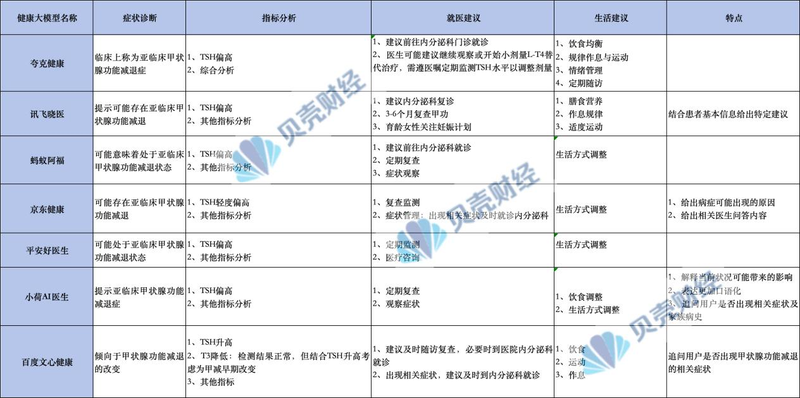
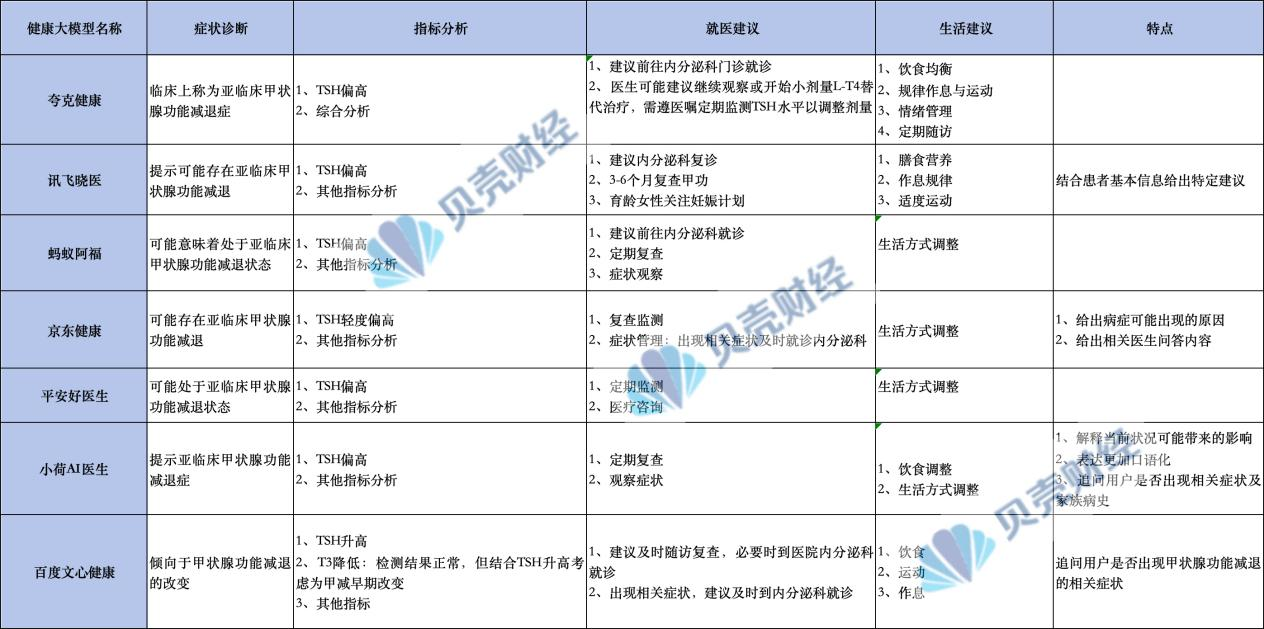
Core Insights - The AI health sector is experiencing a surge, marked by significant product launches from major companies like Ant Group, Baidu, OpenAI, and JD Health, indicating a growing interest and competition in AI healthcare applications [1][10] - Despite the advancements, AI applications exhibit cautious behavior in interpreting health data, with some instances of misinterpretation, highlighting the need for careful usage and potential limitations of AI in medical contexts [2][5] Group 1: AI Health Application Developments - Major AI health applications such as "Antifuku," "Wenxin Health Manager," and "ChatGPT Health" have been launched or upgraded, reflecting a trend towards integrating AI into healthcare [1][10] - The applications tested include features like photo recognition for health reports, AI consultations, and personalized health advice, showcasing their capabilities [2][3] Group 2: Performance and Limitations of AI Models - The evaluation of seven AI health applications revealed a cautious approach in symptom diagnosis, often using tentative language like "may" or "suggests," indicating a conservative stance on health assessments [2][4] - Instances of misinterpretation were noted, such as confusing TSH (Thyroid-Stimulating Hormone) with HCG (Human Chorionic Gonadotropin), which raises concerns about the reliability of AI health applications [5][6] Group 3: Regulatory Environment and Industry Response - Regulatory bodies are beginning to establish guidelines for AI in healthcare, emphasizing the importance of collaboration between medical professionals and AI technologies to ensure patient safety [6][10] - The emergence of AI health applications has prompted hospitals to advise patients against over-reliance on AI for medical advice, stressing the importance of professional medical consultation [6][7] Group 4: User Interaction and Market Trends - Users perceive AI health applications as supplementary tools rather than replacements for medical professionals, often using them for reassurance on minor health concerns [7][8] - The competitive landscape is evolving, with companies aiming to create "Super Apps" that integrate multiple functionalities, enhancing user engagement and retention [11][12]
AI健康应用爆发,大模型“看病”是否靠谱?我们进行了实测
Bei Ke Cai Jing· 2026-01-23 12:29
Core Insights - The article highlights the surge in AI health applications, with major companies like Ant Group, Baidu, OpenAI, and JD Health launching new products, indicating a growing trend in AI healthcare solutions [1][19][17] - Despite the advancements, the reliability of AI in interpreting medical reports is questioned, as some applications have made significant errors in diagnosis [8][6] - Regulatory bodies are beginning to establish guidelines for AI in healthcare, aiming to ensure safety and ethical standards [2][10] Group 1: AI Health Application Developments - Ant Group's AI health application "Ant Afu" gained significant traction, reaching the top two in the Apple App Store shortly after its launch [1] - Other notable AI health applications include Baidu's Wenxin Health, OpenAI's ChatGPT Health, and JD Health's evidence-based AI product "Zhi Yi" [1][19] - The competition among these applications is intensifying, with Ant Afu emerging as a strong contender despite being the newest [19][24] Group 2: Performance and Reliability of AI Applications - A test conducted by a news outlet on seven AI health applications revealed cautious interpretations of medical reports, with discrepancies in whether to recommend medical consultations [3][6] - The applications showed a tendency to use cautious language, indicating potential health issues without definitive conclusions [4][6] - Errors were noted, such as misinterpreting TSH (Thyroid-Stimulating Hormone) as HCG (Human Chorionic Gonadotropin), leading to inappropriate medical advice [8][9] Group 3: Regulatory Environment - The Beijing government's new policy on "AI + Healthcare" sets clear boundaries for the industry, while the National Internet Information Office has proposed interim measures for managing AI interactions in healthcare [2] - The regulatory framework aims to create a safe environment for AI healthcare development, emphasizing the need for collaboration between medical professionals and AI technologies [10][2] Group 4: User Interaction and Experience - Users have reported mixed experiences with AI health applications, with some finding the advice reasonable while others express caution [16][15] - Applications like Ant Afu and Baidu Health have integrated online consultation features, allowing users to connect with doctors after AI assessments [16][18] - The language style of some applications, such as Xiaohe AI Doctor, is more conversational, which may enhance user engagement [7][18] Group 5: Commercialization and Market Trends - AI health applications are evolving from simple tools to comprehensive platforms, aiming for a "Super App" model that integrates various functionalities [23][24] - Ant Afu has publicly stated that its health advice is free from commercial influences, focusing on user trust and engagement [23] - The trend indicates a shift towards creating interconnected ecosystems among different health applications, enhancing user retention and service offerings [24][22]
2026京东健康年度医生盛典在京举行 AI赋能共创互联网医疗新生态
Jing Ji Wang· 2026-01-22 01:24
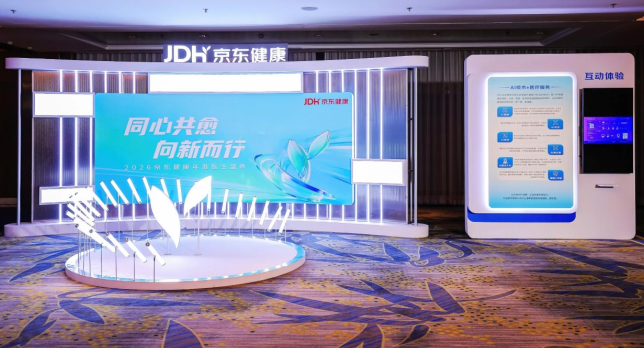
Group 1 - The 2026 JD Health Annual Doctor Ceremony was held in Beijing, focusing on building a broad ecosystem to enhance the professional value of doctors and promote quality medical resources to the public [1] - JD Health's CEO emphasized the company's commitment to collaborating with doctors and expanding its services [1] Group 2 - The launch of the evidence-based medicine AI product "ZhiYi" was a highlight of the event, integrating millions of authoritative medical literature and guidelines to support clinical decision-making and research [3] - "ZhiYi" will be fully integrated into the JD Doctor APP and is designed to enhance diagnostic efficiency and research quality [3] - JD Health has established a leading AI health service matrix, including various AI models and products, marking a significant leap in its AI technology capabilities [3] Group 3 - JD Health's internet medical services have evolved beyond online consultations to offer personalized solutions that link "AI + physical products + services," creating a comprehensive service loop [3] - The company is recognized for its strong supply chain and digital quality control capabilities, effectively connecting patients with quality medical resources, particularly in traditional Chinese medicine [3] Group 4 - JD Health has entered a new phase of "ecological co-construction" with top hospitals, exemplified by the "JD Home Fast Testing" service that allows nurses to collect samples at home [4] - Collaborations with various institutions in remote medical care, smart outpatient services, and health education are underway to build a collaborative ecosystem [4] - JD Health is actively involved in industry standard-setting, having published 317 standardized treatment paths in collaboration with the medical community [4] Group 5 - The "Great Doctor Charity Action Plan" was launched in partnership with several charitable organizations, aiming to encourage more doctors to participate in social welfare services through research, case collection, and resource linking [4]
巨头竞逐医疗AI赛道 健康160与京东健康等国内龙头打造中国方案
Zheng Quan Ri Bao Wang· 2026-01-21 04:09
Core Insights - Artificial intelligence (AI) is deeply integrated into the healthcare system, driving high-quality development in the industry [1] - The competition in the medical AI sector is intensifying among internet healthcare companies and tech firms [1] - Companies like JD Health and Alibaba Health are advancing from "single-point tools" to "ecosystem competition" [1] Company Developments - JD Health launched the evidence-based medicine AI tool "ZhiYi" aimed at doctors, which is considered a Chinese version of "OpenEvidence" [1] - Alibaba Health's AI product "Hydrogen Ion" has completed internal testing and is designed to be the lowest hallucination rate AI assistant in the medical field [1] - Health 160 has developed a dual-driven model combining public and private WeChat accounts to enhance digital healthcare services [2] Technological Advancements - Health 160 has tested an AI health steward multi-agent system covering pre-diagnosis, diagnosis, and post-diagnosis scenarios [3] - JD Health aims to evolve internet healthcare into a core engine for precise, personalized, and comprehensive health management [3] - OpenAI's ChatGPT for Healthcare has been deployed in various institutions, emphasizing data integration and personalized experiences [2] Industry Trends - The focus of AI healthcare competition has shifted from "usefulness" to "stable, compliant, and sustainable implementation" [3] - Future trends in China's AI healthcare include a complementary relationship between major players' full-chain layouts and precise niche market cultivation [4] - The industry is expected to transition from a "treatment-oriented" approach to "proactive health" as technology matures [4]