
Semiconductor Storage

Search documents
半导体存储赛道迎“超级周期”,九方智投调研大为股份探寻国产存储突围之路
第一财经· 2026-02-06 06:45
Core Viewpoint - The article discusses the significant opportunities and challenges in the domestic semiconductor storage industry, particularly in the context of the AI wave and geopolitical tensions, highlighting the growth potential for companies like Shenzhen Dawi Innovation Technology Co., Ltd. [1][10] Group 1: Company Overview - Dawi Innovation entered the semiconductor storage industry in 2020 by acquiring Dawi Chuangxin, focusing on "semiconductor storage + smart terminals" and "new energy + automotive" sectors [1] - As of Q3 2025, Dawi achieved a revenue of 879 million yuan, reflecting a year-on-year growth of 9.90% [1] Group 2: Industry Trends - The storage chip industry is experiencing an unprecedented "super cycle" driven by the global AI wave, leading to a surge in demand for high-capacity and high-speed chips [2][3] - TrendForce data indicates that the DRAM industry revenue is projected to reach $41.4 billion in Q3 2025, with a quarter-on-quarter growth exceeding 30% [3] Group 3: Strategic Insights - Dawi's chairman, Lian Zongmin, emphasized the importance of embedded storage development, which has characteristics such as long certification cycles and high customer stickiness, serving as a stabilizing factor for the company's growth [3] - The company is shifting its strategic focus towards the automotive-grade and industrial-grade storage markets, which are expected to have higher growth potential and technological barriers [3] Group 4: Competitive Landscape - The article notes that international semiconductor companies are reallocating their production capacity towards high-end storage chips, creating a favorable window for domestic companies to break through [6] - Dawi has established a subsidiary, Dawi Agile, to quickly enter the consumer-grade high-end storage market by leveraging a former foreign enterprise's R&D team [6] Group 5: Market Dynamics - The Chinese storage industry is witnessing comprehensive breakthroughs across design, manufacturing, packaging, and application, with companies like Dawi gradually closing the gap with industry leaders [7] - The article highlights the importance of chip design companies as the core of innovation in the industry, while packaging and testing firms play a crucial role in mass production and advanced packaging technology [8] Group 6: Future Outlook - The global semiconductor market is expected to reach $700.9 billion by 2025, with China being the largest and fastest-growing consumer market [12] - Dawi and similar companies are not only capturing growth opportunities but also contributing to the depth and breadth of the Chinese semiconductor industry through their focus on niche markets [12]

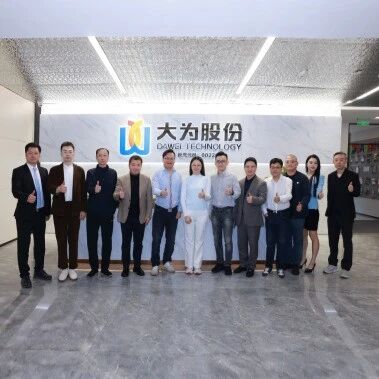
This 1 Stock Quietly Crushed the Market in 2025. Is It a Buy for 2026?
Yahoo Finance· 2025-12-31 12:30
Core Insights - SanDisk (SNDK) has shown exceptional performance in 2025, with a year-to-date increase of 578.5%, making it a notable stock to watch for 2026 [1] - The company is valued at $36.6 billion and specializes in high-capacity, high-performance solid-state drives (SSDs) crucial for cloud providers and enterprises, particularly for AI workloads [2] Financial Performance - In the first quarter of fiscal 2026, SanDisk reported revenue of $2.3 billion, reflecting a 21% sequential increase and a 23% year-on-year growth [3] - Adjusted earnings per share (EPS) rose to $1.22 from $0.29 in the previous quarter, with an adjusted gross margin of 29.9% [3] Market Dynamics - The company is experiencing a supply-demand imbalance in NAND flash memory, allowing for strategic allocation decisions that enhance long-term value and improve pricing and margins [4] - SanDisk is benefiting from significant global investments in AI and data center infrastructure, projected to exceed $1 trillion by 2030 [4] Technological Advancements - SanDisk's BiCS8 technology, designed for superior capacity, performance, and energy efficiency, is gaining traction and currently accounts for 15% of total bits supplied [4] - It is expected that BiCS8 will dominate manufacturing by the end of fiscal 2026, strengthening SanDisk's position in data center, edge, and consumer markets [4]
创业板首家未盈利IPO,要上会了!
Sou Hu Cai Jing· 2025-12-19 06:18
Core Viewpoint - Dapu Micro is set to become the first unprofitable IPO company accepted for listing on the ChiNext board, with its application submitted on June 27, 2025, and sponsored by Guotai Junan Securities [2] Group 1: Main Business - Dapu Micro specializes in the research and sales of enterprise-level SSD products for data centers, being one of the few domestic providers with full-stack self-research capabilities in "controller chips + firmware algorithms + modules" [3] - The company has shipped over 4,900 PB of enterprise-level SSDs, with more than 75% of shipments featuring self-developed controller chips, maintaining a leading market share in the domestic enterprise SSD sector [3] - Dapu Micro's PCIe SSD products are recognized for their high read/write speeds, durability, low latency, and significantly lower average failure rates than JEDEC standards, positioning them at an internationally advanced level [4] Group 2: Technological Innovation - The company has obtained 162 domestic and international invention patents, with several enterprise-level SSD technologies being industry-leading, and has participated in multiple national and provincial research projects [5] - Dapu Micro has been awarded various honors, including recognition as a "specialized and innovative" enterprise and has established a strong brand presence in the industry [5] Group 3: Financial Data - The company reported revenues of 557 million, 519 million, 962 million, and 748 million yuan over the past four years, with net profits of -368 million, -642 million, -195 million, and -361 million yuan, indicating it has not yet achieved profitability [10] - As of June 30, 2025, total assets amounted to 1.981 billion yuan, with a debt-to-asset ratio of 63.40% and a net loss of 354.21 million yuan for the first half of 2025 [11] Group 4: Shareholder Structure - Dapu Haide holds 13.72% of the company's shares and possesses special voting rights, controlling 54.78% of the voting rights, making it the controlling shareholder [8] - Yang Yafei, through Dapu Haide and Dapu Haiju, controls 66.74% of the voting rights, establishing him as the actual controller of the company [8] Group 5: Fundraising Utilization - The company plans to raise approximately 1.877 billion yuan, with funds allocated to the next-generation controller chip and enterprise-level SSD R&D, production testing base, and working capital [9] Group 6: Market Position and Future Plans - Dapu Micro aims to enhance the resilience and security of the domestic enterprise SSD supply chain and has established partnerships with major clients in various sectors, including internet, cloud computing, and telecommunications [6] - The company is committed to advancing the "computational storage" and "intelligent storage" industries, focusing on becoming a platform-based, international, and innovative provider of storage products and solutions [13] - Future plans include continuous research and innovation in core SSD technologies and expanding product offerings to include network cards and RAID cards for data center applications [14]

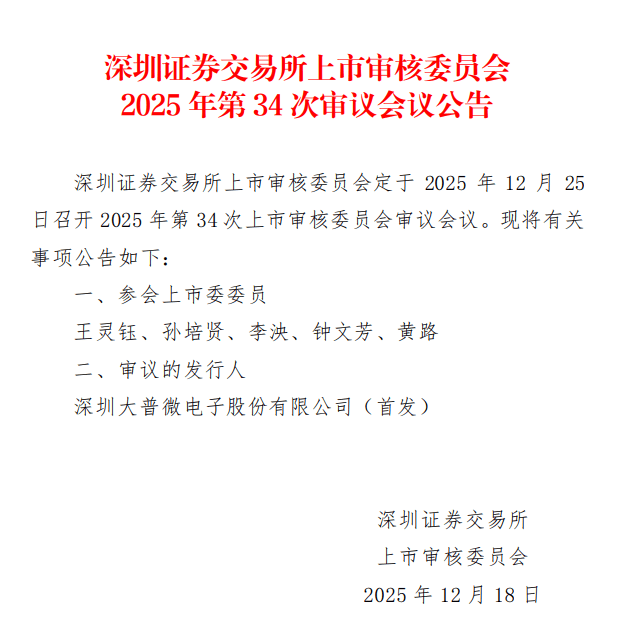
创业板首单未盈利企业IPO!12月25日上会
Sou Hu Cai Jing· 2025-12-18 13:35
Group 1 - The core point of the article is that Shenzhen Dapu Microelectronics Co., Ltd. is set to undergo an IPO review on December 25, marking it as the first unprofitable company accepted for listing on the ChiNext board [1][5] - Dapu Micro plans to raise 1.878 billion yuan for the development and industrialization of next-generation main control chips and enterprise-level SSDs, as well as for a production testing base and to supplement working capital [5] - The company specializes in the research and sales of enterprise-level SSD products and is one of the few domestic providers with full-stack self-research capabilities in "main control chips + firmware algorithms + modules" [5] Group 2 - Dapu Micro has not yet achieved profitability, reporting losses of 354 million yuan in the first half of 2025, 195 million yuan in 2024, 642 million yuan in 2023, and 368 million yuan in 2022, with a cumulative loss of 1.566 billion yuan over the past three and a half years [5] - The company meets the ChiNext listing criteria for unprofitable companies, which requires an expected market value of no less than 5 billion yuan and a minimum revenue of 500 million yuan in the most recent year [5][6] - The China Securities Regulatory Commission has introduced a third set of standards to support high-quality unprofitable innovative companies in going public, indicating a more inclusive approach to financing for such enterprises [6]

首批浮动费率基金业绩分化悬殊:华商致远回报A涨59%领跑,广发价值稳进A跌8%垫底,安信、银华旗下产品落后
Xin Lang Cai Jing· 2025-12-17 07:59
Core Insights - The first batch of floating fee rate funds has shown significant performance differentiation, highlighting the varying capabilities of fund managers in terms of positioning, sector allocation, and market judgment [1][9] Performance Overview - As of December 16, 2025, out of 26 funds, 19 achieved positive returns while 7 reported negative returns. The top performer, Huashang Zhiyuan Return A, delivered a remarkable return of 58.90%, followed by Xin'ao Advantage Industry A at 36.86% and E Fund Growth Progress A at 34.98% [2][10] - Other notable performers include Jiashi Growth Win A and Invesco Great Wall Growth, both exceeding 23% returns. Conversely, funds like Guangfa Value Steady A and Yinhua Growth Smart A reported negative returns of -8.32% and -3.35%, respectively [2][10] - The overall distribution of fund returns is characterized by a "middle large, both ends small" pattern, with most funds yielding between -0.1% and 7% [2][10] Fund Size and Performance Relationship - Notably, high-performing funds are not exclusively large. Huashang Zhiyuan Return A, with a size of 2.838 billion yuan, is the largest, while Jiashi Growth Win A, with a size of 406 million yuan, achieved a return of 32.88%, demonstrating the agility of smaller funds in volatile markets [2][10] Investment Strategies - Top-performing funds tend to focus on high-growth sectors. For instance, Huashang Zhiyuan Return A has concentrated holdings in AI computing-related stocks, with significant contributions from stocks like Zhongji Xuchuang and Shijia Photon, which saw increases of 45.39% and 40.17% over the past three months [3][11] - Xin'ao Advantage Industry A has a high concentration in semiconductor storage, with key stocks like Demingli and Jiangbolong rising by 55.43% and 119.02%, respectively. However, this strategy also led to volatility, as some holdings experienced declines of 13% to 21% [5][13] - E Fund Growth Progress A adopts a more balanced approach, diversifying across sectors such as optical communication and consumer electronics, successfully capturing gains from leading stocks [6][15] Underperforming Funds - Underperforming funds often remain focused on traditional industries or deviate from market trends. Guangfa Value Steady A has a significant allocation to liquor stocks, which have generally declined over 10% in the past three months, contrasting sharply with the strong performance of technology sectors [7][16] - Yinhua Growth Smart A is heavily invested in the real estate sector and certain pharmaceutical stocks, with some holdings experiencing declines as steep as 44.58%, indicating a lack of timely adjustments to market shifts [8][17] Conclusion - The short-term performance of the first batch of floating fee rate funds reflects a collision of different investment strategies and market styles in 2025. Funds aligned with the technology growth narrative performed strongly, while those focused on traditional value or balanced strategies lagged behind [9][17]


存储芯片巨头大手笔扩产
2 1 Shi Ji Jing Ji Bao Dao· 2025-12-12 23:07
Core Viewpoint - The storage industry is experiencing a "super cycle" driven by AI demand, leading to significant expansion plans from major companies like Jiangbolong and Demingli, with expectations of continued price increases into the first half of next year [1][5]. Group 1: Expansion Plans - Jiangbolong has announced a fundraising plan of 3.7 billion yuan, while Demingli has proposed a 3.2 billion yuan expansion plan [1]. - Jiangbolong's fundraising will focus on three key areas: storage product application technology development, NAND Flash main control chip design, and storage chip packaging and testing [1]. - Demingli aims to enhance its full-chain technical capabilities from storage main control chip R&D to storage module delivery through its fundraising projects [1]. Group 2: AI Market Focus - Jiangbolong's fundraising will support high-end storage development and industrialization projects aimed at the AI sector, with a total investment of 930 million yuan for AI-related storage solutions [3][4]. - The demand for storage in AI servers is significantly higher than in traditional servers, with DRAM usage approximately eight times and NAND Flash usage three times that of conventional servers [3]. - Both companies are targeting high-capacity and high-performance solid-state drives (SSDs) and memory products to meet the growing needs of AI applications [4]. Group 3: Market Outlook - The global semiconductor storage market is projected to grow by 16.2% by 2026, reaching a size of 214.8 billion USD, presenting opportunities for domestic storage manufacturers [5]. - Jiangbolong and Demingli are both focusing on enhancing their production capabilities to meet the increasing demand from data centers and AI applications [5]. - The storage industry is characterized by a supply-demand imbalance, with expectations of limited supply from upstream manufacturers in the coming years [6]. Group 4: Financial Health and Strategy - Both companies are facing cash flow challenges, with Demingli reporting negative operating cash flow for several consecutive quarters and a high debt ratio of 73.28% [7]. - Jiangbolong has initiated a plan for H-share listing to address its urgent funding needs, indicating a strong demand for capital in the storage sector [7]. - Companies are adopting inventory management strategies to ensure supply chain stability amid market volatility, with a focus on aligning procurement with sales plans [7][8].
千亿存储龙头宣布扩产,业内预计涨价持续到明年
21世纪经济报道· 2025-12-11 10:13
Core Viewpoint - The storage industry is experiencing a "super cycle" driven by AI demand, leading to significant expansion plans from major players like Jiangbolong and Demingli, with expectations of continued price increases into the first half of next year [1][8]. Group 1: Expansion Plans and Funding - Jiangbolong plans to raise up to 3.7 billion yuan for technology development in storage applications, NAND Flash controller chip design, and packaging testing [1][5]. - Demingli aims to raise 3.2 billion yuan to enhance its full-chain technical capabilities from storage controller chip R&D to module delivery [1][3]. - Both companies are focusing on high-performance storage solutions to meet the increasing demands of AI applications, with Jiangbolong investing 1.28 billion yuan in NAND Flash controller chip development [5][6]. Group 2: Market Dynamics and Demand - AI servers require significantly more storage than traditional servers, with DRAM usage approximately eight times and NAND Flash usage three times higher [5][6]. - The global semiconductor storage market is projected to grow to $214.8 billion by 2026, reflecting a 16.2% increase [6]. - The domestic storage market is expected to benefit from increased demand, particularly as local manufacturers like Yangtze Memory and Changxin Memory make technological advancements [7]. Group 3: Financial Health and Risks - Jiangbolong's market capitalization is reported at 108.6 billion yuan, while Demingli's is at 49.3 billion yuan [1]. - Both companies are facing cash flow challenges, with Demingli reporting negative operating cash flow for several quarters and a high debt ratio of 73.28% [10]. - The companies' expansion plans are subject to the volatility of the storage market, with potential risks associated with the long implementation periods of their projects [3][10]. Group 4: Inventory and Supply Chain Strategies - Companies are adjusting inventory strategies to ensure supply chain stability amid market fluctuations, with Jiangbolong and Demingli both emphasizing long-term contracts with suppliers [12]. - Jiangbolong's inventory value stands at 8.517 billion yuan, while Demingli's is at 5.940 billion yuan, indicating a focus on maintaining adequate stock levels to meet future demand [11][12]. - The anticipated supply constraints in the storage chip market are expected to create favorable conditions for domestic manufacturers, potentially leading to significant profits in the coming year [12].

【公告全知道】存储芯片+CPO+人工智能+数据中心!存储行业头部企业已实现存储模组全产品线布局
财联社· 2025-11-02 15:42
Group 1 - The article highlights the importance of major announcements in the stock market, including suspensions, investments, acquisitions, and performance reports, to help investors identify potential investment opportunities and risks [1] - A leading storage industry company has achieved a full product line layout in storage modules and established long-term strategic partnerships with major manufacturers such as Yangtze Memory Technologies, ChangXin Memory Technologies, SK Hynix, and Samsung [1] - Another company is involved in quantum technology, nuclear power, computing power, digital economy, and data centers, providing quantum computing cloud platform services and ranking second globally in energy storage PCS shipments [1] - A company is collaborating with Foxconn Automotive to deploy no less than 2,000 humanoid intelligent robots over the next five years, focusing on energy storage and wind power [1]

从逻辑到业绩,把握回调机会,存储周期远未结束
2025-10-13 14:56
Summary of Conference Call on Storage Industry Industry Overview - The storage industry is currently experiencing strong performance driven by AI demand growth and limited upstream supply due to low expansion willingness and technological bottlenecks [1][2] - The storage sector saw significant gains in September, particularly among module manufacturers, computing servers, and enterprise storage companies, reflecting market recognition of an AI-driven storage supercycle [1][3] Key Insights and Arguments - Consumer-grade NAND prices surged by 30% in September, leading to severe channel shortages, with expectations of a 20%-30% increase in new contract prices from Korean manufacturers [1][4] - DRAM demand growth is outpacing supply capacity, with prices expected to continue modestly increasing in the first half of next year [1][4] - The NAND upcycle is anticipated to last longer than traditional cycles due to the growing demand for training and inference servers [1][4] - Most storage companies reported a turnaround to profitability in Q3, marking a performance inflection point, with historical data indicating that significant growth typically lags behind price increases by about two quarters [1][5] Future Trends - The current market cycle is expected to last longer than previous cycles, with structural changes among different types of storage products [2][3] - Despite potential short-term fluctuations due to tariff changes, the long-term industry trend remains positive, with any pullbacks seen as good entry points for investment [3][6] - The first wave of stock price increases has been driven by rising storage prices, and the next wave will be driven by sustained earnings growth [5][6] Additional Important Points - The relationship between stock prices and earnings is crucial; continued upward momentum in stock prices requires sustained earnings growth [5] - The upcoming Q3 earnings reports will be critical for assessing future stock performance and market trends [3][6]
需求致行业价格普涨,AI端侧存储解决方案加速迭代 | 投研报告
Zhong Guo Neng Yuan Wang· 2025-09-25 03:35
Core Viewpoint - The semiconductor storage industry is expected to experience steady growth driven by the maturation of generative AI and large language models, alongside sustained demand for core hardware, potentially leading to a price and volume increase from 2025 onwards, maintaining a rating of outperforming the market [1][2]. Group 1: Industry Trends - The NAND price sentiment is rising due to enterprise-level stocking and new smartphone demands, with significant capital expenditures from domestic internet companies, such as Alibaba's investment of 38.6 billion yuan in AI and cloud infrastructure in Q2 2025, and Tencent's capital expenditure doubling to 19.107 billion yuan in the same period [3]. - The DRAM market is experiencing a significant price increase due to the EOL notifications from manufacturers, with expectations of a 20%-50% quarter-on-quarter price rise in Q4 2025, following a 70% increase in contract prices for Nanya Technology in Q3 2025 [4]. Group 2: Market Dynamics - The NOR Flash market is expected to see a healthy supply-demand balance, with price increases projected to reach double-digit percentages in Q4 2025, driven by rising AI data center demands and a recovering automotive market [5]. - The niche DRAM market is facing a supply shortage as major overseas manufacturers exit, leading to price increases, with expectations of continued price hikes throughout the year [5]. Group 3: Investment Recommendations - Companies to focus on include: for niche storage - Zhaoyi Innovation, Puran, Juchen, and Dongxin; for module manufacturers - Kaipu Cloud, Jiangbolong, Demingli, Baiwei Storage, and Shannon Chip Creation; for storage supporting chips - Lanke Technology and Lianyun Technology [6].