存储主控芯片

Search documents
协创数据(300857)公司事件点评报告:公司业绩表现亮眼 AI算力硬件与AI算力服务业务双轮驱动
Xin Lang Cai Jing· 2026-02-09 04:38
Core Insights - The company expects to achieve a net profit attributable to shareholders of 1.05 billion to 1.25 billion yuan in 2025, representing a year-on-year growth of 51.78% to 80.69% [1] - The demand for AI computing power is driven by the large-scale implementation of generative AI and large models, with significant requirements for high-performance AI computing resources [1][2] - The global supply of high-end AI chips remains insufficient, primarily due to limitations in advanced process technology and packaging capacity, which creates barriers for companies developing AI technologies [2] Industry Trends - The AI computing power demand is leading to price increases across the entire industry chain, with significant price hikes observed in storage and CPU segments due to the high demand for AI chips [2][3] - Major cloud service providers have begun to raise prices for their services, reflecting the increased costs of upstream chip prices and the need to match service value with performance [3][4] - The AI hardware market is experiencing a shift from AI chips and storage to cloud computing and computing power leasing, indicating a high demand for AI computing resources alongside resource scarcity [4] Company Overview - The company operates in two main segments: AI smart hardware and AI computing power services, benefiting from the rising demand for storage and computing power leasing [5][6] - In the AI smart hardware segment, the company has developed multiple storage control chips and is capitalizing on the trend of rising storage prices [5] - The AI computing power service segment focuses on providing flexible, on-demand access to GPU and CPU resources for various high-computing scenarios, with a strong presence in multiple fields such as cloud gaming and financial services [6] Financial Projections - The company forecasts revenues of 11.633 billion, 17.101 billion, and 22.574 billion yuan for 2025 to 2027, with corresponding earnings per share (EPS) of 3.41, 5.48, and 7.56 yuan [7] - The current stock price corresponds to price-to-earnings (PE) ratios of 60.3, 37.5, and 27.2 for the respective years, indicating a positive outlook for the company's AI computing hardware and service business [7]
港股开盘 | 恒指高开0.36% 医药股走强 三生制药(01530)涨超3%
智通财经网· 2026-01-27 01:35
Group 1 - The Hang Seng Index opened up 0.36% and the Hang Seng Tech Index rose by 0.16%, with strong performance in pharmaceutical stocks, particularly 3SBio which increased by over 3% [1] - Precious metals experienced a pullback, with Chifeng Jilong Gold Mining falling by over 2% [1] Group 2 - Galaxy Securities anticipates narrow fluctuations in the Hong Kong stock market due to reduced expectations for short-term interest rate cuts by the Federal Reserve and increased global geopolitical uncertainties [2] - The technology sector remains a long-term investment focus, benefiting from price increases in the supply chain, domestic substitution, and accelerated AI applications [2] - The consumer sector is expected to continue benefiting from policy support, with attention needed on the implementation of policies and improvements in consumer data [2] - Geopolitical tensions may benefit safe-haven assets like precious metals [2] Group 3 - According to招商证券, the price increase of storage chips in January exceeded expectations, driving market performance in the first half of the month, with upcoming earnings forecasts from domestic storage companies and quarterly reports from overseas storage manufacturers [2] - There is a potential for price increases in related chips if the trend in storage testing and packaging prices continues, which could lead to broader market opportunities [2] Group 4 - Dongxing Securities predicts a significant increase in the number of satellite launches in China by 2026, with private commercial rocket companies expected to play a crucial role in the national team, creating market opportunities in satellite manufacturing and rocket launching [2] Group 5 - GF Securities believes that space photovoltaics, as a key energy supply solution for spacecraft, will benefit from the global commercial space boom, with existing low-orbit satellite plans expected to create nearly 10GW of demand for space photovoltaics [3] - The industry is currently in an exploratory phase, with photovoltaic equipment manufacturers becoming direct beneficiaries by participating in the development of process routes [3]
存储芯片巨头大手笔扩产
2 1 Shi Ji Jing Ji Bao Dao· 2025-12-12 23:07
Core Viewpoint - The storage industry is experiencing a "super cycle" driven by AI demand, leading to significant expansion plans from major companies like Jiangbolong and Demingli, with expectations of continued price increases into the first half of next year [1][5]. Group 1: Expansion Plans - Jiangbolong has announced a fundraising plan of 3.7 billion yuan, while Demingli has proposed a 3.2 billion yuan expansion plan [1]. - Jiangbolong's fundraising will focus on three key areas: storage product application technology development, NAND Flash main control chip design, and storage chip packaging and testing [1]. - Demingli aims to enhance its full-chain technical capabilities from storage main control chip R&D to storage module delivery through its fundraising projects [1]. Group 2: AI Market Focus - Jiangbolong's fundraising will support high-end storage development and industrialization projects aimed at the AI sector, with a total investment of 930 million yuan for AI-related storage solutions [3][4]. - The demand for storage in AI servers is significantly higher than in traditional servers, with DRAM usage approximately eight times and NAND Flash usage three times that of conventional servers [3]. - Both companies are targeting high-capacity and high-performance solid-state drives (SSDs) and memory products to meet the growing needs of AI applications [4]. Group 3: Market Outlook - The global semiconductor storage market is projected to grow by 16.2% by 2026, reaching a size of 214.8 billion USD, presenting opportunities for domestic storage manufacturers [5]. - Jiangbolong and Demingli are both focusing on enhancing their production capabilities to meet the increasing demand from data centers and AI applications [5]. - The storage industry is characterized by a supply-demand imbalance, with expectations of limited supply from upstream manufacturers in the coming years [6]. Group 4: Financial Health and Strategy - Both companies are facing cash flow challenges, with Demingli reporting negative operating cash flow for several consecutive quarters and a high debt ratio of 73.28% [7]. - Jiangbolong has initiated a plan for H-share listing to address its urgent funding needs, indicating a strong demand for capital in the storage sector [7]. - Companies are adopting inventory management strategies to ensure supply chain stability amid market volatility, with a focus on aligning procurement with sales plans [7][8].
一位高中毕业生的千亿存储之旅
2 1 Shi Ji Jing Ji Bao Dao· 2025-11-14 23:09
Core Insights - The domestic storage manufacturers are experiencing a significant performance and stock price increase due to a rare price surge in the global storage industry, with companies like Jiangbolong, which has a market capitalization exceeding 100 billion yuan, leading the charge [1][12]. Company Development - Jiangbolong was founded by Cai Huabo after he moved to Huaqiangbei, Shenzhen, where he began working with electronic components. The company initially faced challenges but pivoted to develop the world's first U-disk based on AG-AND flash memory, which became popular due to the rise of Apple's iPod [2][3]. - In 2011, Jiangbolong transitioned from OEM to establishing its own brand, "FORESEE," to enhance profit margins and market presence. The brand has since launched various products, including eMMC and SSD, solidifying its position in the embedded storage sector [3][4]. - The acquisition of Lexar from Micron in 2017 marked a significant shift for Jiangbolong, allowing it to expand its product line and transition from a technology-focused company to a brand-oriented one [3][4]. Market Position and Strategy - Jiangbolong's IPO in August 2022 accelerated its research and development efforts, focusing on high-end storage markets, particularly enterprise-level storage, which is projected to grow significantly [7][12]. - The company has made strategic acquisitions to enhance its manufacturing capabilities and expand its market reach, including a recent purchase of SMART Brazil to establish a manufacturing presence in Brazil [8][12]. - Jiangbolong is also moving towards self-developed main control chips, which are crucial for improving product efficiency and overall competitiveness in the storage market [9][12]. Financial Performance - In Q3 2023, Jiangbolong reported a revenue of 6.539 billion yuan, a year-on-year increase of 54.6%, and a net profit of 698 million yuan, reflecting a dramatic growth of 1994.42% compared to the previous year [12]. - The company's stock price has surged significantly, rising from approximately 95 yuan per share in September to a peak of 331.5 yuan, marking an increase of over 248.95% [12]. Industry Trends - The storage industry is currently experiencing a bifurcation, with major players like Samsung and Micron reducing capital expenditures in favor of more profitable segments like HBM (High Bandwidth Memory) [11][12]. - The demand for NAND Flash is declining, while AI-driven applications are creating new opportunities for growth in the storage sector [10][12]. - Morgan Stanley forecasts that contract prices for DRAM and NAND products will continue to rise, indicating a favorable market environment for manufacturers like Jiangbolong [13].
深康佳A:合肥康芯威存储技术有限公司是公司的参股企业
Zheng Quan Ri Bao· 2025-11-07 10:19
Core Viewpoint - Deep Konka A stated on November 7 that Hefei Kexinwei Storage Technology Co., Ltd. is an associate company focused on the independent research and development of storage control chips and module sales [2] Company Summary - Deep Konka A has a stake in Hefei Kexinwei Storage Technology Co., Ltd. [2] - The main business of Hefei Kexinwei involves the development and sales of storage control chips and modules [2]


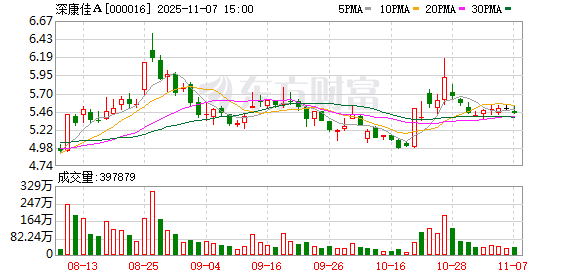
深康佳A(000016.SZ):合肥康芯威存储技术有限公司是公司的参股企业
Ge Long Hui· 2025-11-07 07:17
Core Viewpoint - Deep Kangjia A (000016.SZ) has confirmed its stake in Hefei Kangxinwei Storage Technology Co., Ltd., which focuses on the independent research and development of storage control chips and module sales [1] Company Summary - Deep Kangjia A holds a stake in Hefei Kangxinwei Storage Technology Co., Ltd. [1] - The main business of Hefei Kangxinwei is the independent research and development of storage control chips [1] - The company also engages in the sales of storage modules [1]
江波龙:10月30日接受机构调研,富国基金、恒越基金等多家机构参与
Sou Hu Cai Jing· 2025-11-05 01:21
Core Viewpoint - The company, Jiangbolong (301308), is experiencing significant growth in its semiconductor storage business, driven by increased demand for high-capacity storage solutions and strategic partnerships with major clients [1][6]. Group 1: Market Trends and Demand - The storage market is witnessing a price surge, with prices for 512Gb TLC/1Tb TLC/QLC NND increasing by nearly 40% from September to late October due to high demand from cloud service providers [2]. - The HDD supply is struggling to meet the massive data storage needs, leading to a forecasted supply shortage [2]. - The company is actively expanding its enterprise storage business, ranking third in total capacity among Chinese enterprise SSDs and first among domestic brands [3]. Group 2: Company Performance and Financials - For the first three quarters of 2025, the company reported a revenue of 16.734 billion yuan, a year-on-year increase of 26.12%, and a net profit of 713 million yuan, up 27.95% [6]. - In Q3 2025 alone, the company achieved a revenue of 6.539 billion yuan, reflecting a 54.6% year-on-year growth, and a staggering net profit increase of 1994.42% [6]. - The company's gross margin stands at 15.29%, with a debt ratio of 58.93% [6]. Group 3: Product Development and Innovation - The company has successfully developed UFS4.1 products, which are recognized for their superior performance in terms of process, read/write speed, and stability compared to market alternatives [3][5]. - The company has launched multiple series of self-developed storage controller chips, with deployment exceeding 100 million units by the end of Q3 2025 [5]. - The SOCMM2 memory product, designed for data centers, has been released, showcasing significant advancements in bandwidth and power consumption [3]. Group 4: Future Outlook and Analyst Predictions - Analysts predict continued growth in the company's profits, with forecasts for net profit reaching 1.16 billion yuan in 2025 and 2.93 billion yuan in 2026 [7]. - The company is expected to maintain its competitive edge through ongoing innovation and strategic partnerships, particularly in high-performance storage solutions [3][5].

江波龙(301308) - 2025年10月30日-31日投资者关系活动记录表
2025-11-04 11:48
Group 1: Market Trends and Pricing - The price of 512Gb TLC/1Tb TLC/QLC NAND in the spot market has increased by nearly 40% from September to late October 2025 [3] - The demand for servers has significantly exceeded original supply expectations due to cloud service providers increasing orders for high-capacity QLC SSDs [2] Group 2: Profitability and Supply Chain - The rising prices of wafers positively impact the company's gross margin, although raw material price fluctuations are only one factor affecting performance [4] - The company maintains strong inventory turnover and has established long-term partnerships with major wafer suppliers, ensuring supply chain resilience [4] Group 3: Business Growth and Product Development - The company ranks third in total capacity for enterprise SATA SSDs in China for the first half of 2025, leading among domestic brands [5] - The company is actively expanding its high-performance storage products for data centers and has launched SOCAMM2, designed specifically for AI data centers [5] - The UFS4.1 product, developed in-house, has shown superior performance in speed and stability compared to market alternatives, gaining recognition from major Tier 1 clients [6] Group 4: Chip Development and Deployment - The company has launched four series of storage controller chips, achieving a cumulative deployment of over 100 million units by the end of Q3 2025, with rapid growth expected [6] - The UFS4.1 products are currently undergoing validation with multiple Tier 1 manufacturers, indicating strong market potential [6]
江波龙(301308) - 2025年10月29日投资者关系活动记录表
2025-10-31 10:52
Group 1: Market Trends and Pricing - The recent increase in storage prices is attributed to a significant demand for large-capacity QLC SSDs driven by North American cloud service providers investing in AI infrastructure, leading to a supply shortage of HDDs and a price increase of nearly 40% for 512Gb TLC/1Tb TLC/QLC NAND from September to late October [3] - The company anticipates that the rising wafer prices will positively impact gross margins due to the production cycle from wafer procurement to memory sales, although raw material price fluctuations are only one factor affecting performance [3] Group 2: Business Growth and Profitability - The company ranks third in total capacity for enterprise SATA SSDs in China and first among domestic brands, with enterprise PCIe SSDs and RDIMM products being introduced to major domestic clients [4] - The company is actively expanding its high-performance storage products for data center applications, including new memory types like CXL2.0 and MRDIMM, and has launched SOCAMM2, designed for AI data centers, which has not yet generated revenue [4] Group 3: Supply Chain and Resource Management - The company maintains a strong inventory turnover efficiency and has established long-term partnerships with major wafer suppliers, ensuring a resilient and diversified supply chain [3] - Long-term contracts (LTA) and memorandums of understanding (MOU) with wafer suppliers enhance the stability of key resource supplies [3] Group 4: Technological Advancements - The company has developed UFS4.1 products, which are superior in performance and stability compared to market alternatives, and is currently in the validation phase with several Tier 1 clients [5] - The deployment of self-developed main control chips has surpassed 100 million units by the end of Q3, with continued rapid growth expected [5] Group 5: Strategic Collaborations - The TCM model, which requires comprehensive service capabilities from chip development to packaging, has seen successful collaborations with major clients like SanDisk and ZTE, enhancing customer acceptance during rising storage prices [4] - The company is leveraging its core intellectual property and technical capabilities to expand its coverage among major clients and strategic partners [4]
预计未来90%的芯片公司会破产或重组!
是说芯语· 2025-08-21 03:03
Core Viewpoint - The Chinese semiconductor industry has faced significant adjustments since 2025, with many companies nearing bankruptcy or restructuring due to multiple pressures, including market saturation, technological shortcomings, and financial vulnerabilities [2][29]. Company Summaries 1. LiKeXin Semiconductor - Background: Former subsidiary of Datang Telecom, focused on smart IoT and smartphone SoC chip development - Dilemma: Filed for bankruptcy in July 2025 with debts exceeding 100 million yuan, unable to secure large-scale orders, and faced severe inventory backlog due to market saturation [2]. 2. Jianwenlu (Zhejiang) Semiconductor - Background: IDM model RF chip company targeting the 5G filter market - Dilemma: Entered bankruptcy review in July 2025 due to a 30% drop in production line utilization caused by declining global smartphone shipments and high operational costs [3]. 3. Times Chip Storage Semiconductor - Background: Planned to invest 13 billion yuan in a 12-inch storage chip wafer factory - Dilemma: Failed restructuring in June 2025 due to equipment payment defaults and plummeting storage chip prices [5]. 4. Sichuan Shangda Electronics - Background: FPC supplier with a 35% order growth in 2024 - Dilemma: Filed for bankruptcy in June 2025 due to delayed customer payments and external financing interruptions [8]. 5. Jiangxi Chuangcheng Microelectronics - Background: DSP chip design company supported by local government - Dilemma: Entered bankruptcy in April 2025 due to technological lag and fierce market competition [11]. 6. Xiangxin Integrated Circuit - Background: Leading power management chip packaging company in East China - Dilemma: Filed for bankruptcy in August 2025 due to a 40% revenue decline from customer concentration and order fluctuations [14]. 7. Paixin Semiconductor - Background: Focused on automotive-grade power device packaging - Dilemma: Filed for bankruptcy in June 2025 due to delayed technology implementation and cash flow issues [15]. 8. Juleicheng Semiconductor - Background: GaN epitaxial wafer and chip manufacturer - Dilemma: Filed for bankruptcy in May 2025 due to poor technology choices and equipment payment defaults [16]. 9. Lixin Chuangyuan Semiconductor - Background: Packaging company focusing on power management and MCU chips - Dilemma: Filed for bankruptcy in July 2025 due to delayed customer payments and external financing interruptions [17]. 10. Zhenjiang New District Zhenxin Semiconductor - Background: Chip testing company established in 2018 - Dilemma: Filed for bankruptcy in April 2025 due to equipment payment defaults and declining customer demand [19]. Industry Lessons 1. Technical Research Shortcomings - 80% of companies have R&D investment below 15%, significantly lower than international giants like TSMC [29]. 2. Financial Vulnerability - 90% of companies rely on external financing, with industry financing down 40% in 2025 [30]. 3. Market Demand Fluctuations - Continuous decline in smartphone shipments and high certification barriers in automotive electronics have pressured many companies [31]. 4. Supply Chain Constraints - Heavy reliance on imported equipment and materials poses significant risks, with less than 20% domestic production for equipment below 28nm [32]. 5. Strategic Management Errors - Companies often pursue blind expansion and have a concentrated customer base, leading to vulnerabilities [33]. Future Outlook - By the end of 2024, it is expected that 90% of chip companies will face bankruptcy or restructuring, with a significant concentration of market share among leading firms [35].