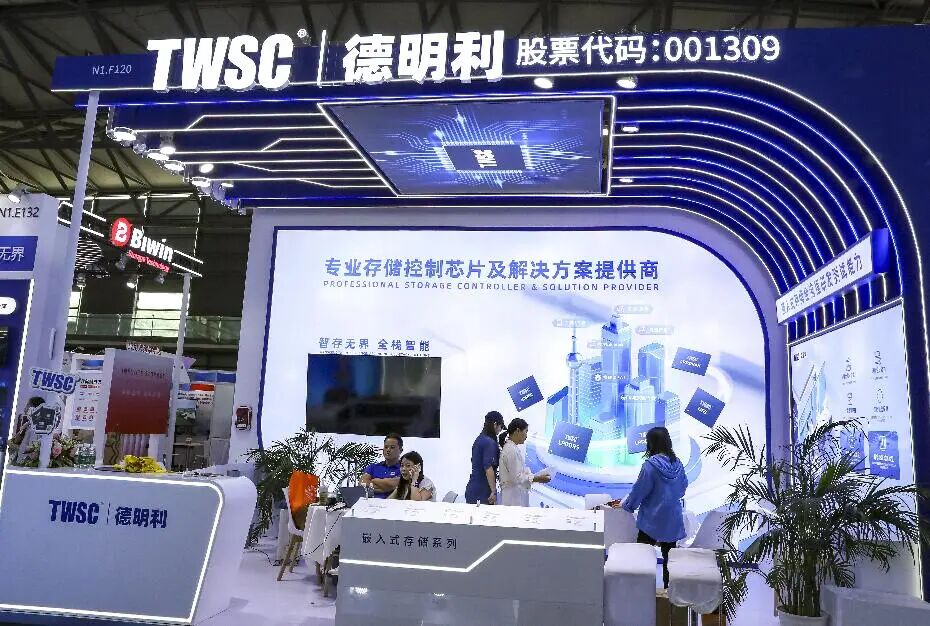
内存产品(DRAM)

Search documents
“订单排期到了明年” 存储超级周期下的众生相:谁在兑现 谁在挣扎
Zhong Guo Ji Jin Bao· 2026-01-31 23:42
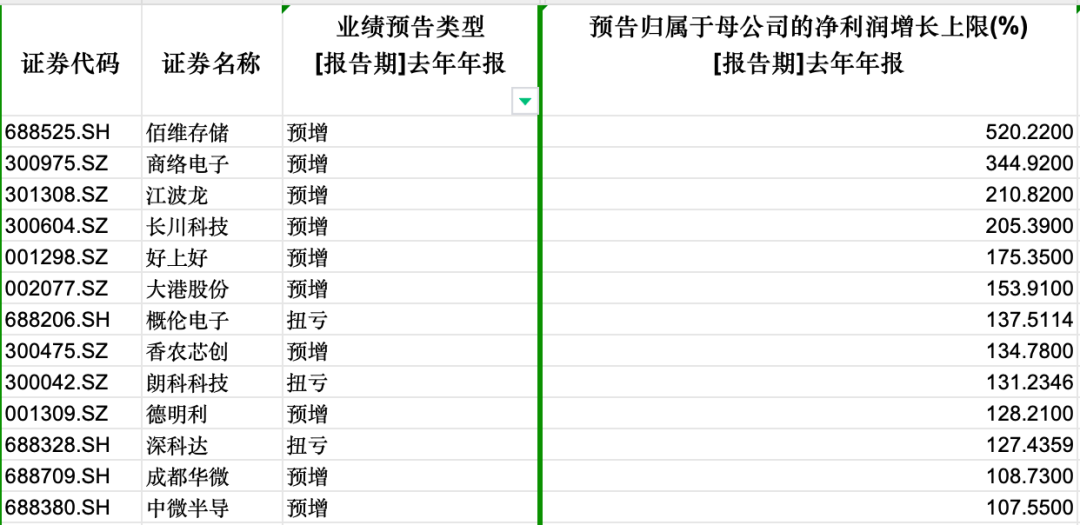
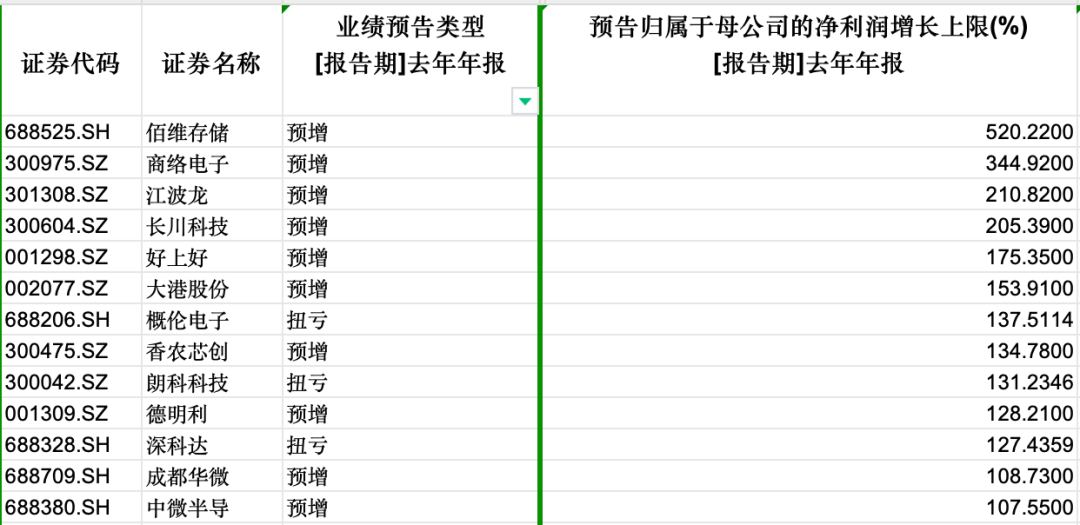
Core Viewpoint - The storage chip market is experiencing a "super cycle" driven by AI, leading to significant price increases and improved profitability for storage companies, while terminal manufacturers face pressure to raise prices or reduce specifications [1][3][7]. Group 1: Market Dynamics - The storage market is emerging from a low point, with many companies reporting substantial profit increases due to stabilizing prices driven by AI demand [1][2]. - As of January 29, 2026, 52 storage-related companies in the A-share market have issued performance forecasts for 2025, with 25 companies expecting profit increases, and 31 companies reporting year-on-year net profit growth [1][2]. - Notable profit increases include Bawei Storage with a projected growth of 520.22%, Shangluo Electronics at 344.92%, and Jiangbolong at 210.82% [2]. Group 2: Price Trends - Market research indicates that storage prices are expected to rise by 40% to 50% in Q1 2026 and by approximately 20% in Q2 2026, surpassing historical highs [3][4]. - Companies like Jiangbolong attribute their recovery to the stabilization of storage prices and increased demand from AI servers, leading to a supply-demand imbalance [2][5]. Group 3: Competitive Positioning - Storage manufacturers are shifting focus from consumer markets to enterprise-level markets, such as data centers and AI servers, where profit margins are higher due to lower price sensitivity [5][6]. - Companies are investing in technology and production capabilities to enhance their competitive edge, with Jiangbolong planning to raise 3.7 billion yuan for technology development and production expansion [6]. Group 4: Impact on Terminal Manufacturers - Terminal manufacturers are facing significant cost pressures due to rising component prices, leading to a projected 14.8% decrease in global laptop shipments in Q1 2026 [7][8]. - Major brands like Lenovo and Dell have begun raising prices on their products, with Lenovo increasing prices by 500 to 1500 yuan on mid-to-high-end models [8][9]. - The rising costs of memory components are impacting the profitability of smartphone manufacturers, with companies like Transsion Holdings reporting a 54.11% decline in net profit due to increased supply chain costs [9].


“产线的机器已经开足了马力,订单排期到了明年,连客户要货的电话都不敢接了,怕得罪人。”存储超级周期下的众生相:谁在兑现,谁在挣扎
Zhong Guo Ji Jin Bao· 2026-01-31 13:05
Core Insights - The storage chip market is experiencing a "super cycle" driven by AI, leading to significant price increases and improved profitability for storage companies, while terminal manufacturers face pressure to raise prices or reduce specifications [1][2][3] Group 1: Market Dynamics - The storage market is emerging from a low point, entering a new upward cycle, with 52 storage-related companies in A-shares reporting positive earnings forecasts for 2025, including 25 companies with expected profit growth [2] - Storage price increases are the primary factor behind the improved performance of these companies, with some reporting profit growth exceeding 100% [2] - Market research indicates that storage prices are expected to rise by 40% to 50% in Q1 2026 and by approximately 20% in Q2 2026, surpassing historical highs [3] Group 2: Competitive Positioning - Storage manufacturers are ramping up production to meet the surging demand from AI applications, with significant increases in memory requirements for AI servers compared to standard servers [4][5] - Companies are shifting focus from consumer markets to enterprise-level markets, where customers prioritize stability and reliability over price, allowing for better profit margins [5] - Companies like Jiangbolong are enhancing their capabilities through partnerships and new product launches, including a 37 billion yuan fundraising plan to invest in core technology and production processes [5][6] Group 3: Challenges for Terminal Manufacturers - Terminal manufacturers are facing significant cost pressures due to rising prices of components, including CPUs and storage, leading to a projected 14.8% decrease in global laptop shipments in Q1 2026 [7][8] - Major brands like Lenovo and Dell have begun to raise prices on their products, with increases ranging from 10% to 30%, while some brands are even canceling low-end models due to cost pressures [8][9] - The financial impact of rising component costs is evident, with companies like Transsion Holdings reporting a 54.11% decline in net profit due to increased supply chain costs [9][10]
“产线的机器已经开足了马力,订单排期到了明年,连客户要货的电话都不敢接了,怕得罪人 ”存储超级周期下的众生相:谁在兑现,谁在挣扎
Zhong Guo Ji Jin Bao· 2026-01-31 12:57
Core Viewpoint - The storage chip market is experiencing a "super cycle" driven by AI, leading to significant price increases and improved profitability for storage companies, while terminal manufacturers face pressure to raise prices or reduce specifications [1][3]. Group 1: Market Dynamics - The storage market is emerging from a low point, with many companies reporting substantial profit increases due to stabilizing prices driven by AI demand [1]. - As of January 29, 2026, 52 storage-related companies in the A-share market have issued performance forecasts for 2025, with 25 companies expecting profit increases, and 31 companies reporting year-on-year net profit growth [1]. - Notably, 13 companies have projected net profit growth exceeding 100% [1]. Group 2: Company Performance - Companies like Bawei Storage and Jiangbolong are forecasting significant profit increases, with Bawei Storage projecting a net profit growth of 520.22% and Jiangbolong 210.82% [2]. - Jiangbolong attributes its turnaround to the recovery of storage prices and increased demand from AI servers, leading to a shift in supply dynamics [2]. - The storage price surge is expected to continue, with predictions of a 40% to 50% increase in Q1 2026 and an additional 20% in Q2 2026 [3]. Group 3: Competitive Positioning - Storage manufacturers are shifting focus from consumer markets to enterprise-level markets, such as data centers and AI servers, which offer higher profit margins due to lower price sensitivity [5]. - Companies are investing in technology and product development to enhance their competitive edge, with Jiangbolong planning to raise 3.7 billion yuan for technology development and production expansion [6]. - The urgency to secure market position is emphasized, as delays in strategic actions could result in missed opportunities during this lucrative period [7]. Group 4: Impact on Terminal Manufacturers - Terminal manufacturers are facing significant cost pressures due to rising prices of storage components, leading to a projected 14.8% decrease in global laptop shipments in Q1 2026 [8]. - Major brands like Lenovo and Dell have begun to raise prices on various product lines, with Lenovo increasing prices by 500 to 1500 yuan for mid-to-high-end models [8][9]. - The rising costs are impacting profit margins, with companies like Transsion Holdings reporting a 54.11% decline in net profit due to increased supply chain costs [9].

产品涨价驱动 存储芯片公司业绩亮眼 行业高景气2026年仍将持续 全球厂商扩产忙
Shang Hai Zheng Quan Bao· 2026-01-27 18:38
Core Insights - The storage chip industry is experiencing significant profitability growth driven by the demand from AI and computing sectors, leading to a high prosperity cycle and continuous product price increases [1] - The high prosperity in the storage chip industry is expected to persist into 2026, with price increases anticipated throughout the year, particularly in the HBM segment, which may remain robust until 2028 [1] Group 1: Company Performance - As of January 27, 2025, 34 storage concept companies in the A-share market have released performance forecasts, with 19 companies reporting profitability, and 17 companies showing year-on-year profit growth, indicating a 50% success rate [2] - Among these, Bawei Storage is leading with an expected revenue of 10 billion to 12 billion yuan, representing a year-on-year growth of 49.36% to 79.23%, and a projected net profit of 850 million to 1 billion yuan, reflecting a staggering growth of 427.19% to 520.22% [2] - Leading companies like Demingli and Zhaoyi Innovation are also reporting strong performance, with Demingli forecasting revenues of 10.3 billion to 11.3 billion yuan, a year-on-year increase of 115.82% to 136.77%, and net profits of 650 million to 800 million yuan, up by 85.42% to 128.21% [2] Group 2: Industry Trends - The primary driver of the high growth in the storage chip industry is the entry into a high prosperity cycle and product price increases, with companies like Bawei Storage and Demingli reporting improvements in sales revenue and gross margins due to stabilizing storage prices [4] - The global storage industry began to rebound from the second quarter of 2025, with major manufacturers like SanDisk initiating price increases, followed by others such as Samsung and Micron [4] - The current price increase cycle is attributed to a structural supply-demand mismatch caused by an explosion in AI demand and supply constraints, with expectations that the price increase cycle will last until the end of 2026 and high prosperity until at least 2027 [5] Group 3: Expansion Strategies - In response to the ongoing high prosperity and rising product prices, storage companies are announcing expansion plans to capitalize on the industry cycle [6] - International manufacturers are focusing on expanding HBM and high-end NAND production capacities, with companies like Kioxia planning to double its NAND capacity over the next five years to meet growing AI data center demands [6] - Domestic companies such as Yangtze Memory Technologies and Changxin Memory Technologies are also ramping up production, with Bawei Storage and Demingli pursuing capital increases for expansion projects [7]

千亿存储龙头宣布扩产,业内预计涨价持续到明年
21世纪经济报道· 2025-12-11 10:13
Core Viewpoint - The storage industry is experiencing a "super cycle" driven by AI demand, leading to significant expansion plans from major players like Jiangbolong and Demingli, with expectations of continued price increases into the first half of next year [1][8]. Group 1: Expansion Plans and Funding - Jiangbolong plans to raise up to 3.7 billion yuan for technology development in storage applications, NAND Flash controller chip design, and packaging testing [1][5]. - Demingli aims to raise 3.2 billion yuan to enhance its full-chain technical capabilities from storage controller chip R&D to module delivery [1][3]. - Both companies are focusing on high-performance storage solutions to meet the increasing demands of AI applications, with Jiangbolong investing 1.28 billion yuan in NAND Flash controller chip development [5][6]. Group 2: Market Dynamics and Demand - AI servers require significantly more storage than traditional servers, with DRAM usage approximately eight times and NAND Flash usage three times higher [5][6]. - The global semiconductor storage market is projected to grow to $214.8 billion by 2026, reflecting a 16.2% increase [6]. - The domestic storage market is expected to benefit from increased demand, particularly as local manufacturers like Yangtze Memory and Changxin Memory make technological advancements [7]. Group 3: Financial Health and Risks - Jiangbolong's market capitalization is reported at 108.6 billion yuan, while Demingli's is at 49.3 billion yuan [1]. - Both companies are facing cash flow challenges, with Demingli reporting negative operating cash flow for several quarters and a high debt ratio of 73.28% [10]. - The companies' expansion plans are subject to the volatility of the storage market, with potential risks associated with the long implementation periods of their projects [3][10]. Group 4: Inventory and Supply Chain Strategies - Companies are adjusting inventory strategies to ensure supply chain stability amid market fluctuations, with Jiangbolong and Demingli both emphasizing long-term contracts with suppliers [12]. - Jiangbolong's inventory value stands at 8.517 billion yuan, while Demingli's is at 5.940 billion yuan, indicating a focus on maintaining adequate stock levels to meet future demand [11][12]. - The anticipated supply constraints in the storage chip market are expected to create favorable conditions for domestic manufacturers, potentially leading to significant profits in the coming year [12].

存储芯片“超级周期”有多久 业内:还有四个季度会更明显
2 1 Shi Ji Jing Ji Bao Dao· 2025-12-11 09:15
Core Viewpoint - The storage industry is experiencing a significant expansion wave driven by increasing demand from AI applications, with major companies like Jiangbolong and Demingli announcing substantial fundraising plans to enhance production capacity and technology development [1][2][3]. Group 1: Fundraising and Expansion Plans - Jiangbolong plans to raise up to 3.7 billion yuan for investments in storage technology development, NAND Flash controller chip design, and packaging testing [1][3]. - Demingli has announced a fundraising plan of 3.2 billion yuan aimed at solidifying its full-chain technical capabilities from storage controller chip R&D to module delivery [1][3]. - Both companies are focusing on expanding production to capture market share amid a booming storage market driven by AI demand [2][3]. Group 2: AI Market Focus - Jiangbolong's fundraising will support high-end storage development projects targeting AI applications, including enterprise-level PCIe SSDs and RDIMM products [4][7]. - Demingli's fundraising is also directed towards high-capacity and high-performance SSDs and DRAM products, reflecting a strong alignment with AI market needs [8][9]. Group 3: Market Dynamics and Future Outlook - The storage market is expected to experience a prolonged upcycle due to surging demand from data centers and AI applications, with predictions of a 16.2% growth in the global semiconductor storage market by 2026 [10][11]. - Both companies are preparing for potential supply shortages in the coming years, with Jiangbolong and Demingli indicating that the supply-demand imbalance will become more pronounced in late 2026 and early 2027 [11][12]. - The companies are adopting strategies to manage inventory and pricing effectively to navigate the challenges posed by the industry's cyclical nature and technological advancements [12][13]. Group 4: Financial Health and Cash Flow - Jiangbolong and Demingli are facing cash flow challenges, with Demingli reporting negative operating cash flows over the past few years and a high debt ratio of 73.28% [12][13]. - Jiangbolong has also indicated a pressing need for funds, having proposed an H-share listing to address its financial requirements [12].

抢抓AI存储上行机遇 上市公司募资扩产忙
Zheng Quan Ri Bao Zhi Sheng· 2025-12-03 13:40
Core Viewpoint - The AI storage market is experiencing significant growth, prompting companies to accelerate their investment and development efforts in high-end storage solutions to meet increasing demand driven by AI technologies [1][2]. Group 1: Company Developments - Jiangbolong plans to raise up to 3.7 billion yuan for R&D and industrialization of high-end storage solutions targeting the AI sector, semiconductor storage control chips, and high-end packaging and testing [1]. - Demingli aims to raise up to 3.2 billion yuan for expanding SSD and DRAM production, as well as establishing a smart storage management and R&D headquarters [2]. - Zhaoyi Innovation reported rapid market share gains for its DDR4 8Gb products and plans to mass-produce self-developed LPDDR4 series products next year [3]. Group 2: Market Trends - The demand for storage is being driven by the exponential growth of generative AI and large model technologies, leading to a significant increase in data processing needs [1]. - DRAM spot prices surged, with DDR5 chips increasing by 30% in one week due to tight supply and limited shipments from major module manufacturers [2]. - The storage industry is expected to enter a prolonged "super cycle" due to AI-driven supply shortages, with market demand continuing to rise [1][2]. Group 3: Industry Standards and Collaboration - The establishment of the Future Storage working group aims to develop AI storage standards and promote a technical framework for storage architecture and performance evaluation [3][4]. - The working group will focus on key technologies such as KV Cache optimization and storage acceleration for AI inference [3].

【读财报】11月上市公司定增动态:实际募资总额344.61亿元 远达环保、沪硅产业募资额居前
Xin Hua Cai Jing· 2025-12-01 23:43
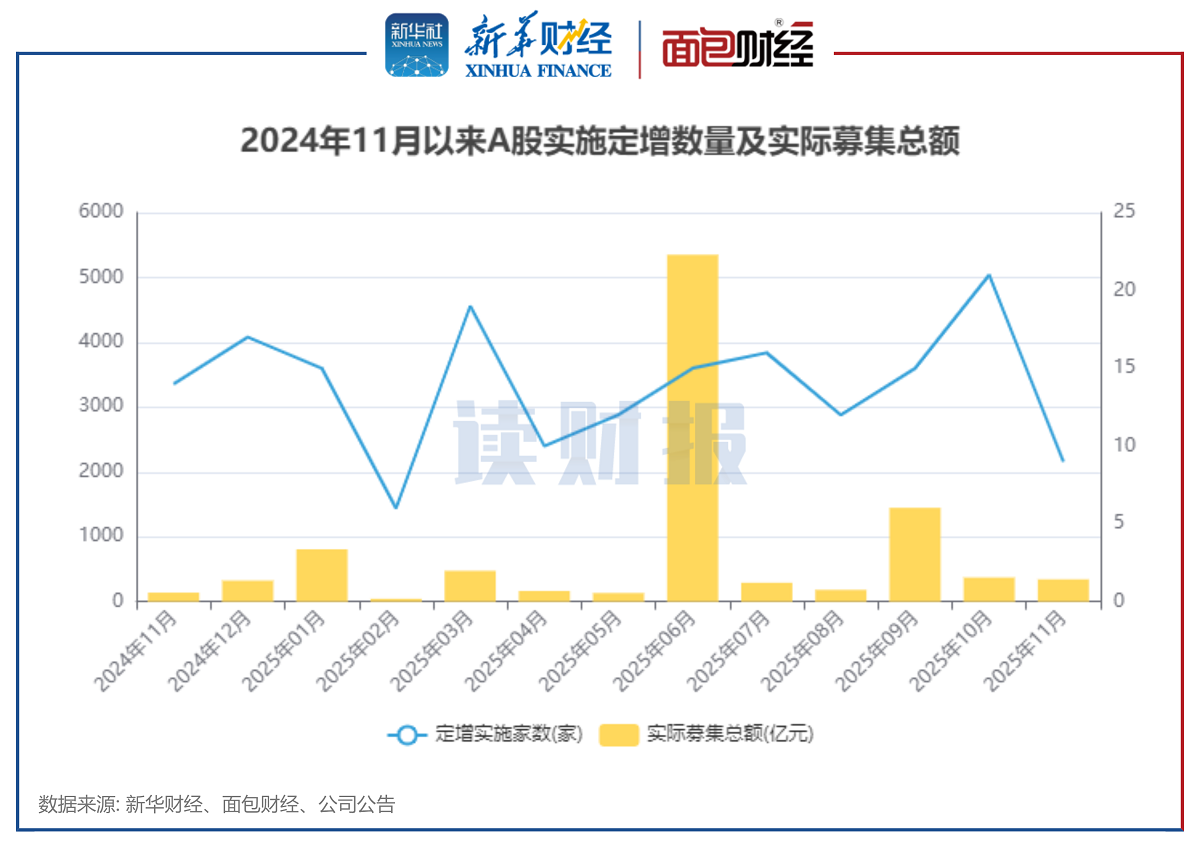
Core Viewpoint - In November 2025, A-share listed companies in China executed 9 private placements, a decrease of 36% year-on-year, while the actual fundraising amount reached approximately 34.461 billion yuan, an increase of 147% year-on-year [1][2]. Group 1: Fundraising Activities - A total of 9 private placements were completed in November 2025, with a total fundraising amount of approximately 34.461 billion yuan, marking a year-on-year increase of 147% but a month-on-month decrease of 8% [2][4]. - The top three companies by fundraising amount were: - Yuanda Environmental Protection raised 23.576 billion yuan by issuing 359,938.93 million shares at 6.55 yuan per share [4][5]. - Hushi Silicon Industry raised 6.716 billion yuan by issuing 44,740.55 million shares at 15.01 yuan per share [4][5]. - Hubei Energy raised 2.9 billion yuan by issuing shares at 4.85 yuan per share [4][5]. Group 2: Planned Fundraising - In November 2025, 29 private placement proposals were disclosed, with a planned fundraising amount of approximately 28.779 billion yuan, reflecting a year-on-year decrease of 34.53% [1][6]. - The companies with the largest planned fundraising amounts included: - Energy-saving Wind Power with a maximum of 3.6 billion yuan for green power projects [9][11]. - Shengxin Lithium Energy and Demingli, each planning to raise 3.2 billion yuan for various projects [9][11]. Group 3: Industry Distribution - The industrial sector led the fundraising activities with 3 completed placements totaling approximately 23.919 billion yuan [6][7]. - The consumer discretionary sector also had 3 placements, but with a significantly lower total of 6.07 million yuan [6][7]. - The information technology sector followed with 2 placements, raising a total of 7.036 billion yuan [6][7].


德明利32亿元定增是否合规待考 上市后不断募资可“失血”愈发严重 由盈转亏却又要募资盖楼
Xin Lang Zheng Quan· 2025-11-28 09:23
Core Viewpoint - Demingli plans to raise 3.2 billion yuan through a private placement to expand production, build a new headquarters, and supplement working capital, despite previous fundraising efforts and rising debt levels [1][6][9]. Group 1: Fundraising and Financial Performance - Demingli has conducted multiple fundraising rounds since its IPO in July 2022, raising 530 million yuan initially, followed by 989 million yuan in January 2025, and now seeking an additional 3.2 billion yuan [1][2]. - The investment progress from the previous fundraising round is only about 71.7%, raising questions about compliance with regulatory requirements that typically mandate an 18-month gap between fundraising events [3][5]. - The company has reported significant fluctuations in profitability, with a net profit of 0.11 billion yuan in 2022, a rebound to 3.03 billion yuan in 2024, but a loss of 0.5 billion yuan in the first three quarters of 2025 [6][7][9]. Group 2: Debt and Cash Flow Issues - Demingli's cash flow from operating activities has been negative, with figures of -3.31 billion yuan in 2022, -10.15 billion yuan in 2024, and -14.95 billion yuan in the first three quarters of 2025, indicating a worsening financial situation [8]. - The company's interest-bearing debt has increased dramatically from 0.26 billion yuan in 2019 to 47 billion yuan by the end of the third quarter of 2025, leading to high financial costs that impact profitability [8][9]. Group 3: Management and Governance Concerns - Prior to the announcement of the new fundraising plan, the controlling shareholders, including Li Hu and Tian Hua, sold shares worth nearly 500 million yuan, raising concerns about their confidence in the company's future [1][14]. - Several major shareholders have also engaged in significant share sell-offs, indicating a potential lack of faith in the company's growth prospects [14][15]. Group 4: Project Specifics and Compliance - The new fundraising plan includes 6.52 billion yuan for a new headquarters in Shenzhen, despite an existing R&D center funded during the IPO, raising questions about project redundancy [10][11][13]. - The total investment for the new headquarters project is estimated at 1.175 billion yuan, with a construction period of 36 months [11].

德明利拟定增募资32亿 年内股价涨250%李虎夫妇套现4.97亿
Chang Jiang Shang Bao· 2025-11-27 07:06
Core Viewpoint - Demingli (001309.SZ), a leading domestic storage module company, plans to raise up to 3.2 billion yuan through a private placement to enhance production capacity and technology in solid-state drives and memory products [1][3]. Fundraising Plan - The company intends to issue no more than 68.07 million shares, raising a total of up to 3.2 billion yuan for various projects, including SSD and DRAM expansion, and establishing a smart storage management and R&D headquarters [3][4]. - The investment amounts for the four projects are 1.123 billion yuan, 747 million yuan, 1.175 billion yuan, and 900 million yuan, with corresponding fundraising allocations of 984 million yuan, 664 million yuan, 652 million yuan, and 900 million yuan [4]. Financial Performance - Since Q3, storage product prices have rebounded, leading to a rapid recovery in Demingli's performance, achieving profitability in Q3 [1][8]. - In 2024, Demingli reported revenue of 4.773 billion yuan, a year-on-year increase of 168.74%, and a net profit of 351 million yuan, up 1302.3% [8]. - For the first three quarters of 2025, revenue reached 6.659 billion yuan, a year-on-year increase of 85.13%, but the company reported a net loss of 27.08 million yuan [8][9]. Shareholder Activity - Important shareholders have reduced their holdings, with the controlling shareholder, Li Hu, and his wife, Tian Hua, collectively cashing out approximately 497 million yuan in September 2025 [10][11][12]. - The stock price has seen significant fluctuations, dropping 29% from a peak of 306 yuan to 217.35 yuan as of November 26, 2025, despite a year-to-date increase of 250.16% [14].