Smart Home Appliances

Search documents
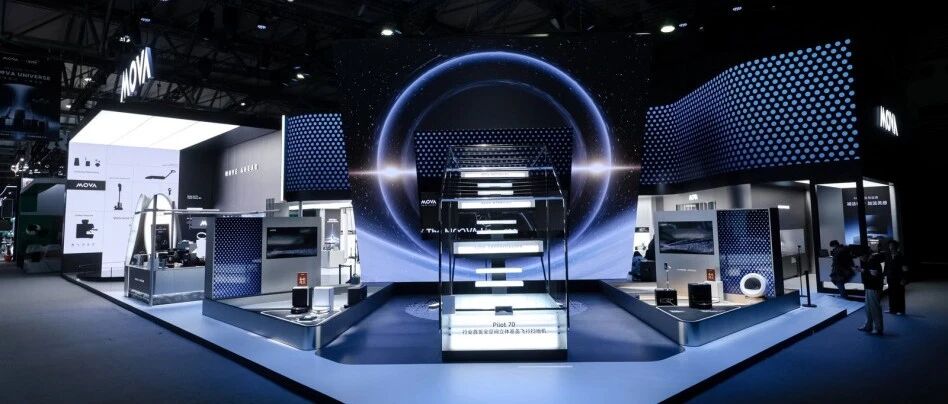
MOVA的下一步:让家庭进入「AI主动」时代
雷峰网· 2026-03-16 00:27
Core Viewpoint - The smart home appliance industry is transitioning from focusing on individual device intelligence to developing a cohesive system that allows these devices to operate collaboratively, thereby simplifying household management and enhancing user experience [2][30][36]. Group 1: Industry Evolution - Over the past decade, smart home appliances have evolved significantly, with stronger computing power, more sensors, and smarter algorithms, leading to a proliferation of devices in households [2][12]. - According to IDC data, global smart home device shipments are expected to exceed 1.4 billion units by 2025, with a compound annual growth rate of 12.2% over five years [2]. - In urban households in China, it is common to have 10 to 20 connected devices, indicating a growing complexity in home management [2]. Group 2: Need for Unified Systems - The increasing number of smart devices has led to a paradox where homes become more complex despite having smarter devices [3][4]. - The industry is recognizing the need for a unified system that can manage these devices collectively rather than focusing solely on enhancing individual device capabilities [4][15]. - MOVA has demonstrated significant growth, with a 418% year-on-year revenue increase and an expansion of its product line to 32 categories, indicating a shift towards creating a comprehensive AI system for home management [8]. Group 3: Transition to Proactive Intelligence - The next phase in smart home technology is moving from "reactive intelligence," where devices wait for user commands, to "proactive intelligence," where systems autonomously manage device operations based on household conditions [18][19]. - MOVA is building an ecosystem that includes continuous perception, understanding of household dynamics, and collaborative scheduling among devices, marking a shift from device intelligence to system intelligence [19]. Group 4: Product Development and Integration - MOVA has introduced innovative technologies in cleaning devices, such as the "All-Object Recognition Obstacle Master" in its robotic vacuum cleaners, which enhances spatial awareness and integrates into the home system [22]. - The company is leveraging foundational engineering capabilities across different products, allowing for a cohesive product ecosystem that enhances overall system efficiency [27]. - As MOVA's product structure matures, new product launches are not merely about expanding categories but also about adding new capabilities to the home system [28]. Group 5: Simplifying Home Management - The smart home appliance industry is shifting from "individual device intelligence" to "system intelligence," focusing on how devices can work together to simplify user experience [30]. - The goal is to create a self-operating household structure where technology seamlessly integrates into daily life, reducing the complexity of managing multiple devices [34][36].

家电装上“AI大脑”,打造“会思考的家”!智能家居开辟消费新蓝海
Xin Lang Cai Jing· 2026-02-26 20:43
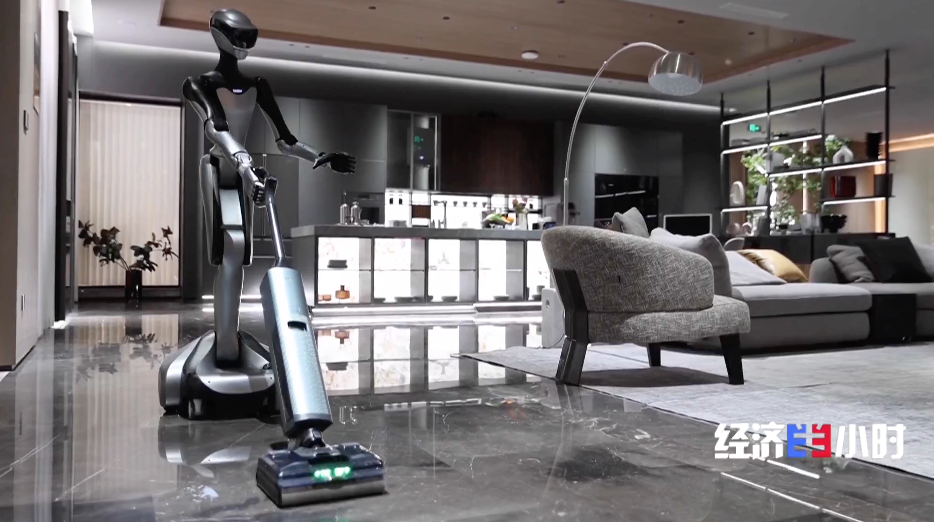
Group 1 - The core theme of the articles revolves around the increasing integration of intelligent robots and smart home appliances into daily life, showcasing their capabilities and consumer acceptance [1][9][10] - The popularity of smart cleaning robots, particularly in commercial settings like shopping malls, indicates a growing consumer interest in these technologies [3][5] - Smart home devices are evolving to include advanced features such as obstacle avoidance, self-cleaning capabilities, and the ability to recognize various household items, enhancing user convenience [6][9] Group 2 - Companies are focusing on developing smart home ecosystems, with products like smart vacuum cleaners, lawn mowers, and pool cleaners, demonstrating strong competitive advantages in the global market [8][10] - The integration of AI technology into home appliances is transforming them from passive tools to proactive partners in daily tasks, creating new market opportunities [9][10] - The trend of traditional appliance manufacturers, smartphone companies, and electric vehicle brands entering the smart home sector is indicative of a broader industry shift towards creating integrated smart ecosystems [10]
科技元素加持,春节更具“智”感
Xin Lang Cai Jing· 2026-02-22 23:06
Group 1 - The core viewpoint of the articles highlights the growing trend of "green and intelligent" consumption among residents, driven by the acceleration of artificial intelligence technology, the deepening of green consumption concepts, and the optimization of "trade-in" policies [1][2]. - The sales of smart home appliances have significantly increased, with consumers focusing more on AI interaction and multi-device collaboration, making them a highlight in the New Year goods market [1]. - The demand for smart fitness equipment, such as AI sports screens and smart dumbbells, has risen, providing convenience and personalized training experiences for consumers [2]. Group 2 - The smart home industry is identified as a key area for consumption upgrade, with a projected global penetration rate of over 40% for smart appliances by 2025, and China contributing 60% of the production capacity [2]. - The market for whole-home smart systems is expected to reach 280 billion yuan by 2026, indicating significant growth potential in the sector [2]. - The shift from focusing on products to emphasizing scenario services is expected to drive market growth, with whole-home smart systems and AI services becoming crucial engines for the appliance market [3].
“全屋智能”成为新消费时尚 家电消费释放全新“智”力 | 2026消费生活观察↓
Yang Shi Wang· 2026-01-03 07:58
Core Viewpoint - The rapid development of technologies such as 5G and artificial intelligence is driving the adoption of smart home devices, particularly among young consumers, who are shifting from "single smart" products to "whole home smart" solutions [1][15]. Group 1: Consumer Trends - Young consumers, particularly those under 35, represent nearly 60% of the home appliance market, indicating a significant trend towards younger demographics in smart home consumption [11]. - The demand for smart home appliances is influenced by the desire for enhanced comfort and convenience, with consumers actively seeking smart features in essential devices [7][9]. - The integration of smart technology into home appliances is becoming a key purchasing factor, with consumers willing to pay for better experiences [13][14]. Group 2: Industry Developments - The smart home industry is evolving from "single smart" products to "whole home smart" systems, allowing for interconnected devices that enhance user experience [15][17]. - The implementation of policies such as trade-in programs is stimulating the smart appliance market, with projected sales exceeding 2.6 trillion yuan by 2025, benefiting over 360 million people [20]. - The Chinese home appliance market is transitioning from a phase of mass consumption to one focused on upgrading existing products, emphasizing new features, technologies, and experiences [23].

IDC:前三季度全球智能扫地机器人市场累计出货1742.4万台 同比增长18.7%
智通财经网· 2025-12-05 05:45
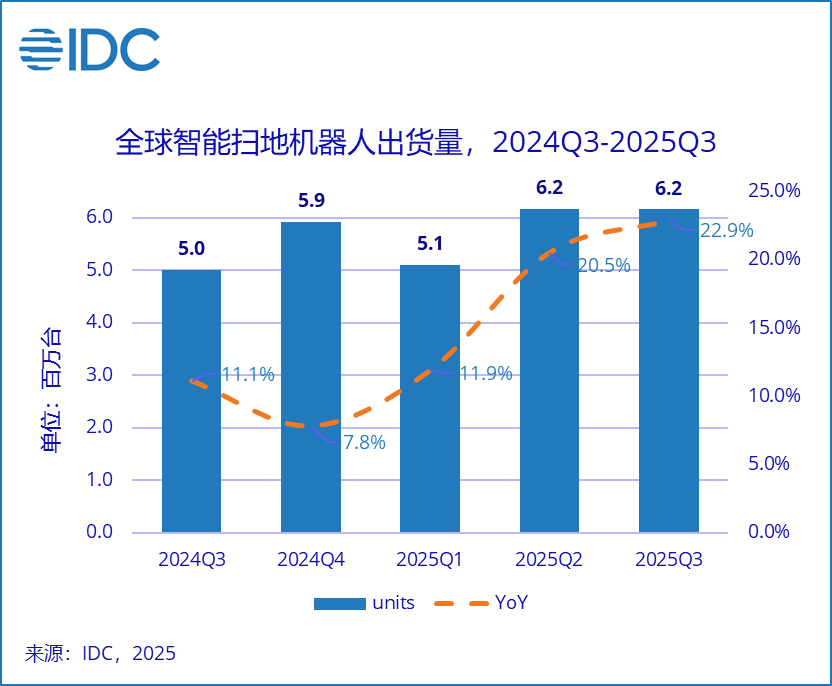
Global Market Overview - The global smart vacuum cleaner market shipped a total of 17.424 million units in the first three quarters of 2025, representing a year-on-year growth of 18.7%, with 6.161 million units shipped in Q3 alone, marking a 22.9% increase [1] - The Middle East, Africa, and Europe have emerged as key growth drivers for the industry [1] Company Performance - Stone Technology (688169.SH) led the global shipment with 3.788 million units in the first three quarters, showing strong performance in the U.S., Germany, South Korea, and Turkey, where it maintained the top position [4] - Ecovacs (603486.SH) shipped 2.453 million units in the first three quarters, achieving a year-on-year growth of 27.7%, and retained the top position in the Chinese market [5] - Dreame ranked first in the European market in the first three quarters, with a market share of 26.8% in Western Europe, although it faced a noticeable decline in its domestic market share [6] - Xiaomi (01810) continues to focus on mid-range value-for-money products while expanding into high-end product lines, performing well in domestic and Asia-Pacific markets [7] - Yunji's global shipment volume ranked among the top five, with significant growth in the U.S. and Asia-Pacific markets, while maintaining a 16.2% market share in the domestic market [8] Chinese Market Insights - The Chinese smart vacuum cleaner market shipped 4.63 million units in the first three quarters, with a year-on-year increase of 27.2%, indicating sustained industry growth [10] - Despite fluctuations in national subsidy policies, leading manufacturers have effectively countered these impacts through product upgrades and AI integration, maintaining steady market growth [10] - The market is experiencing increased competition, with DJI entering the market in August and ranking sixth in shipments, adding new competitive dynamics [10] - The industry faces significant inventory pressure, posing challenges for manufacturers in inventory turnover, profit management, and future product planning [10] Industry Trends - IDC's senior analyst Zhao Siquan noted that the robust growth of the global vacuum cleaner market is attributed to continuous product iteration by Chinese manufacturers, enhanced channel operations, and deepened market demand [11] - Future competition in the industry is expected to escalate, focusing on AI technology empowerment and home ecosystem collaboration, with technological innovation and ecosystem integration becoming key for companies to stand out [11]


核电工程师移民加拿大沦为洗碗工,中国产业优势凸显
Xin Lang Cai Jing· 2025-11-12 10:36
Core Viewpoint - The article argues that China presents more opportunities for ordinary people compared to Europe and North America, which are in a decline phase [1] Group 1: Employment Opportunities - In Europe, young people face fewer job opportunities and lower wages due to a lack of high-tech industries [1] - Key high-tech sectors such as new energy vehicles, smartphones, smart home appliances, AI, robotics, e-commerce, live streaming, and semiconductors are thriving in China [1] Group 2: Future Economic Trends - The article predicts that countries like Europe, Canada, and Australia will experience decline over the next 30 years, while China will continue to rise [1] Group 3: Immigrant Workforce - Chinese immigrants in Western countries often occupy low-status jobs, such as dishwashing, food delivery, and slaughterhouse work, indicating a disparity in job status [1]

Qingdao's Jiaozhou Accelerates Construction of Innovative Industrial System
Globenewswire· 2025-08-25 12:26
Core Insights - Jiaozhou, Qingdao is a key area within the Shanghai Cooperation Organization (SCO) Demonstration Zone, featuring a strong manufacturing base with over 15,000 industrial enterprises and a total output value exceeding 160 billion yuan in 2024 [1][2]. Industrial Development Strategy - The city is implementing targeted measures to build an innovation-driven industrial system, focusing on industrial strategy research, sci-tech innovation, R&D commercialization, and industrial integration [2]. - Initiatives such as "One Town, One Industry Iterative Innovation" and "Three-Industry Integration Development" have been launched to enhance industrial capabilities [2]. Industrial Clusters - Jiaozhou has established seven provincial-level industrial clusters, including specialty food industries and home appliances [3]. - The city also hosts two national-level clusters: Smart Home Appliances and Power Steel Structures, showcasing its advanced manufacturing capabilities [4]. Advanced Manufacturing - Jiaozhou is home to leading manufacturing companies like Qingdao CIMC Reefer Container Manufacture Co., Ltd., Alfa Laval (Qingdao) Industrial Co., Ltd., and Haier Group, contributing to world-class production bases [4]. - The region has developed significant manufacturing facilities, including a global-leading refrigeration container R&D base and Asia's top marine boiler production base [4]. New Energy Industry - In 2025, Jiaozhou is focusing on driving the new energy industry through enhanced R&D, supportive policies, talent development, and global cooperation [5].
Viomi Technology's Pivot Into 'Home Water Solutions' Now Gaining Traction
Seeking Alpha· 2025-07-09 10:55
Group 1 - The article discusses Viomi Technology Co., Ltd, a smart home-water appliance provider, and mentions that the last analysis was in January when the stock was rated a 'hold' at a price of $1.57 [1] - The company focuses on providing income through investment setups by acquiring undervalued profitable stocks with strong balance sheets and minimal debt [1] - The investment strategy includes writing calls against positions to generate additional income while managing risk through position sizing and trailing stop losses [1]


佛山发布银发经济24条,“夕阳红”事业成“朝阳红”产业
2 1 Shi Ji Jing Ji Bao Dao· 2025-06-19 10:45
Group 1 - The core viewpoint of the article emphasizes the development of the silver economy in Foshan as a response to the aging population, aiming to transform the potential of the elderly demographic into economic growth through a comprehensive action plan [1][3] - Foshan plans to establish a well-rounded silver economy industry system by 2027, including the development of 2-3 high-level silver economy industrial parks and a significant increase in elderly care service capacity to 23,000 beds [1][2] - The city is focusing on enhancing its existing manufacturing capabilities in sectors such as elderly medical devices, rehabilitation aids, and food and pharmaceuticals, which are already leading in the country [2][3] Group 2 - The Foshan Silver Economy Development Promotion Association was established to foster collaboration among various sectors, including elderly services, health management, and smart elderly products, aiming to create a synergistic industrial ecosystem [3][4] - The action plan will facilitate the transition from traditional industries to "elderly-friendly" innovations, promoting the integration of technology in products and services for the elderly [3][4] - Foshan aims to explore new models such as community elderly care and smart health management, transitioning from merely providing care to enhancing the quality of life for the elderly [4]
为什么智能产品成了“维修刺客”?
吴晓波频道· 2025-04-04 14:02
Core Viewpoint - The article discusses the challenges and frustrations consumers face with smart products, highlighting issues related to repair difficulties and product reliability in the context of rapid technological advancement and market expansion [1][6]. Group 1: Consumer Experiences - Consumers are increasingly vocal about their dissatisfaction with smart products, citing issues such as malfunctioning devices that are difficult to repair. For example, a smart floor fan purchased for over 200 yuan failed to operate after a summer, and a high-end vacuum cleaner became unserviceable due to complex repair processes [2][3]. - In Zhejiang, a region with high penetration of smart home products, consumers have reported numerous incidents of product failures, including a smart home system that became obsolete after the manufacturer went out of business, affecting over 200 users [2][3]. - Complaints about smart devices have surged, with the national consumer complaint platform reporting 104,000 complaints related to smart devices in 2023, a 1.1-fold increase year-on-year. Smartwatches and smart home devices topped the complaint list [3][12]. Group 2: Repair Challenges - The article emphasizes the difficulty of repairing smart products, which often have complex components that are not easily accessible. For instance, smart panels and smart bathrooms require specialized knowledge and parts that are hard to obtain [8][10]. - Repair technicians note that the increased functionality of smart devices correlates with higher failure rates, and many repairs require proprietary knowledge or tools that are not widely available [8][10]. - The warranty period for smart products does not reflect their higher repair complexity, leading to additional costs for consumers who need extended warranty services [10][22]. Group 3: Industry Analysis - The rapid growth in sales of smart products has not been matched by improvements in quality and after-sales service, leading to a decline in product reliability. Factors such as cost-cutting and market competition contribute to this trend [12][13]. - The average price of smart home systems has dropped significantly, with some companies reporting a more than 50% decrease since 2015, indicating a shift towards lower-cost solutions that may compromise quality [15][22]. - The automotive sector, particularly in electric vehicles, faces similar challenges, with a 137% increase in complaints related to software issues in 2024, highlighting the need for better maintenance and repair solutions [17][22]. Group 4: Recommendations for Improvement - The article suggests that companies should not over-rely on cloud services for smart home systems, advocating for local operation capabilities to ensure functionality even if external services fail [20][22]. - There is a call for improved research and development focused on the economic feasibility of repairs for smart products, particularly in the automotive sector, to enhance the overall consumer experience [22][23]. - The need for establishing industry standards and improving the quality of service in the repair market is emphasized, with suggestions for creating certification systems for repair technicians to enhance trust and service quality [24][25].