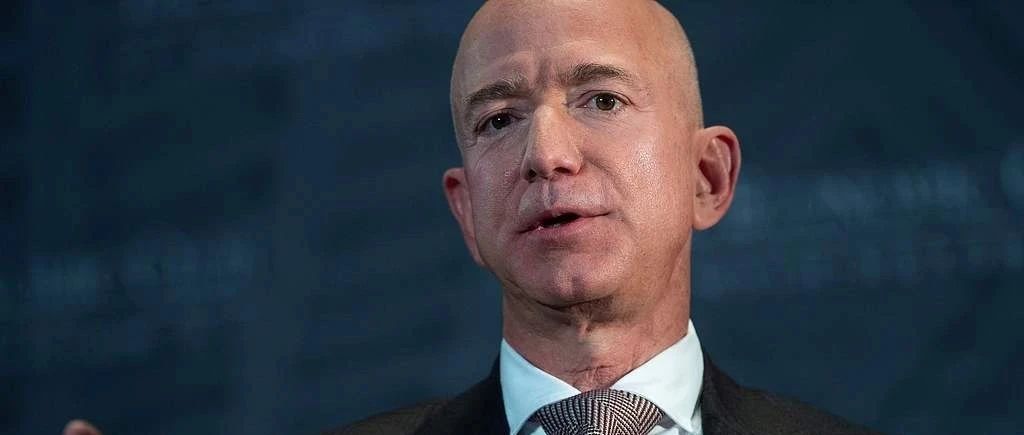
《华盛顿邮报》

Search documents
宝藏商业课!巴菲特1990年在斯坦福法学院的传授:想赚大钱?专心“桶里捞鱼”
聪明投资者· 2025-12-10 07:04
Core Viewpoint - The article emphasizes the interconnectedness of business and investment, highlighting that understanding one enhances the comprehension of the other. It advocates for defining one's "circle of competence" and staying within it to make informed investment decisions [5][12][30]. Group 1: Circle of Competence - Warren Buffett stresses the importance of identifying and operating within one's circle of competence, using the example of Mrs. Blumkin, who successfully ran a furniture business by only engaging in areas she understood [9][19][22]. - Many CEOs of large companies often lack experience in capital allocation, leading to poor acquisition decisions when they venture outside their expertise [10][24][25]. - The article suggests that having fewer but more informed investment opportunities can lead to better outcomes, contrasting this with the prevalent culture on Wall Street that encourages frequent trading [11][32][36]. Group 2: Investment Philosophy - The investment approach advocated is to focus on high-quality businesses and to wait patiently for clear opportunities, rather than being swayed by market noise [30][36][60]. - The article discusses the advantages of owning a portion of a great business, like Coca-Cola, rather than seeking to acquire entire companies, which often leads to overpaying in competitive bidding situations [36][39][44]. - It highlights the importance of investing one’s own capital, as seen in Berkshire Hathaway, where management invests a significant portion of their wealth, aligning their interests with those of shareholders [39][40]. Group 3: Market Dynamics - The article critiques the modern investment theory that equates price volatility with risk, arguing that buying undervalued assets can be safer than overpaying for perceived stability [75][78]. - It points out the challenges of global competition and the risks associated with investing in foreign markets, emphasizing a preference for companies registered in the U.S. [81][83]. - The discussion includes the notion that successful investments often come from understanding the underlying business rather than relying on market trends or speculation [57][60].


【时代风口】 科技巨头为何大举收购传媒娱乐和社交平台资产
Zheng Quan Shi Bao· 2025-10-20 17:11
Core Insights - The acquisition of Paramount by David Ellison's SkyDance for $8 billion, with Larry Ellison contributing $6 billion, signifies a major consolidation in the media industry, potentially leading to the creation of a media empire that could dominate Hollywood [1] - This trend of tech giants acquiring media and social assets reflects a broader strategy aimed at enhancing content quality and integrating various aspects of the value chain [2][3] Group 1: Acquisition Trends - Tech giants are pursuing acquisitions in media and entertainment to gain access to high-quality content, which is crucial in the digital economy [2] - The acquisition of Paramount includes significant media assets such as CBS, Showtime, and Simon & Schuster, indicating a strategic move to consolidate content ownership [1] Group 2: Vertical Integration - The focus on vertical integration allows tech companies to internalize the entire value chain from content creation to distribution, enhancing operational efficiency and shifting value distribution towards ecosystem leaders [3] - This integration is reshaping the profit distribution landscape within the media and entertainment industry [3] Group 3: Data-Driven Empowerment - Tech giants leverage their technological advantages to enhance acquired assets through data analytics, improving content creation and marketing strategies [4] - For instance, Amazon utilizes user data to inform original content production, maximizing investment returns [4] Group 4: Strategic Transformation - Acquisitions enable tech companies to transition from being mere service providers to becoming comprehensive digital lifestyle operators, creating a holistic ecosystem for users [5] - The competitive landscape is evolving from product-based competition to ecosystem-based competition, raising barriers for new entrants [5][6]
贝索斯,新动作
Zhong Guo Ji Jin Bao· 2025-07-24 08:08
Group 1 - Jeff Bezos is considering acquiring CNBC to enhance his media portfolio with a credible and influential voice [1][2] - CNBC is set to be spun off from Comcast's NBCUniversal later this year, making it a potential target for acquisition [2] - The new company, Versant, will focus on traditional media business and cannot sell significant assets, including CNBC, for two years post-spin-off due to tax regulations [2] Group 2 - Bezos previously acquired The Washington Post for $250 million in 2013, but the publication has faced challenges, including reader and staff losses due to its political stance [3] - The Washington Post's shift towards a more neutral position under Bezos led to significant subscriber cancellations, with over 300,000 users opting not to renew [3] - Tensions within The Washington Post's leadership were exacerbated by Bezos's decision to halt endorsements ahead of the 2024 U.S. presidential election [3]
贝索斯,新动作!
中国基金报· 2025-07-24 08:01
Core Viewpoint - Jeff Bezos is considering acquiring CNBC to enhance his media portfolio, aiming to provide a credible and influential voice in the financial media landscape [1][3]. Group 1: Acquisition Interest - Bezos has expressed strong interest in acquiring CNBC, especially after its planned spin-off from Comcast's NBCUniversal later this year [3]. - CNBC is one of the most influential financial television networks in the U.S., featuring iconic programs like "Squawk Box" and "Mad Money with Jim Cramer" [3]. - The acquisition aligns with Bezos's strategy to reshape his media presence, as he has also shown interest in acquiring Vogue or its parent company Condé Nast [3]. Group 2: Comcast's Spin-off Plans - Comcast plans to spin off its cable assets, including CNBC and MSNBC, by the end of the year, forming a new publicly traded company named Versant [3]. - Versant will be led by NBCUniversal executive Mark Lazarus and will focus on expanding traditional media operations, including CNBC [3]. - Due to tax regulations, Versant cannot sell significant assets, including CNBC, for two years post-spin-off, which means Bezos's acquisition would need to wait for this "window period" [3]. Group 3: Previous Acquisition Challenges - Bezos acquired The Washington Post for $250 million in 2013, but the publication has faced operational challenges and significant reader loss due to its political stance [5][6]. - The shift towards a more neutral stance at The Washington Post led to a loss of over 300,000 subscribers, particularly after Bezos halted the paper's endorsement of Kamala Harris ahead of the 2024 presidential election [6].