东安鸡

Search documents
永州代表团赴盐答谢:以冠军之名 续合作之缘
Xin Lang Cai Jing· 2026-01-17 15:37
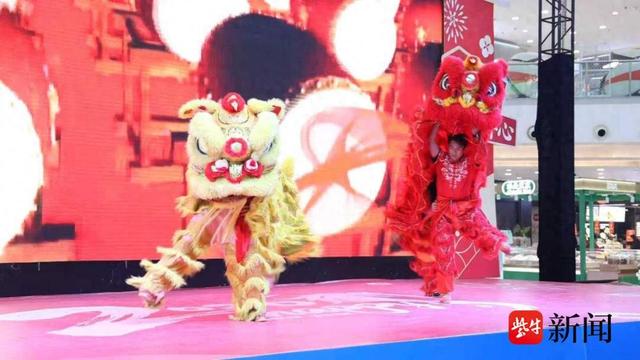
Core Viewpoint - The event held in Yancheng, where the Yongzhou delegation presented local products and cultural items, aims to strengthen cooperation and exchange between the two cities following Yongzhou's championship victory in the Xiang Super League [1][3]. Group 1: Event Highlights - The event featured a lion dance performance and showcased Yongzhou's cultural and natural beauty through a promotional video, attracting the audience's interest in the city [3]. - Yongzhou's delegation highlighted local tourism resources and quality agricultural products, emphasizing their commitment to investment and cooperation [5][6]. - An interactive food tasting area allowed attendees to sample Yongzhou's specialties, such as Dong'an chicken and navel oranges, alongside Yancheng's local products, fostering a sense of community [8][10]. Group 2: Agricultural and Economic Insights - The Yongzhou delegation visited the Yancheng Silver Treasure Group's operation center, observing over 2,000 types of quality agricultural products, showcasing Yancheng's agricultural strength [13]. - The "Salt of Flavor" brand aims to integrate online and offline sales channels, targeting a sales goal of 3.8 billion yuan by 2025, which will significantly boost income for local villages [13]. - The delegation also explored potential collaborations in smart manufacturing, renewable energy, and environmental protection industries during visits to local companies [15]. Group 3: Cultural and Community Connections - The relationship between Yongzhou and Yancheng has been strengthened through mutual support, including Yongzhou sending oranges to Jiangsu and naming a road after Jiangsu as a gesture of gratitude [17]. - The event symbolizes a new beginning for collaboration, with both cities looking to create more opportunities for mutual growth and development [17].

乱炖“江苏与永州”
Xin Lang Cai Jing· 2026-01-07 15:07
Location - Yongzhou is located in the southernmost part of Hunan, serving as a gateway connecting Central China with Lingnan, and is an important portal for Hunan to Guangdong, Guangxi, and ASEAN [4] - The city covers an area of 22,400 square kilometers, larger than Jiangsu's largest city, Yancheng, which is 17,700 square kilometers [7] - Yongzhou has a permanent population of 5.0185 million as of the end of 2024, with an urbanization rate of 50.72% [7] Culture - Yongzhou, historically known as Lingling, gained cultural significance through the Tang dynasty writer Liu Zongyuan, who wrote "Eight Records of Yongzhou" during his exile there [12] - The cultural atmosphere of Yongzhou is characterized by restraint and logic, similar to Yangzhou in Jiangsu, emphasizing deep cultural roots rather than economic dominance [14] Humanities - Zhou Dunyi, a prominent figure in Neo-Confucianism, was born in Yongzhou and significantly influenced Jiangsu's intellectual landscape [15] - Xu Xiake, a traveler from Jiangsu, documented his experiences in Yongzhou, contributing to its cultural narrative and tourism potential [17][18] Development - Yongzhou's economy is primarily agricultural, with a focus on sustainable development and a significant number of industrial transfer projects signed during the 14th Five-Year Plan, totaling over 560 billion yuan [26] - The city's GDP is projected to grow from 210.1 billion yuan in 2020 to 283 billion yuan by 2025 [28] Cuisine - Yongzhou's culinary culture includes unique dishes such as "Dong'an Chicken" and "Yongzhou Blood Duck," which resonate with Jiangsu's culinary preferences [29][33] Relationship with Jiangsu - Yongzhou has engaged in multiple exchanges with Jiangsu, learning from its industrial development and collaborating on agricultural technology and labor output [6][34]

桂粤湘四市农产品直供大湾区
Nan Fang Nong Cun Bao· 2025-08-30 11:01
Core Viewpoint - The event held on August 30 aims to enhance agricultural product sales connections between the Guangxi, Guangdong, and Hunan provinces, facilitating the entry of high-quality agricultural products into the Guangdong-Hong Kong-Macao Greater Bay Area market [2][4][10]. Group 1: Event Overview - The event featured various activities such as exhibitions, promotions, negotiations, and tasting experiences to promote agricultural products from the three provinces [3][4]. - A total of 30 exhibition booths showcased over 100 unique agricultural products from the four cities, including geographical indication products like fragrant taro and Fuchuan navel oranges [20][21]. - The event attracted over 120 buyers from various sectors, resulting in 8 companies signing contracts worth a total of 46 million yuan [24][26]. Group 2: Collaborative Model - The event established a collaborative consumption assistance model, characterized by "government-led, market participation, and multi-party interaction" to enhance agricultural cooperation [7][8]. - The collaboration aims to create a sales network covering "Guangxi North - Guangdong North - Hunan South," facilitating direct access to the Greater Bay Area market [10][12]. - The integration of agricultural development among the three provinces has shown significant progress, allowing for mutual sharing of investment, circulation, trade, and technology resources [27][28]. Group 3: Future Prospects - The next themed event will be hosted by Qingyuan, focusing on gathering more resources to promote high-quality agricultural products from the four cities to the Greater Bay Area market [29]. - The event also included a "Citizen Open Day," allowing consumers to taste, experience, and purchase products, enhancing community engagement [32].


“五一”黄金周老字号成“流量担当”
Huan Qiu Wang· 2025-05-07 00:46
Core Insights - The restaurant industry in Beijing experienced a significant surge in consumer activity during the "May Day" holiday, with traditional brands becoming key attractions for visitors [1][2][3][4] Group 1: Revenue Growth - Beijing Huaten Group reported that its traditional restaurants saw revenue surpassing last year's figures during the holiday, with "Tongchun Garden" experiencing nearly 30% year-on-year growth [1] - "Qingfeng Baozi" and "Er Yujun Meat Pie" also reported over 10% revenue growth compared to the same period last year [1][4] - The "new model store" of Qingfeng Baozi contributed to revenue growth by offering a diverse menu with freshly cooked dishes, attracting many visitors [4] Group 2: Customer Experience - High table turnover rates were observed, with some restaurants achieving 5 to 6 turnovers per day, and peak waiting times reaching nearly 100 tables [1][2] - "Tongheju" and other traditional restaurants reported full bookings and long wait times, especially in tourist-heavy areas [2] - New dining experiences were introduced, such as the "Wang Tian Er" themed rooftop restaurant by Quanjude, enhancing the dining atmosphere with outdoor settings [3] Group 3: Consumer Trends - The influx of tourists, particularly in scenic areas, significantly boosted restaurant traffic, with many traditional eateries becoming popular destinations [2] - The introduction of innovative menu items and cultural experiences, such as traditional afternoon tea at "Kaorouji," attracted a younger demographic [2][4] - The trend of modernizing traditional dining experiences while maintaining cultural heritage was evident, appealing to both local and visiting consumers [3][4]

2025年中国湘菜行业分类、经济环境及产量情况分析
Sou Hu Cai Jing· 2025-04-23 08:34
Core Insights - The article discusses the development and characteristics of Hunan cuisine, also known as Xiang cuisine, which is one of the eight major Chinese culinary traditions, emphasizing its historical roots and unique flavor profile [2][8]. Industry Overview - Hunan cuisine has a long history dating back to the Han Dynasty, characterized by its emphasis on the combination of ingredients and strong spicy flavors [2]. - The cuisine is known for its diverse ingredients and cooking methods, including stir-frying, steaming, and braising, contributing to its rich cultural heritage [8]. Market Dynamics - With the improvement of economic conditions and living standards, consumers are increasingly demanding higher quality and service in dining experiences, seeking not only delicious food but also cultural exploration and enjoyment [4]. - In 2023, the per capita disposable income and consumption expenditure of residents in China were 39,218 yuan and 26,796 yuan, respectively, indicating a growing market for dining experiences [4]. Industry Structure - The Hunan cuisine industry chain consists of three main segments: upstream (raw material production), midstream (restaurant enterprises), and downstream (brand channels and consumers) [6]. - The upstream segment provides essential ingredients such as grains, vegetables, meats, oils, and seasonings necessary for cooking Hunan dishes [6]. Production and Supply - Hunan cuisine is noted for its meticulous preparation and wide variety of ingredients, with a focus on strong flavors and affordability [8]. - In 2022, China's meat and vegetable production reached 93.28 million tons and 799.97 million tons, respectively, both showing an increase from the previous year [8]. Future Outlook - The report from Huajing Industry Research Institute aims to provide insights into the development trends and investment strategies for the Hunan cuisine industry from 2024 to 2030, based on extensive research and analysis [10]. - The report will cover market size predictions, competitive landscape, and key enterprises within the industry [10].