乌帕替尼

Search documents
石四药集团(02005) - 自愿公告 - 產品开发的最新进展
2026-03-31 00:06
自願公告 產品開發的最新進展 石四藥集團有限公司(「本公司」,連同其附屬公司,「本集團」)董事局(「董事局」)欣然公告, 本集團的烏帕替尼已獲中國國家藥品監督管理局批准登記成為在上市製劑使用的原料藥,是國 內企業第三家獲批。 香港交易及結算所有限公司及香港聯合交易所有限公司對本公告之內容概不負責,對其準確 性或完整性亦不發表任何聲明,並明確表示,概不會就因本公告全部或任何部份內容而產生 或因倚賴該等內容而引致之任何損失承擔任何責任。 烏帕替尼是一種 JAK-1抑制劑,主要用於治療類風濕性關節炎和克羅恩病,特應性皮炎類、銀 屑病關節炎、潰瘍性結腸炎、巨細胞動脈炎等。 本公告為本公司自願發佈,目的是使股東及潛在投資者瞭解本集團最新業務發展情況。 承董事局命 執行董事兼公司秘書 周興揚 香港,二零二六年三月三十一日 於本公告日期,董事局成員包括執行董事曲繼廣先生、蘇學軍先生、孟國先生、周興揚先生及 曲婉蓉女士,非執行董事劉文軍先生,以及獨立非執行董事王亦兵先生、周國偉先生及姜廣策 先生。 ...
艾伯维提交白癜风新药申请,2025年营收突破600亿美元
Jing Ji Guan Cha Wang· 2026-02-12 15:10
Group 1 - AbbVie submitted a new indication application for Upadacitinib to treat adult and adolescent non-segmental vitiligo to the FDA and EMA, potentially making it the first systemic drug for vitiligo globally [1] - AbbVie's total revenue for 2025 reached $61.16 billion, marking an 8.6% year-over-year increase, officially entering the $60 billion club [1] - Global sales of Upadacitinib amounted to $8.30 billion, reflecting a 39.1% year-over-year growth, while sales of Risankizumab reached $17.56 billion, up 49.9% [1] Group 2 - AbbVie's stock price fluctuated between $225.82 (highest on February 6) and $214.04 (lowest on February 5) during the week of February 5 to February 12, with a closing price of $223.19 on February 12, up 1.04% [2] - The pharmaceutical sector rose by 0.83% during the same period, while the Dow Jones index increased by 0.50% [2] Group 3 - AbbVie's immunology business generated $30.4 billion in revenue, a 14% year-over-year increase, becoming the core growth driver [3] - The neuroscience business has upgraded to a core pillar, with Vraylar generating $3.62 billion and Botox in the migraine field generating $3.77 billion [3] - The company acquired Capstan to gain access to the tLNP platform, positioning itself in the cutting-edge CAR-T therapy field [3] Group 4 - On February 5, multiple Wall Street firms updated their ratings, with TD Cowen maintaining a buy rating and a target price of $280, while Evercore lowered its target price to $228, and UBS maintained a hold rating with a target price of $230 [4] - Analysts are focusing on the company's pipeline progress and the potential for upward revisions in earnings guidance [4]
同和药业:公司目前在创新药领域暂无相关布局
Mei Ri Jing Ji Xin Wen· 2026-02-02 01:26
Group 1 - The company has a total of 17 new products and over 30 research reserve varieties, with several global patent expirations scheduled between 2028 and 2033 [1] - Some products, such as Vabigatran, Rosuvastatin, and others, are already in the registration submission process, indicating ongoing development efforts [1] - The company plans to maintain multiple new product launches each year, creating a product lineup consisting of mature products, research (registration) products, and reserve products [1] Group 2 - Currently, there is no relevant layout in the innovative drug sector, indicating a focus on other areas [1] - The company's associate, Boya Biotech, primarily engages in the research and production of high-difficulty specialty formulations, which have high industry entry barriers [1] - Future business synergies are expected between the company and Boya Biotech, enhancing overall operational capabilities [1]
凌科药业IPO:核心产品研发进度落后于竞品 市场竞争趋于红海商业化价值兑现或举步维艰
Xin Lang Cai Jing· 2025-12-19 09:46
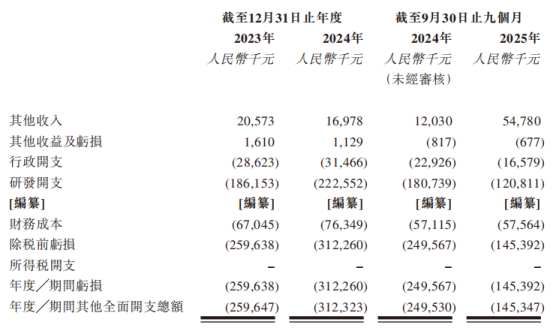
Core Viewpoint - Lingke Pharmaceutical has submitted its listing application to the Hong Kong Stock Exchange, focusing on the development of small molecule inhibitors for autoimmune and inflammatory diseases, particularly targeting the JAK-STAT signaling pathway with its lead products LNK01001 and LNK01004 [1][11]. Financial Performance - The company has accumulated losses exceeding 1.1 billion RMB, with net losses of 260 million RMB, 312 million RMB, and 145 million RMB for the first three quarters of 2023, 2024, and 2025 respectively [2][12]. - Revenue is primarily derived from government subsidies, with other income from bank interest amounting to 20.6 million RMB, 17 million RMB, and 54.8 million RMB for the same periods [2][12]. - As of September 30, 2025, the company had cash and cash equivalents of only 147 million RMB, which could sustain operations for approximately 15 months at the current cash burn rate [2][12]. Product Development - LNK01001 is the closest candidate to commercialization, currently undergoing multiple Phase III clinical trials, with new drug application submissions expected in the first half of 2026 for atopic dermatitis, and in the second half of 2026 and 2027 for rheumatoid arthritis and ankylosing spondylitis respectively [2][12]. - The product's development timeline is significantly behind competitors, with LNK01001 starting preclinical research in 2019, while other JAK inhibitors have already been commercialized [5][15]. Market Competition - The JAK inhibitor market is highly competitive, with established products like AbbVie's Upadacitinib and Pfizer's Abrocitinib already approved and gaining market share, including being included in the national medical insurance directory [6][15]. - The company faces direct competition from these established drugs, which have already demonstrated clinical efficacy and are available at subsidized prices, making it challenging for LNK01001 to gain market traction [6][15]. - Additionally, the patent landscape is shifting, with many generic versions of first-generation JAK inhibitors entering the market, further intensifying competition [6][15]. Regulatory Environment - The company holds 16 global patents in China and 37 overseas, with 106 patents pending approval, indicating a focus on protecting its innovations [9][10]. - However, the competitive landscape is complicated by the invalidation of key patents for existing products, which may affect the company's ability to secure a strong market position [9][10]. Challenges Ahead - Lingke Pharmaceutical's path to commercialization is fraught with challenges, including high cash burn, delayed product development, intense market competition, and stringent pricing pressures from national insurance policies [10][15].


自免赛道再添上市新秀,凌科药业IPO故事的喜与忧
Zhi Tong Cai Jing· 2025-12-09 12:30
Core Viewpoint - Lingke Pharmaceutical (Zhejiang) Co., Ltd. has submitted its IPO application to the Hong Kong Stock Exchange, focusing on innovative small molecule inhibitors for autoimmune and inflammatory diseases, particularly in the JAK-STAT signaling pathway [1][2]. Company Overview - Lingke Pharmaceutical has completed multiple rounds of financing, raising over 1 billion RMB, with notable investments from institutions like Eli Lilly Asia Fund and Junlian Capital [1]. - The company has a strong focus on R&D, with its lead product LNK01001 currently in Phase III clinical trials for atopic dermatitis, rheumatoid arthritis, and ankylosing spondylitis [5][12]. Financial Performance - The company reported revenues of 20.573 million RMB in 2023, with projected revenues of 16.978 million RMB in 2024 and 54.780 million RMB in the first three quarters of 2025 [4]. - Lingke Pharmaceutical has incurred significant net losses, totaling 2.6 billion RMB in 2023, 3.12 billion RMB in 2024, and 1.45 billion RMB in the first three quarters of 2025, with cumulative losses reaching 7.17 billion RMB [2][4]. - As of September 30, 2025, the company had cash and cash equivalents of 147 million RMB, indicating a liquidity pressure with an estimated operational runway of about 15 months [3]. R&D Pipeline - The company is advancing several differentiated small molecule drugs targeting autoimmune and inflammatory diseases, with LNK01001 being the most advanced [5]. - LNK01004, a third-generation pan-JAK inhibitor, has shown promising results in Phase II trials and is expected to enter Phase III trials in mid-2027 [5]. - The IsoNova protein degradation platform has been established to enhance R&D efficiency, producing several preclinical candidates [5]. Market Landscape - The JAK inhibitor market is experiencing significant growth, with global market size projected to expand from $5.5 billion in 2019 to $25.6 billion by 2028 [7][8]. - The Chinese market for JAK inhibitors is also expected to grow from 400 million RMB in 2019 to 17.1 billion RMB by 2028, indicating strong clinical demand [7][8]. - Lingke Pharmaceutical's LNK01001 faces competition from established products in the market, which may impact its commercial success [12].
烧钱23年却无产品上市 和美药业赴港IPO求生
Bei Jing Shang Bao· 2025-12-03 16:01
Core Viewpoint - He Mei Pharmaceutical is urgently seeking an IPO after 23 years of product development, with its first drug Mufemilast recently approved, amidst a highly competitive market for psoriasis treatments [1][4]. Company Overview - Founded in 2002, He Mei Pharmaceutical has raised over 1.2 billion yuan and incurred losses exceeding 1.1 billion yuan, achieving a valuation of 3.9 billion yuan without any products on the market [1][3]. - The company has been in a continuous state of high cash burn, with significant R&D expenditures primarily focused on Mufemilast, which has taken over 16 years to develop [2][3]. Product Development - Mufemilast's development timeline began in 2009, with clinical trials starting in 2012, and it received approval for treating moderate to severe plaque psoriasis in September 2025 [2]. - The R&D costs for Mufemilast accounted for 60% of the total R&D expenses from 2023 to mid-2025, reflecting the heavy investment required for its development [2]. Market Competition - The psoriasis drug market in China is highly competitive, with 18 approved targeted therapies, including 5 small molecules and 13 biologics, leading to a fierce price war [4][5]. - Major competitors include established products from international pharmaceutical giants, which have already captured significant market shares [4][5]. Pricing Strategy - He Mei Pharmaceutical plans to set Mufemilast's initial annual treatment cost between 52,700 and 119,900 yuan, positioning it above some small molecule competitors but below the price of leading biologics [7]. - The relatively high pricing strategy may hinder Mufemilast's competitiveness, especially among price-sensitive patients requiring long-term treatment [7][8]. Commercialization Challenges - The commercialization of Mufemilast is expected to be slow due to the nature of psoriasis as a chronic disease, which requires extensive academic promotion and trust-building among healthcare professionals [8]. - Even if Mufemilast successfully launches, it may not generate significant revenue quickly enough to offset the company's ongoing losses [8].
烧钱23年零产品,和美药业赴港IPO求生
Bei Jing Shang Bao· 2025-12-03 11:56
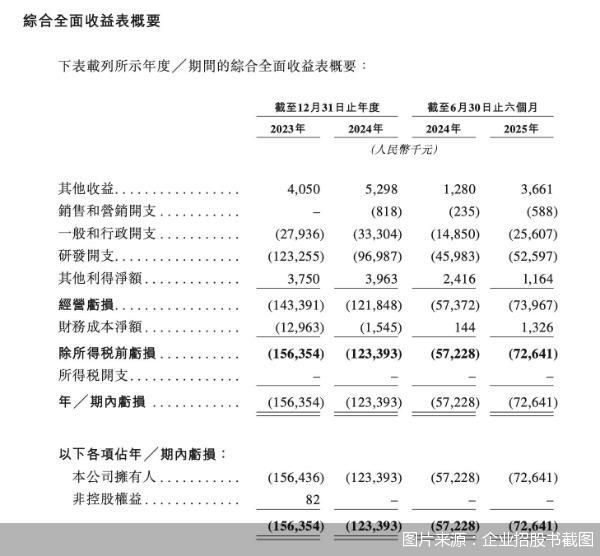
Core Viewpoint - He Mei Pharmaceutical is urgently seeking an IPO after 23 years of product development, with its first drug Mufemilast recently approved, amidst a highly competitive market for psoriasis treatments [1][6]. Company Overview - Founded in 2002, He Mei Pharmaceutical has raised over 1.2 billion RMB and incurred losses exceeding 1.1 billion RMB, achieving a valuation of 3.9 billion RMB despite having no products on the market [1][5]. - The company has been heavily reliant on external financing, completing six rounds of funding from 2021 to the end of 2024, with a post-investment valuation reaching 3.9 billion RMB after the E round [5]. Product Development - The development of Mufemilast has taken 16 years, starting from preclinical research in 2009 to receiving approval for treating moderate to severe plaque psoriasis in September 2025 [3]. - Research and development expenses for Mufemilast accounted for 60% of the total R&D costs, with losses reported at 156.4 million RMB for 2023 and projected losses of 123.4 million RMB for 2024 [3][4]. Market Competition - The psoriasis drug market in China is projected to grow from 18.2 billion RMB in 2024 to 48.3 billion RMB by 2028, with 18 approved targeted therapies already available, including 13 biologics [6][7]. - He Mei Pharmaceutical faces intense competition from established players like Novartis and Eli Lilly, which have already captured significant market shares with their products [6][7]. Pricing Strategy - He Mei Pharmaceutical plans to price Mufemilast between 52,700 RMB and 119,900 RMB annually, positioning it above some small molecule competitors but below the price of established biologics [8]. - The higher pricing strategy may hinder Mufemilast's competitiveness in a market where patients are sensitive to treatment costs, especially for chronic conditions requiring long-term medication [8][9]. Commercialization Challenges - The commercialization of Mufemilast is expected to be slow due to the need for long-term academic promotion and building trust among healthcare professionals [9]. - Even with successful market entry, Mufemilast is unlikely to generate significant revenue quickly, making it difficult for He Mei Pharmaceutical to reverse its overall loss situation [9].
泽璟制药:盐酸吉卡昔替尼片治疗强直性脊柱炎III期临床试验达主要疗效终点
Mei Ri Jing Ji Xin Wen· 2025-10-20 08:32
Core Viewpoint - Zejing Pharmaceutical (688266.SH) announced that its self-developed first-class new drug, Jikaxitinib Hydrochloride Tablets, has achieved the primary efficacy endpoint in the Phase III clinical trial for active ankylosing spondylitis, demonstrating statistical significance (p<0.0001) [1] Company Summary - The company plans to accelerate the drug's market launch process following the successful trial results [1] - Currently, there are only three JAK inhibitors approved by the National Medical Products Administration (NMPA) in China for the treatment of active ankylosing spondylitis: Tofacitinib, Upadacitinib, and Ivarmacitinib [1]

特应性皮炎专题报告:掘金百亿AD蓝海:现有疗法仍可优化,双抗药物有望破局
SINOLINK SECURITIES· 2025-09-16 09:16
Investment Rating - The report indicates a positive outlook for the atopic dermatitis (AD) market, highlighting significant unmet medical needs and potential for new therapies, particularly in small molecules and biologics [4][10][12]. Core Insights - Atopic dermatitis is a chronic, recurrent inflammatory skin disease characterized by severe itching, affecting approximately 600-700 million patients globally, with around 67 million in China, indicating a substantial unmet demand for effective treatments [1][18][20]. - Recent advancements in small molecules and biologics have marked a new phase in AD treatment, with several new products entering the market, although the number remains limited [1][10][32]. - JAK inhibitors have shown excellent efficacy but come with safety concerns, while TYK2 inhibitors are emerging as a promising new option due to their selective action and potentially better safety profile [2][11][12]. - Biologics targeting IL-4Rα and IL-13 have demonstrated significant efficacy in improving skin lesions, with IL-31 showing strong itch relief capabilities [3][12][13]. - The development of dual/multi-target antibodies is seen as a new strategy to enhance treatment efficacy by combining the advantages of different targets [4][13][21]. Summary by Sections Investment Highlights - The AD market has immense potential, with a pressing need for effective therapies [4][10]. - The patient population is large, with over 600 million affected globally, necessitating urgent treatment options [1][18]. Disease Characteristics - AD is characterized by chronic inflammation and severe itching, significantly impacting patients' daily lives [1][14]. - The disease burden is heavy, with a complex pathogenesis involving multiple factors, primarily driven by Th2-type inflammation [21][24]. Current Treatment Landscape - Traditional therapies have safety concerns, leading to a shift towards biologics and small molecules [32][35]. - JAK inhibitors are the most approved class of drugs for AD, but they carry black box warnings due to safety issues [11][12]. - Emerging therapies, particularly TYK2 inhibitors, show promise for better safety and efficacy [2][11]. Biologics and Emerging Therapies - Currently approved biologics include IL-4Rα, IL-13, TSLP, and IL-31, with ongoing research into additional targets [3][12][13]. - Dual/multi-target antibodies are being explored to improve treatment outcomes and extend dosing intervals [4][13][21]. Market Potential - The report emphasizes the significant market potential for AD treatments, with projected growth driven by increasing patient numbers and the introduction of innovative therapies [4][10][20].


周杰伦病情让自身免疫类药物受关注 和美药业能否借势闯关港股?核心产品还未上市,竞品集采已降价超93%
Mei Ri Jing Ji Xin Wen· 2025-06-25 12:43
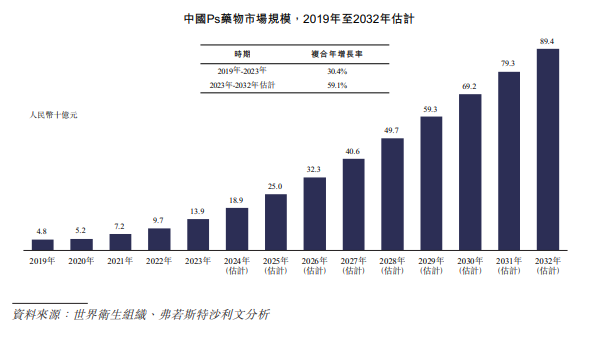
Core Viewpoint - The rising public awareness of autoimmune diseases, particularly ankylosing spondylitis, has led to increased interest in the pharmaceutical company Ganzhou Hemei Pharmaceutical Co., Ltd. as it seeks to go public with its core drug Mufemilast targeting psoriasis and ankylosing spondylitis [1][6]. Company Overview - Ganzhou Hemei Pharmaceutical is preparing for an IPO under the Hong Kong Stock Exchange's 18A biotechnology rules, focusing on high investment and potential returns typical of biopharmaceutical companies [2]. - The company has not yet generated revenue and relies heavily on government subsidies and continuous financing to sustain operations [2][11]. Product Pipeline - The company has seven clinical-stage small molecule candidates aimed at addressing unmet medical needs in autoimmune diseases and oncology [2]. - Mufemilast is a dual-action PDE4 inhibitor that has entered the NDA priority review process, targeting multiple indications including psoriasis and ankylosing spondylitis [2][3]. Market Potential - The market for psoriasis drugs in China has seen rapid growth, with a compound annual growth rate (CAGR) of 30.4% from 2019 to 2023, reaching a market size of 13.9 billion yuan in 2023, projected to soar to 89.4 billion yuan by 2032 [3]. - The autoimmune disease drug market in China has expanded from $2.5 billion in 2019 to $4 billion in 2023, with expectations to reach $26.3 billion by 2032, reflecting a CAGR of 23.3% [6]. Competitive Landscape - The competitive environment for Mufemilast is intense, with existing competitors having undergone significant price reductions due to national procurement policies, with price drops exceeding 93% for some products [5]. - There are currently five approved small molecule targeted therapies for psoriasis in China, with 37 more in clinical development, indicating a crowded market for Mufemilast [5][8]. Financial Status - The company reported significant losses of 156 million yuan in 2023 and 123 million yuan in 2024, with minimal other income [11]. - The company has undergone multiple rounds of financing since 2021, raising over 500 million yuan to support its operations, with a post-investment valuation of 3.9 billion yuan [11]. Leadership - The founder and chairman, Zhang Hesheng, has over 20 years of experience in biopharmaceuticals and holds a significant voting power in the company [12].