
乾崑ADS 4

Search documents
华为靳玉志:ADS 4比旧版本安全多了,说“我们智驾靠堆代码”是胡扯
Jing Ji Guan Cha Wang· 2026-01-18 15:28
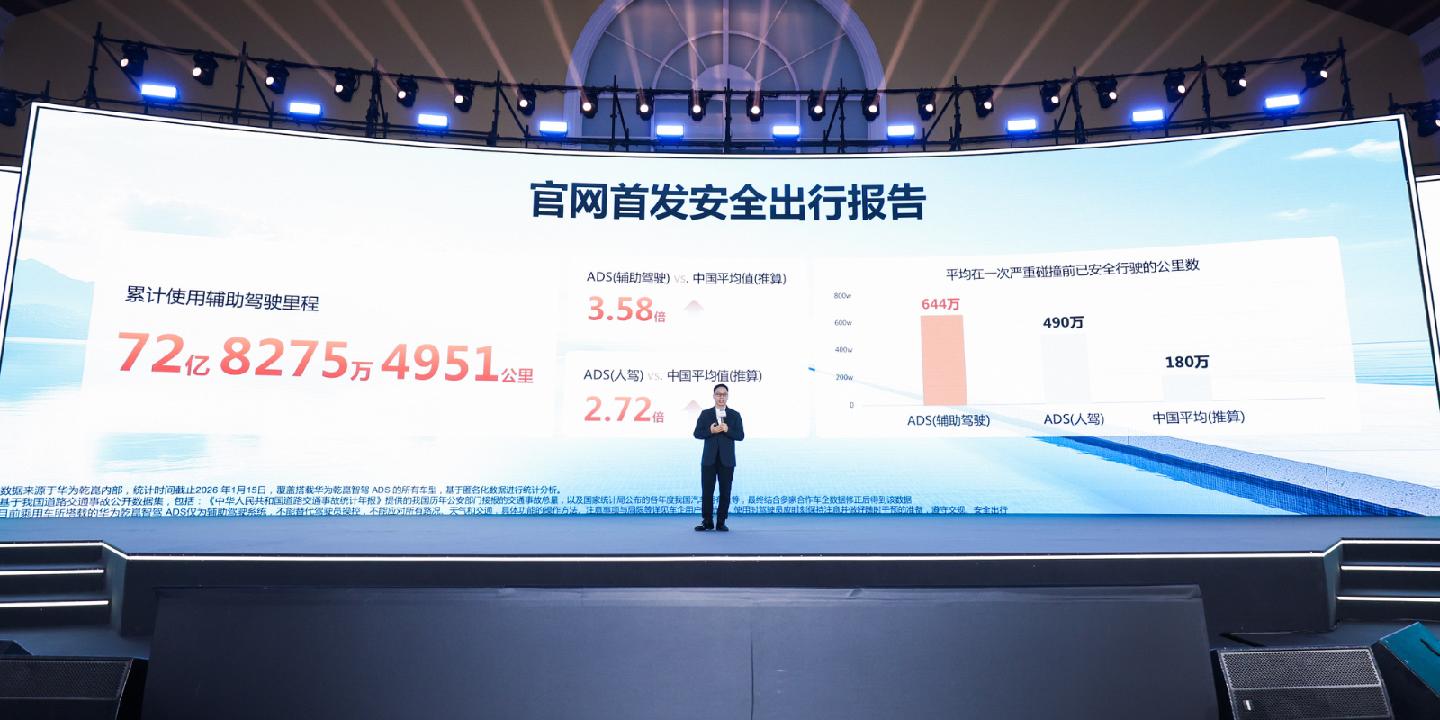
Core Insights - Huawei's CEO of Intelligent Automotive Solutions, Jin Yuzhi, addressed recent criticisms regarding Huawei's intelligent driving system, emphasizing that claims about the system being merely rule-based are unfounded [2] - The company plans to launch the next version of its intelligent driving system, ADS 5, by the end of 2026, with expectations of over 80 vehicle models equipped with the system and a total of 3 million units deployed [3] Group 1: Product Development and Performance - Huawei's intelligent driving system, QianKun ADS, is set to be released in April 2024, with version 4 expected in April 2025 [2] - In the last quarter of 2025, vehicles equipped with Huawei's QianKun ADS sold over 100,000 units for three consecutive months [2] - The safety of ADS 4 has improved by 50% compared to ADS 3.3, with user engagement in urban scenarios increasing [2] Group 2: User Engagement and Feedback - The QianKun app, launched at the 2025 Guangzhou Auto Show, has surpassed 1 million downloads and 660,000 users within two months [4] - Users have submitted 15,000 wish lists for future optimizations of the QianKun intelligent driving features through the app [4] Group 3: Industry Positioning and Technology - Huawei's QianKun ADS has accumulated over 7.2 billion kilometers of assisted driving mileage, demonstrating a safety record that is 3.58 times better than human drivers before a serious collision occurs [3] - The intelligent driving industry is diverging into two technical routes: VLA large models and "world models," with Huawei representing the "world model" approach [3] - Huawei supports the use of LiDAR in its multi-modal fusion hardware solutions, arguing that it enhances safety in extreme conditions where visual sensors may fail [3]

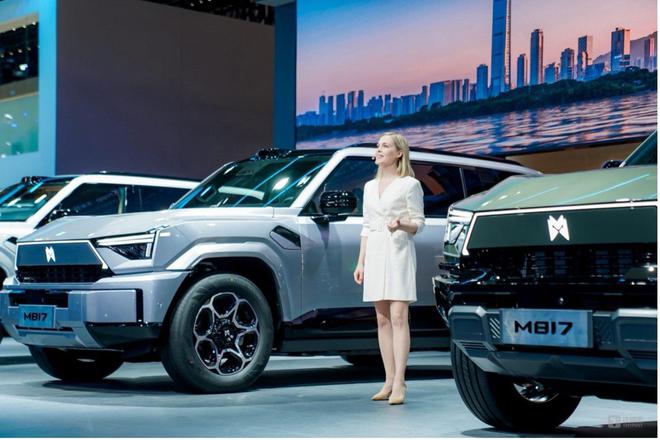
华为全栈赋能之后,猛士M817能否突破硬派越野“小众”的宿命?
Tai Mei Ti A P P· 2025-06-10 07:26
Core Insights - The article discusses the emergence of the Dongfeng Mengshi M817 as a new player in the luxury electric off-road vehicle market, highlighting its ambition to redefine "luxury electric off-road" through a partnership with Huawei's advanced driving systems [2][3] - The M817 combines rugged off-road aesthetics with advanced smart features, aiming to break the stereotype that smart technology is only for urban commuting [2][3] Group 1: Product Features - The Mengshi M817 features a design philosophy called "Heroic Aesthetics 2.0," which emphasizes a muscular Chinese style, with colors inspired by natural landscapes [2] - It is equipped with Huawei's advanced driving system, the QianKun ADS 4, and is one of the first models to feature the HarmonyOS 5 cockpit, enabling functionalities like automatic cruising and smart parking [2][3] Group 2: Brand and Market Position - The collaboration with Huawei is seen as a significant highlight, but it raises questions about the Mengshi brand's ability to stand independently without Huawei's technology [3][4] - The current brand perception of Mengshi is limited to its military background and rugged appearance, which may hinder its market differentiation despite advanced technology [4] Group 3: Market Dynamics - The article notes that while the Mengshi M817 is a strong contender for consumers seeking a stylish and high-performance electric off-road vehicle, the market has shifted from functionality to consumer perception [5] - To attract a broader audience, the vehicle must also address everyday commuting, long-distance charging, and family comfort, rather than solely focusing on off-road capabilities [5]
关键技术加速升级 合资合作持续深化 人工智能深度赋能 从上海车展看汽车业转型“中国速度”(产经观察)
Ren Min Ri Bao· 2025-05-06 21:37
Core Insights - The 21st Shanghai International Automobile Industry Exhibition showcased nearly 1,000 domestic and foreign enterprises, highlighting bold explorations by Chinese new energy vehicle companies in product definition, pricing, and business models, as well as a high acceptance of digital and intelligent experiences among young consumers [1] Electric and Intelligent Technology Upgrades - Chinese smart electric vehicle companies and supply chain enterprises unveiled impressive new technologies, indicating that China's electrification and intelligentization are leading the global automotive industry's transformation [2] - CATL, a global leader in power battery shipments, introduced its sodium-ion battery, which reduces reliance on lithium resources and achieves an energy density of 175 Wh/kg, supporting a range of 500 kilometers [2] - The new dual-core battery architecture from CATL enhances energy density by 60% and weight energy density by 50%, significantly improving range [3] Advanced Driver Assistance Technologies - Major automakers presented advanced driver assistance technologies, including GAC Aion and Didi's L4 autonomous driving Robotaxi, set for delivery by the end of the year [4] - Huawei's ADS 4 system improves efficiency and reduces latency, with a flagship version designed for high-speed L3 applications [4] - Horizon Robotics showcased its high-performance chip with a processing power of 560 TOPS, marking a significant advancement in domestic L2 urban driving assistance systems [4] Global Collaboration and Innovation - Multinational companies are transitioning from "Made in China" to "Developed in China for the World," with significant R&D efforts localized in China [5][6] - Mercedes-Benz's new electric long-wheelbase CLA was developed entirely by a local team in just 18 months, reflecting the rapid innovation pace in the Chinese market [6] - GM's Buick brand introduced a new high-end electric sub-brand and plans to launch six new models based on a versatile architecture within the next 12 months [6] AI Integration in Automotive Development - AI technologies are increasingly integrated into vehicle development, with companies like Zhiji and Xpeng introducing AI-driven chassis systems that enhance safety and adaptability [8][9] - Geely has applied AI across various domains, including architecture, power, chassis, and driving assistance, achieving significant reductions in development cycles and costs [9] - The automotive industry is urged to adopt AI strategies to foster innovative organizational structures and accelerate transformation [10]