以太网芯片

Search documents
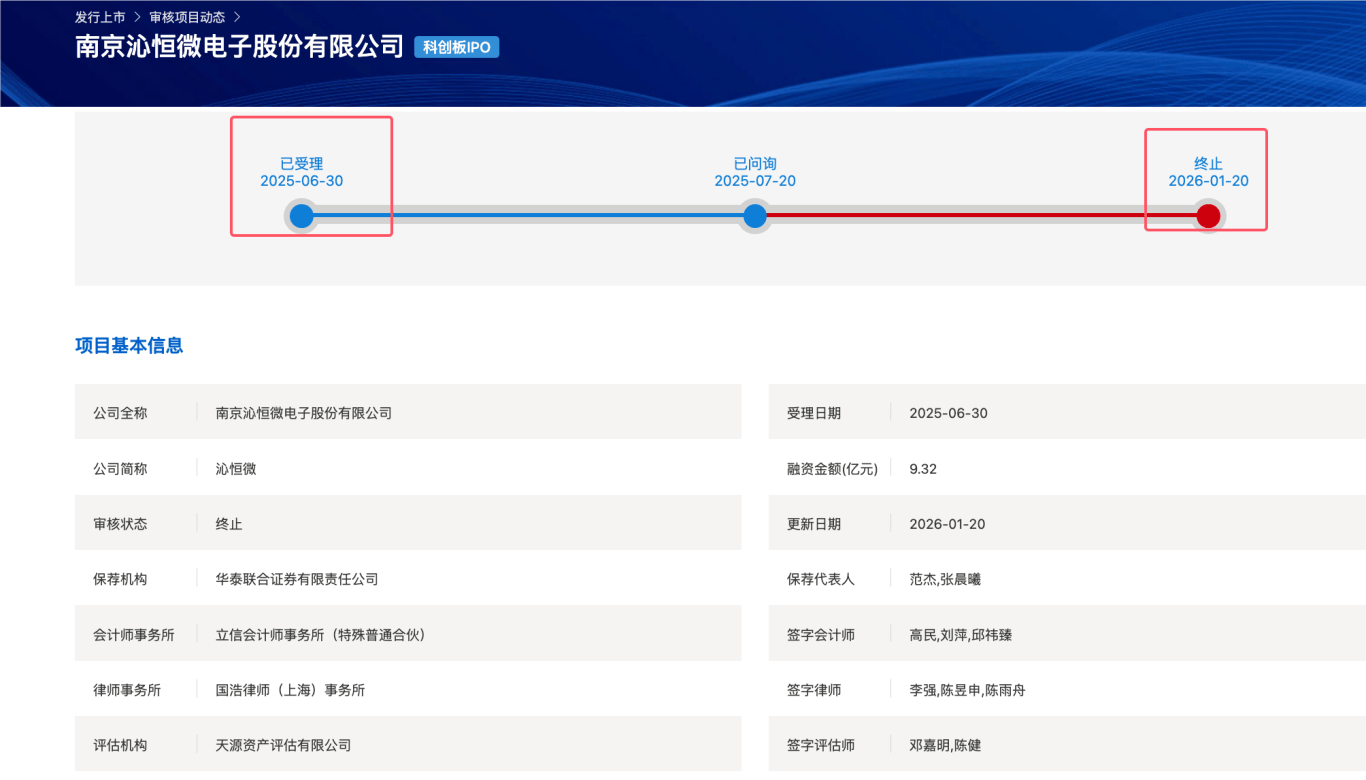
南京沁恒微终止科创板 IPO:一共才184天
Sou Hu Cai Jing· 2026-01-21 01:24
Core Viewpoint - Nanjing Qinheng Microelectronics Co., Ltd. has terminated its IPO application for the Sci-Tech Innovation Board, indicating potential challenges in meeting the board's strategic requirements for innovation and technology [1][5]. Company Overview - Nanjing Qinheng Microelectronics is an integrated circuit design company focused on developing its own IP systems for chip integration, distinguishing itself from traditional chip design firms that typically purchase third-party IP [7]. - The company aims to create a comprehensive chip architecture based on self-researched interface and core IP, targeting the Internet of Things (IoT) market [7]. IPO Details - The company had planned to raise approximately 932 million yuan (about 9.32 billion yuan) through its IPO [4][5]. - The application was received on June 30, 2025, and the review process was terminated by the company and its sponsor, Huatai United Securities, indicating a proactive withdrawal [5][6]. Financial Performance - For the first half of 2025, the company's total revenue was approximately 24.89 million yuan, with a net profit of about 8.18 million yuan [13]. - The revenue composition shows that USB chips accounted for 49.41% of total revenue, while Bluetooth and Ethernet chips contributed 15.77% and 7.78%, respectively [9]. Fund Utilization Plan - The planned use of the raised funds was focused on three main R&D projects: USB chip development, network chip (Bluetooth and Ethernet) development, and full-stack MCU chip development, with total investments projected at approximately 93.15 million yuan [8][18].

预见2025:《2025年中国通信芯片行业全景图谱》(附市场现状和发展趋势等)
Qian Zhan Wang· 2025-11-20 10:15
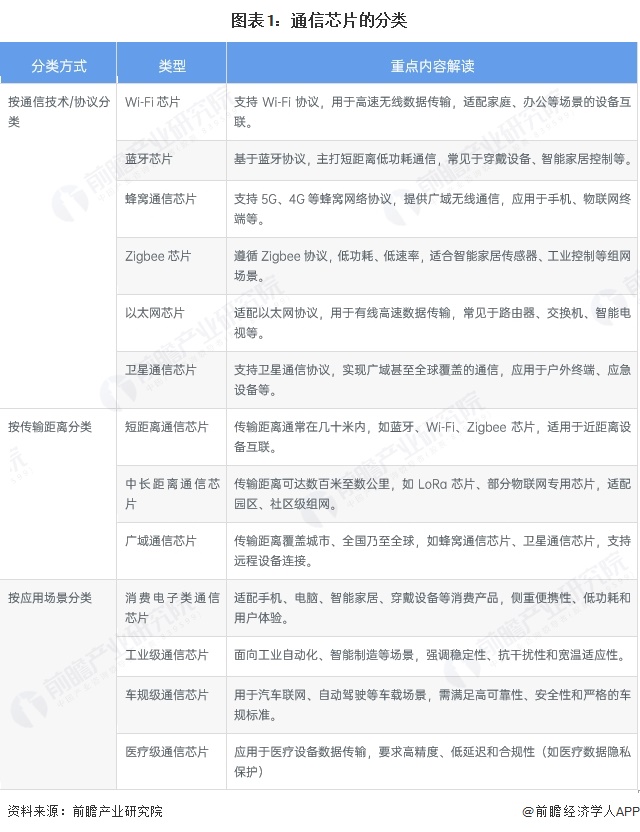
Industry Overview - The communication chip industry in China is defined as integrated circuits specifically designed for data transmission and communication protocols, playing a crucial role in various electronic devices [1][2] - Communication chips are categorized into several types, including Wi-Fi, Bluetooth, Zigbee, cellular communication, RFID, Ethernet, and GPS chips, widely used in smartphones, smart home devices, industrial automation, and medical equipment [2][3] Industry Chain Analysis - The upstream of the communication chip industry consists of raw material and equipment suppliers, while the midstream includes manufacturers who design, produce, and test chips, and the downstream involves terminal device manufacturers integrating these chips into various applications [5][7] Industry Development History - The Chinese communication chip industry has evolved over 40 years, transitioning from technology gaps to self-sufficiency, with significant advancements from 2G to 5G technologies, and is now making strides towards 6G [8][11] Policy Background - Current policies in China focus on key areas such as 5G/6G and satellite communication, promoting breakthroughs in critical technologies through various support measures [12][13] Current Industry Status - The global communication chip industry is at a critical stage with ongoing 5G advancements and steady progress in 6G research, characterized by a competitive landscape where international giants hold significant advantages, while local companies like HiSilicon and Unisoc are making notable progress [16][17] Competitive Landscape - The Chinese communication chip industry can be divided into three tiers based on technical strength and market influence, with leading companies like HiSilicon and Unisoc at the forefront, followed by mid-tier firms like Zhaoxin and Espressif, and smaller innovative companies focusing on niche markets [21][23] Future Development Trends - The industry is expected to see trends such as leading in 6G technology, deepening domestic substitution, and cross-industry integration, with a focus on high-quality development and support for digital economy growth [24][28]
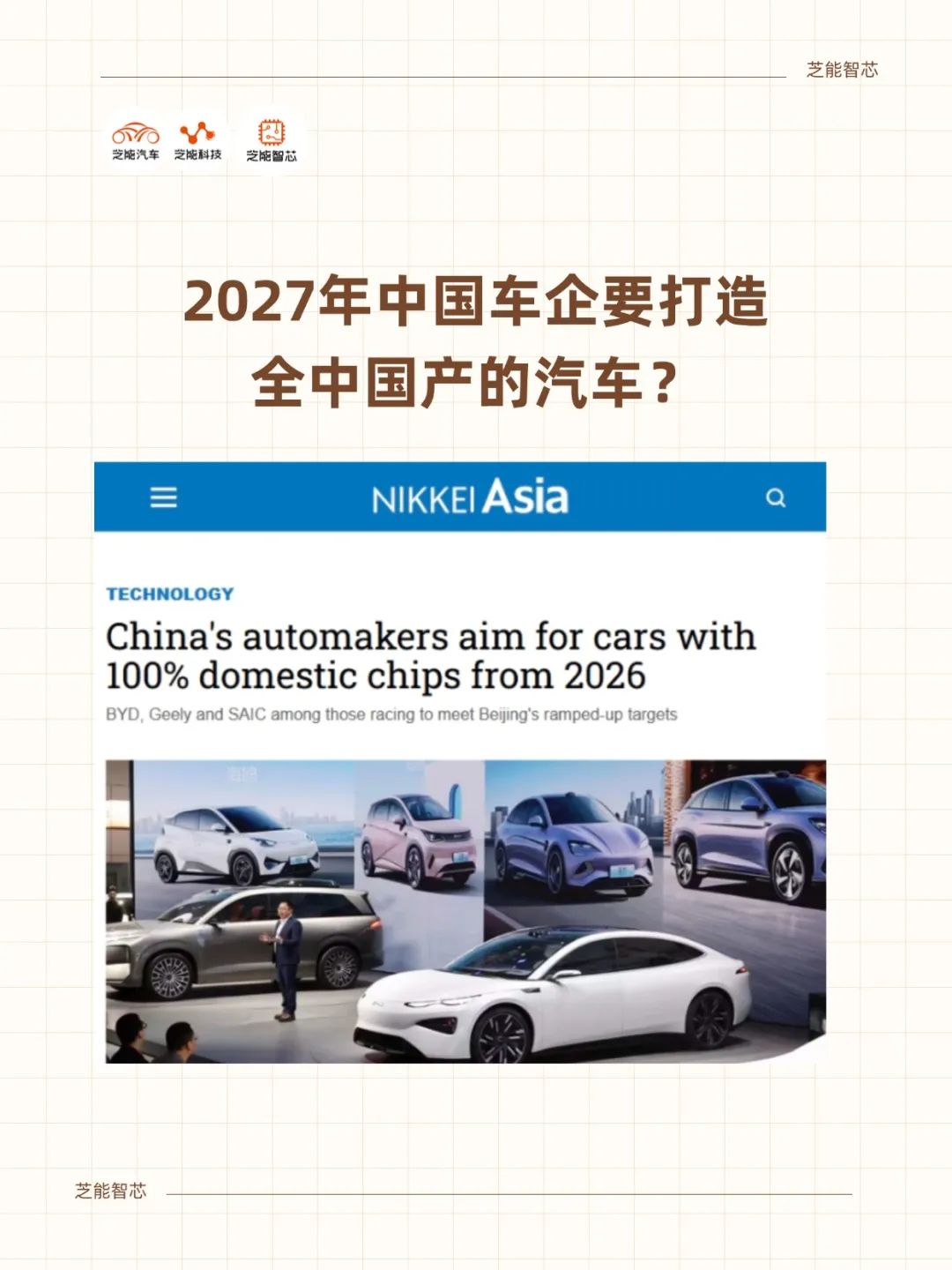
中国车载芯片自主化进程提速,从“25%”到“100%”
Xin Lang Cai Jing· 2025-06-24 07:02
Core Viewpoint - Chinese automotive companies are accelerating the localization of automotive chips, aiming for 100% domestic production by 2027, driven by policy guidance and market awareness, significantly impacting the global chip landscape [1]. Group 1: Chip Classification and Current Status - Automotive chips are essential for the "soft and hard integration" architecture of modern vehicles, with a single vehicle typically requiring hundreds of chips across various functions [5]. - Chips can be categorized into five types: main control (e.g., MCU, SoC), communication (e.g., CAN/LIN/Ethernet transceivers), power (e.g., IGBT drivers), sensor (e.g., millimeter-wave radar front-end), and functional safety chips (e.g., TPM) [6]. - Chinese chip manufacturers have made breakthroughs primarily in main control and communication chip products [6][8]. Group 2: Current Developments in Domestic Chip Production - Companies like Neusoft Carrier, Jiefa Technology, and Huada Semiconductor have launched automotive-grade MCU products that meet AEC-Q100 certification, supporting ISO 26262 safety standards [8]. - In the communication chip sector, companies such as Xingyu Technology and Xinyi Information have achieved small-scale production of domestic CAN and Ethernet PHY chips, with some products entering the vehicle development cycle [8]. - High-performance intelligent driving SoC chips are still dominated by a few companies, with examples like Horizon's Journey series and Huawei's Kirin series, which are being deployed in various vehicle models [9]. Group 3: Trends in Chip Research and Development - Chinese automotive companies are transitioning from being "chip purchasers" to "chip architecture participants" and even "definers," with firms like XPeng leading the way in self-developed AI chip strategies [10]. - The evolution of hardware architecture is moving towards SoC integration platforms that emphasize multi-domain collaboration, requiring chip companies to possess both hardware design capabilities and a complete software SDK stack [12]. - Collaborations between automotive and chip companies are increasing, with examples including Geely's partnership with Hezhima for intelligent driving platforms and BYD's full-stack self-research model for core modules [13][15].