
蓝牙芯片

Search documents
算法、架构和IP全栈自研:杰理科技树立国产AI音频SoC新范式
半导体芯闻· 2026-03-19 10:19
Core Viewpoint - The article highlights the significant transformation in the TWS (True Wireless Stereo) earphone market, emphasizing the rise of domestic Bluetooth chip manufacturers like JieLi Technology, which has gained substantial market share and technological advancements over the past decade [1][4]. Group 1: Company Overview - JieLi Technology, established in 2010, has evolved from a startup focused on audio chips to a leading manufacturer with an annual output exceeding 1.5 billion chips, recognized as a national "manufacturing single champion" [1][3]. - The company has successfully integrated its chips into the supply chains of major domestic brands such as Xiaomi, Honor, and Vivo, as well as international brands like JBL [1]. Group 2: Technological Development - JieLi Technology adopted a forward-looking strategy by gradually diversifying its technology modules from a single audio module to include RF, video, and information collection, ultimately creating a rich product line of SoC (System on Chip) chips [3][5]. - The company has built a flexible R&D platform that standardizes core technology modules, allowing for rapid market response and adaptation to new product demands [5][12]. - As of June 30, 2025, JieLi holds 370 authorized invention patents, ranking first among comparable domestic companies in the industry [5]. Group 3: Market Strategy - JieLi Technology employs a dual-driven market strategy, effectively covering both brand clients and the white-label market through differentiated service capabilities [8][10]. - The company has established a one-hour rapid response mechanism for brand clients, enhancing its competitive edge through quick technical support [8]. Group 4: Product Ecosystem - JieLi's product matrix encompasses various segments, including TWS earphones, open-ear headphones, Bluetooth speakers, and smartwatches, indicating a comprehensive approach to market penetration [12]. - The company is transitioning from a chip supplier to a comprehensive solution provider, offering integrated solutions that include hardware, algorithm optimization, and software development [12]. Group 5: Industry Trends and Future Outlook - The introduction of Bluetooth 5.2 and LE Audio standards has opened new technological opportunities for the wireless audio industry, allowing JieLi to position itself strategically for future growth [14]. - JieLi's new generation Bluetooth audio chips, such as the JL703N and JL708N, demonstrate industry-leading specifications, including low power consumption and high signal-to-noise ratios [14][15]. - The company is also integrating AI capabilities into its SoC chips, enhancing features like noise cancellation and voice recognition, which are becoming essential in the evolving audio chip market [15][16]. - The global market for Bluetooth audio devices is projected to reach 1.3 billion units by 2028, with JieLi poised to play a significant role in this expanding trillion-dollar market [16].

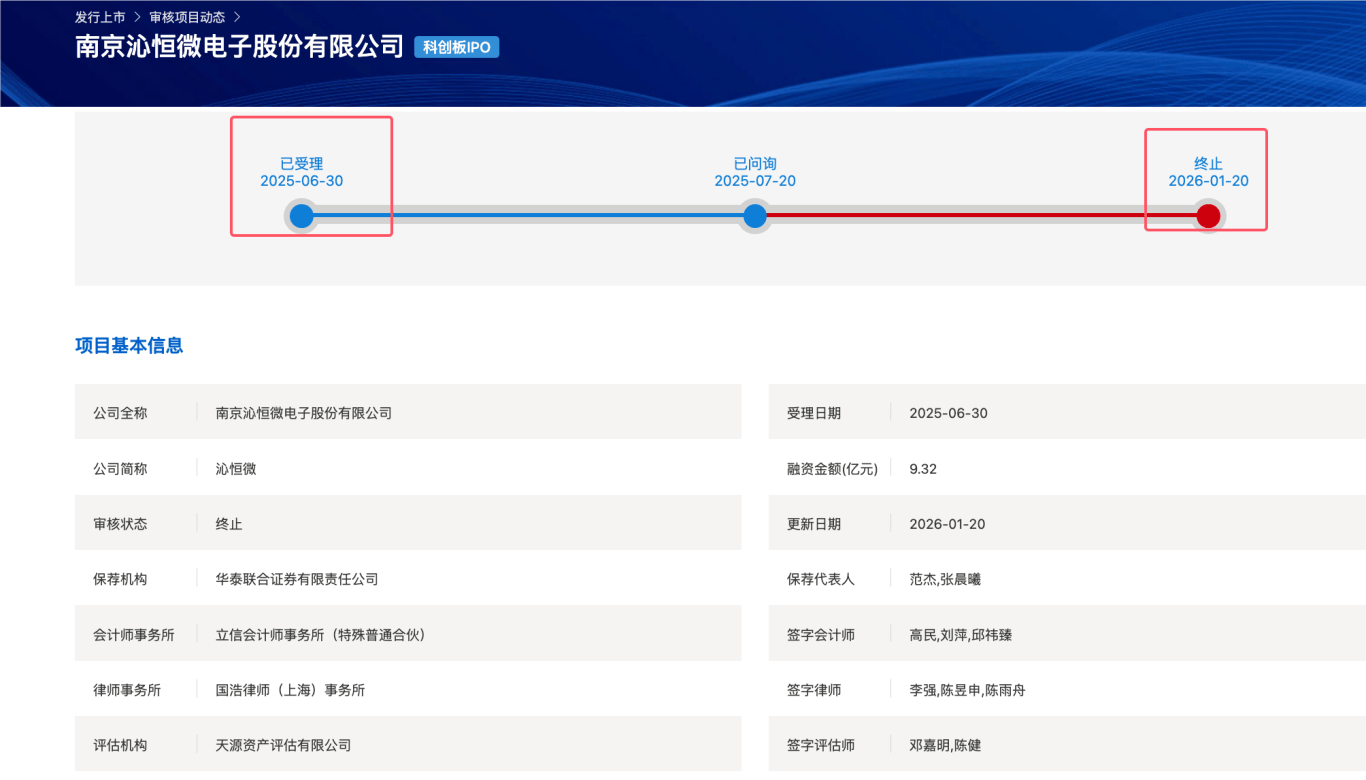
南京沁恒微终止科创板 IPO:一共才184天
Sou Hu Cai Jing· 2026-01-21 01:24
Core Viewpoint - Nanjing Qinheng Microelectronics Co., Ltd. has terminated its IPO application for the Sci-Tech Innovation Board, indicating potential challenges in meeting the board's strategic requirements for innovation and technology [1][5]. Company Overview - Nanjing Qinheng Microelectronics is an integrated circuit design company focused on developing its own IP systems for chip integration, distinguishing itself from traditional chip design firms that typically purchase third-party IP [7]. - The company aims to create a comprehensive chip architecture based on self-researched interface and core IP, targeting the Internet of Things (IoT) market [7]. IPO Details - The company had planned to raise approximately 932 million yuan (about 9.32 billion yuan) through its IPO [4][5]. - The application was received on June 30, 2025, and the review process was terminated by the company and its sponsor, Huatai United Securities, indicating a proactive withdrawal [5][6]. Financial Performance - For the first half of 2025, the company's total revenue was approximately 24.89 million yuan, with a net profit of about 8.18 million yuan [13]. - The revenue composition shows that USB chips accounted for 49.41% of total revenue, while Bluetooth and Ethernet chips contributed 15.77% and 7.78%, respectively [9]. Fund Utilization Plan - The planned use of the raised funds was focused on three main R&D projects: USB chip development, network chip (Bluetooth and Ethernet) development, and full-stack MCU chip development, with total investments projected at approximately 93.15 million yuan [8][18].
安凯微:公司蓝牙芯片可用于AI耳机等
Zheng Quan Ri Bao Wang· 2026-01-08 11:45
Core Viewpoint - Ankai Micro's Bluetooth chips are versatile and can be utilized in various AI applications, including AI headphones, AI glasses, speakers, smart wearables (such as smart helmets, smartwatches, and fitness bands), and smart toys [1]. Company Summary - Ankai Micro has indicated that its Bluetooth chips are applicable in multiple AI-driven devices, showcasing the company's focus on innovation in the smart technology sector [1].

预见2025:《2025年中国通信芯片行业全景图谱》(附市场现状和发展趋势等)
Qian Zhan Wang· 2025-11-20 10:15
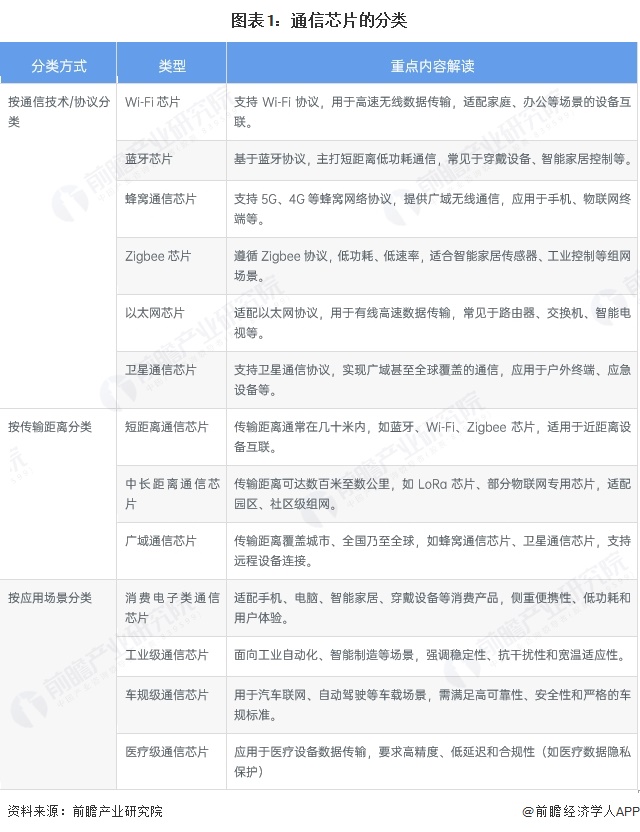
Industry Overview - The communication chip industry in China is defined as integrated circuits specifically designed for data transmission and communication protocols, playing a crucial role in various electronic devices [1][2] - Communication chips are categorized into several types, including Wi-Fi, Bluetooth, Zigbee, cellular communication, RFID, Ethernet, and GPS chips, widely used in smartphones, smart home devices, industrial automation, and medical equipment [2][3] Industry Chain Analysis - The upstream of the communication chip industry consists of raw material and equipment suppliers, while the midstream includes manufacturers who design, produce, and test chips, and the downstream involves terminal device manufacturers integrating these chips into various applications [5][7] Industry Development History - The Chinese communication chip industry has evolved over 40 years, transitioning from technology gaps to self-sufficiency, with significant advancements from 2G to 5G technologies, and is now making strides towards 6G [8][11] Policy Background - Current policies in China focus on key areas such as 5G/6G and satellite communication, promoting breakthroughs in critical technologies through various support measures [12][13] Current Industry Status - The global communication chip industry is at a critical stage with ongoing 5G advancements and steady progress in 6G research, characterized by a competitive landscape where international giants hold significant advantages, while local companies like HiSilicon and Unisoc are making notable progress [16][17] Competitive Landscape - The Chinese communication chip industry can be divided into three tiers based on technical strength and market influence, with leading companies like HiSilicon and Unisoc at the forefront, followed by mid-tier firms like Zhaoxin and Espressif, and smaller innovative companies focusing on niche markets [21][23] Future Development Trends - The industry is expected to see trends such as leading in 6G technology, deepening domestic substitution, and cross-industry integration, with a focus on high-quality development and support for digital economy growth [24][28]
调研速递|星宸科技接受中邮证券等55家机构调研 上半年营收14亿元创新高
Xin Lang Zheng Quan· 2025-08-31 14:52
Group 1 - The company achieved record-high revenue in the first half of 2025, with approximately 1.4 billion yuan, representing a year-on-year growth of about 18.6% [2] - The second quarter revenue reached approximately 740 million yuan, showing a year-on-year increase of about 12.4% and a quarter-on-quarter growth of about 10.9% [2] - All three main business segments experienced growth: smart vehicle revenue was approximately 160 million yuan (up 45.4%), smart IoT revenue was about 330 million yuan (up 31.8%), and smart security revenue was around 910 million yuan (up 12%) [2] Group 2 - The net profit attributable to shareholders decreased to 120 million yuan, a year-on-year decline of about 7.5%, although the second quarter net profit was approximately 70 million yuan, reflecting a quarter-on-quarter increase of about 34.3% [3] - Research and development investment for the first half of 2025 was approximately 320 million yuan, a year-on-year increase of about 9.6%, with an R&D investment rate of about 22.6% [3] - Marketing investment reached approximately 110 million yuan, up about 13.4% year-on-year [3] Group 3 - The company acquired a 53.3087% stake in Bluetooth chip company Furikong for approximately 210 million yuan, enhancing its strategic layout [4] - This acquisition allows for high synergy between the company's self-developed technologies and Furikong's Bluetooth technology, aiming to build a more competitive AI SoC self-developed IP platform [4] - The collaboration is expected to improve dynamic scheduling and multimodal data fusion for edge AI tasks, meeting the demands of smart IoT [4] Group 4 - The company is advancing in the smart robotics sector and has completed multiple chip trials for vehicle laser radar, targeting both vehicle and non-vehicle markets [5] - Plans are underway to develop next-generation advanced process SoCs for smart wearables, which will reduce chip size and power consumption [5] - The company is preparing for an H-share listing to accelerate organic growth and drive external expansion [5]
博通集成: 博通集成2024年年度股东大会会议资料
Zheng Quan Zhi Xing· 2025-06-11 09:31
Core Viewpoint - The company reported a revenue of 828.36 million yuan in 2024, representing a year-on-year growth of 17.49%, while the net profit attributable to shareholders was a loss of 24.72 million yuan, a significant reduction in losses by 73.70% [2][11]. Group 1: Company Overview - The company focuses on the development of wireless communication chips, particularly in the fields of Wi-Fi, Bluetooth, and high-precision positioning [2][6]. - The company has launched several new products, including Wi-Fi 6 and Bluetooth SoC chips, which have been well received in the market [6][9]. - The company has established a strong market presence, becoming a leading supplier of Wi-Fi MCU chips and achieving significant sales in various sectors, including smart home appliances and automotive electronics [9][10]. Group 2: Financial Performance - The company achieved a total revenue of 828.36 million yuan, with a gross profit margin of 34.01%, indicating a healthy financial performance despite the net loss [13][14]. - The company's revenue from the domestic market reached 530.05 million yuan, while revenue from overseas markets decreased due to intense competition [14][15]. - The company’s R&D expenses amounted to 273.10 million yuan, accounting for 32.99% of total revenue, reflecting a strong commitment to innovation [11][12]. Group 3: Governance and Management - The board of directors has held multiple meetings to ensure compliance with legal regulations and to promote effective governance [4][29]. - Independent directors have actively participated in board meetings and committees, ensuring that decisions are made in the best interest of all shareholders, particularly minority shareholders [18][21]. - The company has implemented a robust internal control system to manage risks and ensure compliance with relevant laws and regulations [12][27]. Group 4: Future Outlook - The company plans to continue focusing on the development of wireless connection chips and artificial intelligence platforms to enhance its market share and operational efficiency [17][29]. - The company aims to strengthen its supply chain relationships and optimize its operational processes to support future growth [12][17]. - The company is committed to improving its corporate governance and enhancing the quality of information disclosure to maintain investor confidence [17][28].

趋势研判!2025年中国蓝牙芯片行业发展历程、产业链、出货量、竞争格局及前景展望:物联网等智能终端加速普及,推动蓝牙芯片出货量持续增长[图]
Chan Ye Xin Xi Wang· 2025-06-11 01:29
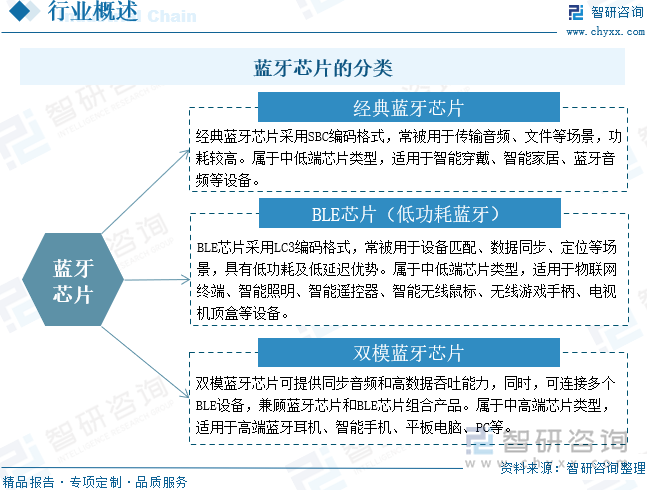
Core Insights - The Bluetooth chip market is experiencing significant growth, with global shipments increasing from 4.2 billion units in 2018 to 5.3 billion units in 2022, representing a compound annual growth rate (CAGR) of 5.99%. It is projected to reach approximately 5.9 billion units by 2024 [1][14]. - The market is characterized by a strong international presence, with Nordic, Dialog, and Texas Instruments holding a combined 61% share of the global BLE chip market. Chinese companies are emerging through differentiated strategies, focusing on low-power Bluetooth chips and specific application scenarios [1][14]. - The Bluetooth chip industry is expected to penetrate various applications, including smart industrial devices, automotive equipment, smart city solutions, and smart home technologies, driving rapid growth in the Chinese Bluetooth chip sector [1][14]. Industry Overview - Bluetooth chips are integrated circuits that enable short-range wireless communication, applicable in audio transmission, data transfer, and location services. They can be categorized into classic Bluetooth chips and BLE (low-energy) chips [4][15]. - The industry has evolved since the 1990s, with significant advancements driven by the rise of IoT, autonomous driving, and 5G technologies, leading to a high growth phase starting in 2017 [6][15]. Market Dynamics - The Bluetooth chip industry value chain consists of upstream resource providers, midstream chip manufacturers, and downstream users. Upstream includes design tool suppliers and wafer manufacturers, while midstream focuses on Bluetooth chip manufacturers providing various products [8][15]. - The Chinese Bluetooth chip industry is still in its early stages but holds substantial growth potential, especially with the advent of the metaverse era [1][14]. Key Players - Notable companies in the Bluetooth chip sector include: - **Yuchip Technology**: Focuses on low-power AIoT chip design, with significant revenue from smart audio SoC chips [29]. - **Hengxuan Technology**: Specializes in low-power wireless computing SoC chips, with a strong presence in smart wearable and home markets [31]. - **Zhongke Blue Communication**: Engages in wireless audio SoC chip development, covering various product lines [28][31]. - **Tai Ling Microelectronics**: Recently went public, focusing on low-power Bluetooth and Zigbee technology chips [28]. - **Jieli Technology**: Concentrates on system-level chips for audio and wearable devices [28]. Future Trends - The industry is expected to see technological innovations that enhance performance, including higher bandwidth and lower latency, driven by the adoption of Bluetooth 5.4 and subsequent versions [33]. - Application scenarios are diversifying beyond traditional consumer electronics into smart homes, wearables, and automotive electronics, with increasing demand for reliable solutions in B2B markets [34]. - Domestic Bluetooth chip companies are strengthening collaborations across the supply chain, aiming for a complete ecosystem from design to application, with a noticeable trend towards domestic substitution in the face of international competition [35].



蓝牙技术联盟李佳蓉:50%蓝牙芯片来自中国市场 未来很多创新会从中国开始
news flash· 2025-06-05 04:29
Core Insights - The Bluetooth technology is evolving towards higher precision, lower power consumption, and increased intelligence [1] - The importance of the Chinese market in the Bluetooth ecosystem is becoming increasingly significant [1] Industry Overview - China is the second-largest member country of the Bluetooth Special Interest Group, with over 6,500 member companies [1] - Member companies in China account for nearly 50% of the annual Bluetooth chip shipment volume [1] - Approximately 50% of smartphones sold each year, which support Bluetooth functionality, are developed by Chinese member companies [1]
蓝牙芯片市场,不能忽视的巨头
半导体芯闻· 2025-06-03 10:39
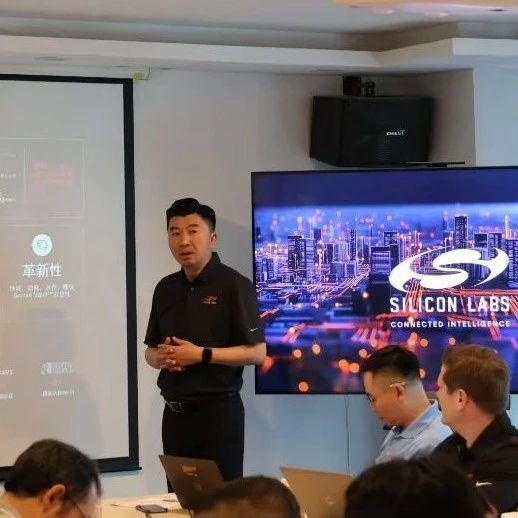
Core Viewpoint - Silicon Labs (芯科科技) has significantly increased its investment in Bluetooth technology, particularly in low-power Bluetooth (Bluetooth LE), leading to an impressive 80% year-on-year growth in its Bluetooth business this year, a feat unmatched by competitors [1][6]. Group 1: Company Strengths - Silicon Labs has a leading product portfolio that provides chips for almost all mainstream wireless protocols, excluding cellular, and collaborates with local module partners to meet domestic customer needs [6]. - The company offers high-performance RF capabilities, with Bluetooth chips supporting output power from 0 dBm to nearly 20 dBm, allowing for longer transmission distances compared to competitors [6]. - The flexible architecture of Silicon Labs' chips enables customers to switch between different protocols with minimal hardware changes, significantly shortening development time [6]. Group 2: Market Focus - Silicon Labs is focusing on four key markets for its Bluetooth products: 1. High-reliability, high-quality, and high-security data transmission markets, such as healthcare devices [8]. 2. Location services, leveraging advantages in Angle of Arrival (AoA) and Angle of Departure (AoD) technologies [8]. 3. AI-enabled connected devices, emphasizing edge-side intelligence rather than large-scale data processing [8]. 4. Audio streaming, with plans to gradually incorporate these features into future products [9]. Group 3: Channel Sounding Technology - Channel sounding, a significant feature of Bluetooth 6.0, allows for bidirectional distance measurement and minimizes multipath effects, marking a major breakthrough in Bluetooth technology [11]. - Silicon Labs was among the first to support channel sounding and Bluetooth 6.0 specifications, enabling applications in asset tracking and secure proximity sensing [11][14]. Group 4: Medical Applications - The medical application market is a major focus for Silicon Labs, with a growing demand for personalized health devices that can operate efficiently and securely [18]. - The company has developed various Bluetooth products tailored for medical applications, including BG22, BG27, and BG29, which cater to different device requirements [19][20]. - Innovations in power management and integration of AI/ML hardware accelerators in these products enhance their performance and reliability in medical settings [21].

博通集成连续三年亏损 产品销售规模尚在爬坡
Zheng Quan Shi Bao Wang· 2025-05-29 10:51
Group 1 - The core viewpoint is that Broadcom Integrated has faced three consecutive years of losses but is actively launching new chip products to enhance its market position [1][2] - In 2024, Broadcom Integrated reported a revenue of 828 million yuan, a year-on-year increase of 17.49%, while still incurring a net loss of 24.72 million yuan [1] - The company has been focusing on product iteration and market expansion, particularly in Wi-Fi, Bluetooth, and automotive chips, to address inventory issues and improve sales [1] Group 2 - The integrated circuit industry, where Broadcom Integrated operates, is characterized by rapid technological and product iteration, necessitating continuous innovation and market adaptation [2] - The company faces multiple risks in new product development, including potential misjudgment of market demand, extended R&D cycles, and challenges in market penetration due to immature product solutions [2] - Broadcom Integrated is also exposed to competitive risks from well-funded international firms like Qualcomm and MediaTek, as well as domestic competitors in the rapidly growing IC design sector [2]