低温银浆

Search documents
苏州固锝(002079.SZ):公司目前尚未与SpaceX开展合作
Ge Long Hui· 2026-02-03 08:40
Group 1 - The core viewpoint of the article is that Suzhou Gude (002079.SZ) has not yet established a partnership with SpaceX, despite speculation [1] - The company’s wholly-owned subsidiary, Suzhou Jingyin, is one of the first enterprises to achieve the localization of silver paste, indicating a significant milestone in domestic production [1] - Suzhou Jingyin is currently a global leader in low-temperature silver paste technology, highlighting its competitive advantage in the market [1]

苏州固锝(002079) - 002079苏州固锝投资者关系管理信息20260129
2026-01-29 02:45
Group 1: Product Development - Suzhou Jingyin began developing heterojunction paste in 2017, becoming one of the first companies in China to produce it at scale, overcoming early foreign monopolies [1] - The company launched silver-coated copper technology in 2021, significantly reducing the cost of heterojunction battery paste, and has successfully developed a silver-coated copper paste with 10% silver content [1][2] - The company is also expanding the application of heterojunction paste in other fields, including space photovoltaics, addressing specific challenges related to environment and radiation [2] - The company has successfully developed ultra-low temperature silver paste for perovskite stacked batteries, achieving advanced performance metrics in industry testing [3] Group 2: Financial Management - As of September 30, 2025, the consolidated asset-liability ratio of Suzhou Gude is around 20%, indicating a healthy financial position [4] - The company has strategically reduced market share with high-risk clients to manage accounts receivable risks, ensuring that the scale of receivables remains within a controllable range [4] Group 3: Market Dynamics - High silver prices have positively impacted the company's silver paste business, leading to increased acceptance of the silver-coated copper solution among clients [5] - The overseas photovoltaic market is expected to grow faster than the domestic market in 2026, with the company establishing a silver paste production base in Malaysia to benefit from this growth [8] Group 4: Product Offerings and Strategy - The company's silver paste shipments are primarily high-temperature silver paste, with low-temperature silver paste accounting for approximately 10%-20% of total shipments [8] - The company maintains an open attitude towards mergers and acquisitions, focusing on business compatibility and future management considerations [8]
苏州固锝(002079) - 002079苏州固锝投资者关系管理信息20260121
2026-01-21 03:12
Group 1: Company Overview and Market Position - Suzhou Gude Electronics has established itself as a comprehensive supplier in the semiconductor device industry, evolving from a school-run enterprise since 1990 to a major player with a complete product line [1][2] - The company ranks third globally in market share for front silver paste and second in low-temperature silver paste, indicating a strong competitive position [2][3] Group 2: Product Performance and Sales Forecast - The shipment volume for silver-coated copper paste is projected to be nearly 100 tons in 2024, with a slight decline expected in 2025 due to industry challenges [1][2] - The company anticipates a modest growth in domestic sales despite a predicted downturn in the photovoltaic sector, supported by a focus on high-quality customer relationships [3] Group 3: Technological Innovations and Cost Management - The company has prioritized the use of domestic raw materials, including silver powder, and has achieved breakthroughs in low-temperature technology to enhance product performance [2] - Cost reduction strategies include mass production of low-silver-content silver paste, which helps maintain competitive pricing [2] Group 4: Future Growth and Capacity Expansion - The company is prepared to expand production capacity in its Malaysian subsidiary in response to increasing overseas demand, while also maintaining a low debt-to-asset ratio [3] - Predictions indicate a significant increase in demand for silver-coated copper products, driven by advancements in technology and market expansion [3]
苏州固锝:子公司苏州晶银新材料科技公司的低温银浆主要应用于现有的HJT、BC、钙钛矿光伏电池组件产品
Mei Ri Jing Ji Xin Wen· 2026-01-07 01:24
Group 1 - The company has two main investment highlights: the mass production of automotive-grade products and the sampling of IMU for Tesla's humanoid robot [2] - The company is focusing on automotive-grade products as a significant profit growth point, with ongoing advancements in the humanoid robot project [2] - The subsidiary, Suzhou Jingyin New Materials Technology Co., Ltd., has successfully mass-produced low-temperature silver paste, which is primarily used in existing HJT, BC, and perovskite solar cell components [2] Group 2 - The company's affiliate, Suzhou Minghao Sensor Technology Co., Ltd., is actively entering the humanoid robot market, with pressure sensor products currently in small-scale trial production for leading clients [2] - The low-temperature silver paste can also be applied to gallium arsenide battery components, although sales have not yet been established [2]

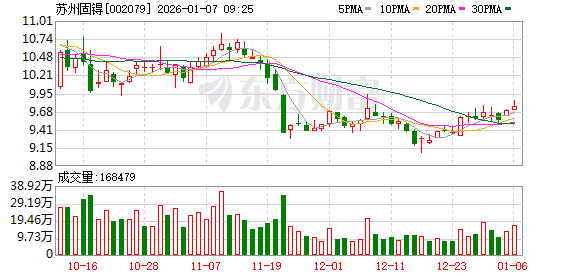
苏州固锝(002079.SZ):参股公司苏州明皜传感积极布局人形机器人市场
Ge Long Hui· 2026-01-07 01:12
Core Viewpoint - The company is focusing on long-term development of automotive-grade products as a significant profit growth point, while also advancing its humanoid robot project [1] Group 1: Automotive and Robotics - The company has a long-term strategy for automotive-grade products, which are expected to be a key driver of profit growth [1] - The company's affiliate, Suzhou Minghao Sensor Technology Co., Ltd., is actively entering the humanoid robot market, with pressure sensor products currently in small-scale trial production for leading clients [1] Group 2: Materials Technology - The company's wholly-owned subsidiary, Suzhou Jingyin New Materials Technology Co., Ltd., is producing low-temperature silver paste, primarily used in existing HJT, BC, and perovskite solar cell components, and can also be applied to gallium arsenide cell components, although sales have not yet been established [1]
苏州固锝:苏州晶银的低温银浆目前主要应用于现有的HJT、BC、钙钛矿光伏电池组件产品
Zheng Quan Ri Bao Wang· 2025-12-24 10:41
Group 1 - The core viewpoint of the article is that Suzhou Gude (002079) has confirmed the application of its low-temperature silver paste in existing HJT, BC, and perovskite photovoltaic cell components, primarily serving ground photovoltaic power station customers [1] Group 2 - The low-temperature silver paste is produced by the company's wholly-owned subsidiary, Suzhou Jingyin [1] - The current end customers for the low-temperature silver paste are mainly ground photovoltaic power stations [1]
光伏HJT设备,2026年将继续爆发
Ge Long Hui· 2025-12-19 10:51
Core Insights - The U.S. photovoltaic (PV) market is experiencing a dual turning point of "demand explosion + capacity return" in 2025, driven by AI computing power expansion and a declining interest rate cycle, leading to a projected installation capacity of over 60GW in 2025 with a compound annual growth rate of 20% [1][2]. Demand Side - The U.S. renewable energy generation share is low at approximately 10%, significantly below the global average of 30%, indicating substantial room for energy structure transformation [2]. - The demand for PV is catalyzed by the electricity gap created by AI data centers and manufacturing recovery, as these centers operate continuously and require stable power sources, making PV a preferred clean energy option [2]. - The arrival of a declining interest rate cycle has amplified demand potential, as the internal rate of return (IRR) for PV projects is highly correlated with interest rates, leading to lower financing costs and increased investment willingness from developers [2]. Policy Support - The U.S. government is promoting domestic PV production through a combination of "manufacturing subsidies + trade protection," establishing a solid foundation for local capacity expansion [2]. - Although the Investment Tax Credit (ITC) for distributed projects will gradually phase out after 2027, subsidies for manufacturing remain strong, with 4 cents per cell and 7 cents per module, reducing cost pressures for domestic manufacturers [2]. Domestic Capacity and Challenges - The planned domestic PV capacity in the U.S. is set to reach 60-70GW, with approximately 40GW already in production for modules, but only single-digit capacity for cells, highlighting a significant supply gap [3]. - The U.S. PV manufacturing faces challenges such as high labor, energy, and compliance costs compared to China, necessitating the adoption of more efficient and lower-cost technologies like HJT (Heterojunction Technology) [3][4]. HJT Technology Advantages - HJT technology requires only four core processes, resulting in lower operational costs (OPEX) of $5.4-5.5 million per GW, compared to $7.2 million for TOPCon technology, with a cost difference of 2 cents per watt [4]. - Even without government subsidies, HJT can achieve a profit of 1.6 cents per watt, indicating sustainable profitability post-subsidy reduction [5]. Patent Landscape - HJT technology has a patent advantage, as its core patents expired in 2015, allowing U.S. companies to expand capacity without the risk of patent litigation, unlike TOPCon and BC technologies [8]. - Several U.S. companies have announced HJT capacity expansion plans, totaling over 30GW, expected to materialize between 2026 and 2028, providing certainty for the supply chain [8][9]. Equipment Supply Chain - The surge in HJT capacity in the U.S. will benefit Chinese equipment manufacturers, who dominate the global HJT equipment market with over 70% market share, providing a competitive edge in terms of cost and service [10]. - U.S. companies prefer Chinese equipment due to significant cost advantages (60%-70% cheaper than overseas options) and faster service response times, which are crucial for meeting rapid production ramp-up needs [10]. Investment Opportunities - The expansion of domestic PV capacity and the adoption of HJT technology create clear investment themes focused on "equipment leaders + technology support," balancing performance certainty with growth potential [11]. - Key players include: - Maiwei Co., which leads in HJT equipment with over 70% market share, benefiting from U.S. capacity expansion [11]. - Aotwei, a leader in module packaging equipment, with ongoing demand from the 40GW of installed capacity [11]. - Gaomei Co., a core supplier of HJT wafer cutting equipment, benefiting from technology upgrades and U.S. capacity expansion [11]. Auxiliary Investment Themes - The demand for low-temperature silver paste and TCO targets will rise with HJT technology, driving exports of related materials [12]. - Companies producing photovoltaic glass and encapsulants are well-positioned to meet the supply chain needs of U.S. module production, leveraging global presence and cost advantages [12].




光伏HJT设备,2026年将继续爆发
格隆汇APP· 2025-12-19 10:13
Core Viewpoint - The U.S. photovoltaic (PV) market is expected to experience a "demand explosion + capacity return" by 2025, driven by AI computing power expansion and a declining interest rate cycle, leading to a projected installation capacity of over 60GW in 2025 with a compound annual growth rate of 20% [5][6]. Demand Side - The share of renewable energy generation in the U.S. is approximately 10%, significantly lower than the global average of 30%, indicating substantial potential for energy structure transformation [7]. - The demand for PV is catalyzed by the electricity needs of AI data centers and the recovery of the manufacturing sector, as these facilities operate continuously and require stable energy sources, making PV an attractive option [7]. - The arrival of a declining interest rate cycle enhances the demand potential, as the internal rate of return (IRR) for PV projects is closely linked to interest rates, leading to lower financing costs and increased investment willingness from developers [8]. Policy Side - The U.S. government is promoting domestic PV industry localization through a combination of manufacturing subsidies and trade protection measures. Although the Investment Tax Credit (ITC) for distributed projects will gradually be phased out after 2027, subsidies for manufacturing continue to support the industry [9]. - Current domestic PV capacity planning in the U.S. is set at 60-70GW, with approximately 40GW of component capacity already in operation, but a significant gap remains in battery cell production, highlighting a structural imbalance in the industry [9]. Manufacturing Challenges - U.S. PV manufacturing faces three main pressures: high labor costs, high energy consumption, and high compliance costs, necessitating the adoption of more efficient and lower-cost technology solutions [10]. - The cost structure for U.S. manufacturing is significantly higher than that of China, with labor costs being 3.5 times higher, energy costs 2.1 times higher, and depreciation costs 1.3 times higher [11]. - The shift in market focus from capital expenditure (CAPEX) to operational expenditure (OPEX) favors technologies like Heterojunction Technology (HJT), which offers superior operational efficiency compared to traditional technologies [11]. HJT Technology Advantages - HJT technology has a unique advantage in the U.S. market due to its lack of patent barriers, as its core patents expired in 2015, allowing companies to avoid patent litigation risks [15]. - The recognition of HJT technology has led to substantial capacity expansion plans, with several U.S. companies announcing HJT capacity increases totaling over 30GW by the end of 2025 [15]. Chinese Equipment Suppliers - The expansion of HJT capacity in the U.S. will benefit Chinese PV equipment manufacturers, who hold a dominant position in the global market, particularly in HJT production line equipment [18]. - Chinese equipment suppliers, such as Maiwei, have over 70% market share in HJT equipment, providing a cost-effective solution that meets U.S. environmental and technical standards [18]. - The competitive advantages of Chinese equipment include lower prices (60%-70% of overseas equipment) and faster service response times, making them the preferred choice for U.S. manufacturers [18]. Investment Focus - The clear investment theme emerging from the U.S. PV market expansion and HJT technology adoption focuses on "equipment leaders + technology support," balancing performance certainty with growth potential [19]. - Key players include Maiwei, a leader in HJT equipment with significant market share, and Aotwei, a leader in component packaging equipment, both of which are well-positioned to benefit from the ongoing capacity expansion [20]. - Supporting lines of investment include materials and technology companies that supply low-temperature silver paste and TCO targets, which are essential for HJT technology [21].