
信芯

Search documents
从第一颗中国芯到“代表通道”,为什么是海信?
经济观察报· 2026-03-13 09:29
Core Viewpoint - The article highlights Hisense's journey in innovation and manufacturing, showcasing its advancements in display technology and its significant growth in international markets, marking a shift from being a follower to a leader in certain sectors of the manufacturing industry [6][9]. Group 1: Innovation in Display Technology - Hisense launched RGB three-dimensional color control technology at CES 2025, which attracted significant attention from international experts [2][4]. - The company has developed two groundbreaking chips that address long-standing industry challenges, achieving a one-year lead in mass production over foreign competitors [16][18]. - Hisense's RGB-Mini LED televisions captured 48.7% of the high-end market during the 2025 Double Eleven shopping festival, with the company holding over 95% of the sales share in this segment [19][20]. Group 2: Manufacturing Advancements - Hisense has established "lighthouse factories" that utilize AI to enhance production efficiency, achieving a 49% increase in production efficiency and a 35% reduction in production costs [24][22]. - The company has implemented AI-driven quality control systems that significantly reduce inspection times and improve defect detection rates [25]. - Hisense's commitment to R&D is evident, with 5% of its revenue allocated to research, resulting in over 70,000 patent applications and participation in 78 international standards [12][9]. Group 3: International Expansion - Hisense's international revenue reached 1,107 billion yuan in 2025, accounting for 49.3% of its total revenue, with a significant increase in overseas brand recognition [34][33]. - The company has successfully acquired and revitalized several international brands, such as Sharp and Toshiba, leading to profitability within months of acquisition [34][36]. - Hisense has established a global presence with 36 industrial parks and production bases, and 64 overseas companies and offices [37]. Group 4: Future Outlook and Strategic Vision - The company emphasizes the importance of integrating traditional manufacturing with emerging technologies, aiming for sustainable growth and innovation in both established and new industries [40]. - Hisense's leadership believes in the necessity of preparing for future market dynamics while maintaining competitiveness in traditional sectors [40].


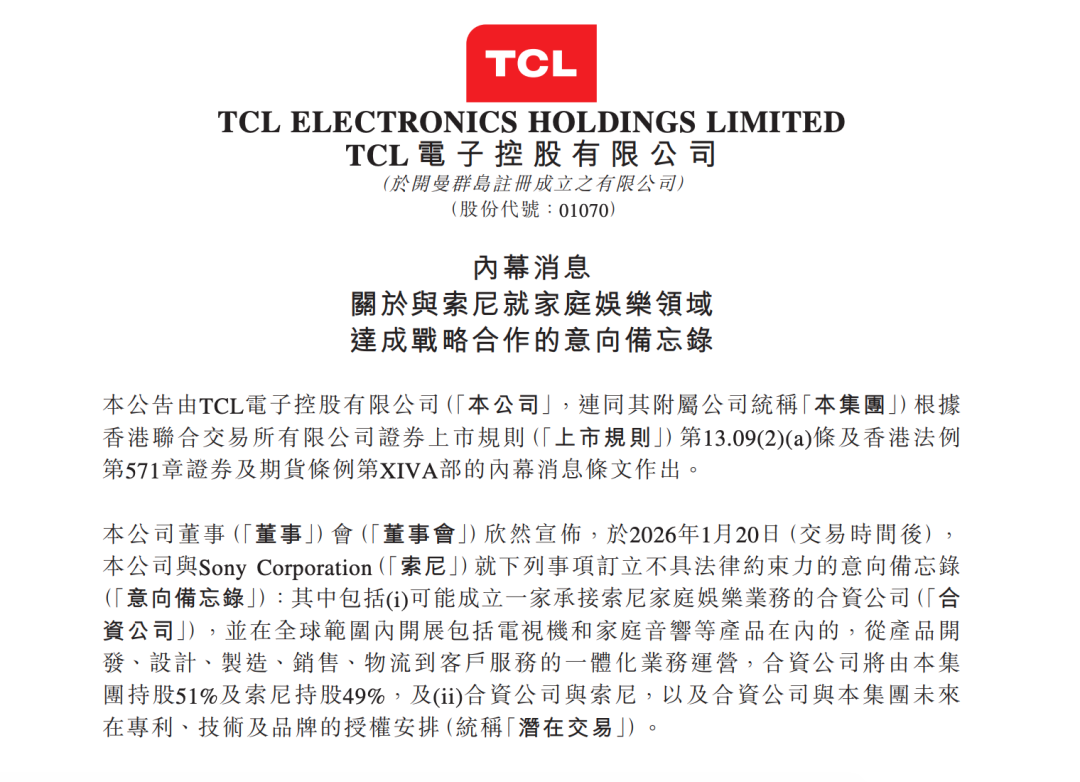
索尼委身TCL,日企时代终落幕了
Feng Huang Wang· 2026-01-20 13:07
Core Viewpoint - The collaboration between Sony and TCL marks a significant shift in the consumer electronics industry, highlighting the transition from traditional Japanese brands to Chinese manufacturers as key players in the market [1][21]. Group 1: Partnership Details - TCL announced a memorandum of understanding with Sony to establish a joint venture focused on Sony's home entertainment business, which will operate globally in an integrated manner [2][11]. - The joint venture will have TCL holding a 51% stake and Sony holding 49%, indicating that a Chinese company will lead the future of Sony's once-iconic television brand [5][12]. - The partnership aims to combine Sony's high-quality audio-visual technology and brand value with TCL's advanced display technology and cost efficiency [11][12]. Group 2: Historical Context - Sony was once a dominant player in the television market, with its Trinitron technology setting quality standards in the 1980s and 1990s, but has since faced challenges from emerging Chinese brands [6][9]. - The rise of Chinese brands like TCL and Hisense began in the early 2000s, leveraging lower costs and innovative technologies to capture market share from Japanese manufacturers [6][18]. - By 2025, Sony's television shipments had significantly declined, ranking tenth globally, while TCL and other Chinese brands surged ahead in market share [15][19]. Group 3: Industry Transformation - The collaboration reflects a broader trend in the consumer electronics industry, where traditional vertical integration models are being replaced by more flexible cooperative networks [12][16]. - As Chinese brands evolve from being price competitors to technology innovators, the dynamics of global competition are shifting, with a focus on collaboration rather than direct competition [16][20]. - The partnership symbolizes a strategic pivot for Sony, allowing it to concentrate on higher-margin businesses while leveraging TCL's manufacturing capabilities to sustain its legacy in the consumer electronics space [15][16].

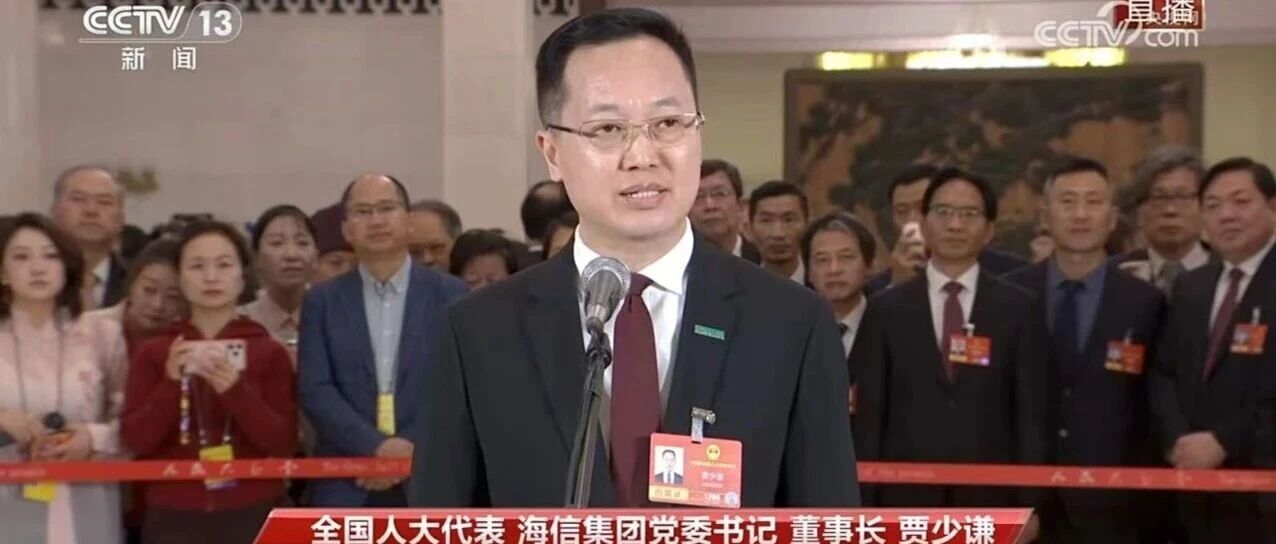
邓庆旭对话贾少谦:恪守质量信仰,做快时代中的坚守者
Xin Lang Cai Jing· 2026-01-16 02:55
Core Viewpoint - The fundamental principle for a manufacturing enterprise, regardless of market cycles, is to prioritize quality as its core value [1][11]. Group 1: Company Development and Strategy - Hisense has shown steady growth over the past year, showcasing its latest World Cup customized products at CES, emphasizing "AI technology" and its advancements in artificial intelligence and smart hardware [1][11]. - The company has a long-standing commitment to quality, which is deeply embedded in its corporate philosophy and operational practices [3][14]. - Hisense's development strategy has evolved to include high technology, high quality, and high-level service since the maturation of the Chinese market economy in 1993 [3][13]. Group 2: Quality Management Philosophy - Hisense maintains a zero-tolerance policy towards quality issues, believing that even a 0.01% defect rate can lead to a complete failure for affected customers [3][13]. - The company has institutionalized its quality philosophy into what is known as the "Seven Military Regulations" for quality management [3][13]. - Quality is viewed as a moral obligation and a core value that cannot be overlooked, as stated by the chairman [4][18]. Group 3: Technological Innovation and R&D - Hisense has invested significantly in chip technology, being the only domestic home appliance company involved in research across various semiconductor fields [4][15]. - The RGB-Mini LED technology represents a breakthrough in display technology, requiring advanced capabilities in both RGB lighting and image quality control [5][15]. - The development of the "Xinxin" chip in 2005 marked a milestone for Hisense, enabling the company to lead in display technology [15]. Group 4: Digital Quality Management - Hisense is implementing a digital quality management system that leverages AI and machine vision for real-time monitoring and anomaly detection, shifting from post-production checks to proactive quality control [7][17]. - The company has established a digital framework that integrates research, supply chain, quality improvement, and carbon management, addressing traditional traceability challenges [6][16]. - Hisense's Qingdao factory has been recognized as a "lighthouse factory," showcasing its advanced AI-driven quality control processes that have improved detection efficiency by 70.7% [7][17]. Group 5: Global Brand Positioning - As a global sponsor for the upcoming 2026 World Cup, Hisense aims to enhance its brand visibility and trust through high-quality products showcased at major sporting events [9][19]. - The company emphasizes that quality is essential for brand strength and global competitiveness, committing to further integrate AI into its quality ecosystem [8][18]. - Hisense's approach to manufacturing focuses on long-term foundational values, ensuring that quality remains a priority in all aspects of its operations [10][19].
曾毓群,投了一个上海团队
投资界· 2025-03-02 06:53
上海半导体版图浮现。 作者 I 刘博 报道 I 投资界PEdaily 宁王又出手了。 投资界获悉,思朗科技宣布完成D轮融资交割,由宁德时代旗下产业投资平台溥泉资本 (CATL Ca pti a l)领投,中芯聚源跟投。 宁德时代为何出手?成立于2 016年的思朗科技,脱胎于中国科学院自动化研究所,创始 人王东琳曾任该所所长,带队研发了高性能领域微处理器MaPU,填补了国内空白。一路 走来,思朗科技身后聚集了一支长长的投资人队伍。 众所周知,半导体是一场攸关未来的产业之战。正如思朗科技所在的上海,如今撑起中国 半导体产业的半壁江山。 脱胎于中国科学院 退休博士带队 这是一家从实验室走出的创业公司。 1 9 5 6年出生的王东琳,本科毕业于北京工业大学,后在中国科学院完成了博士学位,并 留院工作。从工程师做起,王东琳此后曾担任中国科学院自动化研究所所长、国家专用集 成电路设计工程技术研究中心主任。 2 0 0 9年,王东琳萌发打造一款新国产架构的想法,既保留专用芯片(ASIC芯片)的性能 和低功耗,又能具备可编程性和通用性。2 0 11年,他正式在中国科学院申报此项目,得 到了A类先导科技专项支持。随后,王东琳带 ...
