
信贷支持

Search documents
2300万元精准“输血”:北京农商银行以“榫卯精神”助力小微企业破解资金难题
Jin Rong Jie· 2026-01-28 03:01
Core Viewpoint - Beijing Rural Commercial Bank is committed to providing tailored financial solutions for small and micro enterprises, addressing their funding challenges and injecting vitality into regional economic development [1][2]. Group 1: Financial Support for Small and Micro Enterprises - The bank has provided a total of 23 million yuan in credit support to small and micro enterprises in various sectors, including information technology, healthcare, and food processing [1]. - In the information technology sector, the Xicheng branch offered 10 million yuan in credit to a high-tech enterprise, alleviating its funding pressure for software procurement [2]. - The Pinggu branch provided nearly 6 million yuan in loans to a "little giant" enterprise in the healthcare sector, addressing cash flow issues caused by long payment cycles and procurement costs [2]. Group 2: Innovative Service Models - The bank focuses on building long-term cooperative mechanisms with enterprises through innovative service models, exemplified by the 7 million yuan in working capital provided to a food enterprise in Huairou [3]. - The bank's services extend beyond funding to include integrated financial services such as credit business for upstream and downstream clients, payment settlement, and wealth management [3]. - Beijing Rural Commercial Bank aims to deepen its financial services for small and micro enterprises, enhancing service coverage and precision to promote high-quality regional economic development [3].
2300万元精准"输血":北京农商银行以"榫卯精神"助力小微企业破解资金难题
Jin Rong Jie Zi Xun· 2026-01-27 08:59
Core Viewpoint - Beijing Rural Commercial Bank is committed to providing tailored financial solutions for small and micro enterprises, addressing their funding challenges and injecting vitality into regional economic development [1][2] Group 1: Financial Support for Small and Micro Enterprises - The bank has provided a total of 23 million yuan in credit support to small and micro enterprises in the information technology, healthcare, and food processing sectors through its branches in Xicheng, Pinggu, and Huairou [1] - In the information technology sector, the Xicheng branch offered 10 million yuan in credit to a high-tech enterprise, alleviating its funding pressure for software procurement [1] - The Pinggu branch provided nearly 6 million yuan in loans to a "little giant" enterprise in the healthcare sector, addressing cash flow issues caused by long payment cycles and procurement costs [1] Group 2: Innovative Service Models - Beijing Rural Commercial Bank focuses on building long-term cooperative mechanisms with enterprises, emphasizing innovative service models for mutual benefit [2] - The Huairou branch provided 7 million yuan in working capital to a food enterprise, supporting its high-frequency funding needs for raw material procurement [2] - The bank offers a comprehensive ecosystem of financial services, including credit business integration, payment settlement, and wealth management, to meet diverse financial needs of enterprises [2]
光大银行鄂尔多斯分行:支持绿色制造赋能实体经济 用专业服务彰显担当
Zhong Guo Jin Rong Xin Xi Wang· 2026-01-27 01:36
Core Viewpoint - The Everbright Bank Ordos Branch is actively implementing the national "dual carbon" strategy and green development concept, integrating financial services with national strategy and regional economic development to empower local enterprises for high-quality growth [1] Group 1: Financial Support Initiatives - The branch has provided 80 million yuan in credit support to a green manufacturing demonstration enterprise, helping to solidify the foundation for its green manufacturing development [1] - The branch is facilitating the import of 150 million yuan in credit certificates for a group company involved in importing petroleum gas, addressing various challenges in the import process through a professional team [1] Group 2: Commitment to Political Responsibility - The branch prioritizes political construction and utilizes diverse financial tools such as credit support and international settlement to precisely meet the development needs of enterprises [1] - The bank aims to inject financial vitality into green manufacturing enterprises and build service bridges for foreign trade logistics companies, contributing to the high-quality economic and social development of Ordos City [1]


工行北京开发区分行为“小巨人”企业贷款超13亿元
Jin Rong Shi Bao· 2026-01-26 02:12
Group 1 - The Industrial and Commercial Bank of China (ICBC) focuses on technology finance, targeting specialized and innovative "little giant" enterprises with strong technical capabilities and market potential [1] - By the end of 2025, ICBC plans to provide credit support to over 50 "little giant" enterprises, with a total loan amount exceeding 1.3 billion yuan [1] - The bank's customer managers actively engage with clients, such as Beijing Lingtian Intelligent Equipment Group Co., Ltd., to understand their financial needs related to the development of fire-fighting robots [1]

成武农商银行南鲁支行信贷支持,助力生鲜小店焕新迎新春
Qi Lu Wan Bao· 2026-01-21 02:10
Core Viewpoint - The article highlights the positive impact of financial support from a local bank on small businesses, specifically focusing on a fresh supermarket that underwent significant renovations, enhancing customer experience and boosting local economic activity [1][2]. Group 1: Business Renovation and Impact - A fresh supermarket owned by a woman named Zhang has recently completed renovations with a loan of 200,000 yuan from Chengwu Rural Commercial Bank, improving its appearance and layout [1]. - The upgraded store features a bright and spacious environment, with clearly defined sections for fresh goods, dry goods, and seasonal items, which has led to increased customer satisfaction and repeat visits [1]. - Zhang has developed a detailed inventory plan based on previous sales data for the upcoming Spring Festival, feeling more confident in stocking new products due to improved cash flow [1]. Group 2: Financial Support and Economic Growth - The Chengwu Rural Commercial Bank has actively engaged in community outreach, providing financial support to small businesses and individual entrepreneurs, which has revitalized the local economy [1]. - The financial backing has not only supported Zhang's supermarket but has also stimulated consumer enthusiasm in the surrounding area, with many customers praising the store's improvements [1]. - Zhang is now planning to open a new branch after the Spring Festival, expressing confidence in the growth of her business with the bank's support [2].
兴业银行济南分行:金融助力秋粮“颗粒归仓”
Qi Lu Wan Bao· 2025-11-05 16:19
Core Viewpoint - The article highlights the challenges faced by farmers during the harvest season due to adverse weather conditions, while also showcasing the proactive measures taken by a grain logistics company in Dongying to ensure efficient grain collection and drying services, supported by timely financial assistance from a local bank [2] Group 1: Agricultural Challenges - The 45th World Food Day coincides with a season that should be marked by abundant harvests, yet continuous rain in Qilu has created difficulties for autumn grain collection and drying [2] - Farmers are concerned about the risk of grain spoilage due to the rainy weather, which has led to increased anxiety during the harvest period [2] Group 2: Company Operations - A grain logistics company in Dongying is experiencing a bustling environment with continuous grain deliveries and 24-hour operation of drying towers, ensuring timely service for farmers [2] - The company provides a one-stop service for grain collection and drying, alleviating farmers' concerns about weather-related spoilage [2] Group 3: Financial Support - The company’s operations are significantly supported by financial assistance, with a representative noting that timely credit support from Industrial Bank has been crucial in reducing operational risks [2] - Since the start of the autumn harvest, the Jinan branch of Industrial Bank has conducted comprehensive demand assessments and has issued nearly 30 million yuan in loans to four grain enterprises in Dongying, demonstrating a commitment to supporting rural revitalization [2]



广发银行金融赋能文旅产业高质量发展 绘就秋日旅途新画卷
Xin Hua Wang· 2025-10-10 08:22
Core Viewpoint - Guangfa Bank is actively promoting financial services to support the development of the cultural tourism industry, focusing on diversified needs through precise credit investment and comprehensive financial services [1] Group 1: Precise Credit Support for Cultural Tourism Infrastructure - In Hebei, Guangfa Bank provided 150 million yuan in loans to support 10 projects, including the construction of a party school and infrastructure upgrades for local parks [2] - In Sichuan, a loan of 10 million yuan was allocated to the Sanxingdui cultural tourism project for the development of cultural products [2] - In Xinjiang, over 75 million yuan in loans were issued to support the maintenance and unique ice sculpture projects at the Sayram Lake scenic area [2] Group 2: Comprehensive Services for Industry Optimization and Experience Enhancement - In Shanxi, a loan of 16 million USD was provided to support the cultural tourism investment group's optimization in various sectors, enhancing the brand experience [3] - In Shandong, 68 million yuan in loans were issued to the Confucius Cultural Tourism Group to support cultural product procurement and events [3] Group 3: Warm Financial Services Integrated into Travel Experiences - In Liaoning, Guangfa Bank provided credit support and organized volunteer teams to assist tourists, promoting financial knowledge and fraud prevention [4] - In Guizhou, a loan of 7.5 million yuan was provided to enhance the comfort and satisfaction of tourists at a hotel management company [4] - The bank plans to continue innovating financial service models to contribute to the high-quality development of the cultural tourism industry [4]
聚焦多元场景 践行金融为民——山东中行金融知识宣教新实践
Qi Lu Wan Bao· 2025-09-24 00:33
Group 1 - The core idea of the article is that the Shandong Branch of Bank of China is actively promoting financial education and consumer rights protection through a series of innovative activities during the "Financial Education Promotion Week" [1][3][5] - The bank has organized 480 "Financial Education Pioneer Teams" to deliver financial knowledge to various communities, including fishing villages, urban business districts, and schools, emphasizing the theme of "protecting financial rights and supporting a better life" [1][3][5] - Specific activities include financial education initiatives in port cities like Rizhao, Yantai, and Weihai, focusing on core industries such as port logistics and marine equipment manufacturing, providing credit support and supply chain financial policy interpretations [3][5] Group 2 - The "Financial Education Promotion Week" also targets fishing villages, with initiatives like the "Fishing Village Promotion Team" that addresses the specific financial needs of fishermen, teaching them about savings and investment strategies [5][6] - In addition to fishing villages, the bank has engaged in various community outreach efforts, including performances and interactive financial education events in commercial areas, enhancing public awareness of financial knowledge [7][9] - The bank has collaborated with local regulatory bodies to conduct anti-fraud campaigns, using relatable language and local dialects to effectively communicate with diverse audiences, particularly in rural areas [9][11] Group 3 - The bank has integrated financial education with the back-to-school season, launching initiatives like the "First Lesson of the School Year" to educate students on financial safety and fraud prevention [12][13] - Collaborative efforts with local media have been established to enhance financial literacy through real case analyses, increasing public vigilance and confidence in financial institutions [15] - The ongoing commitment of the bank to financial education aims to continuously enrich the methods of outreach and expand communication channels, ensuring that financial education is accessible and impactful [15]
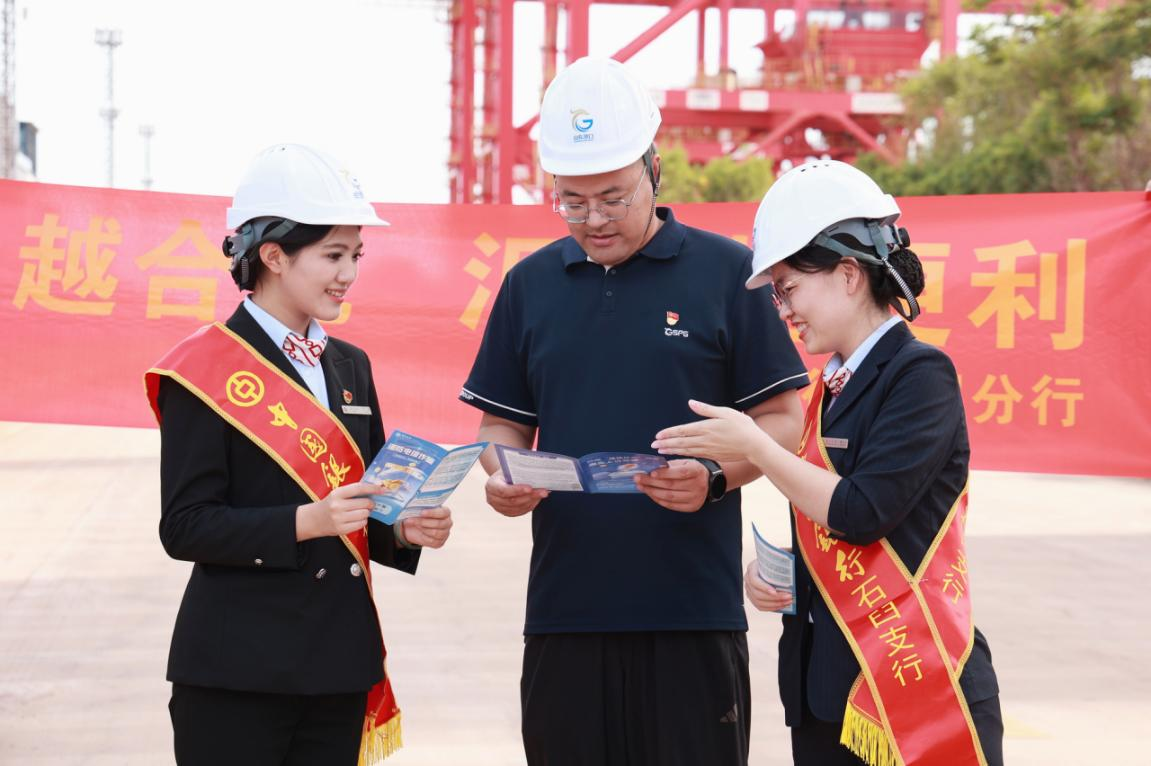
金融知识进万家 山东中行掀起金融教育宣传热潮
Zhong Guo Jin Rong Xin Xi Wang· 2025-09-23 11:52
Core Viewpoint - The Shandong Branch of Bank of China is actively promoting consumer rights protection and financial education through a series of initiatives, emphasizing the importance of safeguarding financial rights and enhancing the quality of life for consumers [1] Group 1: Financial Education Initiatives - The Shandong Branch has launched a "September Concentrated Education and Promotion Week" with 480 financial education teams engaging in various local activities to promote financial literacy [1] - Activities are tailored to local characteristics, with a focus on port cities like Rizhao, Yantai, and Weihai, addressing specific industry needs such as logistics and marine economy [2] - The bank is conducting targeted financial education in fishing villages, teaching fishermen about savings and investment strategies to protect their earnings [2] Group 2: Community Engagement and Collaboration - Local branches are encouraged to collaborate with regulatory bodies to host financial education events, enhancing community engagement through performances and interactive sessions [3] - The bank is utilizing a "grid-based" approach to reach various commercial areas, educating the public on common scams and promoting rational investment concepts [3] - In rural areas, the bank is using local dialects and informal settings to deliver anti-fraud education, making financial literacy accessible to all [4] Group 3: Innovative Outreach Methods - The bank is integrating financial education with the back-to-school season, launching initiatives like the "First Lesson of School" to educate students on financial safety and fraud prevention [5] - Collaborations with local media have been established to broadcast financial education programs, enhancing public awareness and trust in financial institutions [6] - The bank aims to continuously improve its outreach methods, ensuring that financial education is impactful and resonates with the community [6]
银行系AIC扩容至9家,股权投资仍待破局
Di Yi Cai Jing· 2025-07-17 11:53
Core Viewpoint - The establishment of the "China Post Financial Asset Investment Co., Ltd." marks the entry of the last major state-owned bank into the financial asset investment company (AIC) sector, indicating a significant expansion of AICs in China, which now totals nine with a combined registered capital of nearly 150 billion yuan [2][3]. Group 1: AIC Expansion and Challenges - The recent expansion of AICs signifies a shift from traditional debt-to-equity conversion tools to comprehensive investment platforms, with the five major state-owned banks' AICs projected to achieve a combined net profit of 18.354 billion yuan in 2024, reflecting a compound annual growth rate of 57.93% from 2018 to 2024 [4]. - AICs face three main challenges: low tolerance for non-performing loans under traditional risk control systems, mismatches between debt and equity funding in terms of duration and returns, and a shortage of experienced equity investment talent due to inadequate compensation structures [2][7]. Group 2: Regulatory and Market Context - The AIC initiative began in 2016, with the first licenses issued to the five major state-owned banks, but no new licenses were granted until the recent policy relaxation in March 2023, which allowed for the establishment of additional AICs [3]. - The AICs are expected to enhance the direct financing capabilities for technology enterprises, promoting a more efficient integration of debt and equity financing services [5][9]. Group 3: Talent and Operational Challenges - The traditional banking risk assessment framework is not well-suited for equity investments, leading to difficulties in attracting qualified personnel who understand both industry and capital markets [8]. - Recommendations include granting AICs greater autonomy, establishing market-oriented operational mechanisms, and revising compensation structures to attract skilled investment professionals [8][9].