
金融资产投资公司

Search documents
第三家股份制银行AIC开业
Zhong Guo Ji Jin Bao· 2025-12-17 13:35
Core Viewpoint - Xinyin Financial Asset Investment Co., Ltd. (Xinyin Jintou) officially opened in Guangzhou, becoming the third financial asset investment company (AIC) under a joint-stock bank in China [1][2]. Group 1: Company Establishment - Xinyin Jintou's registered capital is 10 billion RMB, and it is located in Guangzhou, Guangdong Province [2]. - The establishment of Xinyin Jintou signifies the addition of another AIC under a joint-stock bank, enhancing the AIC landscape in China [2]. Group 2: Strategic Focus - Xinyin Jintou will focus on market-oriented debt-to-equity swaps and equity investment in strategic emerging industries, supporting innovation-driven enterprises and the private economy [2]. - The company aims to enhance the comprehensive operational capabilities and sustainable development of CITIC Bank [2]. Group 3: Industry Context - The opening of Xinyin Jintou follows the establishment of other AICs, including the one under China Merchants Bank in Shenzhen, contributing to a dual-core AIC structure in the Guangdong-Hong Kong-Macao Greater Bay Area [3]. - The rapid expansion of AICs is supported by regulatory changes, allowing joint-stock banks to establish AICs in 18 pilot cities, thus accelerating the pace of AIC licensing [3].

注册资本150亿元!“零售之王”大动作!
券商中国· 2025-12-02 13:14
Core Viewpoint - The establishment of Zhaoyin Investment marks a significant development in the financial asset investment company (AIC) sector, with a registered capital of 15 billion yuan, making it the highest initial capital among AICs in China [2][4]. Group 1: Company Overview - Zhaoyin Investment, a wholly-owned subsidiary of China Merchants Bank, officially opened in Shenzhen on December 2, 2023, after receiving approval for establishment in July and for operations in November [1][4]. - The company aims to leverage opportunities from national policies, technological innovation, and capital market development to enhance its role in the financial asset investment industry [3][4]. Group 2: Strategic Goals - Zhaoyin Investment aspires to be a leader in the financial asset investment sector by focusing on technology innovation, enhancing investment management capabilities, and promoting long-term value investment [4]. - The company plans to strengthen collaboration with its parent bank and other investment sectors to create a robust investment ecosystem [4]. Group 3: Market Position and Future Outlook - The AIC sector is expanding, with regulatory support for equity investment, which is expected to drive growth in technology finance and equity markets [8]. - The recent policy changes allow AICs to engage in equity investments beyond debt-to-equity swaps, positioning them as key players in supporting innovation and enterprise transformation [7][8].



中信AIC落地广州:金投“耐心资本”改写股权投融资格局
2 1 Shi Ji Jing Ji Bao Dao· 2025-11-24 06:13
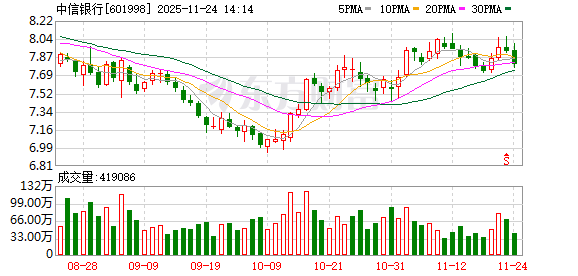
Core Viewpoint - The establishment of Xinyin Financial Asset Investment Co., Ltd. (信银金投) by CITIC Bank marks a significant step in the expansion of the banking sector's asset investment companies (AIC), highlighting the growing role of AICs in connecting financial capital with industrial development [2][10]. Group 1: AIC Development and Advantages - AICs have evolved since their inception in 2016, initially aimed at market-oriented debt-to-equity swaps, and have expanded their business scope to include equity investments, becoming a crucial bridge between indirect and direct financing [4][10]. - The regulatory environment has been increasingly favorable, with pilot programs for AICs expanding to 18 key cities, allowing for greater investment flexibility and encouraging banks to establish AICs [4][10]. - AICs offer significant capital efficiency advantages compared to traditional bank equity investments, requiring only 400% capital weight for equity investments versus 1250% for banks, thus enabling more sustainable long-term investments [5][6]. Group 2: Strategic Importance of Xinyin Financial Investment - The establishment of Xinyin Financial Investment in Guangzhou is strategically significant, as the city is a financial hub with a robust ecosystem, having attracted numerous financial institutions and AIC funds [8][9]. - Xinyin Financial Investment aims to focus on strategic emerging industries and align with Guangzhou's modernization goals, particularly in sectors like new information technology and artificial intelligence [9][11]. - The opening of Xinyin Financial Investment is timely, coinciding with the accelerated development of AICs, which are becoming essential for banks to enhance their core competitiveness and support high-quality economic development [10][12]. Group 3: Future Outlook for AICs - The number of AICs in China is expected to increase, with potential new entrants like Postal Savings Bank, indicating a trend towards specialization and regional focus within the industry [12]. - AICs are anticipated to play a more prominent role in providing "patient capital," facilitating the integration of financial and industrial sectors, and offering comprehensive financial solutions to enterprises [11][12].
招行新公司成立,新团队来头曝光
2 1 Shi Ji Jing Ji Bao Dao· 2025-11-22 14:14
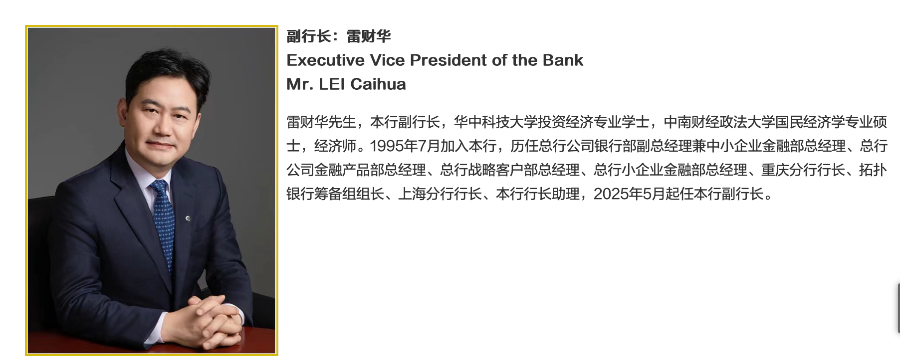
Core Viewpoint - China Merchants Bank's subsidiary, AIC, has officially been approved to commence operations after nearly five months of preparation, marking a significant development in the financial asset investment sector [1][6]. Group 1: Company Establishment and Structure - China Merchants Bank has received formal approval from the National Financial Regulatory Administration for its wholly-owned subsidiary, China Merchants Financial Asset Investment Co., Ltd., to begin operations [1]. - The registered capital of the new AIC is 15 billion RMB, making it the highest initial registered capital among financial asset investment companies in China [6]. - The company will be located in the China Merchants Bank headquarters building in Shenzhen, with plans for the headquarters to move to a new location in the Shenzhen Bay Super Headquarters Base [1]. Group 2: Management and Personnel - The board of directors for the new AIC has been established, with key personnel including Lei Caihua as Chairman and legal representative, who is also the Vice President of China Merchants Bank [1][2]. - Other board members include senior executives from various departments of China Merchants Bank, indicating a strong internal leadership structure [2]. Group 3: Market Context and Future Plans - The establishment of AIC aligns with national policies aimed at expanding the role of financial asset investment companies in supporting technological innovation and economic development [7]. - Other banks, including Industrial Bank and CITIC Bank, have also established their AICs, indicating a growing trend among commercial banks to engage in financial asset investment [6][7]. - Analysts suggest that the benefits of AICs extend beyond direct equity investment profits, potentially enhancing overall banking revenues through increased deposits, loans, and intermediary services from technology clients [8].
全国首家股份制银行金融资产投资公司成立
财联社· 2025-11-16 09:31
Core Viewpoint - Xingyin Financial Asset Investment Co., Ltd. has been established as the first shareholding bank financial asset investment company (AIC) in China, aiming to support the optimization of capital structures and reduction of leverage for technology innovation and private enterprises [1] Group 1 - The company was officially unveiled in Fuzhou on the 16th, with a registered capital of 10 billion yuan [1] - The establishment of AICs is supported by a document released by the National Financial Supervision Administration in March, which encourages qualified commercial banks to initiate the establishment of AICs [1] - Industrial Bank became the first shareholding bank approved to establish and operate an AIC, with Xingyin Investment registered in Fuzhou [1]


这家大行获准,六大行已全部“集齐”
Jin Rong Shi Bao· 2025-10-28 07:47
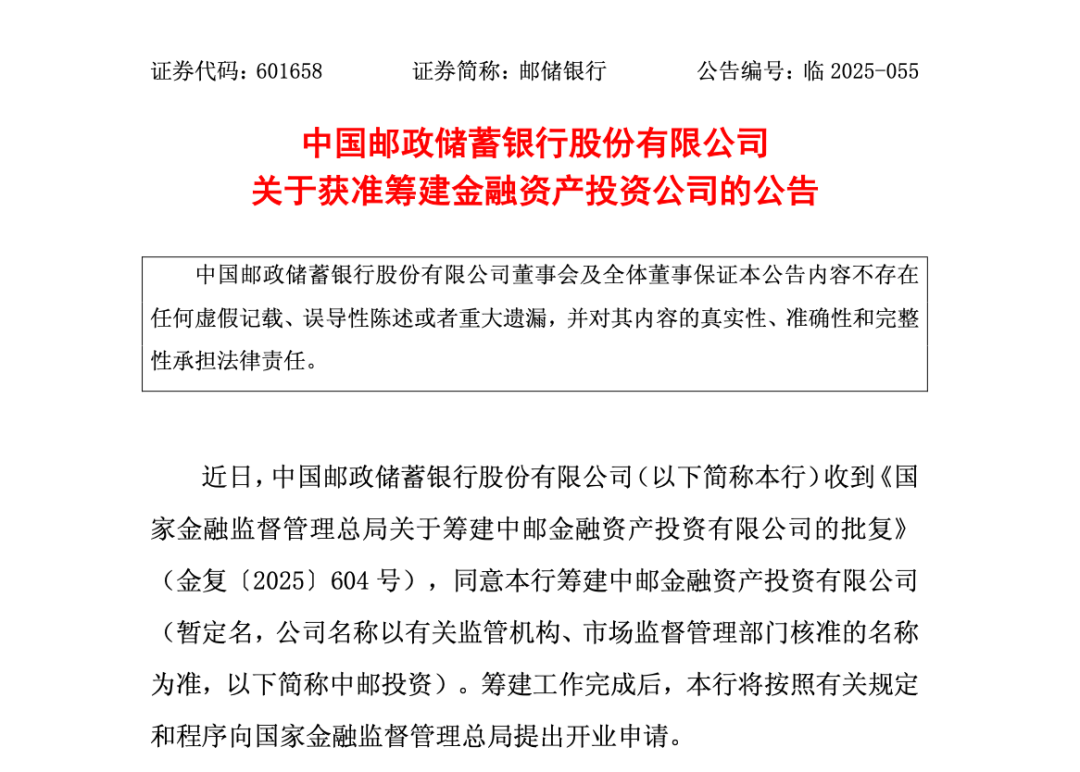
Core Insights - Postal Savings Bank of China (PSBC) has established its Asset Investment Company (AIC), marking its entry into the same league as the other five major state-owned banks after an 8-year wait [2] - The establishment of AICs began in 2017, with the first five major state-owned banks obtaining their licenses, and the recent expansion of AIC licenses is supported by the regulatory body [2] - The role of AICs has evolved from primarily assisting distressed quality enterprises through debt-to-equity swaps to now emphasizing support for technological innovation [2] Summary by Sections - **Establishment of AIC**: PSBC's AIC, named Zhongyou Investment, is a response to national calls for supporting technological advancements and enhancing comprehensive service capabilities [3] - **Market Impact**: The expansion of AICs is expected to promote the development of investment-loan linkage, improving financing services for technology-driven small and medium-sized enterprises [3] - **Strategic Goals**: The AIC aims to support new productive forces and enhance the quality of services to the real economy, contributing to the high-quality development of PSBC [3]

银行系AIC扩容至9家,股权投资仍待破局
Di Yi Cai Jing· 2025-07-17 11:53
Core Viewpoint - The establishment of the "China Post Financial Asset Investment Co., Ltd." marks the entry of the last major state-owned bank into the financial asset investment company (AIC) sector, indicating a significant expansion of AICs in China, which now totals nine with a combined registered capital of nearly 150 billion yuan [2][3]. Group 1: AIC Expansion and Challenges - The recent expansion of AICs signifies a shift from traditional debt-to-equity conversion tools to comprehensive investment platforms, with the five major state-owned banks' AICs projected to achieve a combined net profit of 18.354 billion yuan in 2024, reflecting a compound annual growth rate of 57.93% from 2018 to 2024 [4]. - AICs face three main challenges: low tolerance for non-performing loans under traditional risk control systems, mismatches between debt and equity funding in terms of duration and returns, and a shortage of experienced equity investment talent due to inadequate compensation structures [2][7]. Group 2: Regulatory and Market Context - The AIC initiative began in 2016, with the first licenses issued to the five major state-owned banks, but no new licenses were granted until the recent policy relaxation in March 2023, which allowed for the establishment of additional AICs [3]. - The AICs are expected to enhance the direct financing capabilities for technology enterprises, promoting a more efficient integration of debt and equity financing services [5][9]. Group 3: Talent and Operational Challenges - The traditional banking risk assessment framework is not well-suited for equity investments, leading to difficulties in attracting qualified personnel who understand both industry and capital markets [8]. - Recommendations include granting AICs greater autonomy, establishing market-oriented operational mechanisms, and revising compensation structures to attract skilled investment professionals [8][9].
刊首语 | 王力:金融资产投资公司股权投资试点解析
Sou Hu Cai Jing· 2025-05-14 07:41
Core Viewpoint - The recent policy document issued by the National Financial Supervision Administration aims to expand the scope of equity investment by financial asset investment companies (AICs) to include trial cities and their provinces, thereby enhancing the funding sources for private equity investments and promoting collaboration with local state-owned assets and industry groups [1][2]. Group 1: Financial Asset Investment Companies (AICs) - AICs are non-bank financial institutions approved by the State Council, primarily engaged in the conversion of bank debts into equity and related support services [2]. - The establishment of AICs aims to address the increasing non-performing assets in the banking system through market-oriented debt-to-equity swaps, while also assisting distressed bank clients [2]. - AICs can engage in direct equity investments and manage or participate in private equity funds, with capital sourced from parent banks and other financial instruments [2][5]. Group 2: Investment Trends and Market Impact - AICs have begun to accelerate investments in private equity and technology innovation, collaborating with local state-owned assets and industry groups to establish various themed investment funds [1][3]. - By March 2025, five AICs had signed agreements covering 18 trial cities with a total investment amount exceeding 350 billion yuan, marking AICs as a significant new force in the domestic private equity market [1][3]. - The expansion of AICs into private equity investments signifies a breaking down of barriers between indirect financing through bank credit and direct equity investments, enhancing the role of bank-led financial holding groups [3]. Group 3: Policy Recommendations - It is recommended to further expand the trial scope for private equity investments by AICs, allowing for more capital and business potential to be released while ensuring risk control [7]. - A comprehensive regulatory framework should be established to support the operations of AICs, ensuring that their primary focus on non-performing asset disposal is maintained [8]. - The capital market should be optimized to support high-quality development, enhancing market vitality and increasing the proportion of direct financing [9][10].

光大期货金融期货日报-20250514
Guang Da Qi Huo· 2025-05-14 05:11
Group 1: Investment Ratings - The investment ratings for stock index futures and government bond futures are both "oscillation" [1] Group 2: Core Views - For stock indices, the joint statement between China and the US, along with domestic policy measures such as the establishment of new financial asset investment companies, support for Huijin to increase holdings of stock index funds, and the central bank's reserve requirement ratio and interest rate cuts, are expected to help companies repair their balance sheets, promote the stable development of the real economy, and steadily increase stock market valuations. The internal policy drive is the main theme for the stock market in 2025. The revenue growth rate of A-share listed companies has narrowed for three consecutive quarters, and the net profit has increased by about 4% year-on-year, but the ROE is still in the stage of bottoming out and stabilizing [1] - For government bonds, the bond market has been supported by expectations of monetary policy easing and the weakening of the pricing fundamentals caused by tariffs. However, with the implementation of a series of incremental measures on May 7 and the joint statement between China and the US on May 12 to significantly reduce mutual tariffs, the two major positive factors have disappeared, and the bond market is expected to run in a bearish direction. The yield curve is expected to steepen again [1][2] Group 3: Summary by Directory 1. Research Views - **Stock Index Futures**: The joint statement between China and the US provides a good start for further trade negotiations. Domestic policies are the main driving force for the stock market in 2025. The revenue and profit of A-share listed companies are showing signs of improvement, and the market is expected to oscillate [1] - **Government Bond Futures**: The bond market is expected to be bearish due to the implementation of monetary policy measures and the reduction of tariffs. The yield curve is expected to steepen [1][2] 2. Daily Price Changes - **Stock Index Futures**: On May 13, 2025, compared with May 12, IH rose 0.06%, IF fell 0.05%, IC fell 0.59%, and IM fell 0.67%. Among the stock indices, the Shanghai Composite 50 rose 0.20%, the CSI 300 rose 0.15%, the CSI 500 fell 0.21%, and the CSI 1000 fell 0.27% [3] - **Government Bond Futures**: On May 13, 2025, the 30-year main contract rose 0.13%, the 10-year main contract rose 0.03%, the 5-year main contract fell 0.01%, and the 2-year main contract rose 0.03% [1] 3. Market News - On May 13, the Chinese Foreign Ministry Spokesperson responded to questions about Sino-US economic and trade talks and the issue of special tariffs on fentanyl, stating that the responsibility for the fentanyl issue lies with the US, and the US's imposition of tariffs has damaged Sino-US cooperation and Chinese interests [5] 4. Chart Analysis - **Stock Index Futures**: The report presents the trend charts of IH, IF, IM, and IC main contracts, as well as the basis trend charts of various stock index futures [6][7][8] - **Government Bond Futures**: The report shows the trend charts of government bond futures main contracts, the yield charts of government bond cash bonds, the basis charts, the inter - period spread charts, the inter - variety spread charts, and the capital interest rate charts [13][14][16] - **Exchange Rates**: The report includes the charts of the central parity rate of the US dollar against the RMB, the euro against the RMB, the forward exchange rates of the US dollar and the euro against the RMB, the US dollar index, and the exchange rates of the euro, pound, and yen against the US dollar [20][21][22]
一周银行速览(05.2—05.9)
Cai Jing Wang· 2025-05-09 07:50
Regulatory Actions - The People's Bank of China announced a reduction in the reserve requirement ratio by 0.5 percentage points, expected to provide approximately 1 trillion yuan in long-term liquidity to the market [1] - The policy interest rate will be lowered by 0.1 percentage points to 1.4%, and the personal housing provident fund loan rate will decrease by 0.25 percentage points, with the first home rate for loans over five years dropping from 2.85% to 2.60% [1] Industry Developments - Industrial banks are increasing their asset investment companies (AIC), with Industrial Bank, China Merchants Bank, and China CITIC Bank announcing plans to establish AICs with registered capital of 100 billion yuan, 150 billion yuan, and 100 billion yuan respectively [3] - The first batch of bank-issued technology innovation bonds has been announced, with a total issuance cap of 640.5 billion yuan, indicating a strong market response to new policies [4] Housing Loan Adjustments - Major cities including Beijing, Shanghai, Guangzhou, and Shenzhen have lowered the personal housing provident fund loan rate by 0.25 percentage points, bringing the rate for first-time homebuyers over five years to a historical low of 2.6% [5] - Other cities such as Zhengzhou and Ningbo have also announced similar reductions, with the new rates effective immediately for new loans and set to apply to existing loans from January 1, 2026 [5] Banking Sector Performance - In the annual reports of 42 listed banks, total operating income reached 5.65 trillion yuan, with a year-on-year growth of 0.08%, while net profit attributable to shareholders increased by 2.35% to 2.14 trillion yuan [7] - In the first quarter, 42 A-share banks reported total assets exceeding 314 trillion yuan, with a slight decline in operating income and net profit compared to the previous year [8] Corporate Changes - Dazhou Bank's shareholding structure has changed significantly, with Dazhou High-tech Innovation Co., Ltd. acquiring approximately 15.32 billion shares, raising its stake to 49.2%, thus becoming a state-controlled city commercial bank [9][10] - Jiangsu Bank has received approval to acquire Jiangsu Danyang Su Yin Village Bank and establish four new branches, indicating ongoing consolidation in the banking sector [11]