偏股类基金

Search documents
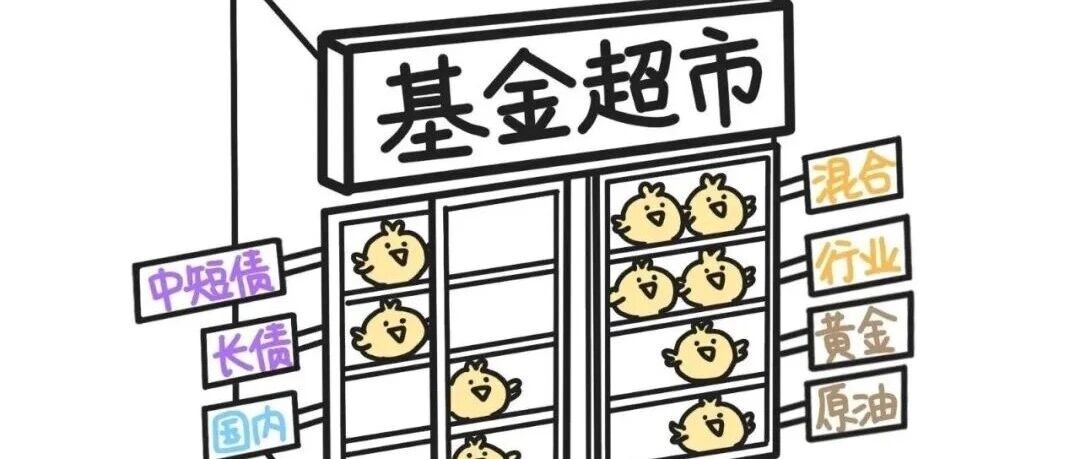
新手养基第一步 关掉你的基金超市
雪球· 2025-12-12 13:00
Core Viewpoint - The article emphasizes the pitfalls of having an excessive number of funds in an investment portfolio, likening it to running a supermarket, which can lead to false diversification and management difficulties [6][17]. Group 1: Reasons for Excessive Fund Holdings - Fear of Missing Out (FOMO) drives investors to buy into new concepts and themes, leading to an overwhelming number of funds [9]. - Misunderstanding the principle of diversification results in investors believing that holding more funds inherently reduces risk [11]. - Decision paralysis occurs when investors are overwhelmed by choices, leading them to buy multiple funds without a clear strategy [13]. Group 2: Problems with Excessive Fund Holdings - False Diversification: Holding many funds does not guarantee risk diversification, as many funds may share the same underlying assets [18]. - Management Overload: Monitoring numerous funds can be time-consuming and impractical, making it difficult to analyze performance and make informed decisions [22]. Group 3: Steps to Optimize Fund Holdings - Step 1: Define a portfolio structure based on individual risk tolerance and investment goals, including allocations to different types of funds [27][30][34]. - Step 2: Tag each fund according to its category to gain clarity on the portfolio composition [37]. - Step 3: Consolidate similar funds by evaluating them based on performance, drawdown history, fund size, fee structure, and manager experience [41][45][49]. Group 4: Tools and Recommendations - The article suggests using fund comparison tools available in various apps to facilitate the selection process and streamline decision-making [50]. - It introduces a three-part asset allocation tool that helps investors avoid common pitfalls by providing a structured framework for fund selection and management [65][66].

2025年公募新发图鉴:头部领跑,中小深耕
Morningstar晨星· 2025-12-11 01:05
Core Viewpoint - The Chinese public fund issuance market is experiencing a significant recovery and structural characteristics in 2025, driven by policy guidance and market demand, with a notable increase in the number of new non-money market funds and a shift towards equity funds as the main focus of new issuances [1][3]. Group 1: Market Performance - As of December 4, 2025, the total number of new non-money market funds reached 1,476, a substantial increase from 1,134 in 2024, marking a three-year high [1]. - Among the new issuances, equity funds (including stock funds and mixed funds with at least 70% equity allocation) accounted for 1,066 new products, up 47.9% from 721 in 2024 [1]. - The issuance of bond funds (including bond funds and mixed funds with at least 50% bond allocation) remained stable at 360, compared to 366 in 2024 [1]. Group 2: Differentiation in New Issuance - There is a clear differentiation in new issuance performance between leading and smaller fund companies, with top firms capturing nearly half of the total new issuance volume and initial scale [5][6]. - Leading fund companies, such as Huaxia Fund, Fuguo Fund, and Yifangda Fund, dominate the market with 71, 60, and 54 new products respectively, significantly exceeding the industry average of 11 new products [7][9]. - Smaller fund companies typically adopt a focused strategy, averaging around 4 new products, concentrating on specific asset types or niche areas to differentiate themselves [9]. Group 3: Active vs. Passive Fund Dynamics - In 2025, passive products, particularly ETFs, became a focal point in the public fund industry, with 601 of the 1,066 new equity funds being passive, including 282 ETFs and 197 ETF-linked funds [10][14]. - Active fund issuance remains dominated by leading companies, with Huaxia Fund leading with 33 new active products, while smaller firms struggle to match the scale of larger competitors [14]. - The issuance of "fixed income plus" products in the active bond category saw a significant increase, with the number rising from 97 in 2024 to 154 in 2025, indicating a growing trend in this segment [14]. Group 4: Pricing of New Products - The pricing of new products reflects the fee reform initiated by the China Securities Regulatory Commission, with management and custody fees generally lower across the board [17][19]. - Active equity funds typically have management fees around 1.20% for non-index enhanced products and 0.80% for index-enhanced products, while passive funds have significantly lower fees [19][20]. - The average management fee for newly issued passive equity funds is around 0.37%, while bond passive products average 0.16%, indicating a trend towards lower costs in the industry [20]. Group 5: Strategic Differentiation - The public fund market in 2025 showcases strategic differentiation based on resource endowments, with leading firms expanding through a platform-based approach while smaller firms focus on specialization [21]. - Investors are encouraged to consider the investment objectives and strategies of new funds rather than solely chasing brand names or market trends, highlighting the importance of rational asset allocation [21].

半仓迎接牛市!这个策略进可攻,退可守
雪球· 2025-07-17 09:22
Core Viewpoint - The article emphasizes a balanced investment strategy using a "half-position" approach, which aims to mitigate market risks while capturing opportunities, achieving a balance between risk and return [3]. Group 1: Asset Allocation Strategy - The proposed asset allocation consists of 50% fixed income, 45% equities, and 5% commodities, which is designed to optimize risk and return [3]. - The "Three-Part Method" is introduced, focusing on asset diversification, market diversification, and time diversification through systematic investment [4]. Group 2: Fixed Income Allocation - The fixed income portion is divided into 50% allocation, with 40% in Chinese bonds and 10% in U.S. bonds [5]. - The rationale for favoring Chinese bonds over U.S. bonds includes lower price volatility and reduced currency risk, despite U.S. bonds offering higher yields [7][8]. - Specific funds within the fixed income category include: - 15% in Guangfa 7-10 Year National Development Bonds Index A - 15% in Bosera Credit Bond Pure Debt A - 10% in E Fund China Bond New Composite Index A - 5% each in Morgan Overseas Stable Allocation Mixed and Bank of China U.S. Dollar Bond [8]. Group 3: Equity Allocation - The equity allocation of 45% employs a "barbell strategy," with equal weight given to high-growth sectors (e.g., technology, new energy) and stable dividend-paying stocks [13]. - Domestic equity is favored over overseas equity based on valuation metrics, with the price-to-earnings ratio (PE-TTM) for the China Hong Kong Stock Connect Technology at 21.46, compared to 35.15 for the Nasdaq 100 [13]. Group 4: Commodity Allocation - The commodity allocation is set at 5%, primarily focused on gold, reflecting a strategy to hedge against global currency instability [18]. - The specific allocation within commodities includes 1% in Guotai Gold ETF, and 2% each in Guotai Commodity and Yinhua Anti-Inflation Theme, with gold comprising approximately 3% of the total commodity allocation [18]. Group 5: Investment Strategy Execution - The article suggests a high-frequency systematic investment approach, such as daily or weekly investments, to accumulate shares in overseas assets, especially during market downturns [20]. - Dynamic rebalancing is recommended when asset allocation deviates by 5% or more, which typically requires significant market movements to occur [21].