错失恐惧症

Search documents
黄金暴跌,有人一夜亏掉半年工资!这届投资者终于明白,全都输在一个字上
Sou Hu Cai Jing· 2026-02-07 17:41
Core Viewpoint - The recent decline in gold prices has led to significant losses for investors who bought at peak prices, highlighting the volatility and risks associated with gold investments [5][7][14]. Group 1: Market Trends - Gold prices reached a historic high of $5,598 per ounce on January 26, with domestic prices peaking at 1,257 yuan per gram [5]. - By early February, gold prices plummeted to 1,091 yuan per gram, resulting in a loss of over 12% for many investors who purchased at the peak [7]. Group 2: Investment Risks - Investors are facing "beautiful traps" such as misleading financial schemes offered by jewelry stores, which promise high returns but are often unregulated and risky [9][10]. - The use of leverage in gold futures trading can lead to catastrophic losses, with investors potentially owing money beyond their initial investment due to rapid price declines [12]. Group 3: Behavioral Insights - The phenomenon of "fear of missing out" has driven many to invest in gold, despite its traditional role as a safe-haven asset [14][15]. - Investors often overlook the long-term strategies employed by central banks, which buy gold in bulk and hold it for extended periods, contrasting with individual investors who may need liquidity [15]. Group 4: Investment Guidelines - It is advised that investors consider their holding period before purchasing physical gold, as short-term trading can incur high costs [18]. - Investors should avoid complex financial products that they do not fully understand, opting instead for transparent options like gold ETFs [19]. - Establishing strict stop-loss and take-profit levels is crucial to managing risk effectively in volatile markets [20][22].


白银将冲击125美元?专家警告:库存告急或引爆“不可抗力”冲击波
Jin Shi Shu Ju· 2025-12-30 23:53
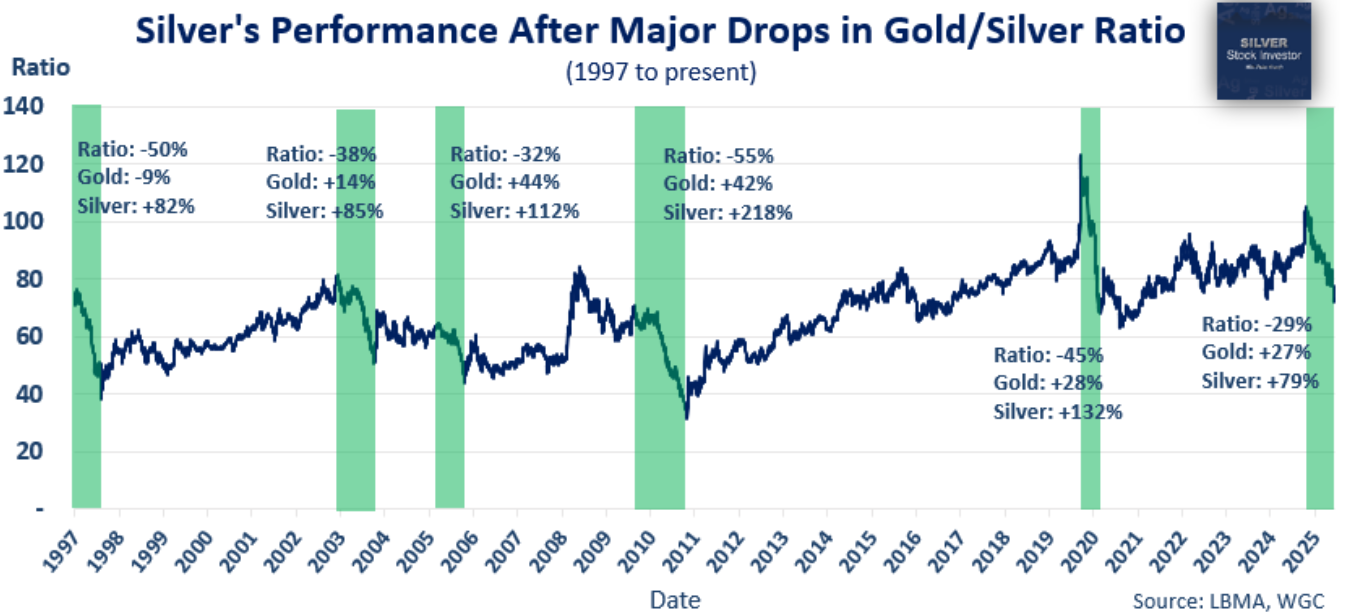
Core Viewpoint - Silver prices have surpassed $76 per ounce, doubling in value this year, leading to investor anxiety about a potential market reversal. However, historical analysis of the gold-silver ratio suggests that silver may still have significant upside potential, with supply constraints expected to trigger price surges by 2026 [1]. Group 1: Price Projections - Silver has broken its historical high of $50 per ounce, marking a significant milestone after 45 years, with $50 now seen as a new support level [1]. - If the gold-silver ratio drops from its recent peak of approximately 105 to around 59, silver could reach about $67 per ounce, assuming gold prices stabilize at $4,000 [4]. - In a bullish scenario where gold reaches $5,000 and the gold-silver ratio falls to 45, silver prices could soar to $111 per ounce [5]. Group 2: Market Dynamics - Current silver supply is critically low, with Shanghai's inventory at a 10-year low and London facing tight supplies, creating a precarious situation for the market [6]. - The shifting of silver inventories between major markets like New York and London does not increase the total supply but highlights localized shortages, particularly in China, which is a major consumer of industrial silver [6]. - The potential for a significant price spike exists if industrial users face delivery issues, leading to a scenario where cash settlements may not suffice, causing prices to surge dramatically [6]. Group 3: Investor Behavior - The phenomenon of "fear of missing out" (FOMO) is likely to drive individual investors towards silver as they seek alternatives to high gold prices, perceiving silver as a more affordable option [7]. - As investors recognize the high gold prices, they may turn to silver, which appears relatively cheap, further fueling demand and potentially driving prices higher [7]. - The ongoing high gold-silver ratio may prompt investors to enter the silver market, anticipating continued upward movement in silver prices even if gold prices stabilize [7].
新手养基第一步 关掉你的基金超市
雪球· 2025-12-12 13:00
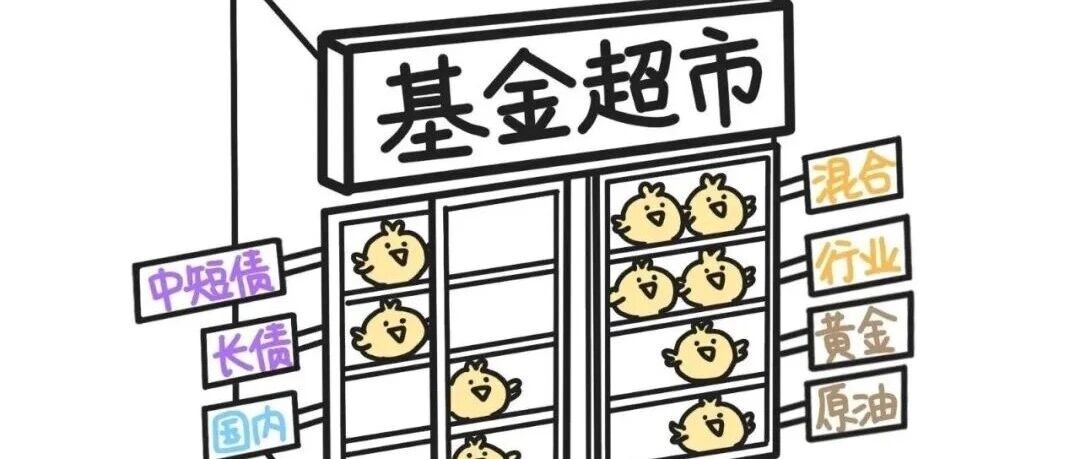
Core Viewpoint - The article emphasizes the pitfalls of having an excessive number of funds in an investment portfolio, likening it to running a supermarket, which can lead to false diversification and management difficulties [6][17]. Group 1: Reasons for Excessive Fund Holdings - Fear of Missing Out (FOMO) drives investors to buy into new concepts and themes, leading to an overwhelming number of funds [9]. - Misunderstanding the principle of diversification results in investors believing that holding more funds inherently reduces risk [11]. - Decision paralysis occurs when investors are overwhelmed by choices, leading them to buy multiple funds without a clear strategy [13]. Group 2: Problems with Excessive Fund Holdings - False Diversification: Holding many funds does not guarantee risk diversification, as many funds may share the same underlying assets [18]. - Management Overload: Monitoring numerous funds can be time-consuming and impractical, making it difficult to analyze performance and make informed decisions [22]. Group 3: Steps to Optimize Fund Holdings - Step 1: Define a portfolio structure based on individual risk tolerance and investment goals, including allocations to different types of funds [27][30][34]. - Step 2: Tag each fund according to its category to gain clarity on the portfolio composition [37]. - Step 3: Consolidate similar funds by evaluating them based on performance, drawdown history, fund size, fee structure, and manager experience [41][45][49]. Group 4: Tools and Recommendations - The article suggests using fund comparison tools available in various apps to facilitate the selection process and streamline decision-making [50]. - It introduces a three-part asset allocation tool that helps investors avoid common pitfalls by providing a structured framework for fund selection and management [65][66].
白银凭什么是“新黄金”?因为世界更疯了
Jin Shi Shu Ju· 2025-12-12 06:03
Group 1 - The German Finance Ministry canceled the planned issuance of commemorative silver coins due to the significant rise in silver prices, which exceeded the face value of the coins [1] - Silver prices surged to $63.86 per ounce, nearly double from the previous year, significantly outpacing gold's nearly 60% increase [1] - The recent price increase of silver is reminiscent of historical surges in the late 1970s and 2008, but it has not been accompanied by a collapse in stock or bond markets [1] Group 2 - The rise in silver prices is driven by a mix of greed and fear, with industrial demand increasing, particularly from electric vehicles and computing chips, leading to a supply-demand imbalance [2] - The U.S. government's designation of silver as a strategic commodity has raised concerns about potential tariffs, exacerbating the supply issues and leading to hoarding in the domestic market [2] - There are reports of financial players exploiting price discrepancies between markets, reminiscent of speculative distortions seen in the past [2] Group 3 - Retail investor enthusiasm is growing, driven by a "fear of missing out" on investments in AI, gold, and cryptocurrencies, leading some to turn to silver due to its practical uses [3] - Concerns about inflation and the Federal Reserve's actions, including interest rate cuts and bond purchases, are causing investors to view silver and gold as hedges against currency devaluation [3][4] - The unusual pattern of rising long-term interest rates during a Fed rate-cutting cycle is prompting some investors to consider precious metals as a safeguard against inflation and sovereign default risks [4] Group 4 - The uncertainty surrounding potential actions by President Trump regarding the Federal Reserve and tariffs is intensifying the prevailing atmosphere of fear and greed in the market [5] - The canceled commemorative coin symbolizes the current market climate, where excitement and anxiety coexist, reflecting broader economic concerns [5]
明知印度是“投资坑”,企业为何扎堆往里跳?揭秘真相背后逻辑
Sou Hu Cai Jing· 2025-07-14 08:24
Core Viewpoint - The article discusses the paradox of investment in India, highlighting the allure of its vast market and low labor costs, while also warning of the inherent risks and challenges that investors face in this complex environment [1][3][5]. Group 1: Market Potential - India boasts a population of 1.4 billion, creating a significant market opportunity that attracts businesses seeking growth [7]. - Even a small percentage of consumers can support a large business empire, making India an appealing destination for companies from mature markets [9]. - The wave of consumer upgrades is anticipated to emerge, driving expectations for future growth that outweigh current risks [9]. Group 2: Cost Advantages - Labor costs in India are significantly lower, allowing for greater production efficiency; for instance, one worker in a domestic market can produce three shirts in India [11]. - Despite concerns about worker efficiency and discipline, the low cost of labor is a compelling factor for companies looking to maximize output [11]. Group 3: Competitive Pressure - The fear of falling behind competitors drives many companies to invest in India, as industry peers are rapidly establishing a presence in the market [13]. - This "fear of missing out" leads businesses to enter the Indian market despite the known risks, as they feel compelled to keep pace with their rivals [15]. Group 4: Regulatory Challenges - Once companies invest in India, they may encounter a complex regulatory environment that can impose significant costs and operational challenges [17]. - Compliance issues, such as environmental standards and labor contracts, can lead to unexpected financial burdens, making it difficult for companies to repatriate profits [19][21]. Group 5: Human Behavior and Investment Psychology - Many investors believe they can navigate the challenges of the Indian market, often underestimating the complexities involved [23]. - The article suggests that investors are driven by greed and a sense of optimism, leading them to ignore warnings and past failures [27][37]. - The cyclical nature of investment in India reflects a broader human tendency to chase opportunities despite the risks, as capital flows in and out of the market based on prevailing narratives [32][34].