农业

Search documents
美印贸易协议 如何牵动美印俄三边关系
Xin Lang Cai Jing· 2026-02-03 20:49
Core Viewpoint - The trade agreement between the U.S. and India aims to address mutual economic interests, with India agreeing to reduce its purchase of Russian oil in exchange for lower tariffs on Indian goods exported to the U.S. [1][2] Group 1: Trade Agreement Details - President Trump announced that India will stop purchasing Russian oil, while the U.S. will reduce tariffs on Indian goods from 25% to 18% [1] - The agreement includes India's commitment to significantly increase its procurement of U.S. oil and other products, potentially purchasing over $500 billion worth of U.S. energy, technology, agriculture, and coal [1] - The White House confirmed that the additional 25% tariff imposed on India for purchasing Russian oil will be completely removed [1] Group 2: Economic Context - The agreement reflects a reciprocal nature, with the U.S. lowering tariffs in exchange for India adjusting its energy procurement strategy [2] - India's manufacturing sector is under pressure from U.S. tariff policies, necessitating a return to normal production levels [2] - The recent free trade agreement between India and the EU has pressured the U.S. to adjust its stance in negotiations with India [2] Group 3: Challenges in Implementation - India has not publicly confirmed its agreement to stop purchasing Russian oil, raising questions about the actual implementation of the agreement [3] - Analysts believe that India, as the world's third-largest oil consumer, will find it difficult to completely halt imports from Russia due to longstanding strategic ties and economic considerations [4] - The feasibility of alternative oil sources, such as Venezuela, is questioned due to infrastructure limitations and production capacity [4] Group 4: Future Relations - While the agreement may ease trade tensions, it is unlikely to fundamentally improve U.S.-India relations, which have been strained under the current administration [5][6] - The effectiveness of the agreement remains uncertain, as previous trade agreements by the Trump administration have often lacked clarity and concrete execution timelines [6] - The agreement is seen as lacking strategic depth, potentially addressing trade issues but failing to resolve deeper underlying tensions between the two nations [6]
美印贸易拉锯战终结,关税从50%降至18%,但细节是什么?
Di Yi Cai Jing· 2026-02-03 08:32
Core Viewpoint - The trade dispute between the United States and India is nearing resolution, with India agreeing to stop purchasing Russian oil in exchange for the U.S. reducing tariffs on Indian goods [1][3]. Group 1: Trade Agreement Details - President Trump confirmed a bilateral trade agreement with Indian Prime Minister Modi, which includes reducing the "reciprocal tariff" on Indian goods from 25% to 18% [3][5]. - The U.S. will eliminate the additional 25% tariff imposed to pressure India to cease Russian oil purchases, leading to an overall reduction in tariffs on Indian goods to 18% [1][3]. - Modi has committed to significantly increasing the procurement of U.S. products, including energy, technology, and agriculture, with a potential purchase of over $500 billion [3][5]. Group 2: Context and Implications - The agreement comes shortly after India signed a free trade agreement with the European Union, indicating competitive dynamics in U.S.-India trade relations [4]. - The U.S. had previously imposed tariffs on Indian goods due to disagreements over oil procurement, which delayed the trade agreement for several months [5][6]. - India's oil imports from Russia had surged post-Ukraine conflict, with Russian oil accounting for over one-third of India's total imports at one point [6]. Group 3: Oil Procurement Dynamics - The Indian government has not yet formally instructed refiners to halt Russian oil imports, indicating a need for a "phased exit" from existing contracts [6]. - Recent data shows a decline in Russian oil imports by India, with OPEC oil gaining a higher share in the Indian market [6]. - The price dynamics of oil have shifted, reducing the attractiveness of discounted Russian oil as global prices have fallen [7].


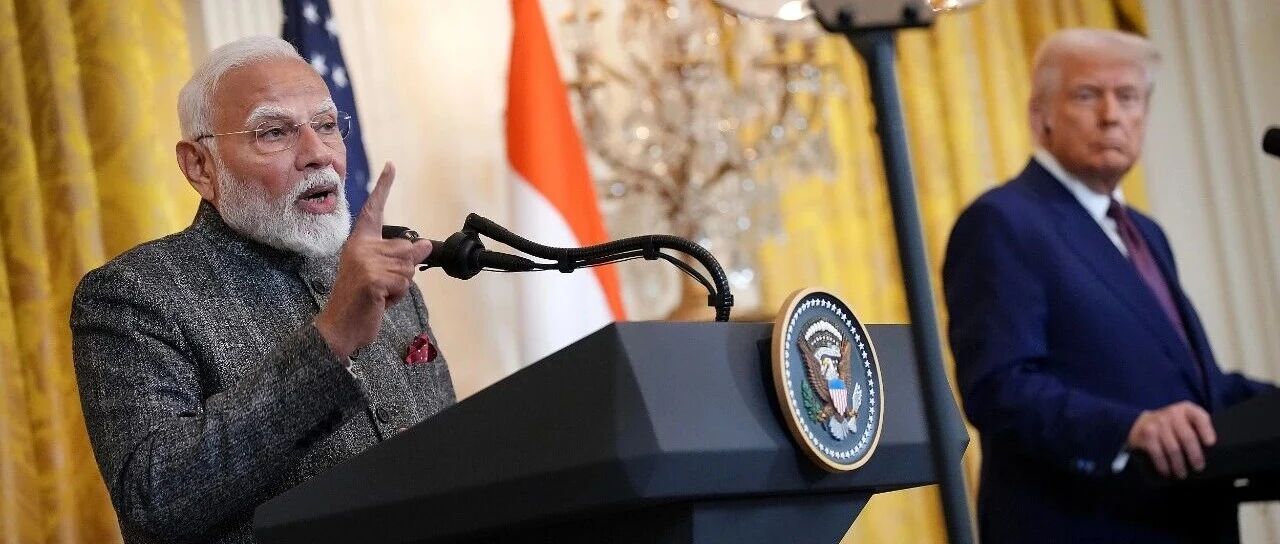
特朗普:莫迪同意不买俄罗斯石油,美国将降低对印关税
第一财经· 2026-02-03 00:37
Core Viewpoint - The article discusses a recent agreement between the United States and India, where India will stop purchasing Russian oil, and in return, the U.S. will lower tariffs on Indian goods. Group 1: Trade Agreement Details - President Trump confirmed a phone call with Indian Prime Minister Modi, where Modi agreed to halt the purchase of Russian oil, and the U.S. will reduce tariffs on Indian goods from 25% to 18% [2][5] - Modi also committed to significantly increasing the procurement of U.S. oil and may consider purchasing oil from Venezuela [3] - The agreement includes a bilateral trade deal where India will purchase over $500 billion worth of U.S. products, including energy, technology, agriculture, and coal [4] Group 2: Tariff Changes - The U.S. will eliminate the additional 25% tariff imposed on Indian goods to compel India to stop buying Russian oil [5] - The reduction in tariffs is part of a broader negotiation that has been ongoing since February of the previous year, but differences over oil procurement delayed the agreement [7] - Modi confirmed on social media that the U.S. agreed to lower the tariff rate on Indian goods to 18% [6]
Why Is Deere (DE) Down 0.5% Since Last Earnings Report?
ZACKS· 2025-12-26 17:31
Core Viewpoint - Deere's recent earnings report showed a mixed performance, with earnings per share missing estimates and a decline in net income, while net sales increased year over year, indicating potential challenges ahead for the company [2][11]. Financial Performance - Fourth-quarter fiscal 2025 earnings were $3.93 per share, missing the Zacks Consensus Estimate of $3.96, and decreased 14% from the prior year [2]. - Net sales of equipment operations reached $10.6 billion, up 14% year over year, surpassing the Zacks Consensus Estimate of $9.99 billion [3]. - Total net sales, including financial services, were $12.4 billion, an 11% increase year over year [3]. - The cost of sales rose 21% year over year to $7.94 billion, leading to a total gross profit decrease of 2.7% to $4.45 billion [4]. Segment Performance - Production & Precision Agriculture segment sales increased 10% year over year to $4.74 billion, but operating profit decreased 8% to $604 million due to higher production costs [5]. - Small Agriculture & Turf sales rose 7% to $2.46 billion, but operating profit plummeted 89% to $25 million, impacted by higher warranty expenses and tariffs [6]. - Construction & Forestry sales were $3.38 billion, up 27% year over year, with operating profit increasing 6% to $237 million [7]. - Financial Services division revenues were $1.55 billion, up 2% year over year, with net income rising to $293 million from $173 million in the prior year [8]. Cash and Debt Position - Cash and cash equivalents at the end of fiscal 2025 were $8.28 billion, up from $7.32 billion at the end of fiscal 2024 [9]. - Cash flow from operating activities was $7.5 billion in fiscal 2025, down from $9.23 billion in the prior fiscal year [9]. - Long-term borrowing increased to $43.5 billion from $43.23 billion at the end of fiscal 2024 [9]. Fiscal Guidance - For fiscal 2026, Deere expects net income between $4.00 billion and $4.75 billion, with varying projections for different segments [12]. - Production & Precision Agriculture sales are expected to decrease by 5-10%, while Small Agriculture & Turf sales are projected to rise by 10% [12]. Estimate Trends - Since the earnings release, there has been a downward trend in estimates, with the consensus estimate shifting down by 27.39% [13]. VGM Scores - Deere has a Growth Score of B but lags in Momentum with an F, resulting in an aggregate VGM Score of C [14]. Outlook - The overall trend in estimates has been downward, leading to a Zacks Rank of 4 (Sell), indicating expectations of below-average returns in the coming months [15].


东华软件:公司积极响应产业发展政策
Zheng Quan Ri Bao Wang· 2025-12-18 13:12
Core Viewpoint - Donghua Software (002065) is actively responding to industrial development policies and is evaluating different business cooperation models based on market conditions [1] Group 1: Business Focus - The company's key business areas include digital core applications, industry models, intelligent agent development, and related computing power digital infrastructure construction in sectors such as healthcare, finance, cultural tourism, agriculture, and water conservancy [1] - The company has maintained effective business development through direct collaboration with clients in the aforementioned fields [1]

UBS Maintains Bullish Stance on Deere & Company (DE) Following Meetings with Management
Yahoo Finance· 2025-11-07 07:26
Core Insights - Deere & Company (NYSE: DE) is a significant holding in Bill Gates's stock portfolio, representing 3.79% of it [1] - UBS maintains a "Buy" rating on Deere & Company with a price target of $535 following discussions with management [2] - The company faces challenges due to delays in new equipment orders from farmers, leading to a wide range of possible outcomes for North American agriculture trends in 2026 [3] Financial Performance - Deere & Company reported weaker fiscal Q3 results in August, with declines in sales and net income attributed to lower crop prices and macroeconomic pressures [4] - Both segments, Production & Precision Agriculture and Small Agriculture & Turf, experienced decreased sales due to lower shipment volumes [4] Future Outlook - The trend of declining sales is expected to continue amid macroeconomic uncertainties, although a potential soybean trade deal could enhance farmer confidence [5] - UBS anticipates that Deere & Company's 2026 guidance will indicate a lean start [5] - The company specializes in the manufacturing and distribution of agricultural, construction, and forestry equipment [5]
80 家!中国生物制造500+代表性企业榜单(江苏篇), 建议收藏!
合成生物学与绿色生物制造· 2025-07-17 16:06
Core Insights - The article highlights the growing focus and development of the synthetic biology and biomanufacturing industry in Jiangsu Province, China, emphasizing its strategic importance and the supportive policies in place [2][3]. Policy and Industry Support - Jiangsu Province has identified biomanufacturing as a key development area in its "14th Five-Year Plan," with specific policies aimed at fostering a robust industrial ecosystem [2]. - Local governments in cities like Nanjing, Suzhou, Wuxi, and Changzhou are increasing financial support and subsidies for synthetic biology enterprises [2]. Talent and Research Capabilities - Jiangsu boasts a strong talent pool with leading life sciences universities and research institutions, such as Nanjing University and Southeast University, contributing to advancements in key technologies like gene editing and enzyme engineering [2]. - The province ranks highly in the number of research papers and patents in critical technology areas [2]. Industry Chain Development - The synthetic biology industry chain in Jiangsu is well-structured, covering upstream technologies like gene synthesis and DNA storage, midstream platforms with fermentation and purification capabilities, and downstream applications in pharmaceuticals, agriculture, and materials [2][3]. - Wuxi and Taizhou are noted for their significant biomanufacturing capacity, accounting for over 30% of the national output [2]. Industrial Parks and Company Listings - Jiangsu is accelerating the establishment of synthetic biology industrial parks, including several innovation parks in the Yangtze River Delta region [3]. - A total of 80 companies from Jiangsu have been recognized in the "Top 500 Biomanufacturing Companies in China" list, showcasing the province's competitive landscape [3]. Upcoming Events and Future Plans - The "China Biomanufacturing Industry Map (2025)" will be released in August 2025, featuring over 500 representative companies [1]. - The Fourth Synthetic Biology and Green Biomanufacturing Conference will take place from August 20-22, 2025, in Ningbo, Zhejiang, focusing on key trends and innovations in the industry [17].