
科技

Search documents
美印贸易协议 如何牵动美印俄三边关系
Xin Lang Cai Jing· 2026-02-03 20:49
Core Viewpoint - The trade agreement between the U.S. and India aims to address mutual economic interests, with India agreeing to reduce its purchase of Russian oil in exchange for lower tariffs on Indian goods exported to the U.S. [1][2] Group 1: Trade Agreement Details - President Trump announced that India will stop purchasing Russian oil, while the U.S. will reduce tariffs on Indian goods from 25% to 18% [1] - The agreement includes India's commitment to significantly increase its procurement of U.S. oil and other products, potentially purchasing over $500 billion worth of U.S. energy, technology, agriculture, and coal [1] - The White House confirmed that the additional 25% tariff imposed on India for purchasing Russian oil will be completely removed [1] Group 2: Economic Context - The agreement reflects a reciprocal nature, with the U.S. lowering tariffs in exchange for India adjusting its energy procurement strategy [2] - India's manufacturing sector is under pressure from U.S. tariff policies, necessitating a return to normal production levels [2] - The recent free trade agreement between India and the EU has pressured the U.S. to adjust its stance in negotiations with India [2] Group 3: Challenges in Implementation - India has not publicly confirmed its agreement to stop purchasing Russian oil, raising questions about the actual implementation of the agreement [3] - Analysts believe that India, as the world's third-largest oil consumer, will find it difficult to completely halt imports from Russia due to longstanding strategic ties and economic considerations [4] - The feasibility of alternative oil sources, such as Venezuela, is questioned due to infrastructure limitations and production capacity [4] Group 4: Future Relations - While the agreement may ease trade tensions, it is unlikely to fundamentally improve U.S.-India relations, which have been strained under the current administration [5][6] - The effectiveness of the agreement remains uncertain, as previous trade agreements by the Trump administration have often lacked clarity and concrete execution timelines [6] - The agreement is seen as lacking strategic depth, potentially addressing trade issues but failing to resolve deeper underlying tensions between the two nations [6]
美印贸易拉锯战终结,关税从50%降至18%,但细节是什么?
Di Yi Cai Jing· 2026-02-03 08:32
Core Viewpoint - The trade dispute between the United States and India is nearing resolution, with India agreeing to stop purchasing Russian oil in exchange for the U.S. reducing tariffs on Indian goods [1][3]. Group 1: Trade Agreement Details - President Trump confirmed a bilateral trade agreement with Indian Prime Minister Modi, which includes reducing the "reciprocal tariff" on Indian goods from 25% to 18% [3][5]. - The U.S. will eliminate the additional 25% tariff imposed to pressure India to cease Russian oil purchases, leading to an overall reduction in tariffs on Indian goods to 18% [1][3]. - Modi has committed to significantly increasing the procurement of U.S. products, including energy, technology, and agriculture, with a potential purchase of over $500 billion [3][5]. Group 2: Context and Implications - The agreement comes shortly after India signed a free trade agreement with the European Union, indicating competitive dynamics in U.S.-India trade relations [4]. - The U.S. had previously imposed tariffs on Indian goods due to disagreements over oil procurement, which delayed the trade agreement for several months [5][6]. - India's oil imports from Russia had surged post-Ukraine conflict, with Russian oil accounting for over one-third of India's total imports at one point [6]. Group 3: Oil Procurement Dynamics - The Indian government has not yet formally instructed refiners to halt Russian oil imports, indicating a need for a "phased exit" from existing contracts [6]. - Recent data shows a decline in Russian oil imports by India, with OPEC oil gaining a higher share in the Indian market [6]. - The price dynamics of oil have shifted, reducing the attractiveness of discounted Russian oil as global prices have fallen [7].

特朗普:莫迪同意不买俄罗斯石油,美国将降低对印关税
第一财经· 2026-02-03 00:37
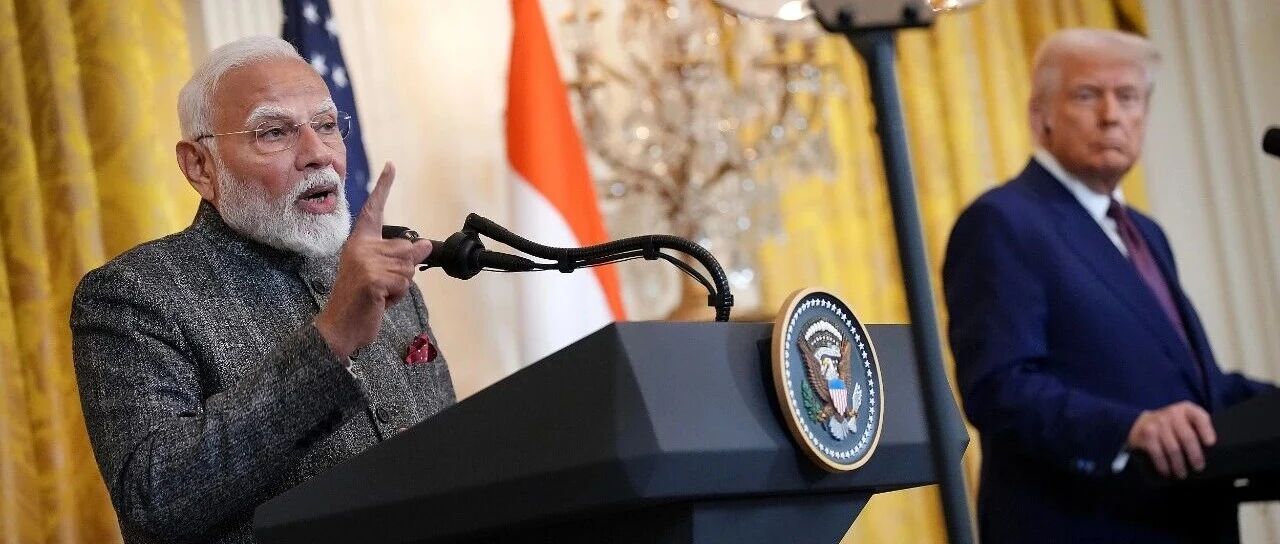
Core Viewpoint - The article discusses a recent agreement between the United States and India, where India will stop purchasing Russian oil, and in return, the U.S. will lower tariffs on Indian goods. Group 1: Trade Agreement Details - President Trump confirmed a phone call with Indian Prime Minister Modi, where Modi agreed to halt the purchase of Russian oil, and the U.S. will reduce tariffs on Indian goods from 25% to 18% [2][5] - Modi also committed to significantly increasing the procurement of U.S. oil and may consider purchasing oil from Venezuela [3] - The agreement includes a bilateral trade deal where India will purchase over $500 billion worth of U.S. products, including energy, technology, agriculture, and coal [4] Group 2: Tariff Changes - The U.S. will eliminate the additional 25% tariff imposed on Indian goods to compel India to stop buying Russian oil [5] - The reduction in tariffs is part of a broader negotiation that has been ongoing since February of the previous year, but differences over oil procurement delayed the agreement [7] - Modi confirmed on social media that the U.S. agreed to lower the tariff rate on Indian goods to 18% [6]
长春:“冰雪+”业态催热多元消费“暖场景”
Shang Hai Zheng Quan Bao· 2026-01-04 20:27
Core Viewpoint - The New Year celebrations in Changchun, despite the extreme cold, have successfully ignited consumer enthusiasm through a blend of ice and snow activities with cultural, sports, technology, and commercial elements, marking a strong start for the tourism market in 2026 [2][3] Group 1: Event Highlights - The "Fourth Season South River Changchun Powder Snow Carnival" attracted thousands of citizens and tourists, showcasing a grand fireworks display to welcome the New Year [2] - Various activities, including ice sculptures and 3D light shows, brought historical buildings to life, enhancing the festive atmosphere [2] - The integration of ice and snow themes with non-material cultural heritage and art performances drew a significant young audience to trendy districts [2] Group 2: Economic Impact - On January 1, 2026, Changchun received 1.2375 million domestic tourists, generating a total expenditure of 873 million yuan, reflecting year-on-year increases of 24.33% and 17.8% respectively [3] - The "Ice and Snow +" business model has stimulated comprehensive consumption across various sectors, from equipment rentals to dining and accommodation [2]

海南自贸港高水平开放锚定“八新”目标
Xin Lang Cai Jing· 2025-12-25 05:03
Core Insights - The official launch of the Hainan Free Trade Port's full island closure operation on December 18, 2025, marks a significant milestone in China's high-level opening-up strategy and the development of the Hainan Free Trade Port [1] Institutional Developments - The full island closure will implement a new institutional arrangement of "one line open, two lines controlled, and free flow within the island," enhancing the free movement of goods, capital, personnel, and information [1] - This arrangement aims to position Hainan as a high-level open gateway for international trade, investment, and talent flow, while also providing practical experience for domestic free trade port construction [1] Policy Enhancements - The "zero tariff" policy will expand significantly to cover approximately 6,600 tax items, accounting for 74% of all goods, thereby reducing operational costs for enterprises and facilitating industrial restructuring [2] - The policy will also lower market access thresholds for all eligible market entities on the island, creating a more free and convenient production and trading environment [2] - A comprehensive policy system characterized by "zero tariffs, low tax rates, and simplified tax systems" will be optimized, including tax reductions and simplified tax administration [2] Economic and Industrial Growth - Hainan Free Trade Port aims to enhance its policy system to align with high-level free trade standards, improving trade and investment liberalization and facilitating a globally leading business environment [3] - The port will focus on optimizing its economic structure, promoting the development of tourism, modern services, high-tech industries, and tropical agriculture towards clustering and high-end directions [3] Technological Innovation - Hainan will establish a multi-level technological innovation system, focusing on key areas such as seed industry, deep sea, and aerospace, to integrate technological innovation with industrial development [4] Regional Development - The port will integrate deeply with major national regional strategies, promoting urban coordination and balanced regional development, injecting new momentum into the comprehensive development of the island [4] Environmental and Social Progress - Hainan will advance green development and ecological civilization, aiming to become an international model for ecological protection and sustainable development [5] - The port will enhance public service systems to improve residents' income and quality of life, ensuring that all citizens benefit from the development of the free trade port [5] Security and Future Industries - Hainan will strengthen risk prevention and social governance to ensure a stable environment for the construction of the free trade port, which is essential for industrial upgrades and high-quality development [5] - The port will strategically position itself in emerging industries such as biomanufacturing, hydrogen energy, and brain-computer interfaces, aiming to secure a competitive edge in global markets [5]
东原仁知服务:上半年股东应占利润同比增加约7.6%
Sou Hu Cai Jing· 2025-08-22 01:12
Core Viewpoint - Dongyuan Renzhi Service reported a revenue increase of approximately 3.1% year-on-year for the first half of 2025, reaching around RMB 794 million [1] Revenue Breakdown - Property city services generated revenue of approximately RMB 503 million, accounting for about 63.4% of total revenue, with a year-on-year increase of approximately 8.8% [1] - Quality life services contributed approximately RMB 117 million, representing about 14.7% of total revenue, with a year-on-year increase of approximately 1.0% [1] - Comprehensive services, including foreign-related, technology, and medical services, generated approximately RMB 174 million, accounting for about 21.9% of total revenue, with a year-on-year decrease of approximately 9.5% [1] Profitability Metrics - The company achieved a gross profit of approximately RMB 110 million, reflecting a year-on-year decrease of approximately 12.7% [1] - The gross profit margin was approximately 13.8%, down by about 2.5 percentage points year-on-year [1] - Profit for the period was approximately RMB 28.8 million, representing a year-on-year increase of approximately 14.2% [1] - Profit attributable to shareholders was approximately RMB 25.8 million, with a year-on-year increase of approximately 7.6% [1] Operational Footprint - As of June 30, 2025, the company operated and managed 641 projects across 79 cities, with a total managed building area of 66 million square meters [1] - The group has signed contracts to provide property city services, quality life services, and comprehensive services for 656 projects in 80 cities, covering a total contracted building area of approximately 72.2 million square meters [1]