
农事体验

Search documents
昔日闲置土地 今朝“网红农场”
Xin Lang Cai Jing· 2026-02-11 22:53
Core Viewpoint - The article highlights the transformation of Qishan Village through the establishment of Zhixing Farm, which integrates agricultural, cultural, and tourism activities to revitalize the local economy and enhance community well-being [1][4]. Group 1: Community Engagement and Events - The village organized a New Year gathering called "Xiang Ma Na Fu · Neighbors Celebrate Together" to welcome the Spring Festival, showcasing community collaboration and festive spirit [1]. - Villagers actively participated in preparing traditional foods, creating a vibrant atmosphere filled with the scents of local cuisine [1]. Group 2: Economic Development and Resource Utilization - Qishan Village, with 232 households and 827 residents, previously relied on traditional crop farming, which barely covered costs. The local leadership sought to change this by introducing the Zhixing Farm project in 2024 [2]. - The farm was developed on 65 acres of previously idle land and a vacant school building, promoting agricultural and cultural tourism while providing job opportunities for local residents [2][3]. Group 3: Employment and Income Generation - Zhixing Farm offers diverse services, including agricultural experiences and cultural activities, attracting over 4,000 visitors since its opening in early 2025 [3]. - The farm has created jobs for 15 villagers, with local workers earning between 100 to 150 yuan daily, supplemented by land rental income [3]. Group 4: Tourism and Community Recognition - The increase in visitors has significantly boosted the farm's growth and the village's reputation, leading to media coverage and further recognition [4]. - Plans are underway to expand parking facilities to accommodate the growing number of tourists, enhancing the overall visitor experience [4]. Group 5: Future Development Plans - Qishan Village aims to continue developing its agricultural and cultural tourism sectors, focusing on making the village more beautiful and its residents more prosperous [5].
新华时评:消费活力何以在“体验”中生发
Xin Hua She· 2026-01-22 08:09
Group 1 - The core viewpoint of the articles highlights the shift in consumer behavior from "product-oriented" to "experience-oriented" consumption, driven by a desire for emotional resonance and personal expression during the consumption process [1][2] - The "Panda Special Train" experience, which combines sightseeing, social interaction, and cultural engagement, reflects the growing demand for immersive travel experiences, marking a significant trend in the tourism industry [1] - The rise of experience-based consumption is evident in urban areas with the popularity of activities such as stand-up comedy, DIY workshops, and immersive theaters, as well as personalized services like custom travel and home-cooked meals [1] Group 2 - According to the National Bureau of Statistics, service retail sales in China are projected to grow by 5.5% in 2025, outpacing product retail sales growth by 1.7 percentage points, indicating a robust expansion of the experience economy [2] - The emotional economy market in China is expected to exceed 4.5 trillion yuan by 2029, showcasing the vast potential for growth in this sector [2] - The government is actively promoting new growth points in service consumption, emphasizing the need for high-quality service supply and the integration of cultural, aesthetic, and spiritual values into products and services [2]
新华时评·人文经济激活消费新动能丨消费活力何以在“体验”中生发
Xin Hua Wang· 2026-01-21 11:16
Core Insights - The article emphasizes the shift in consumer behavior from traditional purchasing to experience-oriented consumption, highlighting the emergence of new consumption vitality through immersive experiences [1][2] Group 1: Experience Economy - The experience economy is rapidly growing, with consumers increasingly favoring experiences over mere products, as seen in various urban activities like stand-up comedy, DIY workshops, and immersive theaters [1] - The latest data from the National Bureau of Statistics indicates that by 2025, China's service retail sales are expected to grow by 5.5%, outpacing product retail sales growth by 1.7 percentage points [2] - Predictions suggest that by 2029, the emotional economy market in China will exceed 4.5 trillion yuan, indicating significant future potential [2] Group 2: Consumer Expectations - Experience consumption is not based on abstract feelings; it requires a foundation of goods and services that also provide cultural, aesthetic, and spiritual value, raising the bar for quality and content in consumer offerings [2] - The State Council has proposed measures to foster new growth points in service consumption, encouraging the emergence of new business models and enhancing the quality of service offerings [2]
陇南市武都区四合村:美丽乡村绘就幸福新“画卷”
Xin Lang Cai Jing· 2026-01-12 01:27
Core Insights - The article highlights the transformation of Sihe Village in Wudu District into a vibrant rural tourism destination, showcasing the integration of ecological advantages with cultural and wellness tourism to boost local income [1][2]. Group 1: Infrastructure and Development - The village has seen significant improvements in infrastructure, including the construction of an asphalt road, a smart parking lot, and a public square, enhancing the overall visitor experience [1]. - Environmental improvements included the regularization of housing, with 22 illegal constructions removed and 46 houses beautified, contributing to a more appealing landscape for tourists [1]. Group 2: Economic Impact - The local economy has benefited from increased tourism, with local residents now actively participating in the tourism industry rather than being mere observers [2]. - The village's strategy of integrating tourism with local agriculture and wellness services has created new income opportunities for residents, allowing them to earn a living from tourism activities [1][2].
专家解读广东农文旅27条:从相加到相融,打造全国样板
Nan Fang Du Shi Bao· 2025-12-20 05:57
Core Insights - The article discusses the recent measures introduced by Guangdong Province to promote the high-quality integration of agriculture, culture, and tourism (农文旅融合), aiming to transform rural areas into outdoor sports havens, digital immersive theaters, and wellness travel destinations. Group 1: Policy Measures - Guangdong's "Hundred Counties, Thousand Towns, and Ten Thousand Villages High-Quality Development Project" has issued 27 action guidelines to enhance the integration of agriculture, culture, and tourism [1] - The measures indicate a shift from pilot exploration to systematic promotion across the province, emphasizing a transition from traditional models to a multi-value chain integration [1][2] - The focus is on creating a nationally leading and globally recognized model for the deep integration of agriculture, culture, and tourism, showcasing Guangdong's unique characteristics and cultural richness [1] Group 2: Development Strategies - The measures advocate for the full integration of agriculture, culture, and tourism by breaking down industry boundaries and activating resource elements [3] - Specific strategies include developing high-quality immersive cultural tourism projects that incorporate local cultural elements, enhancing historical and cultural sites, and promoting non-heritage workshops [3] - The document encourages the development of leisure activities such as agricultural sightseeing, fishing experiences, and cultural tourism, while also enhancing rural tourism routes [3] Group 3: Health and Wellness Focus - The integration of agriculture, culture, and tourism is extending into wellness tourism, with encouragement for the development of health tourism bases and eco-friendly wellness products [4] - The Guangzhou area is highlighted as a model for multi-industry integration, focusing on wellness, culture, and agriculture to create high-quality wellness vacation products [4] Group 4: Market-Driven Innovation - The measures emphasize a market-oriented approach to developing tourism experiences, shifting from a supply-driven model to one that responds to market demands [7] - Initiatives include promoting local cuisine through campaigns like "Hundred Counties, Thousand Bowls" to enhance the culinary tourism experience [8] Group 5: Cultural and Historical Resource Activation - The measures propose revitalizing local cultural resources by developing unique performance spaces and themed tourism projects, as well as utilizing industrial heritage for tourism [9] - The integration of digital technology is highlighted as a means to enhance the visitor experience, with examples of AR and VR applications in tourism [10] Group 6: Branding and Promotion - The measures outline plans for branding and promoting the integration of agriculture, culture, and tourism, including the establishment of demonstration benchmarks and unique local activities [10][11] - The "Media+" initiative aims to create engaging content to attract diverse consumer groups and enhance the visibility of rural tourism projects [11]
专家解读广东农文旅27条:从相加到相融,打造全国样板丨品粤百千万
2 1 Shi Ji Jing Ji Bao Dao· 2025-12-18 07:17
Core Insights - The article discusses the recent measures introduced by Guangdong Province to promote the integration of agriculture, culture, and tourism (referred to as "农文旅融合") as part of the "百县千镇万村高质量发展工程" initiative, aiming to create a national model for high-quality development in this sector [1][3][4]. Group 1: Development Strategy - Guangdong's agricultural, cultural, and tourism development is transitioning from pilot exploration to systematic promotion across the province, indicating a shift towards institutionalization and comprehensive integration [1][2]. - The measures emphasize breaking down industry boundaries and activating resource elements to reconstruct rural value, focusing on full-domain and full-industry integration [3][4]. Group 2: Cultural and Tourism Integration - The measures propose deep exploration of Lingnan culture, integrating traditional agricultural and fishing practices, and developing high-quality immersive cultural tourism projects [3]. - There is a focus on enhancing historical and cultural sites, supporting the construction of themed tourism routes, and promoting intangible cultural heritage workshops [3][4]. Group 3: Health and Wellness Tourism - The integration of agricultural and cultural tourism extends to health and wellness, encouraging the development of coastal, hot spring, mountain, and lake tourism resorts, as well as traditional Chinese medicine health tourism bases [4]. - The Guangzhou area is highlighted as a model for multi-industry integration, focusing on wellness, culture, agriculture, and innovation [4]. Group 4: Market-Oriented Development - The integration of agriculture, culture, and tourism is seen as a potential pillar industry for counties, with a market-driven approach to developing products and experiences based on user needs [6]. - The measures advocate for innovative leisure experiences and brand promotion, including the "广东美食" initiative to enhance local culinary offerings [7]. Group 5: Digital Transformation - The application of digital technology is emphasized as a means to revitalize rural tourism experiences, with initiatives to enhance digital immersion in agricultural and cultural tourism projects [9]. - The measures include promoting the use of virtual reality (VR) and augmented reality (AR) technologies to create new immersive experiences [9]. Group 6: Media and Promotion - The "媒体+" initiative aims to enhance the promotion of agricultural, cultural, and tourism integration through various media campaigns, including short videos and thematic storytelling [10]. - This approach is designed to respond to the trends of instant and fragmented cultural consumption, helping to consolidate rural projects into recognizable brand clusters [10].
加快农文旅融合发展,点燃县域经济新引擎
Nan Fang Du Shi Bao· 2025-12-17 12:17
Core Viewpoint - The Guangdong Province has issued measures to promote the high-quality integration of agriculture, culture, and tourism, aiming to enhance rural development and meet urban demand for green products and cultural experiences [1][3]. Group 1: Background and Context - The integration of agriculture, culture, and tourism is a modern rural industry development model that connects urban demand with rural supply, effectively releasing consumption potential [1]. - Guangdong has unique advantages for developing this integration, including strong industrial support, rich cultural heritage, and favorable geographical and climatic conditions [2]. Group 2: Implementation and Achievements - Guangdong has initiated 19 pilot projects for county-level integration of agriculture, culture, and tourism, with significant progress observed in various regions, including the completion of 618 kilometers of scenic tourism roads [3]. - The province has seen the establishment of 51 key rural tourism towns, 72 beautiful leisure villages, and 365 culturally and touristically distinctive villages, indicating the strong vitality of this integration [3]. Group 3: Strategic Measures - The measures emphasize planning and support differentiated development paths based on local resources, avoiding homogenization and fostering unique agricultural and tourism industry clusters [4]. - The core content of the measures focuses on innovation-driven integration, expanding diverse business models and experiential scenarios, including immersive cultural tourism projects and rural leisure activities [5]. Group 4: Stakeholder Engagement - The measures aim to improve the benefits for farmers by promoting shared development models, encouraging participation through various revenue-sharing mechanisms, thus transforming farmers from passive observers to active participants [6]. - The implementation of these policies is expected to create more attractive rural tourism destinations, positioning the agriculture, culture, and tourism industry as a new economic engine for Guangdong's counties [6].
杭湖交界“南瓜瀑布”火出圈
Hang Zhou Ri Bao· 2025-11-25 02:43
Core Insights - The article highlights the creation of a pumpkin-themed family farm named "Polly's Pumpkin Farm" by Zheng Zeqiu and his wife Jiang Jiaxu, aimed at providing a natural environment for their daughter and promoting fresh produce [1][2] - The farm spans 800 acres and features thousands of uniquely shaped and colored pumpkins, enhancing the aesthetic appeal and visitor experience [1] - The couple has cultivated over 40 varieties of pumpkins and also rotates seasonal fruits like dragon fruit and strawberries [1] Summary by Sections Farm Concept and Development - The farm was transformed from the original Pi Pa Bay Ecological Farm into a pumpkin-themed attraction after Zheng Zeqiu returned from Canada in 2018 [1] - The initial goal was to create a space where their daughter could enjoy nature and fresh produce [1] Visitor Experience and Activities - The harvesting process of pumpkins is likened to "opening a blind box," providing unique experiences for visitors due to the genetic and climatic variations of each pumpkin [2] - The farm has introduced various themed activities such as pumpkin banquets, English study courses, and hands-on farming experiences to attract visitors [2] Educational and Therapeutic Aspects - A new herb garden has been established, featuring several types of herbs for both aesthetic enjoyment and therapeutic benefits [2] - The farm aims to educate children about ecological awareness and traditional agricultural knowledge through nature education courses and family farming experiences [2]
“双节”假期江西古村多元体验引客来
Zhong Guo Xin Wen Wang· 2025-10-09 06:16
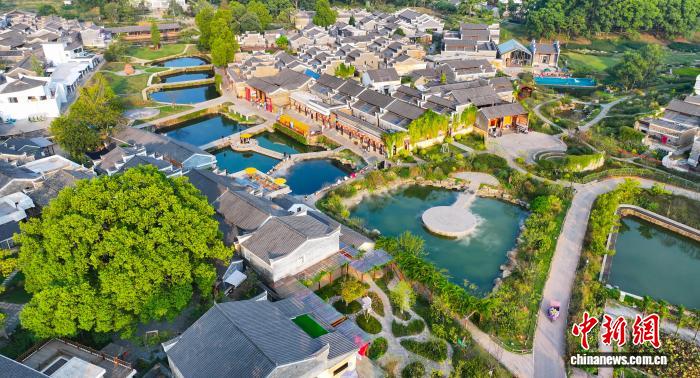
Core Insights - The article highlights the increasing popularity of the Diaoyuan Ancient Village in Jizhou District, Jiangxi Province, during the National Day and Mid-Autumn Festival holidays, attracting a significant number of tourists through diverse experiences [1][3]. Group 1: Tourist Experience - Visitors engaged in various activities such as rice harvesting and fishing, which provided them with a deeper appreciation for agricultural labor [3][5]. - The village features a "Song Tide Market" with over ten specialty stalls, offering traditional snacks and crafts, enhancing the cultural experience for tourists [5][7]. - Evening entertainment included performances like traditional rock music and Sichuan opera, creating a unique blend of tradition and modernity for visitors [5][7]. Group 2: Visitor Statistics - Since mid-September, local accommodations have been fully booked, with an average daily visitor count exceeding 7,000 during the holiday period [7]. - The rise in popularity of the village is attributed to a collaborative model involving government leadership, market operations, and community participation [7]. Group 3: Development Strategy - The Jizhou District has implemented a restoration strategy focused on minimal intervention to revitalize the ancient village, which was previously at risk of disappearing [7]. - Future plans include continuing to explore the integration of traditional preservation with innovative experiences to enhance cultural vitality and attract more visitors [7].

让农文旅“拧成一股绳”
Jing Ji Ri Bao· 2025-09-18 21:58
Core Viewpoint - The integration of agriculture, culture, and tourism is essential for expanding agricultural product consumption and revitalizing rural tourism markets, requiring collaboration among various government levels and industry sectors [1][3]. Group 1: Market Performance - In the first three quarters of 2024, rural tourism received 2.248 billion visitors, a year-on-year increase of 15.5%, with total revenue reaching 1.32 trillion yuan, up 9.8% [2]. - By the end of 2024, rural tourism visitor numbers are expected to exceed 20% growth compared to the same period in 2023 [2]. - In the first quarter of 2024, rural tourism recorded 707 million visitors, a growth of 8.9%, generating revenue of 412 billion yuan, an increase of 5.6% [2]. Group 2: Policy and Strategic Framework - The 2022 Central Document No. 1 emphasized the need for deep integration of agriculture, culture, and tourism to support rural industry diversification and value chain extension [3]. - The 2024-2035 Agricultural Power Construction Plan aims to establish a modern rural industrial system that integrates agriculture, forestry, animal husbandry, fishery, and tourism [3]. - Current policies serve as guidance for various departments and stakeholders in executing the integration of agriculture, culture, and tourism [3]. Group 3: Challenges and Solutions - Existing challenges in the integration process include single industry fusion, insufficient participation from villagers, lack of cultural depth in products, and outdated infrastructure [3]. - To address these issues, collaboration among government levels, industry sectors, and rural communities is necessary to innovate business models and optimize operational strategies [3][4]. Group 4: Service and Operational Enhancements - Strengthening financial support and enhancing infrastructure such as water, electricity, and digital services are crucial for improving rural tourism and agricultural product consumption [4]. - The focus should be on elevating the management and operational standards of related industries, including non-heritage workshops, homestays, and rural markets [4]. Group 5: Consumption Model Optimization - Leveraging local agricultural resources to create attractive tourism experiences can transform agricultural products into tourism highlights [5]. - Establishing sustainable mechanisms that allow farmers to benefit from both agricultural sales and participation in rural tourism services is essential for shared prosperity [5].