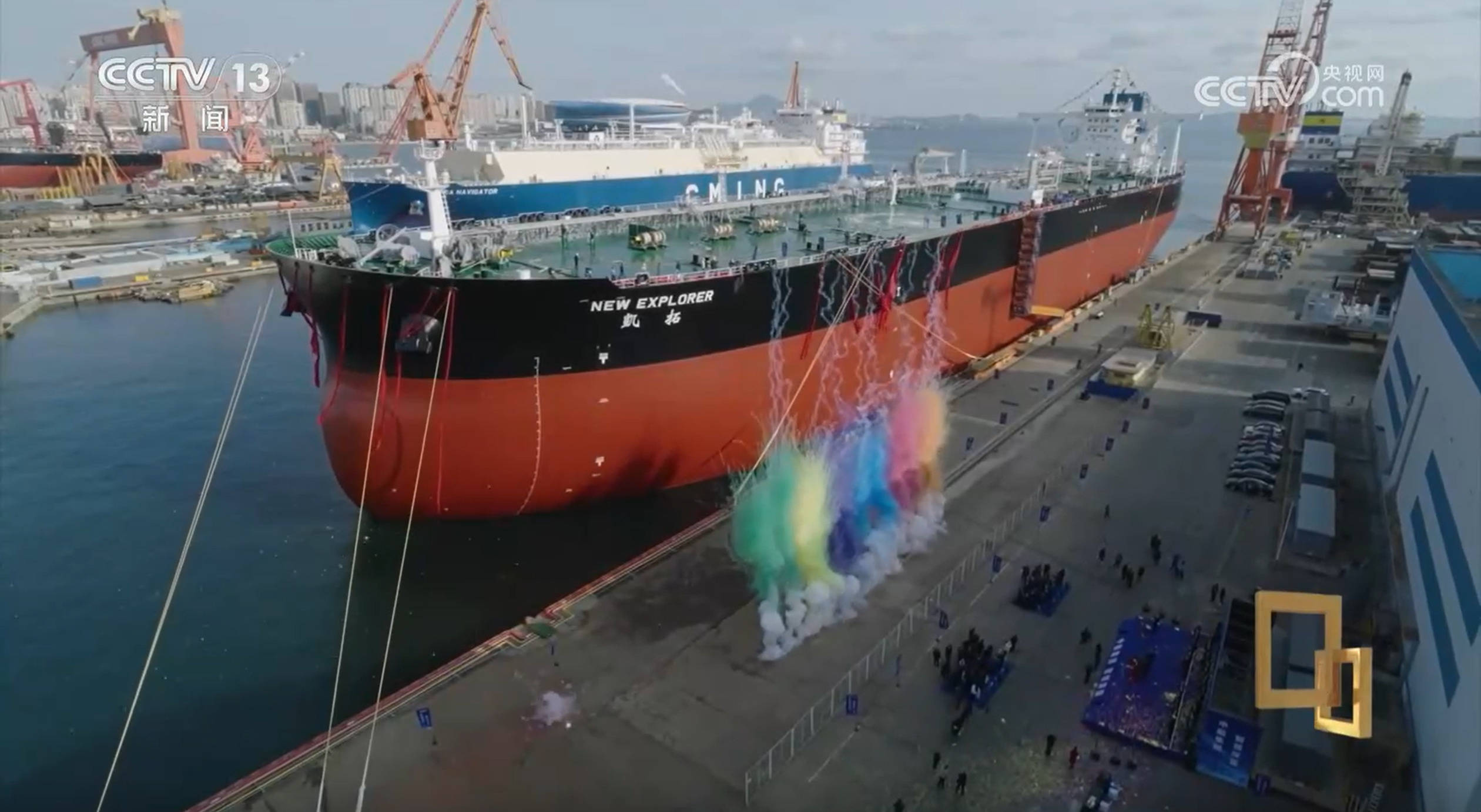
凯拓轮

Search documents
百年企业,如何在时代大潮中奋楫前行,请看—— 招商局“四艘船”的故事(强国建设故事汇·百业千企焕新记)
Ren Min Ri Bao· 2026-01-20 22:43
Core Viewpoint - The article emphasizes the responsibilities and missions of central enterprises in China, particularly focusing on the role of China Merchants Group in contributing to national development and modernization efforts [1]. Group 1: Company History and Development - China Merchants Group, established over 150 years ago, is recognized as China's first modern company and a pioneer in national industry [1]. - The group has total assets exceeding 15 trillion yuan, with operations spanning transportation logistics, comprehensive finance, real estate, and technology innovation [1]. - The historical significance of the "Yidun" ship is highlighted as it marked the beginning of modern Chinese shipping and opened the first coastal commercial route [3]. Group 2: Corporate Responsibility and National Service - The "Hailiao" ship symbolizes the company's commitment to national interests, having raised the national flag during a pivotal moment in Chinese history [5]. - The company has actively engaged in modernizing its operations, such as the transformation of the Ma Wan Smart Port, which has significantly improved operational efficiency [7]. - China Merchants Group's focus on aligning its business strategies with national goals has led to substantial growth, with total assets increasing 40 times from 2012 to 2025 [7]. Group 3: Innovation and Technological Advancement - The introduction of the "New Yidun" ship, which utilizes advanced materials and technology, reflects the company's commitment to innovation and sustainability in the shipping industry [13]. - The establishment of the advanced technology research institute and the Lion Mountain AI laboratory demonstrates the group's investment in cutting-edge technology and talent acquisition [2]. - The company aims to enhance its capabilities in strategic emerging industries, with significant investments in technology and innovation during the 14th Five-Year Plan period [15]. Group 4: Global Expansion and International Strategy - China Merchants Group has expanded its global footprint, investing in 51 ports across 26 countries, with overseas revenue accounting for over 30% of its total [12]. - The company has successfully implemented its international strategy, significantly increasing container throughput at its overseas ports [12]. - The focus on mutual benefit and cooperation in international operations has positioned the company as a key player in global trade [12]. Group 5: Future Outlook and Strategic Goals - The company plans to accelerate its "third entrepreneurship" phase, aiming to build world-class enterprises and achieve significant profit and revenue milestones [16]. - The emphasis on technological innovation and international operations is expected to drive the company's growth and enhance its role in national development [16].
巨轮出海!中国船说硬核出圈全球争抢中国造船订单
Xin Lang Cai Jing· 2026-01-14 14:03
Core Insights - During the "14th Five-Year Plan" period, China's shipbuilding industry consistently ranks first globally in three key metrics: completed shipbuilding volume, new orders, and order backlog, with a global market share exceeding 50% [1][2] Group 1: Industry Achievements - In November 2025, China's first electromagnetic catapult aircraft carrier, the Fujian, will officially enter service, marking the People's Navy's entry into the "three aircraft carrier era" [1][2] - The first ship of China's 076 amphibious assault ship, the Sichuan, completed its maiden voyage in the same month [1][2] - The world's first methanol dual-fuel powered intelligent ultra-large oil tanker, the Kaituo, was successfully delivered in Dalian, Liaoning [1][2] - A 740TEU pure electric open-top container ship, the Ningyuan Dianpeng, was launched in Jiujiang, Jiangxi, equipped with a photovoltaic system for renewable energy support, achieving zero emissions during operation and loading/unloading [1][2] Group 2: Technological Innovations - Asia's first new type of suction dredger equipped with a multifunctional unmanned measurement vessel was officially produced in Nantong, Jiangsu, filling a technological gap in the dredging industry [1][2] - The first mini robotic arm for shipbuilding was showcased at the 2025 China International Maritime Exhibition and is now widely used in domestic shipbuilding enterprises [1][2] Group 3: Market Demand and Contracts - In December 2025, China Shipbuilding Group and China COSCO Shipping Group signed a new shipbuilding project cooperation agreement worth over 50 billion RMB, marking the highest single contract amount signed by a Chinese shipbuilding company [1][2] - During the "14th Five-Year Plan" period, Chinese shipyards accounted for 64.2% of global new ship orders [1][2]
面对面丨深耕造船核心技术 巾帼设计师创造中国“船”说
Yang Shi Xin Wen Ke Hu Duan· 2026-01-04 23:24
Core Viewpoint - The delivery of the "Kai Tuo" oil tanker, the world's first 300,000-ton ultra-large crude oil ship powered by domestically produced methanol dual-fuel technology and equipped with an intelligent liquid cargo control system, marks a significant advancement in China's shipbuilding industry, emphasizing green and intelligent maritime solutions [1][7][33]. Group 1: Technological Innovations - The "Kai Tuo" tanker features a dual-fuel main engine that allows for flexible switching between traditional fuel and methanol, significantly reducing carbon emissions by 92%, sulfur emissions by 99%, and particulate matter by 90% [7][9]. - The integration of a methanol fuel supply system into the complex structure of the tanker posed significant design challenges, including space optimization and material selection to withstand methanol's corrosive properties [9][11][13]. - The vessel is equipped with a domestic intelligent liquid cargo control system that automates loading and unloading processes, enhancing operational efficiency and safety [19][21]. Group 2: Industry Context - As of 2025, China's shipbuilding industry has maintained the largest global market share for 16 consecutive years, with over 60% of new ship orders worldwide [31]. - The industry has transitioned from imitating foreign designs to achieving independent innovation, successfully producing high-value, high-tech vessels, including aircraft carriers and large LNG carriers [31][29]. - The "Kai Tuo" tanker is set to operate on the Middle East-Far East route, indicating China's growing influence in global shipping logistics [33].

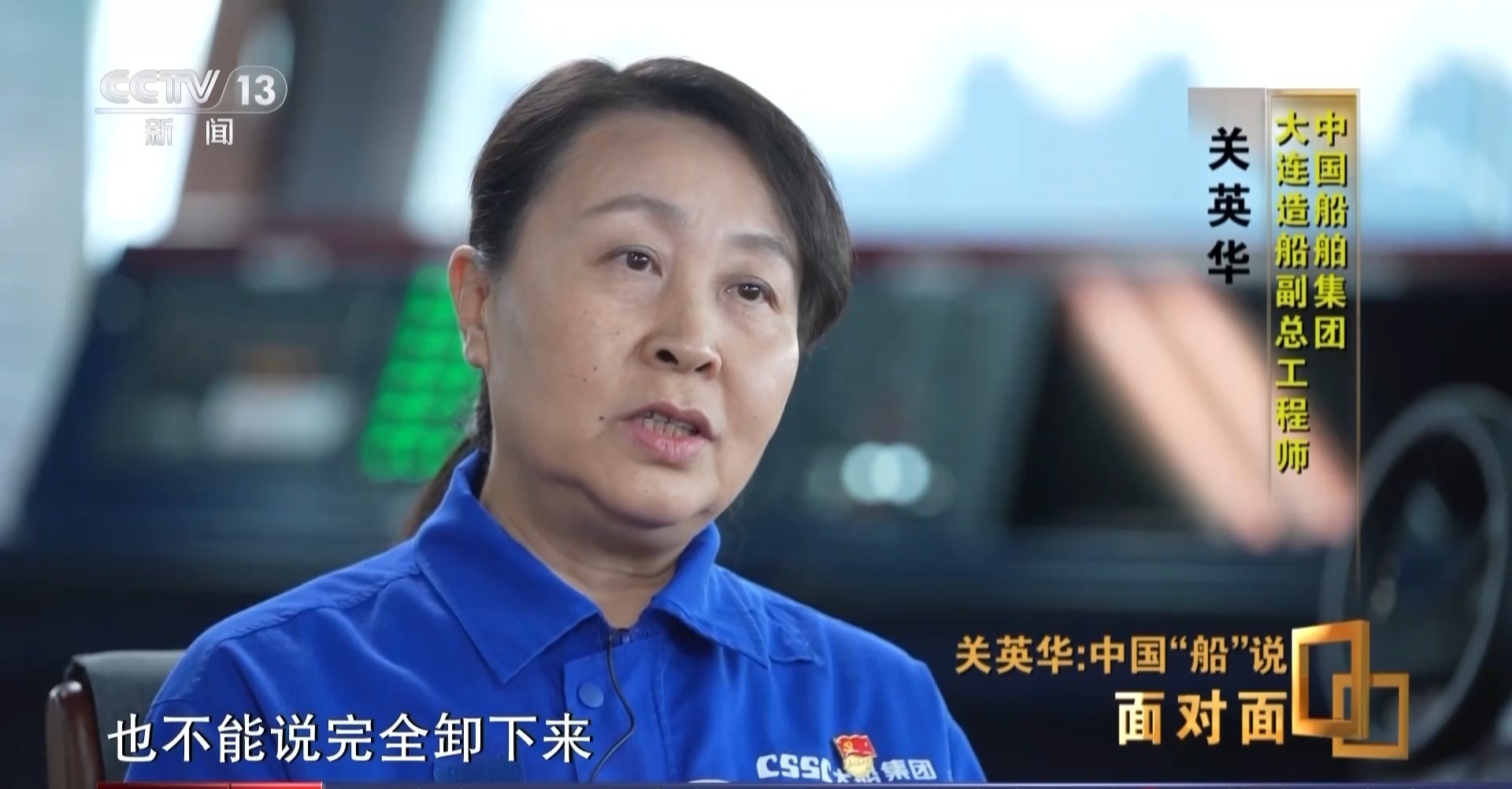
面对面丨关英华:深耕造船核心技术 巾帼设计师创造中国“船”说
Sou Hu Cai Jing· 2026-01-04 23:15
Core Viewpoint - The delivery of the "Kai Tuo" oil tanker, the world's first 300,000-ton ultra-large crude oil carrier powered by domestically produced methanol dual-fuel technology and equipped with an intelligent liquid cargo control system, marks a significant advancement in China's shipbuilding industry, emphasizing green and intelligent maritime solutions [1][4][15]. Group 1: Vessel Specifications and Innovations - The "Kai Tuo" tanker measures approximately 333 meters in length and 60 meters in width, with a deck area equivalent to three football fields, capable of carrying about 2.1 million barrels of crude oil [1][11]. - The vessel features a dual-fuel main engine that allows for flexible switching between traditional fuel and methanol, significantly reducing carbon emissions by 92%, sulfur emissions by 99%, and particulate matter by 90% [4][6]. - The "Kai Tuo" is designed as a shallow-draft vessel, with a loaded draft depth nearly one meter less than conventional ultra-large oil tankers, enhancing its ability to navigate through shallow waterways like the Strait of Malacca [10][11]. Group 2: Technological Challenges and Achievements - Integrating a methanol fuel supply system into the "Kai Tuo" presented significant design challenges due to space constraints and the corrosive nature of methanol, requiring careful selection and treatment of materials [8][6]. - The intelligent liquid cargo control system automates loading and unloading processes, allowing for optimized operational efficiency and safety, which previously required extensive manual monitoring and operation [11][10]. - The successful domestic development of the methanol fuel supply system represents a milestone for China's shipbuilding capabilities, showcasing the transition from reliance on foreign technology to independent innovation [8][14]. Group 3: Industry Context and Future Outlook - China's shipbuilding industry has maintained the world's largest market share for 16 consecutive years, with over 60% of new ship orders globally by 2025, indicating a strong position in high-value, high-tech shipbuilding sectors [14][15]. - The delivery of the "Kai Tuo" is part of a broader strategy to enhance China's capabilities in constructing advanced vessels, including LNG carriers and large cruise ships, which are considered the "crown jewels" of the shipbuilding industry [15][14]. - The company aims to continue pushing technological boundaries and improving its offerings, with plans to build 40 large oil tankers, including six LNG dual-fuel tankers for Greek shipowners [17][15].