凯迪拉克汽车

Search documents
“2路公共汽车”多地开花,“车景点”为何越来越多?
Zhong Guo Qi Che Bao Wang· 2026-01-05 03:54
Core Insights - The article highlights the growing trend of automotive-themed attractions both domestically and internationally, showcasing how these sites serve as cultural landmarks and connect people with their historical and industrial heritage [12][13]. Domestic Developments - Chongqing has created a new attraction called "Big Bus Passing Through the Eighth Floor," inspired by the popular "Route 2 Bus" song and the Li Ziba light rail experience, which has quickly gained popularity among tourists [3]. - The Shanghai Automotive Expo Park is noted as China's first automotive culture theme park, covering an area of 1,150 acres and featuring diverse automotive cultural elements [4]. - Changchun International Automotive Park, recognized as China's largest automotive culture theme park, spans 1.05 million square meters and integrates ecological landscapes with automotive culture [4]. - The Kunming 871 Automotive Culture Park has transformed from an industrial site into a vibrant automotive cultural space, showcasing both modern and classic vehicles [4]. International Attractions - The "Carhenge" in Nebraska, USA, creatively combines classic American cars with the ancient Stonehenge concept, using 38 vintage cars to reflect the evolution of American automotive design [7]. - Cadillac Ranch in Texas features 10 Cadillacs half-buried in the ground, symbolizing artistic expression and the evolution of the Cadillac brand from 1949 to 1963 [9]. - A unique totem pole in Vancouver, Canada, made from five stacked cars, represents the relationship between industrial development and nature [9]. - In France, the "Long-Term Parking" installation features 59 classic cars encased in concrete, preserving the aesthetic and cultural significance of the 1970s and 1980s automotive design [10]. - Ferrari World in Abu Dhabi, the world's first indoor theme park dedicated to the Ferrari brand, spans 200,000 square meters and features thrilling rides, including the Formula Rossa roller coaster, which reaches speeds of 241 km/h [11]. Cultural Significance - Automotive-themed attractions serve as cultural vessels that evoke collective memories and reflections on industrial civilization, allowing visitors to connect emotionally with the history and evolution of automobiles [12]. - These sites transcend mere observation, showcasing how automobiles reshape interactions with urban and natural environments, thus redefining the relationship between people, cities, and nature [12][13]. - The article emphasizes that automotive attractions encapsulate a narrative of human pursuit for connection, innovation, and the celebration of speed and nostalgia [13].


记者手记丨跨国企业借“国风”广告吸引“中国心”
Xin Hua She· 2025-12-12 03:20
Core Insights - Multinational companies are increasingly using traditional Chinese cultural themes in their advertising to attract Chinese consumers, reflecting a shift towards local cultural integration [1][2][4] - The Chinese market continues to show strong growth potential, with retail sales expected to exceed 50 trillion yuan in 2024 and foreign investment surpassing 700 billion USD during the 14th Five-Year Plan [1][3] Group 1: Advertising Strategies - Companies are shifting from a Western-centric advertising approach to one that resonates with local culture, utilizing teams familiar with Chinese social media and cultural nuances [2][3] - Popular social media platforms like Douyin, Bilibili, and Xiaohongshu are being leveraged by foreign companies to engage with audiences through culturally relevant content during traditional festivals [2][3] - Collaborations with local brands and timely marketing campaigns, such as Coca-Cola's "Tribute to 40 Years" series, are becoming essential strategies for foreign companies to connect with Chinese consumers [3] Group 2: Cultural Integration - There is a growing trend among younger consumers to favor local cultural elements, as seen in Adidas's use of traditional motifs like Miao embroidery and the story of "Fish Leaping Over the Dragon Gate" [4] - The rise of cultural confidence in China is reshaping consumer behavior, leading to a preference for products that reflect local heritage and emotional resonance [4] - The success of non-material cultural heritage products on platforms like Douyin, which sold 6.5 billion units of related items, indicates a strong market for culturally inspired goods [3]
John Roth接棒何思文,以全球化经验提升通用中国地位
Zhong Guo Jing Ji Wang· 2025-11-12 08:52
Group 1 - General Motors announced leadership changes, with Steve Hill appointed as the Senior Vice President of Global Export and Retail Innovation starting December 1, and John Roth succeeding him as the President of General Motors China [1] - During his tenure as President of General Motors China, Steve Hill played a crucial role in the company's recovery in the Chinese market, leading to consecutive profitability over four quarters and a year-on-year increase in both sales and market share in Q3 2025 [2] - Hill's strategies included optimizing business operations, enhancing local team authority, and advancing the transition to electric vehicles, while also leveraging production capacity in China for global exports [2] Group 2 - John Roth, the incoming President of General Motors China, has a strong background in global markets, having led Cadillac to regain its reputation and achieve significant sales growth [3] - Roth's extensive experience at General Motors since 1991 includes various roles in sales and marketing, which positions him well to enhance General Motors China's importance in the global market [5] - Rory Harvey, Executive Vice President and Global Market President, emphasized Roth's leadership experience and successful business outcomes as key factors for driving sustainable growth in China [5]


通用中国“换帅”:何思文转岗全球出口业务,凯迪拉克全球副总裁接棒
Zhong Guo Jing Ying Bao· 2025-11-12 08:10
Core Insights - General Motors announced leadership changes to support the recovery of its business in the Chinese market and to promote global export growth [1] Group 1: Leadership Changes - Effective December 1, Steve Hill will take on the newly established role of Senior Vice President of Global Export and Retail Innovation, leveraging GM's global manufacturing network and distribution channels to accelerate export growth [1] - John Roth, currently the Global Vice President of Cadillac, will succeed Steve Hill as Senior Vice President and President of GM China, having led Cadillac to become the fastest-growing luxury brand and the top-selling luxury electric vehicle brand [1][2] - Rory Harvey, GM's Executive Vice President and President of Global Markets, emphasized Hill's deep understanding of global operations and extensive experience in sales, marketing, and after-sales service as key factors for success in his new role [1] Group 2: Performance and Strategy - Under Hill's leadership, GM China achieved profitability for four consecutive quarters and was the only global automaker to gain market share this year [1] - Hill highlighted significant growth in the export business of GM's joint ventures, particularly with SAIC-GM-Wuling, contributing to GM's international market profitability and future growth potential [2] - Roth expressed his commitment to driving business transformation in China, recognizing it as one of the most dynamic and competitive markets globally [3]
通用汽车调整高管任职,推动中国业务发展
Zhong Guo Qi Che Bao Wang· 2025-11-11 14:43
Core Insights - General Motors announced leadership changes to support the recovery of its business in China and promote global export growth [1] Group 1: Leadership Changes - Steve Hill will assume the newly created role of Senior Vice President of Global Export and Retail Innovation starting December 1, leveraging GM's global manufacturing footprint and distribution channels to accelerate export growth [1] - John Roth, currently the Global Vice President of Cadillac, will replace Steve Hill as Senior Vice President and President of GM China [3][6] Group 2: Performance and Strategy - During his tenure as President of GM China, Steve Hill led a series of business restructurings, achieving profitability for four consecutive quarters and becoming the only global automaker to gain market share this year [3] - Hill highlighted significant growth in export business, particularly through the joint venture with SAIC-GM-Wuling, contributing to GM's international profitability and future growth potential [3] - John Roth has extensive leadership experience in global markets and has successfully led Cadillac to become the fastest-growing luxury brand and the top-selling luxury electric vehicle brand [3][6]

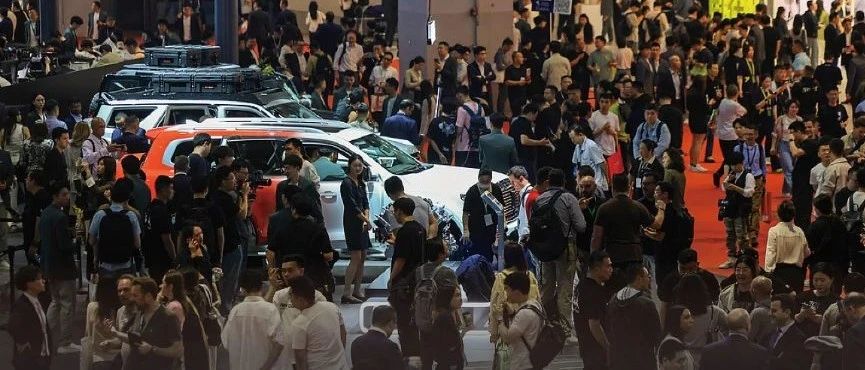
不敢吹牛的上海车展:雷军缺席,网红翻车,老外取经
吴晓波频道· 2025-04-24 18:04
Core Viewpoint - The 2025 Shanghai Auto Show reflects a shift towards a more serious and technology-driven atmosphere, showcasing the aftermath of a fierce price war and the evolving landscape of the automotive industry [2][3][25]. Group 1: Event Overview - The Shanghai Auto Show, the largest global auto exhibition, opened on April 23, 2025, after a dispute over its hosting rights [2][6]. - This event marks a temporary halt after over 700 days of price wars in the automotive sector [3]. - The layout of the exhibition indicates a consolidation of power among leading companies, with larger displays from firms like Geely and Huawei, while many smaller brands and foreign automakers are notably absent [4][12]. Group 2: International Presence and Engagement - The show has seen an increase in international attendance, facilitated by improved access and visa policies, leading to a more diverse crowd [7][9]. - High-profile executives from global automotive brands are engaging with Chinese manufacturers, indicating a shift towards more equal standing in terms of brand status and technological capabilities [11][12]. Group 3: Technological Trends - Key technological highlights include advancements in fast charging, with companies like Zeekr and BYD showcasing rapid charging capabilities [26]. - The integration of AI and digital technologies is becoming prominent, with many companies announcing the application of AI models in their vehicles [29][30]. - A notable trend is the shift from hardware-focused innovations to software-defined vehicles, reflecting a broader digital transformation in the automotive industry [30]. Group 4: Safety and Regulatory Focus - The event has seen a strong emphasis on safety, particularly in light of recent regulatory changes regarding autonomous driving technologies [35][36]. - Many companies have adjusted their marketing strategies to focus on safety rather than exaggerated claims about autonomous capabilities, reflecting a more cautious approach in the industry [35][36]. Group 5: Market Dynamics and Future Outlook - The 2025 Auto Show signifies a transition into a phase of technological refinement rather than radical innovation, with companies focusing on optimizing existing technologies [39]. - The competition is shifting towards enhancing user experience and safety, as well as addressing consumer demands for personalized vehicle features [41].