
化工原料

Search documents
输入性通胀:推升成本压力
GUOTAI HAITONG SECURITIES· 2026-03-31 12:41
Group 1: Manufacturing Sector Insights - The manufacturing PMI for March 2026 is 50.4%, an increase of 1.4 percentage points from the previous month, marking a return to the expansion zone after two months[7] - The new orders index and production index are at 51.6% and 51.4%, respectively, both above the critical point, indicating strong demand recovery[13] - Small and medium-sized enterprises' PMIs have significantly improved, with small enterprises at 49.0% (up 1.5 percentage points) and medium enterprises at 49.3% (up 4.5 percentage points) from the previous month[10] Group 2: Price and Cost Pressures - The main raw material purchase price index is at 63.9%, up 9.1 percentage points, while the factory price index is at 55.4%, up 4.8 percentage points, indicating rising input costs due to geopolitical tensions[16] - The procurement volume index has risen to 50.9%, reflecting increased purchasing activity driven by demand recovery[18] - The inventory indices for raw materials and finished products are at 47.7% and 46.7%, respectively, indicating a slowdown in inventory depletion[18] Group 3: Non-Manufacturing Sector Performance - The non-manufacturing business activity index is at 50.2%, up 0.5 percentage points, with significant internal differentiation in the service sector[20] - The construction business activity index is at 49.3%, up 1.1 percentage points, but still indicates a low level of activity, with new orders at 43.5%[23] - Consumer services sectors such as retail and hospitality are below the critical point, suggesting a need for policy support to boost consumer confidence[20] Group 4: Risks and Future Outlook - Rising raw material prices may squeeze profit margins for downstream enterprises, potentially suppressing future investment and production willingness[26] - The ongoing geopolitical tensions in the Middle East remain a critical variable, with sustained high oil prices likely to exacerbate cost pressures in downstream industries[26] - Real estate demand needs to be stimulated, and geopolitical risks could disrupt market stability[27]
股指二季度观点:地缘定价从混沌到清晰-20260331
Dong Zheng Qi Huo· 2026-03-31 08:44
1. Report Industry Investment Rating - Not provided in the given content 2. Core Viewpoints of the Report - The geopolitical pricing in the second quarter of the stock index has changed from chaos to clarity. The Middle - East situation is becoming more complex, and the war situation will affect the fundamentals of equity assets. It is expected that the US and Iran will go through a process of "war expansion - negotiation and compromise" in the second quarter. A - shares may experience a V - shaped trend in the second quarter. In the short term, the A - share bull market is tested, but in the medium term, the technology industry represented by artificial intelligence is still the main line of the A - share bull market. It is recommended to go long on the IM futures with higher technology content on dips [92] - High oil prices will lead to an increase in global energy and trade costs, and have an impact on China's imports and exports, inflation, and economic growth. The PPI and CPI are expected to rise, and the global economic growth is predicted to decline [21][53][67] - The Chinese government is taking measures to expand domestic demand and promote economic structural adjustment, such as increasing investment in infrastructure and adjusting policies on consumption and investment [79] 3. Summary by Related Catalogs 3.1 China - Iran and China - Persian Gulf Seven - Country Trade - Iran's direct trade volume with China is small, with a trade surplus of less than $4 billion. After the US sanctions in 2018, the direct trade between China and Iran decreased [5] - China's exports to the eight countries including Iran and the seven Persian - Gulf countries have been increasing in the past five years. In 2025, the total export amount to the eight countries was $169.27 billion, accounting for 4.3%. China's imports from the seven Persian - Gulf countries accounted for 6.1% of the total imports, and the trade deficit turned positive in 2025, reaching $5.7 billion [6][16] - If trade with the seven Persian - Gulf countries is interrupted, China's exports will decrease by 4.3% and imports by 6.1%. China's import dependence on these countries is mainly concentrated in crude oil, natural gas, chemical raw materials, and plastic products, and some products have a share of over 20%. The export of carpets, textiles, motor vehicles, steel products, and electromechanical products may be damaged [25][29] 3.2 Energy and Market Impact - The Strait of Hormuz is crucial for China. About 200 - 210 million barrels of crude oil pass through it every day, accounting for about 20% of the world's seaborne oil. The liquefied natural gas transportation accounts for about 20% of the world, and the methanol transportation accounts for about 35% of the world. The closure of the strait will lead to an increase in global energy and trade costs [21] - Crude oil accounts for 18.2% of China's total energy consumption, and the external dependence is about 72%. The crude oil imported from the seven Persian - Gulf countries accounts for about 40% of the total imported crude oil. China's oil reserves can support about 100 days. If the war persists and the strait is blocked, it will impact the economic growth [34] - Before the US - Iran war, the global equity assets were in a bull market. After the war, the global risk assets were under pressure, and the stock markets generally declined. In March, only the energy and mineral sectors rose, while the technology stocks and HALO assets fell significantly [38][46] 3.3 A - share Market Performance - In March, A - shares fell in line with the global stock markets. The rising sectors include energy (coal, power utilities, and new energy), defense (banks, public utilities), and AI infrastructure (communications). The falling sectors are mainly HALO heavy - hitters such as non - ferrous metals, steel, and building materials, concept stocks such as military industry, and technology stocks such as media and computer [49] - At the tertiary industry level, coal chemical industry, lithium batteries, new energy power generation, and optical communications performed well [50] 3.4 Inflation and Economic Growth - The increase in oil prices has led to an unexpected rise in PPI and CPI. In March, the PPI is expected to approach 0 year - on - year, turn positive in the second quarter, and the annual central level will rise to about 0.5%, 1.5% higher than the initial forecast. The CPI is expected to rise to about 1%, 1% higher than the initial forecast [60] - China's exports increased significantly in the first two months, but the impact of the US - Israel - Iran conflict on the global economy will be apparent from the second quarter. The OECD estimated in March that the GDP growth rate in the four quarters of this year will decline by 0.12, 0.23, 0.31, and 0.33 percentage points respectively compared with the February forecast [67] - China's economic growth is more dependent on foreign trade, and domestic demand is weak. The fiscal stimulus in 2026 is limited, and the incremental content is mainly in policy - based financial instruments and special funds for expanding domestic demand [72] 3.5 Policy and Industry Development - The government's work report in 2026 emphasizes building a strong domestic market, with a re - balance between consumption and investment, and an increase in support for fixed - asset investment. The positions of rural revitalization, new urbanization, and improving people's livelihood are advanced [79][80] - The National Development and Reform Commission will invest more than 7 trillion yuan in "six networks" and key areas this year, and the scale of artificial - intelligence - related industries will exceed 10 trillion yuan by the end of the 15th Five - Year Plan. The Ministry of Commerce focuses on service consumption, the central bank focuses on supporting domestic demand, innovation, and small and medium - sized enterprises, and the Ministry of Finance provides loan interest subsidies for individuals and enterprises [84] - Although the valuation of technology stocks is still high, their structure is relatively healthy after the profit upward revision and valuation downward revision in the fourth quarter of last year. The non - technology stocks have relatively mild changes in valuation and profit. The policy support for the technology industry is obvious [91]
【公募基金】地缘扰动剧烈,结构机会持续——公募基金指数跟踪周报(2026.03.09-2026.03.13)
华宝财富魔方· 2026-03-16 09:19
Investment Insights - The short-term impact of geopolitical conflicts on equity markets is expected to gradually diminish, with the market likely having priced in the risks of high oil prices over the coming months [1][6] - A-shares are anticipated to oscillate between the "HALO chain" of price increases and the "TACO chain" of growth due to geopolitical uncertainties, delayed Fed rate cut expectations, and domestic policy transmission lags [1][6] - Key areas to focus on include: (1) Energy alternatives and price increase logic, benefiting sectors like coal chemical and heat pump due to rising prices of crude oil, natural gas, and chemical raw materials [1][6][7]; (2) Structural opportunities in growth sectors, with specific attention to hardware upgrades in areas like CPO, PCB, and liquid cooling, especially with the upcoming NVIDIA GTC conference [1][7] Equity Market Review - During the week of March 9-13, 2026, major indices such as the Shanghai Composite Index and the CSI 300 experienced varied performance, with the Shanghai Composite down by 0.70% and the ChiNext Index up by 2.51% [5] - The average daily trading volume for the entire A-share market was 24,969 billion, showing a decrease compared to the previous week [5] - The "养龙虾" concept initially drove a surge in related sectors like computing power leasing and AI applications, but quickly cooled due to regulatory risks [5] Fixed Income Market Review - The bond market saw adjustments during the week of March 9-13, 2026, with the 1-year government bond yield decreasing by 0.9 basis points to 1.28%, while the 10-year and 30-year yields increased by 3.33 basis points to 1.81% and 8.53 basis points to 2.37%, respectively [2][8] - The bond market is significantly influenced by overseas geopolitical conflicts, with concerns about input inflation and delayed rate cuts leading to a rise in yields across various maturities [2][8] - If the conflict in the Middle East continues, there may be upward pressure on the yield center, particularly for long-term bonds [2][8] Public Fund Market Dynamics - The China Securities Regulatory Commission revised the disclosure guidelines for public funds to enhance transparency and protect investors' rights, effective from May 1, 2026 [10][11] - Key revisions include the integration of similar disclosure items across annual, semi-annual, and quarterly reports, and the introduction of new disclosure requirements such as trading conditions and investor statistics [11]


美国若打击伊朗,后果更致命!中国能源与经济将迎三重挑战?
Sou Hu Cai Jing· 2026-02-16 04:54
Group 1: Conflict Overview - The Middle East situation has been escalating since 2025, particularly the tensions between the US and Iran, primarily due to Iran's nuclear program, which the US suspects involves secret weapon development [1] - The conflict began with Israel's airstrikes on Iranian nuclear facilities on June 13, 2025, leading to a twelve-day retaliatory war where Iran launched missiles at Israeli cities [1][3] - The US military actions included bombing three major Iranian nuclear facilities on June 21, 2025, which prompted Iran to retaliate with missile strikes on a US airbase in Qatar [3] Group 2: Economic Implications - The military actions have severely disrupted Iran's oil production and exports, impacting China, the largest importer of Iranian oil, which relies heavily on the Strait of Hormuz for energy supplies [7] - China's imports from the Middle East constitute a significant portion of its total imports, with a high dependency on oil transported through the Strait of Hormuz [7][12] - The conflict has led to fluctuations in chemical raw material prices in China, affecting industries such as home appliances and automotive manufacturing [7] Group 3: Geopolitical Dynamics - The US has increased military deployments in the Middle East, including aircraft carriers and strategic bombers, while Iran's parliament discussed the potential closure of the Strait of Hormuz as a countermeasure [5] - European nations have called for dialogue to prevent further escalation, while China has opposed unilateral actions and advocated for negotiations [5][12] - The US has warned countries trading with Iran of potential additional tariffs, complicating China's trade relations with Iran, which involve significant exports of machinery [9][10] Group 4: China's Position and Strategy - China has emphasized the importance of maintaining energy security and has accelerated efforts to diversify energy sources and strengthen reserves in response to potential disruptions [12][16] - China's assistance to Iran has been primarily economic and diplomatic, avoiding military involvement, while maintaining a balanced relationship with Gulf countries [14] - The Chinese government has actively promoted dialogue to resolve disputes and has facilitated talks aimed at restoring negotiations regarding Iran's nuclear issue [16]

闰土股份跌2.00%,成交额2.84亿元,主力资金净流入131.66万元
Xin Lang Zheng Quan· 2026-02-12 01:52
Core Viewpoint - The stock of Zhejiang Runtu Co., Ltd. has experienced significant price increases in 2023, with a year-to-date rise of 96.39% as of February 12, 2023, indicating strong market interest and performance in the textile dye and chemical raw materials sector [1]. Group 1: Stock Performance - As of February 12, 2023, Runtu's stock price was reported at 14.67 CNY per share, with a trading volume of 2.84 billion CNY and a market capitalization of 16.489 billion CNY [1]. - The stock has seen a 22.15% increase over the last five trading days, a 90.52% increase over the last 20 days, and a 95.34% increase over the last 60 days [1]. - Runtu has appeared on the stock market's "龙虎榜" (top trading list) twice this year, with the most recent appearance on February 10, 2023 [1]. Group 2: Financial Performance - For the period from January to September 2025, Runtu reported a revenue of 4.163 billion CNY, reflecting a year-on-year growth of 2.25%, and a net profit attributable to shareholders of 225 million CNY, which is a 49.10% increase year-on-year [2]. - The company has distributed a total of 4.445 billion CNY in dividends since its A-share listing, with 614 million CNY distributed over the past three years [3]. Group 3: Shareholder Information - As of January 30, 2025, Runtu had 67,400 shareholders, an increase of 102.82% from the previous period, with an average of 14,047 shares held per shareholder, a decrease of 50.70% [2]. - Among the top ten circulating shareholders, Hong Kong Central Clearing Limited is the ninth largest, holding 11.4486 million shares as a new shareholder [3].

【石油和化工行业景气指数】1月:季节需求拉动 景气指数上涨
Zhong Guo Hua Gong Bao· 2026-02-11 05:28
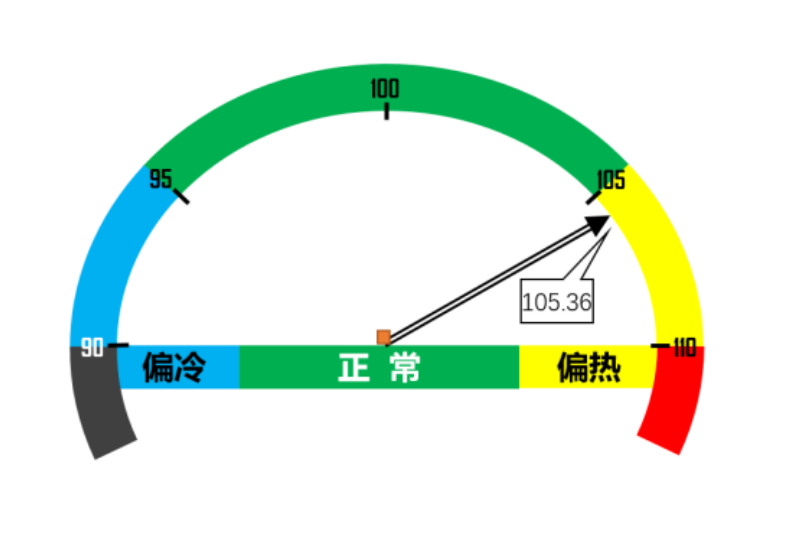
Core Insights - The oil and chemical industry prosperity index rose to 105.36 in January 2026, driven by low oil prices and seasonal demand ahead of the Spring Festival [2][11] - The upstream oil and gas extraction sector faced ongoing pressure from falling prices, but seasonal demand led to inventory reduction, resulting in a slight recovery in the prosperity index [11] - The fuel processing industry saw a profit recovery, but inventory turnover slowed, causing a decline in its prosperity index [2][11] - The chemical raw materials and products manufacturing sector, along with rubber, plastic, and other polymer products manufacturing, experienced synchronized growth in production, profits, and inventory turnover due to low raw material costs and seasonal stocking [2][11] Index Data - The oil and chemical industry prosperity index increased by 4.45 points from December to January [8][16] - The oil and gas extraction sector index rose by 5.15 points, ending a four-month decline [11][16] - The fuel processing industry index decreased by 10.33 points, indicating a shift from overheating to normal conditions [14][16] - The chemical raw materials and products manufacturing index increased by 11.72 points, reflecting favorable conditions for production and sales [14][16] - The rubber, plastic, and other polymer products manufacturing index rose by 9.92 points, indicating a strong production response to low costs and seasonal demand [16] Market Trends - The manufacturing PMI fell to 49.3% in January 2026, indicating a slowdown in overall manufacturing, contrasting with the rising prosperity index in the petrochemical sector [3][17] - Geopolitical tensions in the Middle East have led to short-term fluctuations in oil prices, with market sentiment oscillating between conflict risks and potential negotiations [4][18] - The oil price is expected to maintain a volatile pattern with upward pressure and downward support due to seasonal demand weakness [4][18] Future Outlook - The petrochemical industry is anticipated to face challenges in February 2026 due to fluctuating oil prices and weakening post-holiday demand, leading to a potential seasonal decline in the prosperity index [9][19] - The demand side remains a critical variable, with the industry entering a traditional off-peak season after the Spring Festival [19]
股市必读:2月10日太阳纸业现409.57万元大宗交易
Sou Hu Cai Jing· 2026-02-10 16:57
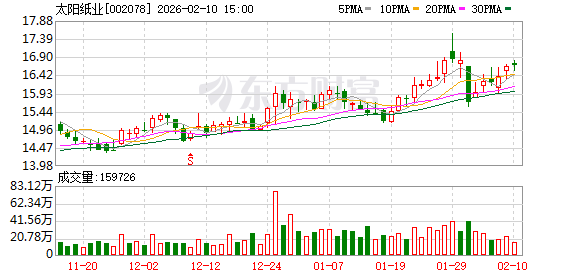
Group 1 - The stock price of Sun Paper Industry (002078) closed at 16.69 yuan on February 10, 2026, with a slight increase of 0.18% and a turnover rate of 0.58% [1] - The trading volume for Sun Paper Industry on the same day was 159,700 shares, resulting in a transaction amount of 267 million yuan [1] - On February 10, the net outflow of main funds was 6.15 million yuan, while the net inflow of speculative funds was 15.06 million yuan, and retail investors experienced a net outflow of 8.91 million yuan [2][3] Group 2 - A block trade of 4.10 million yuan occurred for Sun Paper Industry on February 10 [2][3] - The company’s secretary responded to an investor inquiry regarding the impact of a 1% appreciation of the RMB against the USD on net profit, indicating that the effect depends on the company's import dependency and financial structure [2] - The appreciation of the RMB is expected to lower the costs of imported raw materials and production equipment, as the company primarily settles its overseas purchases in USD [2]

太阳纸业:人民币的升值有益于降低公司进口原材料、生产设备等的采购成本
Zheng Quan Ri Bao· 2026-02-10 13:37
Core Viewpoint - The appreciation of the RMB positively impacts the paper industry by reducing raw material costs and increasing foreign exchange gains, with the extent of impact depending on the company's import dependency and financial structure [2]. Group 1: Impact of RMB Appreciation - The appreciation of the RMB primarily benefits the company by lowering the costs of imported raw materials, production equipment, and other purchases, which are mainly settled in USD [2]. - The company's foreign procurement of raw materials includes wood pulp, wood chips, and chemical raw materials, which are significantly affected by currency fluctuations [2]. Group 2: Financial Management Strategies - The company's foreign exchange business is determined based on actual import amounts, and it also utilizes forward foreign exchange contracts and other financial derivatives to manage exchange rate risks [2].
太阳纸业:人民币升值有益于降低公司进口原材料、生产设备等的采购成本
Sou Hu Cai Jing· 2026-02-10 04:06
Core Viewpoint - The company, Sun Paper (002078), addressed investor inquiries regarding the impact of a 1% appreciation of the RMB against the USD on its net profit for 2026 compared to 2025, highlighting the effects of currency fluctuations on raw material costs and exchange gains [1] Group 1: Impact of RMB Appreciation - The appreciation of the RMB primarily affects the paper industry by reducing raw material costs and increasing exchange gains [1] - The specific impact of RMB appreciation on the company's net profit depends on its reliance on imports and financial structure [1] - The company sources raw materials such as wood pulp, wood chips, and chemical materials mainly in USD, meaning RMB appreciation can lower procurement costs for imports and production equipment [1] Group 2: Currency Risk Management - The company's foreign exchange operations are determined based on actual import amounts, and it utilizes forward foreign exchange contracts to manage currency risk [1]
西陇科学(002584):中标中国石化催化剂有限公司采购项目,中标金额为179.20万元
Xin Lang Cai Jing· 2026-01-27 14:44
Group 1 - The core point of the article is that Xilong Science Co., Ltd. has won a procurement project from Sinopec Catalyst Co., Ltd. with a bid amount of 1.792 million yuan for iron nitrate [1] Group 2 - Xilong Science (002584.SZ) reported a revenue of 7.816 billion yuan in 2024, with a revenue growth rate of 10.22% and a net profit attributable to the parent company of 62 million yuan, reflecting a net profit growth rate of 85.24% [2] - In the first half of 2025, the company reported a revenue of 3.368 billion yuan, with a revenue growth rate of -14.78% and a net profit attributable to the parent company of -75 million yuan, indicating a net profit growth rate of -276.35% [3] - The company operates in the materials industry, primarily dealing with inorganic chemical raw materials, with its 2024 revenue composition being 56.48% specialized chemicals, 22.63% chemical raw materials, 11.81% electronic chemicals, 7.92% general reagents, 0.68% raw materials for pharmaceuticals and food additives, 0.31% lithium battery cathode materials, and 0.16% other businesses [3]

