华为Pura 80系列

Search documents
存储厂商高管疯狂扫货奢侈品
第一财经· 2026-03-05 10:57
Core Viewpoint - The storage industry is experiencing a significant shift due to the explosive demand for high bandwidth memory (HBM) driven by AI data centers, leading to a supply-demand imbalance that is causing memory costs to surge, ultimately impacting consumer electronics pricing [3][4][11]. Supply and Demand Dynamics - The demand for HBM is prioritizing server-side production, while DRAM and NAND supply for smartphones is tightening, resulting in a rapid increase in mobile LPDDR4/5 prices, which are expected to reach nearly three times the levels of Q3 2025 by Q2 2026 [4][11]. - Storage capacity expansion will take several quarters to translate into actual supply, with challenges expected to persist until the second half of 2027, particularly affecting low-end models [5][11]. Cost Implications - The rising storage prices are leading to increased costs for consumers, with smartphone manufacturers facing unprecedented cost pressures, which may result in higher retail prices for end products [3][5]. - Some Android OEMs have already raised prices by 10% to 20% as of January 2026, with the material cost of flagship models seeing a significant increase in the proportion attributed to storage [5][10]. Price Adjustments in the Market - Price increases are not just theoretical; several Android brands have raised prices by 10% to 20% for certain models, with some mid-range series seeing increases close to 20% [8][10]. - Samsung's Galaxy S26 series has seen price hikes of approximately $100 in overseas markets, with high-storage versions experiencing a 20% increase [8][10]. Competitive Landscape - Major brands like Huawei have not yet followed the trend of price increases, maintaining competitive pricing in a market where stability is becoming a competitive advantage [10]. - Apple is employing promotional strategies to stabilize sales, with some iPhone models seeing price reductions of about 11% to 14% to counteract the rising costs [10]. Future Outlook - Analysts predict that high storage prices will persist at least until the second half of 2026, with AI demand continuing to exert pressure on production capacity [11]. - The ongoing price dynamics are reshaping the competitive landscape for smartphone manufacturers, testing their pricing power, product capabilities, and supply chain management [11].


华为登顶,吃了谁的蛋糕?
Xin Lang Cai Jing· 2026-01-22 20:13
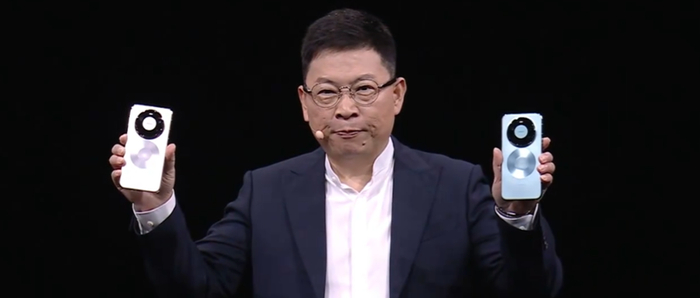
Core Insights - Huawei has regained the top position in the Chinese smartphone market with a shipment of 46.7 million units and a market share of 16.4% in 2025, although this is significantly lower than its peak of 124.9 million units and 38.3% market share in 2020 [2][3][6] - The competition among the top three manufacturers—Huawei, Apple, and Vivo—is intense, with their shipment volumes closely aligned, indicating a highly competitive market landscape [4][7] - Despite Huawei's return to the top, its shipment volume has decreased by approximately 2% year-on-year, reflecting a broader market decline [5][6] Shipment and Market Share - In 2025, the top five smartphone manufacturers in China by shipment volume are: 1. Huawei: 46.7 million units (16.4%) 2. Apple: 46.2 million units (16.2%) 3. Vivo: 46.1 million units (16.2%) 4. Xiaomi: 43.8 million units (15.4%) 5. OPPO: 43.4 million units (15.3%) [3][6] - The overall smartphone market in China saw a slight decline, with total shipments of 284.4 million units in 2025, down 0.6% from 2024 [6] Activation vs. Shipment - Huawei's activation volume ranks fifth, significantly lower than its shipment volume, indicating potential inventory issues with a gap of over 3 million units between shipments and activations [10][12] - In contrast, other brands like Vivo, Apple, and OPPO have activation volumes closely matching their shipment volumes, suggesting healthier inventory management [12][10] Competitive Landscape - The competition is not only between Huawei and Apple but also includes Vivo, which has maintained a strong presence in the market, and Xiaomi, which has shown positive growth [30][34] - OPPO has also demonstrated resilience, achieving a year-on-year shipment growth of nearly 30% in 2025, indicating a robust competitive strategy [34] Product Strategy and Pricing - Huawei's successful return is attributed to its strong product lineup, including the Mate 70 and Pura 80 series, which have seen significant sales despite the absence of advanced 3nm chips [21][24] - The company has strategically reduced prices on key models, with reductions exceeding 800 yuan, making its products more competitive in a market where other brands have raised prices [27][29] Future Outlook - The smartphone market in 2026 is expected to face challenges, including rising storage costs and a potential decline in overall shipments, which could reshape the competitive dynamics [36][38] - The ability of manufacturers to adapt to these changes and maintain product appeal will be crucial for sustaining market positions in the coming years [38]


华为重夺国内第一 自研芯片破局 国产高端格局生变?
Xin Lang Cai Jing· 2026-01-18 13:34
Core Insights - Huawei regained the top position in the domestic smartphone market with 46.7 million units shipped, capturing a 16.4% market share, ending Apple's years of dominance [1][12] - The shift in consumer sentiment towards domestic brands and self-developed technology marks the arrival of a new era for high-end domestic smartphones [3][12] Market Performance - The overall domestic smartphone market is expected to see a 1% year-on-year decline in shipments for 2025, reflecting weak consumer confidence [1] - Huawei's Mate 80 series achieved over 2 million units shipped in its first month, while the Pura 80 series gained popularity due to its practical camera design [3] Consumer Preferences - Over 62% of new Huawei users chose the brand due to recognition of domestic self-developed technology rather than just technical specifications [3] - There is a noticeable shift in consumer behavior from blindly pursuing international brands to valuing technological independence and brand sentiment [3] Technological Advancements - The Kirin 9030 series chips have improved performance by 42%-45% compared to previous generations, balancing performance and power consumption through software optimization [5] - Huawei's self-developed chips not only alleviate supply chain issues but also allow for innovative product design, as seen in the Pura 80 Ultra's unique dual telephoto lens system [5] High-End Market Dynamics - The high-end smartphone market (priced above 3000 yuan) surpassed 30% of the total market share for the first time, becoming a key growth driver [7] - Huawei has transitioned from a follower to a rule-maker in the high-end market, particularly in the foldable phone segment, where it holds over 60% market share [7] Competitive Landscape - Samsung's market share in the foldable segment is declining due to its overly international product design, which does not align with domestic user habits [8] - Local brands like Vivo are also gaining traction in the high-end market, indicating a shift towards a domestically-led market landscape [8] Industry Implications - Huawei's resurgence highlights the importance of self-innovation as a long-term competitive advantage in an uncertain global supply chain environment [10] - The global smartphone market is projected to grow by 1.5% in 2025, with emerging markets and AI devices driving growth, while the domestic market is expected to recover only in 2026 [10] Conclusion - Huawei's reclaiming of the top position in the domestic smartphone market is not merely a rebound but a culmination of years of technological accumulation, signaling the official arrival of the high-end domestic smartphone era [12]
手机电池卷上10000毫安时,还需要充电宝吗?
Guan Cha Zhe Wang· 2025-12-29 10:36
Core Insights - Honor has launched the Honor WIN series of gaming flagship smartphones, featuring a 10,000mAh battery, marking the entry of battery capacity into the "ten-thousand" era, with a starting price of 2,699 yuan [1] - The upcoming Honor Power2 will feature a 10,080mAh battery, becoming the first smartphone to exceed the ten-thousand battery capacity [1] - The trend of increasing battery capacity in domestic smartphones reflects changing user demands and intense market competition [2] Battery Capacity Trends - In the first half of this year, among 62 mainstream models launched, 4 models had batteries of 8,000mAh or more, 17 models had between 7,000mAh and 7,999mAh, and 21 models had between 6,000mAh and 6,999mAh [1] - The average battery capacity of smartphones in the Chinese market reached 5,418mAh in May 2025, showing an 11% year-on-year increase [4] Market Competition - As features like AI, imaging, and performance become more homogeneous, large battery capacity has emerged as a key differentiator for manufacturers [2] - The competition is highlighted by the close market shares of brands, with Vivo leading at 17.2%, followed by Apple and Huawei, each with around 10% market share [8] Technological Advancements - The increase in battery capacity is attributed to breakthroughs in battery technology, particularly the application of silicon-carbon anode batteries, which allow for higher energy density [5] - Innovations in packaging and structural design, such as the sandwich structure used in Honor's X70, have enabled larger capacities without increasing size [6] Charging Technology - The competition in battery life has entered a new phase of "technology integration," with advancements in fast charging, software optimization, and AI scheduling [7] - High-power chargers are becoming more common, with models like the Honor WIN series supporting 100W fast charging [7]

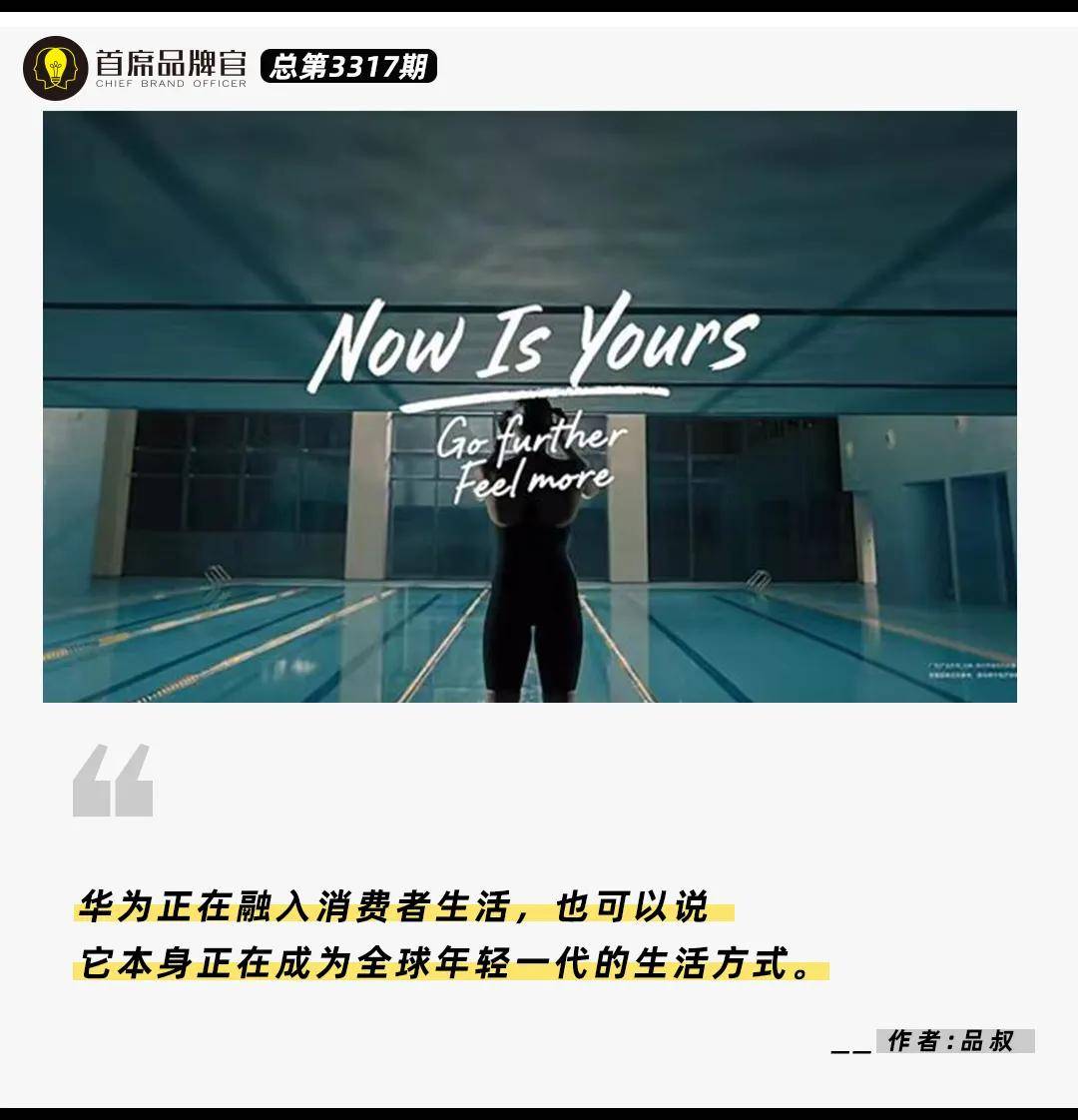
用户到底需要怎样的品牌?从华为Now is Yours主张说起
Sou Hu Cai Jing· 2025-12-28 09:04
Core Insights - The rise of a new generation of consumers is reshaping the technology market, making youth engagement a survival necessity for brands [3][4] - Traditional marketing strategies are becoming less effective as young consumers seek authenticity and emotional connection rather than mere product features [4][6] Group 1: Consumer Behavior - Young consumers are immersed in niche cultures such as esports and subcultures, valuing individuality and emotional resonance while being critical of overt marketing tactics [4][5] - The shift from template-based marketing to a more personalized approach is essential as consumers exhibit fatigue towards standardized advertising [4][7] Group 2: Brand Strategies - Huawei has shifted its focus from technical specifications to understanding and addressing consumer needs through relatable stories and user-centric design [5][10] - The introduction of features like the wheelchair mode in Huawei's products demonstrates a commitment to inclusivity and addressing specific user needs, reflecting a deeper understanding of diverse consumer requirements [10][14] Group 3: Market Positioning - Huawei's approach emphasizes long-term engagement with consumers, fostering a community around shared interests and experiences rather than just selling products [14][15] - The brand's success in wearable technology and other segments is attributed to its ability to integrate into consumers' daily lives, making technology a part of their community [15][21] Group 4: Future Trends - The technology industry is expected to face intensified competition for youth engagement, with brands needing to adapt to diverse consumer demands driven by emotional and experiential factors [24][25] - Companies must prioritize authentic emotional connections and support for self-expression among young consumers, moving away from traditional authoritative marketing styles [24][25]
华为Pura系列焕新升级,Pura 90将携影像突破亮相
Xin Lang Cai Jing· 2025-12-25 12:40
Core Insights - Huawei announced the upgrade of its P series to the Pura series in the first half of 2024, marking a deepening of its dual flagship strategy with Pura and Mate [2][3] - The Pura brand emphasizes a minimalist and pure design philosophy, with the slogan "Chase the true self, forge ahead" highlighting a spirit of continuous progress and breakthrough [2][3] - The Pura 90 series, set to launch in 2026, is currently in intensive preparation, featuring a return to flat screen designs with the standard version having a 6.58-inch screen and the Pro version a 6.87-inch screen, which is an increase from the 6.8-inch screen of the previous Pura 80 Pro series [2][3] Imaging Capabilities - The Pura 90 series is expected to significantly enhance its photography performance, although specific configuration details have not yet been disclosed [4] - The previous Pura 80 series achieved a breakthrough with its "one lens dual focal length" technology, integrating a 3.7x medium-long focus and a 9.4x super long focus optical lens in one module, along with a 1/1.28-inch large sensor that greatly improved long-focus image quality [4] - The periscope long-focus lens utilizes an RYYB sensor array, allowing for clear and bright telephoto images even in low-light conditions [4]
半年拿下四款旗舰机型,瑞声科技WLG玻塑镜头今年销量超前三年总和
Zhi Tong Cai Jing· 2025-10-28 02:43
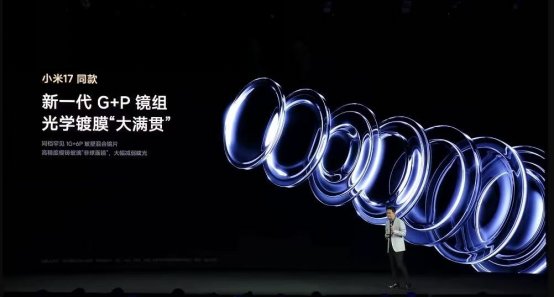
Core Insights - The article highlights the rapid development and adoption of glass-plastic hybrid lens technology in smartphones, particularly with the recent launch of the REDMI K90 Pro Max, which achieved over 130,000 sales on its first day, marking a 120% increase compared to its predecessor [1] - The technology is gaining traction among manufacturers, with significant breakthroughs in imaging quality, module thickness control, and mass production feasibility expected by 2025 [3][5] Group 1: Product Launch and Sales - REDMI's K90 Pro Max is the first Pro Max model, featuring a large 1/1.31-inch main camera and a 1G6P glass-plastic hybrid lens, contributing to its strong sales performance [1] - The K90 series is the fourth flagship model to utilize the WLG glass-plastic hybrid lens technology from AAC Technologies in less than six months, following the launches of Xiaomi MIX Flip 2, Huawei Pura 80 series, and Xiaomi 17 series [1] Group 2: Technical Advantages - The glass-plastic hybrid lens offers superior optical performance with fewer lens elements, reducing the overall length and thickness of the lens module by approximately 10% compared to traditional designs [5] - The high light transmittance of glass lenses enhances overall light intake, improving low-light performance and bokeh effects, while also significantly reducing glare and ghosting artifacts [5] Group 3: Industry Trends and Future Outlook - The glass-plastic hybrid lens technology has transitioned from an observational phase to a rapid development phase, with nearly 20 smartphone models adopting this technology across brands like Xiaomi, Sony, and vivo [7] - AAC Technologies is expected to ship over 10 million WLG lenses in 2025, indicating a substantial increase in production capacity and market acceptance [10] - The technology is also expanding beyond smartphones into automotive applications, particularly in advanced driver-assistance systems (ADAS), where it offers cost and weight advantages while maintaining thermal stability and imaging quality [10]
半年拿下四款旗舰机型,瑞声科技(02018)WLG玻塑镜头今年销量超前三年总和
智通财经网· 2025-10-28 02:28
Core Insights - The article highlights the rapid development and adoption of glass-plastic hybrid lens technology in smartphones, particularly with the recent launch of the REDMI K90 Pro Max, which achieved over 130,000 units sold on its first day, marking a 120% increase compared to its predecessor [1][7] Group 1: Technology Advancements - The glass-plastic hybrid lens technology has gained significant traction among manufacturers, especially as it approaches 2025, due to breakthroughs in imaging quality, module thickness control, and mass production feasibility [3][9] - The hybrid lens structure allows for higher optical performance with fewer lens elements, reducing the overall length and thickness of the lens module by approximately 10% compared to traditional designs [4][9] - The high light transmittance of glass lenses enhances overall light intake, improving low-light performance and bokeh effects, while also significantly reducing glare and ghosting artifacts [4][5] Group 2: Market Trends - REDMI and Xiaomi are recognized as pioneers in the adoption of glass-plastic hybrid lenses, with the REDMI K50 Supreme Edition being the first smartphone globally to feature a 100-megapixel WLG hybrid lens [7][9] - The technology has transitioned from an initial phase of industry skepticism to a rapid development phase, with nearly 20 smartphone models incorporating this technology across various brands, including Xiaomi, Sony, and vivo [7][10] - By 2025, the expected shipment volume of WLG lenses from AAC Technologies is projected to exceed 10 million units, indicating a significant increase in production capacity and market acceptance [10] Group 3: Future Prospects - The glass-plastic hybrid lens technology is not limited to smartphones; it is also penetrating the automotive sector, particularly in advanced driver-assistance systems (ADAS), where it offers advantages in thermal stability, imaging quality, and cost reduction [10] - Analysts predict that over 30% of new flagship smartphones will feature glass-plastic hybrid lenses, with an anticipated annual growth rate exceeding 50% in the ADAS market [10]
“双节”智能家居产品销量增长14.3%
Nan Fang Du Shi Bao· 2025-10-11 04:48
Core Insights - The "Double Festival" during National Day and Mid-Autumn Festival has led to increased consumer spending on home appliances, with a reported 2.7% year-on-year growth in sales for key retail and catering enterprises during the holiday period [1] - Major e-commerce platforms have seen significant growth in energy-efficient appliances, with smart refrigerators and smart home products experiencing increases of 20.7% and 16.8% respectively [1] Group 1: Consumer Trends - New household appliances such as dishwashers, water purifiers, and dryers have emerged as the "new three major appliances," with Suning's sales of high-end appliances (over 10,000 yuan) increasing by 73% [2] - There is a noticeable shift towards quality, health, and smart home products, with consumers willing to invest in appliances that enhance comfort and convenience [2][3] - The demand for large-capacity and smart appliances is rising, with products like 600L refrigerators and smart washing machines becoming bestsellers [3] Group 2: Sales Performance - The sales of dishwashers increased by 59%, while clothes dryers and shoe cleaners saw growth rates of 82% and 211% respectively during the holiday [4] - The emotional value of appliances is becoming increasingly important, with sales of projectors, coffee machines, and home gaming consoles growing by 245%, 181%, and 292% respectively [4] - E-commerce platforms like JD.com reported a threefold increase in sales for action cameras and a twofold increase for digital cameras during the holiday [4][6] Group 3: Government Initiatives - The recent issuance of 690 billion yuan in special bonds for consumer upgrades has significantly stimulated consumer spending, with over 3.3 billion people applying for subsidies [5] - Retail sales of home appliances and related goods have seen substantial year-on-year growth, with categories like home appliances and audio-visual equipment increasing by 28.4% and 22.3% respectively [5]


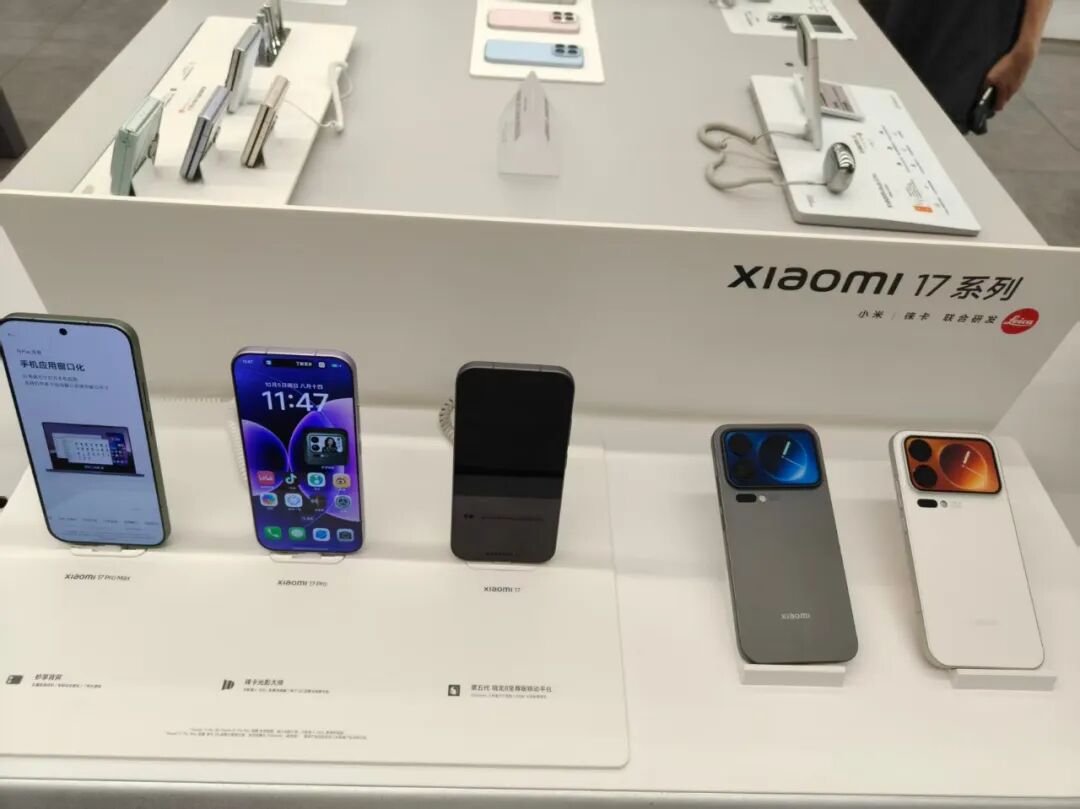
小米17热销,iPhone 17紧俏!实探假期换机潮
Zhong Guo Zheng Quan Bao - Zhong Zheng Wang· 2025-10-05 14:19
Core Insights - The Chinese smartphone market is experiencing a surge in demand during the National Day and Mid-Autumn Festival holidays, with high-end models from brands like Apple, Huawei, and Xiaomi seeing significant interest [1][2]. Group 1: High-End Smartphone Sales - Apple's iPhone 17 series is in high demand, with limited stock available, particularly for the iPhone 17 model [2][4]. - Xiaomi's 17 series has sold over 1 million units since its launch on September 27, 2023, indicating a faster sales pace compared to previous models [4]. - Huawei's new Mate XTs foldable phone requires advance reservations due to high demand, while the Pura 80 series has sufficient stock [4][5]. Group 2: Market Trends and Projections - Counterpoint Research predicts an 8% year-on-year growth in the global high-end smartphone market (priced above $600) by the first half of 2025, with Apple holding a 62% market share [5][6]. - Xiaomi's high-end smartphone sales increased by 55% year-on-year, primarily driven by the Chinese market [5]. - Upcoming releases from brands like vivo, OPPO, and Honor are expected to provide consumers with more high-end options, further enhancing competition in the market [5][6]. Group 3: Technological Advancements - The acceleration of high-end smartphone development is being driven by AI technology, with the global AI smartphone market share projected to rise from 16% in 2024 to 54% by 2028 [6].