存储涨价潮

Search documents
三星手机用美光芯片!
国芯网· 2026-02-26 12:54
Core Viewpoint - The article discusses the challenges faced by Samsung in the memory chip market, particularly in relation to its mobile business, highlighting a shift in supplier strategy due to rising memory costs and supply chain pressures [2][4]. Group 1: Memory Supply and Pricing - Samsung's Galaxy S26 series has adopted an unusual strategy where approximately 50% of its initial orders do not use Samsung's own memory chips but instead utilize Micron's LPDDR5X chips [4]. - The price increase for LPDDR5X memory set by Samsung's DS division is around 100%, prioritizing sales to high-paying clients like Apple over discounts for its mobile division [4]. - The cost of memory now constitutes 30% to 40% of the Bill of Materials (BOM) for smartphones, approaching 50%, indicating that nearly half of the material cost for flagship phones is spent on storage [4]. Group 2: Market Impact and Forecast - Goldman Sachs has revised its forecast for global smartphone shipments in 2026 down by 6%, expecting only 1.19 billion units to be shipped, reflecting a contraction in the market [5]. - The smartphone market is not experiencing a recovery but is instead facing a year-on-year decline due to uncontrolled storage costs [5].


存储超级周期下实探PC市场:销售催促“再不买还得涨”
Xin Lang Cai Jing· 2026-02-06 01:25
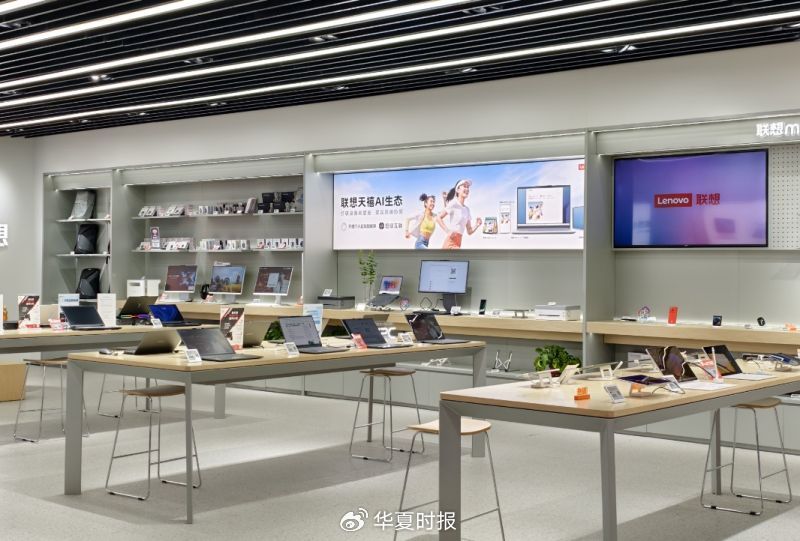
Core Viewpoint - The ongoing increase in storage chip prices is expected to lead to a rise in PC prices, with major brands already starting to pass on these costs to consumers [2][11]. Group 1: Price Adjustments by Major Brands - Lenovo, HP, and Honor have begun adjusting prices for certain models, with Lenovo's gaming laptops seeing increases of approximately 1000 yuan, while HP's adjustments range from 200 to 500 yuan depending on the model [3][12]. - Honor has already raised prices on several models by around 500 to 1000 yuan, with promotional discounts still making the final prices competitive [12]. - Other brands like Huawei, Xiaomi, and Samsung have not yet raised prices but anticipate adjustments in the near future, potentially between 5% and 10% [4][12]. Group 2: Market Trends and Consumer Behavior - The global PC shipment volume is projected to remain stable, with Gartner reporting a 9.3% increase in Q4 2025 compared to Q4 2024, totaling over 270 million units for the year [18]. - Despite price increases, demand for PCs may remain strong among users with essential needs or those seeking high-performance AI PCs, although price-sensitive consumers may be deterred [18]. - The smartphone market is also experiencing price increases due to rising storage costs, with the average selling price expected to exceed $400 for the first time in Q4 2025 [4][13]. Group 3: Industry Challenges and Future Outlook - The rising cost of memory, which constitutes 15% to 18% of a typical PC's total cost, is significantly impacting pricing strategies across the industry [5][14]. - Analysts predict that the current cycle of price increases driven by AI demand could last for 2-3 years, with structural adjustments in production capacity taking time to resolve [19]. - Major manufacturers like Lenovo and Asus are preparing to pass on increased costs to consumers, with expectations of further price hikes in 2026 [15][19].
华为登顶,吃了谁的蛋糕?
Xin Lang Cai Jing· 2026-01-22 20:13
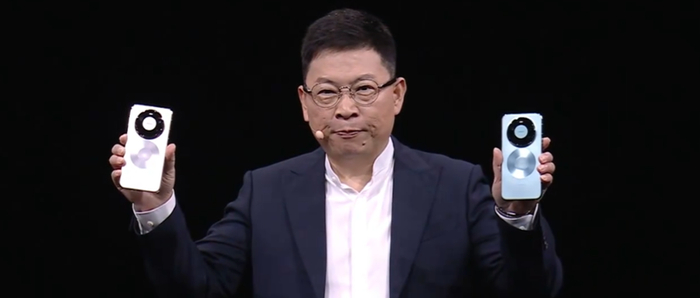
Core Insights - Huawei has regained the top position in the Chinese smartphone market with a shipment of 46.7 million units and a market share of 16.4% in 2025, although this is significantly lower than its peak of 124.9 million units and 38.3% market share in 2020 [2][3][6] - The competition among the top three manufacturers—Huawei, Apple, and Vivo—is intense, with their shipment volumes closely aligned, indicating a highly competitive market landscape [4][7] - Despite Huawei's return to the top, its shipment volume has decreased by approximately 2% year-on-year, reflecting a broader market decline [5][6] Shipment and Market Share - In 2025, the top five smartphone manufacturers in China by shipment volume are: 1. Huawei: 46.7 million units (16.4%) 2. Apple: 46.2 million units (16.2%) 3. Vivo: 46.1 million units (16.2%) 4. Xiaomi: 43.8 million units (15.4%) 5. OPPO: 43.4 million units (15.3%) [3][6] - The overall smartphone market in China saw a slight decline, with total shipments of 284.4 million units in 2025, down 0.6% from 2024 [6] Activation vs. Shipment - Huawei's activation volume ranks fifth, significantly lower than its shipment volume, indicating potential inventory issues with a gap of over 3 million units between shipments and activations [10][12] - In contrast, other brands like Vivo, Apple, and OPPO have activation volumes closely matching their shipment volumes, suggesting healthier inventory management [12][10] Competitive Landscape - The competition is not only between Huawei and Apple but also includes Vivo, which has maintained a strong presence in the market, and Xiaomi, which has shown positive growth [30][34] - OPPO has also demonstrated resilience, achieving a year-on-year shipment growth of nearly 30% in 2025, indicating a robust competitive strategy [34] Product Strategy and Pricing - Huawei's successful return is attributed to its strong product lineup, including the Mate 70 and Pura 80 series, which have seen significant sales despite the absence of advanced 3nm chips [21][24] - The company has strategically reduced prices on key models, with reductions exceeding 800 yuan, making its products more competitive in a market where other brands have raised prices [27][29] Future Outlook - The smartphone market in 2026 is expected to face challenges, including rising storage costs and a potential decline in overall shipments, which could reshape the competitive dynamics [36][38] - The ability of manufacturers to adapt to these changes and maintain product appeal will be crucial for sustaining market positions in the coming years [38]


联想、戴尔、惠普等PC厂商计划涨价?回应来了
凤凰网财经· 2025-12-08 08:34
Core Viewpoint - The article discusses the potential price increases for PCs and servers from major manufacturers like Lenovo, Dell, and HP due to rising storage costs, with expected increases of up to 20% [1]. Group 1: Price Increase Plans - Lenovo has notified customers that all server and PC prices will expire on January 1, 2026, with significant price hikes expected [1]. - Dell is considering price increases for PC and server products, with anticipated hikes of at least 15% to 20%, potentially effective by mid-December [1]. - HP's representatives acknowledged that all products utilizing storage will likely see price increases, although specific amounts depend on company policy and supply-demand dynamics [3]. Group 2: Manufacturer Responses - Dell and HP confirmed the pressure from rising component costs, indicating that prices for computers will inevitably rise [3]. - In contrast, Lenovo, Apple, and Asus denied any immediate plans for price increases, with Asus even mentioning upcoming discounts during the shopping season [4]. - A Lenovo dealer expressed uncertainty about future price changes, citing significant increases in graphics card prices [4]. Group 3: Market Data - According to IDC, global traditional PC shipments reached 75.9 million units in Q3 2025, a 9.4% increase from 69.3 million units in Q3 2024 [4][6]. - Lenovo maintained the largest market share at 25.5%, followed by HP at 19.8%, Dell at 13.3%, Apple at 9.0%, and Asus at 7.8% [6]. - HP's CEO warned of potentially challenging conditions in the second half of 2026, indicating that price increases may be necessary [6].




戴尔、联想等PC厂计划涨价,涨幅最高20%
Xin Lang Cai Jing· 2025-12-07 08:13
Core Viewpoint - The ongoing increase in storage prices is impacting not only smartphone manufacturers but also PC and laptop manufacturers, leading to planned price hikes of up to 20% by companies like Lenovo, Dell, and HP [1] Group 1: Price Increases - Lenovo has already begun notifying customers about upcoming price adjustments [1] - Dell and HP are also planning to raise prices, with the maximum increase expected to reach 20% [1] - All server and computer quotes will expire on January 1, 2026, after which new pricing will significantly increase [1]
存储成本暴涨数万元,AI服务器客户不怕涨价怕没货
雷峰网· 2025-11-07 06:31
Core Viewpoint - The storage market is experiencing significant price fluctuations driven by the demand from the AI industry, leading to a complex interplay of supply and demand dynamics [1][2][4]. Group 1: Price Dynamics - The storage market has seen a phenomenon of "daily price changes," with distributors adjusting prices frequently due to market volatility [1]. - Major players like SanDisk and Micron have announced price increases for NAND Flash and DDR products, with potential hikes reaching 30% [2][3]. - The price of DDR4 memory has surged dramatically, with reports indicating increases of up to 1.5 times, reflecting a scarcity premium as it approaches obsolescence [11][12]. Group 2: Demand and Supply Factors - The AI industry's expansion is driving an exponential increase in storage demand, with AI servers requiring significantly more DRAM and NAND compared to traditional servers [4][5]. - The construction of data centers in the U.S. has surged, with investments exceeding $40 billion, indicating a strong correlation between AI demand and storage market growth [5][6]. - A self-reinforcing cycle of demand is emerging, where expectations of price increases lead to strategic stockpiling by buyers, further tightening supply [2][6]. Group 3: Market Structure and Future Outlook - The current supply adjustments by major manufacturers are lagging behind the rapid demand growth, creating a "capacity gap" between old and new generation products [8][10]. - The storage market is expected to exceed $200 billion by 2025, with AI demand contributing over 40% of this growth [7][21]. - The market is in a "seller's cycle," with manufacturers controlling supply to maintain high prices, which is expected to continue until at least the end of 2026 [21][24]. Group 4: Impact on AI Server Market - AI server manufacturers face rising costs due to increased storage prices, but demand remains strong as hardware configurations are rigid and cannot be compromised [15][19]. - The cost of AI training servers is projected to rise by 3% to 5% due to storage price increases, but this has not deterred buyers from purchasing [16][19]. - The pricing mechanism in the industry is shifting, with contracts now being negotiated on a more frequent basis due to price volatility [18][19]. Group 5: Key Signals for Market Turning Point - The storage market's turning point may hinge on two key signals: the pace of AI capital investment in North America and the supply situation from manufacturers [22][24]. - Current market conditions suggest that unless there is a significant increase in production capacity or a slowdown in demand, prices are likely to remain elevated [22][24].