卡游三国

Search documents
衢州夫妇卖卡牌 赚得600亿身家
2 1 Shi Ji Jing Ji Bao Dao· 2026-02-17 16:04
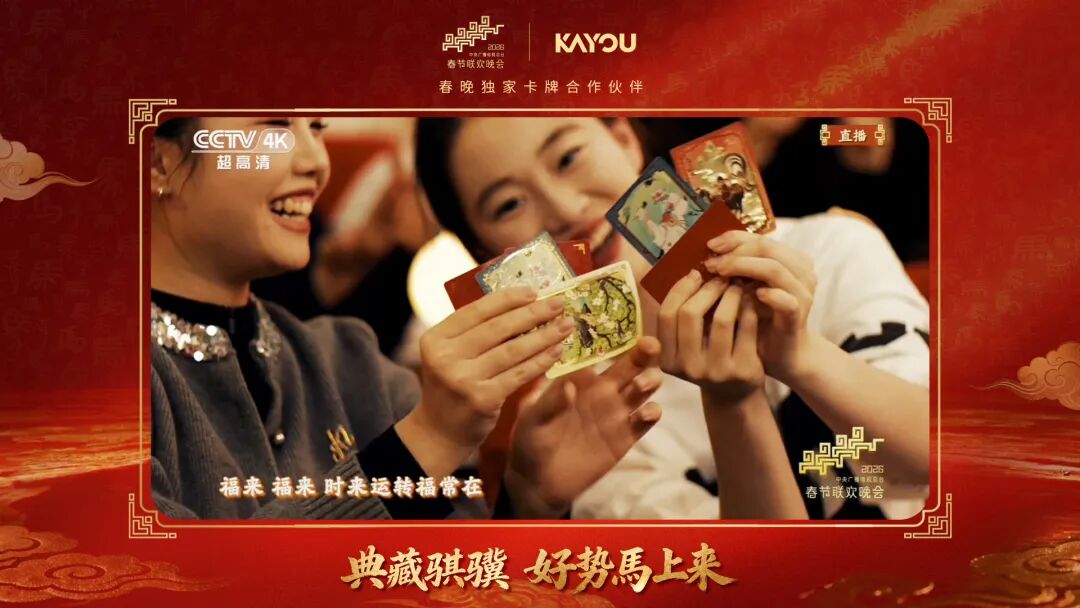
Core Viewpoint - The company KAYOU, led by founder Li Qibin, is leveraging popular IPs to transform trading card games into a billion-dollar business, aiming to integrate these products into mainstream cultural consumption through strategic partnerships and innovative marketing initiatives [1][3][15]. Group 1: Business Performance and Strategy - KAYOU plans to sell 4.8 billion packs of cards in 2024, generating revenue of 10 billion yuan with a net profit of 4.466 billion yuan, maintaining a gross margin of around 70% for three consecutive years [6]. - The company has a strong reliance on a few major IPs, with over 80% of its revenue coming from non-exclusive licenses of popular brands like Ultraman and My Little Pony, which poses a risk of renewal [6][8]. - KAYOU is expanding its product offerings by collaborating with over 30 domestic IPs, aiming to elevate trading cards from mere entertainment products to new cultural consumption symbols [15][19]. Group 2: Market Expansion and Product Diversification - The company is actively diversifying its product lines, including plush toys and stationery, with a notable focus on the "Zero Series" of pens, which has seen a compound annual growth rate of over 370% from 2022 to 2024 [21]. - KAYOU has established a distribution network with 217 dealers across 31 provinces, although it has limited self-operated stores [19]. - The company is also collaborating with Tencent Games to launch physical card competitions based on popular games like "Honor of Kings" [9]. Group 3: Cultural Integration and IP Development - KAYOU is focusing on integrating national cultural elements into its products, having developed its first proprietary IP, "KAYOU Three Kingdoms," and collaborating with renowned artists for themed card sets [11][15]. - The company aims to reduce negative perceptions associated with trading card blind boxes, which have been criticized for promoting irrational spending among minors [8]. - KAYOU's partnership with the Spring Festival Gala marks a significant step in positioning trading cards within mainstream culture [1][15].

市场洞察:从市场格局、增长驱动与细分赛道了解中国集换式卡牌市场的发展现状及前景
Tou Bao Yan Jiu Yuan· 2025-12-10 12:25
Investment Rating - The report indicates a high growth potential for the Chinese collectible card market, with a compound annual growth rate (CAGR) of 67.87% from 2017 to 2024, and a projected CAGR of 11.1% from 2024 to 2029 [8][10]. Core Insights - The Chinese collectible card market is experiencing rapid expansion driven by "IP economy," "emotional consumption," and "social interaction," transitioning from a highly concentrated competitive landscape to a more diversified one [7]. - The market size has grown from RMB 700 million in 2017 to RMB 26.3 billion in 2024, with expectations to reach RMB 44.6 billion by 2029 [8][10]. - Despite the rapid growth, per capita spending in China remains significantly lower than in mature markets like Japan and the USA, indicating substantial room for growth [11]. Market Dynamics - The competitive landscape is currently dominated by a few key players, with 卡游 holding a market share of 71.1% as of 2024, while the top five companies account for 82.4% of the market [15][20]. - The core driver of the collectible card industry is the richness and exclusivity of IP resources, which are essential for building competitive strength [16]. - Channel layout and community operation are critical for maintaining market position, with 卡游 leveraging a robust multi-channel sales network [17]. Consumer Trends - The user demographic is becoming younger, with the Z generation and female users increasingly participating in the market, shifting towards interest and emotional consumption [24]. - Innovative models like live-streaming card unboxing have transformed card consumption into community interaction activities, significantly boosting user engagement [27][28]. Product Categories - The industry has diversified into four main product categories: IP cards, sports cards, film cards, and star cards, with IP cards being the largest segment [37][38]. - Each category has distinct characteristics and target audiences, with IP cards leading the market due to their strong cultural appeal [40]. Future Outlook - The report suggests that the future of the collectible card market will depend on the ability to innovate and deepen engagement with core drivers, such as IP development and community building [37][46]. - The integration of online and offline channels is crucial for providing a diverse consumer experience, with significant growth potential in the online sales segment [34].
文化创意产业高质量发展调研交流活动在沪举行
Ren Min Ri Bao· 2025-12-04 02:35
Core Insights - The event focused on "Building Quality Cultural Creative Brands to Promote High-Quality Development of the Cultural Industry" and aimed to explore innovative and integrated development paths for the cultural creative industry in the new era [1][2] Group 1: Event Overview - The event was organized by the People's Daily Cultural Media Co., Ltd. and the Shanghai Jing'an District Committee Propaganda Department, featuring both field research and interactive discussions [1] - Participants visited key cultural and commercial landmarks in Jing'an District, experiencing the area's rich historical and cultural heritage [1] Group 2: Strategic Goals - Jing'an District aims to establish itself as a "Global Film and Television Creation Center," "Global E-sports Capital," "Asian Performing Arts Capital," and "Creative Design Industry High Ground" [1] - The district is focused on optimizing the industrial ecosystem, enhancing policy support, and improving service capabilities to drive high-quality development in the cultural creative sector [1] Group 3: Expert Insights - Experts emphasized the need for deep cultural experiences and emotional resonance, particularly among younger consumers, advocating for immersive cultural narratives and coherent cultural expression systems [2] - Recommendations included advancing the integration of culture and technology, creating scalable digital cultural applications, and enhancing international cultural image and competitiveness [2] Group 4: Company Practices - Beijing Palace Museum Cultural Creative Co., Ltd. shared successful examples of cultural innovation, emphasizing the importance of aligning with contemporary life and audience emotions to avoid homogenization [3] - Zhejiang KAYOU Animation Co., Ltd. discussed its dual spiral approach of "Culture + Intelligent Manufacturing," focusing on integrating traditional culture into modern products and actively participating in international markets [3] Group 5: Industry Collaboration - The event highlighted the necessity for collaboration among various stakeholders, including government, academia, and market forces, to achieve sustainable brand influence and cultural value transmission [3][4] - The importance of personalized IP development, full industry chain operations, and the integration of new technologies like AIGC in content production was also stressed [4] Group 6: Brand Development - GAP's CEO shared insights on blending international brands with Chinese traditional culture, demonstrating how cultural elements can enhance brand differentiation and emotional connections with local consumers [5] - The consensus among participants was that maintaining cultural roots while leveraging technological innovation and deep integration is essential for the sustainable growth of the cultural creative industry [5]
卡牌行业龙头卡游冲刺港股,亏损12亿为何还敢IPO?要不要打?
Sou Hu Cai Jing· 2025-05-08 07:44
Core Viewpoint - The company, 卡游, is preparing for an IPO despite reporting a net loss of 1.242 billion yuan in 2024, driven by rapid revenue growth and a strong market position in the collectible card industry [1][2]. Company Overview - 卡游's core business is collectible card games, with total revenue of approximately 10.057 billion yuan in 2024, where card business contributed 8.2 billion yuan, accounting for over 80% of total revenue [5]. - The company holds leading positions in various segments, including a 13.3% market share in the general entertainment products industry, 21.5% in the general entertainment toys sector, and a dominant 71.1% in the collectible card market [5]. Reasons for IPO - The company aims to expand its capital strength to support rapid growth, with a revenue increase of 277.8% year-on-year in 2024, necessitating significant funding despite the current losses [6]. - The IPO is intended to seize market opportunities and enhance competitiveness against international rivals, as China has become the largest card market globally, valued at 26.3 billion yuan [6]. - The company seeks to solidify its leading position in the industry and unlock valuation potential, given the low per capita spending on cards in China compared to Japan and the U.S. [6]. Competitive Advantages - 卡游 boasts a rich IP matrix with 70 IPs, including one proprietary IP, which enhances its product offerings and market appeal [8]. - The company has a robust sales network, covering all 31 provinces in China through 217 distributors, 32 flagship stores, and various online platforms [8]. - 卡游 capitalizes on the "Guzi Economy" trend, aligning collectible cards with national cultural IPs to meet the consumption preferences of Generation Z [8]. Industry Outlook - The collectible card industry in China has experienced a compound annual growth rate of 57% from 2019 to 2024, with a market size of 26.3 billion yuan in 2024, surpassing the U.S. and Japan [9]. - There is significant growth potential in the market, as per capita spending on collectible cards in China is only 18.7 yuan, compared to 119.3 yuan in Japan and 64.0 yuan in the U.S., indicating a possible 3-6 times increase in market size [9]. Impact of Losses on IPO - Market sentiment remains optimistic regarding the company's IPO despite the reported losses, as the losses are attributed to high initial investments during the expansion phase rather than poor business performance [10][11]. - The company maintains a high gross margin of around 70%, indicating strong core business profitability [11]. - The backing of prestigious underwriters such as Morgan Stanley, CICC, and JPMorgan reflects confidence in the company's future prospects [11].