卷纸

Search documents
山姆的狠招:用“大”甩掉90%的人,只为让10%的人上瘾
Sou Hu Cai Jing· 2025-12-24 11:03
Core Insights - Sam's Club adopts a unique strategy by focusing on "large" products, contrasting with the retail industry's trend towards smaller, individual servings. This approach is often perceived as catering to family purchases or low-price strategies [1] Group 1: Experience Economics - The concept of "large" serves as an efficiency filter, targeting customers who can handle larger quantities, thus ensuring a higher average transaction value and stable repurchase cycles [3][5] - "Large" acts as a value amplifier, making the perception of "value for money" more tangible through visual impact and lower per-unit costs [5][6] - The large packaging creates a sense of "unconscious consumption," enhancing customer satisfaction and reducing the pain associated with spending [6] Group 2: Shopping Experience Transformation - The large format transforms shopping into a discovery journey, encouraging customers to explore and find unexpected items, thus increasing dwell time and cross-purchase rates [8][9] - Shopping at Sam's Club becomes an entertaining and leisurely activity, rather than a mere task, due to the engaging nature of the large products [9] Group 3: Strategic Implications - The strategy of focusing on "large" products illustrates that what may seem like a disadvantage can be leveraged to attract ideal customers and create unique value [10] - Small and medium-sized business owners are encouraged to consider how their products or services can incorporate a "characteristic threshold" that naturally attracts the desired customer base while gently deterring unsuitable ones [11]


从生活用纸看促消费与反浪费
Ren Min Wang· 2025-12-19 04:15
Core Viewpoint - The article discusses the relationship between the upgrade of paper product consumption and the opposition to waste, emphasizing that consumption upgrades do not necessarily lead to increased waste but can enhance quality and efficiency in usage [1][3]. Group 1: Consumption Upgrade - The shift from "just enough" to "specific use" in paper products reflects an improvement in living standards and consumption upgrades, which focus on quality rather than quantity [1][2]. - Higher quality paper products, such as kitchen paper and cream paper, reduce the amount used while improving user experience, demonstrating that consumption upgrades can lead to resource savings and reduced waste [1][3]. Group 2: Supply and Demand Adaptation - Achieving a precise match between supply and demand is crucial for unifying consumption upgrades with waste reduction, as seen in products designed for specific scenarios [2][5]. - The introduction of high-quality, specialized paper products can enhance their utility and effectiveness, thereby minimizing unnecessary consumption [3][4]. Group 3: Trends in Paper Consumption - The current trends in paper consumption include scenario refinement, prioritization of quality, and increased emphasis on green and eco-friendly products, such as biodegradable paper [4][5]. - The popularity of bamboo pulp paper illustrates how environmentally friendly products can attract consumers while also reducing waste and promoting sustainable practices [4][5].
中年人网购记录有多炸裂
Sou Hu Cai Jing· 2025-08-19 07:12
Core Viewpoint - The article discusses the phenomenon of middle-aged and elderly individuals becoming addicted to online shopping, leading to a significant impact on family relationships and raising concerns about the quality and necessity of their purchases [1][36][38]. Group 1: Online Shopping Behavior - Middle-aged and elderly consumers are increasingly engaging in online shopping, often purchasing low-quality or unnecessary items, which has become a source of frustration for their children [1][36]. - The allure of low prices drives these consumers to buy items that are often deemed "junk" or "three-no products" (no quality, no brand, no after-sales service) [4][12]. - The convenience of online shopping has led to a surge in deliveries, with families overwhelmed by the volume of packages arriving at their homes [23][36]. Group 2: Psychological Factors - The article highlights that many elderly individuals are motivated by a fear of being left behind in a rapidly changing world, leading them to engage in online shopping as a way to stay connected [38]. - There is a psychological manipulation at play, where unscrupulous sellers exploit the elderly's desire for bargains and their lack of understanding of online shopping processes [36][38]. - The phenomenon reflects a role reversal in family dynamics, where younger generations now worry about their parents' online habits, similar to how parents once worried about their children's gaming [38]. Group 3: Market Dynamics - The article suggests that the market for online products targeted at the elderly is thriving, as businesses find it easier to sell to this demographic due to their willingness to spend [36]. - There is a growing trend of products marketed with dubious claims, such as health benefits or unique features, which appeal to the elderly's concerns about health and wellness [21][36]. - The rise of live-stream shopping has become particularly popular among older consumers, who are drawn to the interactive and engaging nature of these platforms [10][36].

财说| 负债率89%的宜宾纸业“跨界转型”蒙阴影
Xin Lang Cai Jing· 2025-05-26 23:38
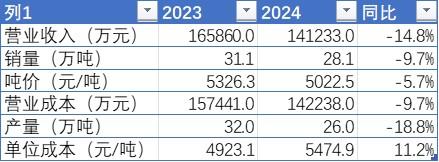
Core Viewpoint - Yibin Paper's stock price has nearly doubled in the past month, reaching a historical high, primarily driven by a related acquisition of a controlling stake in Sichuan Push Acetate Fiber Co., Ltd. from its parent company Wuliangye Group [1][2] Financial Performance - In 2024, Yibin Paper's revenue is expected to decline by 8.34% year-on-year, with a net loss expanding to 128 million yuan, while the gross margin of its traditional paper business has turned negative [1][6] - The company reported a revenue of 2.238 billion yuan in 2024, down 8.34% year-on-year, and a net profit attributable to shareholders of -128 million yuan, a shift from profit to loss [6][8] Acquisition Details - Yibin Paper acquired 67% of Sichuan Push Acetate Fiber Co. for 206 million yuan, with the target company projected to generate a net profit of 149 million yuan in 2023 at a price-to-earnings ratio of only 2 [1][2] - The acquisition is seen as a strategic move to transform the business into high-barrier acetate fiber production, but faces significant integration challenges due to differing technologies and market channels [2][4] Debt and Financial Strain - Yibin Paper's debt ratio reached 91.69%, with a total debt of 2.54 billion yuan in short-term loans and 1.756 billion yuan in long-term loans, raising concerns about its financial sustainability [1][3] - The company is expected to incur fixed financial expenses of approximately 110 million yuan annually due to interest payments and debt repayments related to the acquisition [5][6] Industry Challenges - The paper industry is facing significant pressure, with Yibin Paper's paper product output declining by 18.79% and sales down by 9.7% in 2024 [7][8] - The average price of paper products has decreased by 5.7%, while production costs have increased by 11.2%, further squeezing profit margins [7][9] Market Valuation - Despite the short-term stock price surge, Yibin Paper's price-to-book ratio stands at 25 times, significantly higher than the industry average of 1.54 times, indicating potential long-term risks if performance does not meet expectations [10]