
发电玻璃

Search documents
聚焦高质量发展丨安徽蚌埠:逐梦新材料 智造新未来
Xin Hua Wang· 2025-12-02 08:04
Core Viewpoint - The new materials industry in Bengbu, Anhui, is rapidly developing, leveraging agricultural waste like straw to create innovative products and enhancing the local economy through strategic initiatives and project investments [1][6]. Group 1: Industry Development - Bengbu has positioned the new materials industry as a key emerging sector, focusing on integration with the Yangtze River Delta development strategy and promoting the "Intelligent Manufacturing Strong City, Industry-Based City" strategy [1][5]. - The city has established eight national-level innovation platforms and 42 provincial-level platforms in the new materials sector, fostering a robust industrial foundation [5]. - The new materials industry in Bengbu has seen significant growth, with 411 companies generating an annual output value exceeding 660 billion yuan [11]. Group 2: Product Innovation - Innovative products made from straw, such as biodegradable lunch boxes and polylactic acid shirts, were showcased at the International New Materials Industry Conference, highlighting the potential of agricultural waste [1]. - The China National Building Material Group has developed ultra-thin flexible glass, which is only 30 micrometers thick and has a lifespan of up to 27 years, contributing to advancements in the glass industry [3][5]. Group 3: Investment and Projects - At the recent conference, a total of 162 projects were signed, with a total investment of 701.97 billion yuan, including 79 projects in Bengbu worth 251.01 billion yuan [6]. - The city is actively optimizing its business environment to attract high-quality projects, implementing a comprehensive system for project management and resource allocation [8]. Group 4: Collaborative Development - The new materials industry in Bengbu has formed a collaborative development pattern across various sectors, including silicon-based, bio-based, chemical, and advanced non-ferrous metals [9][11]. - The city is leveraging its strengths in bio-based materials, particularly through the complete industrial chain for polylactic acid production, which utilizes non-grain biomass [11].

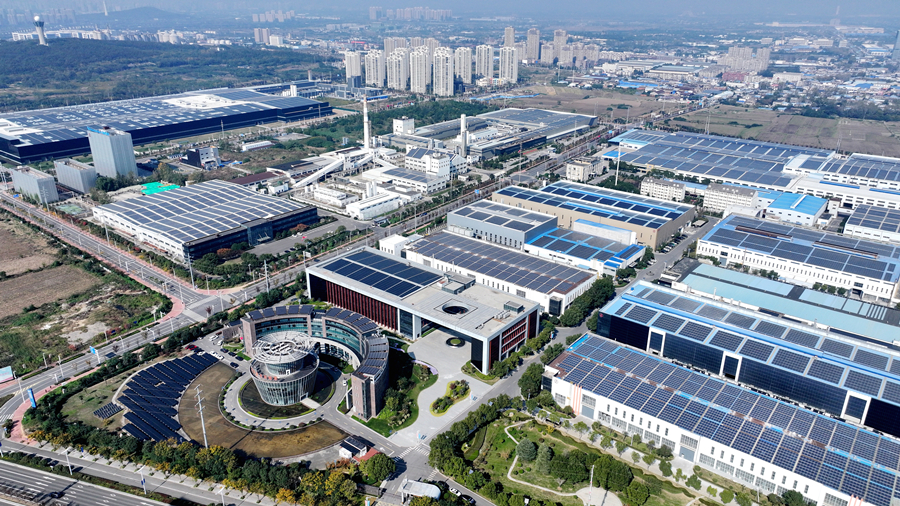
发电玻璃横空出世!中国智造如何悄然重塑能源格局?
Sou Hu Cai Jing· 2025-11-25 16:38
Core Insights - The article discusses the innovative development of transparent solar glass in China, which can convert sunlight into electricity while maintaining its transparency, thus revolutionizing energy generation [1][4]. Technology and Innovation - The transparent solar glass utilizes a unique "selective light capture" technology that absorbs ultraviolet and infrared light while allowing visible light to pass through, made possible by a special semiconductor material developed by Sun Yat-sen University [4]. - The glass achieves an impressive 8% photovoltaic conversion rate, a result of ten years of dedicated research and development [4]. - The production of this glass relies on advanced manufacturing equipment, ensuring optical-grade smoothness and cleanliness necessary for large-scale production [4][7]. Economic and Application Potential - The application of this technology in urban settings, such as skyscrapers, allows for the integration of solar power generation into building facades, significantly reducing the need for traditional rooftop solar panels [5]. - In regions with high electricity prices, such as Shenzhen, the economic benefits of this technology are particularly pronounced, with local electricity prices being three times higher than in western regions [5]. - The technology has also been tested in electric vehicles, demonstrating the ability to generate sufficient power to support vehicle functions even in extreme cold conditions [5]. Environmental Impact - The production of transparent solar glass is expected to contribute significantly to environmental sustainability, with one production facility capable of generating over 110 million kilowatt-hours of electricity annually, saving 40,000 tons of standard coal and reducing carbon dioxide emissions by 120,000 tons [7]. - This technology aligns with China's "dual carbon" goals, aiming for a 50% photovoltaic coverage rate on new public buildings and factory rooftops by 2025 [7]. Industry and Global Positioning - The development of transparent solar glass showcases China's capability in high-end manufacturing and innovation, countering perceptions that the country only imitates foreign technologies [8]. - The article emphasizes China's commitment to open innovation and international collaboration, highlighting the importance of both independent technological advancements and global partnerships in driving progress [8].
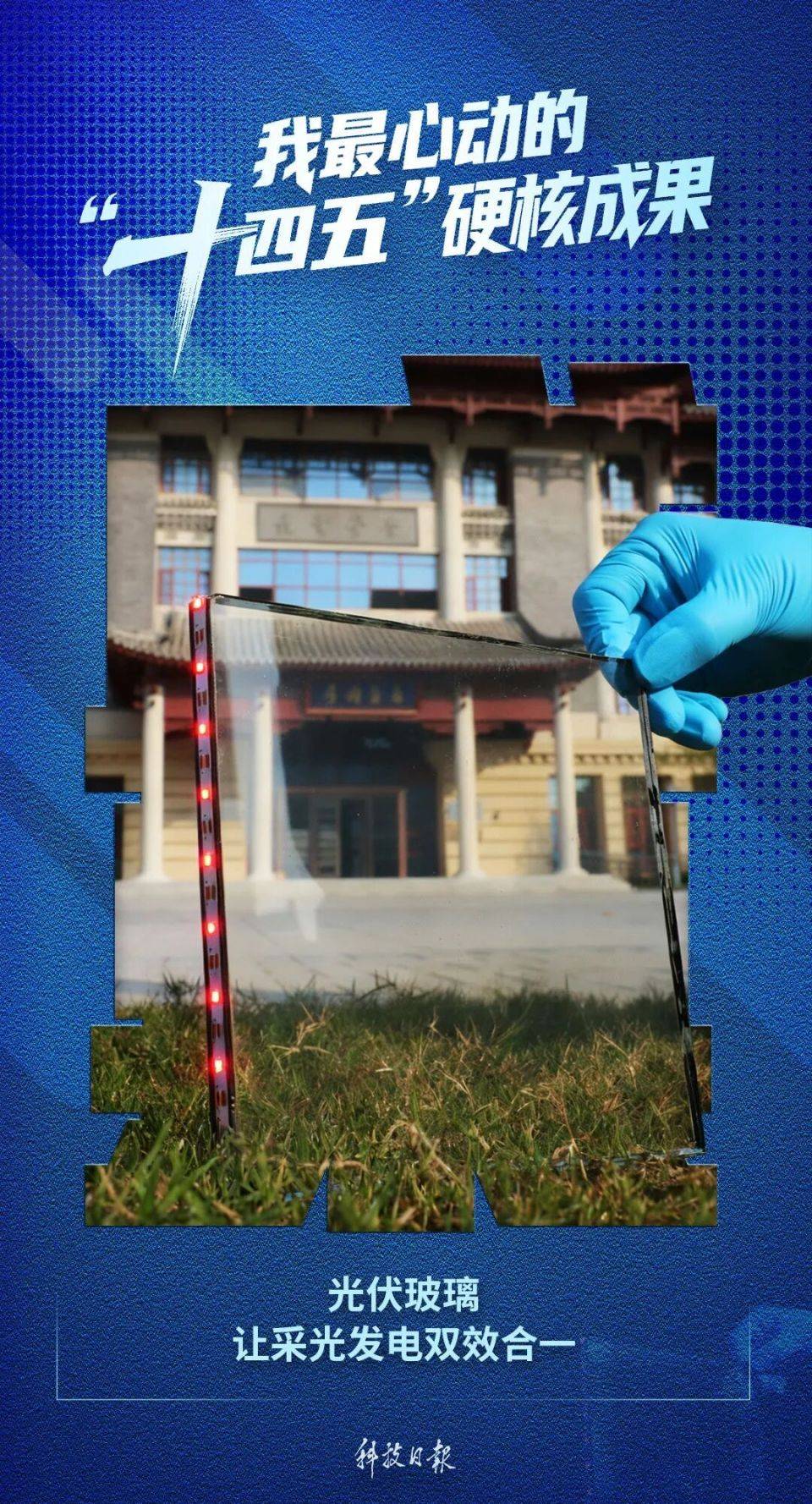
耀皮玻璃20251117
2025-11-18 01:15
Summary of the Conference Call for Yao Pi Glass Industry Overview - The float glass market is experiencing an overall downturn, but the automotive processing glass segment driven by new energy vehicles shows strong demand, expected to continue growing from the second half of 2024 to 2025. Fuyao dominates the market with a 70% share, while Yao Pi holds less than 20% [2][3] - The photovoltaic glass market is divided into two types: rolled glass and PCO (transparent conductive oxide) glass. Rolled photovoltaic glass is under pressure, but prices have stabilized with the coordination of the Ministry of Industry and Information Technology [2][3] Company Performance and Strategy - After acquiring Asahi Glass's Dalian production line, Yao Pi quickly became profitable, providing high-quality float and coated products, mainly focused on the cadmium telluride (CdTe) sector. There is some customer interest in perovskite technology, but large-scale production has not yet been achieved [2][5] - The company plans to focus on high-quality float and coated products, actively participating in the development of CdTe and perovskite technologies, and strengthening collaboration with customers to customize TCO substrates [7][17] Growth in Specific Segments - The demand for power-generating glass is steadily increasing, with some cities requiring that 25% of new buildings use power-generating glass. Yao Pi's business in this area is growing rapidly, with a projected 100% increase from 2024 to 2025 [4][8] - The Dalian Yao Pi plant is operating at full capacity, with PTO products accounting for about 20% of total capacity, also producing high-grade float glass for automotive applications [4][13] Technological Developments - Perovskite technology is developing rapidly but faces long-term stability issues. Many companies are actively researching and procuring raw materials from Yao Pi, but large-scale production information remains unclear [6][11] - TCO glass accounts for approximately 30% to 40% of the cost in both CdTe and perovskite batteries, making it a crucial component rather than just an accessory [12] Market Dynamics - The CdTe battery market is currently small, and even with a 100% annual growth rate, the total volume remains limited. The timeline for large-scale production of perovskite batteries is uncertain, which will affect TCO glass demand in the short term [11] - Yao Pi has established capabilities to supply TCO products since 2011, leveraging technologies from top brands like Pilkington and Asahi Glass, enhancing its competitive edge [17] Production Capacity and Future Plans - Yao Pi has sufficient production capacity to meet potential rapid demand growth, with additional production lines in Tianjin and Changshu ready to be equipped for mass production [16][18] - The company aims to expand its end-user applications, particularly in high-end power generation solutions for construction, to meet the growing market demand [7]

山东滨州:沉睡资产正焕新
Jing Ji Ri Bao· 2025-11-01 02:21
Core Insights - The transformation of the Huaneng Zhanhua Thermal Power Company into Shandong's largest wind-solar power station demonstrates effective resource revitalization and project upgrades, significantly increasing power generation efficiency [1] - The "government-court linkage" approach in Binzhou combines judicial expertise with government resources to address complex bankruptcy issues, ensuring environmental responsibilities are prioritized during corporate restructuring [1] - The initiative to revitalize dormant state-owned assets in Binzhou aims to clear "sleeping assets" by 2027, with a current asset revitalization rate of 24.2%, exceeding initial targets [2] Group 1 - The Huaneng Shandong Company invested nearly 100 million yuan to initiate a new energy project, transitioning from coal to renewable energy generation [1] - The Binzhou Water Development Group is implementing a transformation model that utilizes idle land and facilities to create a high-end equipment manufacturing park, projected to generate an annual output value of 850 million yuan [2] - The focus on "tailored solutions" for asset disposal allows each asset to find the most suitable path based on its unique conditions, enhancing overall efficiency [3] Group 2 - The Binzhou government has completed asset revitalization worth 3.21 billion yuan, with state-owned enterprises experiencing a year-on-year increase in total assets and operating income of 15.89% and 20.29%, respectively [3] - The transformation of the original wetland restoration technology center into a space for aerospace culture education is expected to attract 1 million visitors annually, generating 50 million yuan in revenue [3] - The ongoing revitalization efforts are characterized as a long-term battle requiring comprehensive coordination and targeted breakthroughs to optimize the layout of state-owned capital [3]
山东滨州 沉睡资产正焕新
Jing Ji Ri Bao· 2025-10-31 22:02
Core Insights - The transformation of Huaneng Zhanhua Thermal Power Co., which was previously in severe debt, into Shandong Province's largest wind-solar power station demonstrates effective resource revitalization and project renovation [1] - The local government and judiciary have collaborated to address complex bankruptcy issues, ensuring environmental responsibilities are prioritized during the liquidation process [1] - The city of Binzhou has initiated a three-year action plan to revitalize "sleeping assets," aiming for a dynamic clearance of these assets by 2027, with a current asset revitalization rate of 24.2% [2] Group 1 - The Huaneng Shandong Company has invested nearly 100 million yuan to develop a new energy project, transitioning from coal to renewable energy generation [1] - The local court has recognized land reclamation fees and carbon emission quota payments as common benefit debts, ensuring these are prioritized over ordinary debts [1] - The revitalization of idle assets is seen as a crucial breakthrough for state-owned enterprises to overcome development bottlenecks [2] Group 2 - Binzhou Water Development Group is utilizing 103 acres of idle land to create a high-end equipment manufacturing park, with an expected annual output value of 850 million yuan [2] - The innovative approach of "cultural + livelihood + industry" by Binda Industrial Group aims to transform various facilities into educational and cultural centers, projecting significant visitor numbers and revenue [3] - In the first half of the year, Binzhou's state-owned enterprises reported a 15.89% increase in total assets and a 20.29% increase in operating income year-on-year [3]
“好房子”引领建材发展新方向
Jing Ji Ri Bao· 2025-09-01 22:16
Core Viewpoint - The construction of "good houses" is recognized as a new direction for the building materials industry, emphasizing the importance of high-quality materials, standards, and services in housing development [1][4]. Group 1: Building Materials Industry Development - The implementation of the "Residential Project Specification" on May 1 supports high-quality development in residential projects [1]. - The Chinese government has proposed to enhance the entire chain of housing design, construction, maintenance, and service levels, promoting the construction of safe, comfortable, green, and smart "good houses" [1]. - The building materials industry in China has developed a comprehensive system covering over 30 sub-industries and more than 1,000 products, with a focus on advanced materials such as energy-saving, functional, and intelligent materials [1][2]. Group 2: Trends in Energy-Saving Materials - Key trends in energy-saving materials include high performance, such as aerogel glass with superior insulation and soundproofing properties, and composite materials like graphene heating materials that combine multiple functions [2]. - The development of biomass materials, which utilize natural materials like bamboo and wood, is also gaining traction [2]. - The core factor for the promotion of new energy-saving materials is the high adaptability of performance to cost [2]. Group 3: New Materials Industry Growth - The output value of China's new materials industry has increased from 1 trillion yuan in 2012 to 6.8 trillion yuan in 2022, with expectations to reach 10 trillion yuan this year [3]. - The new materials sector is transitioning from a focus on solving basic availability issues to meeting major national strategic needs and enhancing international competitiveness [3]. - Future developments will focus on strategic and future industry demands, including advanced basic materials and innovative functional materials [3]. Group 4: Transformations in Material Development - The development of new materials is undergoing three transformations: changes in research paradigms, performance requirements, and preparation scenarios [3]. - The integration of artificial intelligence in material design and research is shifting the paradigm from data-driven to AI-driven approaches [3]. - New manufacturing systems and extreme manufacturing requirements are redefining material preparation and performance expectations [3].
建筑材料转型升级 专家建议强化“好材料”创新支撑“好房子”
Zhong Guo Xin Wen Wang· 2025-08-27 08:29
Core Viewpoint - The construction of "good houses" is a new direction for building development, requiring good standards, design, materials, and services, emphasizing the importance of "good materials" in the construction process [1]. Group 1: Importance of Good Materials - The complete building materials system in China includes over 1,000 products across 30 sub-industries, making it the largest producer and consumer of building materials [1]. - To transition from scale expansion to high-quality development, there is a need for better collaboration between the construction and materials industries [1]. - "Good materials" are essential for building "good houses," with energy-saving, creative, functional, and smart materials being crucial [1]. Group 2: Trends in Energy-Saving Materials - The development trends for energy-saving materials include high performance, such as aerogel glass with superior insulation and soundproofing properties, and composite materials like graphene heating materials that combine multiple functions [2]. - Biomass materials, derived from natural sources like bamboo and wood, are also emerging as new building materials [2]. Group 3: Innovations in Functional Materials - The core factor for promoting the application of advanced energy-saving materials is the high adaptability of performance to cost [3]. - An example of innovative energy-generating materials is the "power-generating glass," which converts light energy into electrical energy through a thin film of cadmium telluride [3]. - The development of new waterproof and soundproof materials is essential to address common living issues in old housing, with a focus on system integration, functional composites, low carbon emissions, and recycling in future research [3].
旗滨集团(601636.SH):现有产品不涉及发电玻璃
Ge Long Hui· 2025-08-07 07:53
Core Viewpoint - Qibin Group (601636.SH) currently does not produce power generation glass and has been focusing on TCO glass production since 2010, showcasing its capability for large-scale production and relevant technological reserves [1] Group 1 - The company has achieved national scientific and technological achievement certification and new product and technology certification for its TCO glass [1] - Qibin Group is conducting restorative experiments for TCO glass production in Liling, aiming to accelerate technological iteration and process optimization [1] - The company seeks to make breakthroughs in the high-end market [1]

“国之大材”是如何锻造的——走进中国建材集团
Shang Hai Zheng Quan Bao· 2025-07-14 18:29
Group 1 - The article highlights the innovative advancements and green initiatives within the China National Building Material Group, showcasing various member companies' efforts in sustainable manufacturing and technology development [4][8] - The establishment of the world's first zero-carbon fiberglass production base by Jushi Group in Huai'an, which utilizes self-generated green electricity from a 233 MW wind farm, is a significant achievement [5][8] - The production line for cadmium telluride solar glass in Handan represents the most advanced and fully automated facility in North China, aiming to enhance energy conversion efficiency [7][8] Group 2 - China National Building Material Group has invested over 10 billion yuan annually in R&D over the past five years, resulting in numerous technological breakthroughs and awards [8] - The company is focused on developing innovative products, such as the multifunctional heating board and the new generation of gypsum board, which have shown significant market potential [11][12] - The introduction of automated production processes in various facilities has led to increased efficiency and reduced labor intensity, exemplified by the advancements in wind turbine blade manufacturing [9][10] Group 3 - The commitment to ecological sustainability is evident in the operations of Jiangxi Southern Cement, which emphasizes resource utilization and environmental protection [13] - The SCR denitrification system set to be operational by 2025 is expected to significantly reduce nitrogen oxide emissions, showcasing the company's dedication to green practices [13] - The overall strategy of China National Building Material Group aims to integrate technological innovation with industrial development to strengthen its market position and contribute to national material strength [13]


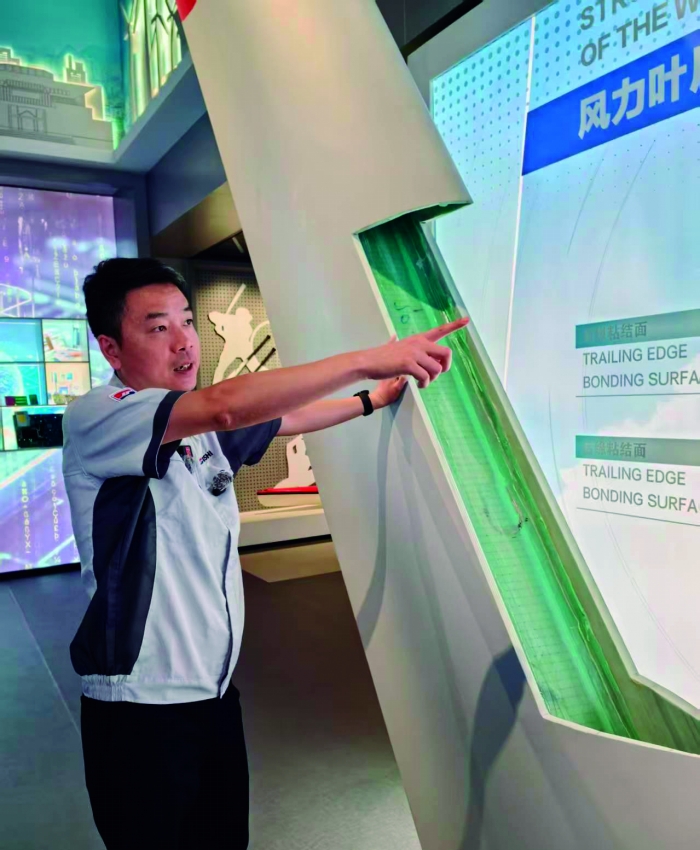
(活力中国调研行)厚积“薄”发 柔玻璃撑起产业硬脊梁
Zhong Guo Xin Wen Wang· 2025-07-06 03:53
Core Viewpoint - The article highlights the advancements in flexible and foldable glass technology developed by China National Building Material Group Glass New Materials Research Institute, showcasing its applications in various high-tech products and its significance in the global glass industry [1][2][3]. Group 1: Product Innovation - The flexible foldable glass produced by the company is only 30 micrometers thick, approximately one-third the thickness of a standard A4 paper, and has a bending lifespan exceeding one million cycles [1]. - This glass maintains high temperature resistance, hardness, light transmittance, gas tightness, and flatness, ensuring stable mechanical and chemical properties even under oxidative and illuminated conditions [1]. - The flexible glass has been widely applied in products such as foldable smartphones, rollable televisions, and flexible medical testing equipment [1]. Group 2: Research and Development - The production of ultra-thin flexible foldable glass required over a thousand experiments for formulation, followed by industrial trials and the design of dedicated production lines [2]. - The team, led by an academician from the Chinese Academy of Engineering, has successfully overcome key technological challenges, establishing a comprehensive industrial chain from high-strength glass to precision post-processing [2]. - The company has developed a "three-chain integration" model, combining innovation, engineering, and industry chains, resulting in numerous "China's first, world-leading" achievements [2]. Group 3: Market Impact - The development of the world's first 8.6-generation OLED ultra-thin float glass substrate is set to be completed by the end of 2024, marking a significant milestone in the production of high-generation OLED glass substrates in China [2][3]. - These innovations support the demand for advanced glass materials in sectors such as information display, new energy, semiconductors, and high-end equipment, ensuring the security of China's industrial supply chains [3]. - The advancements in glass technology signify a shift for China from following and catching up to leading in the global glass industry [3].