合川桃片

Search documents
重庆北站春运见闻:行囊装满年味 归途皆是团圆
Xin Lang Cai Jing· 2026-02-14 08:17
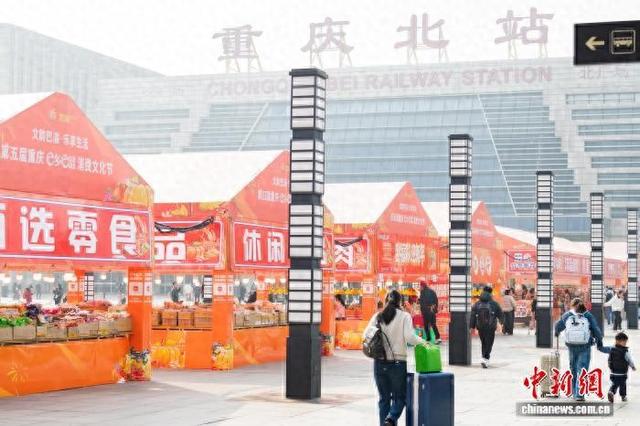
Core Viewpoint - The article highlights the vibrant atmosphere at Chongqing North Station during the Spring Festival travel rush, showcasing the integration of local culture and commerce through the "e乡e味" event, which promotes local agricultural products and enhances the travel experience for returning home [1][11]. Group 1: Event Overview - The "e乡e味" event is taking place at Chongqing North Station, featuring various local specialties and agricultural products, creating a festive environment for travelers [2][3]. - The event includes a wide array of local delicacies, such as spicy hotpot base, cold rabbit, and various sauces, attracting many travelers [3][6]. Group 2: Traveler Experiences - Travelers like Zhou Xiao express satisfaction in finding local products at the station, such as vacuum-packed cured meats and other specialties, which they can take home easily [6][8]. - Younger travelers, such as Li Ran, appreciate the convenience of a delivery service that allows them to send local snacks directly to their homes, enhancing their travel experience [8][10]. Group 3: Economic Impact - The event not only facilitates the sale of local products but also supports local farmers by expanding their market reach, contributing to the local economy [10][11]. - On February 13, Chongqing North Station experienced a peak in passenger flow, sending 188,000 travelers, a 16.5% increase compared to the same day in 2025, marking a historical high for single-day passenger volume [10].

刨猪宴之外,“村”IP的春节打开方式
3 6 Ke· 2026-02-12 11:36
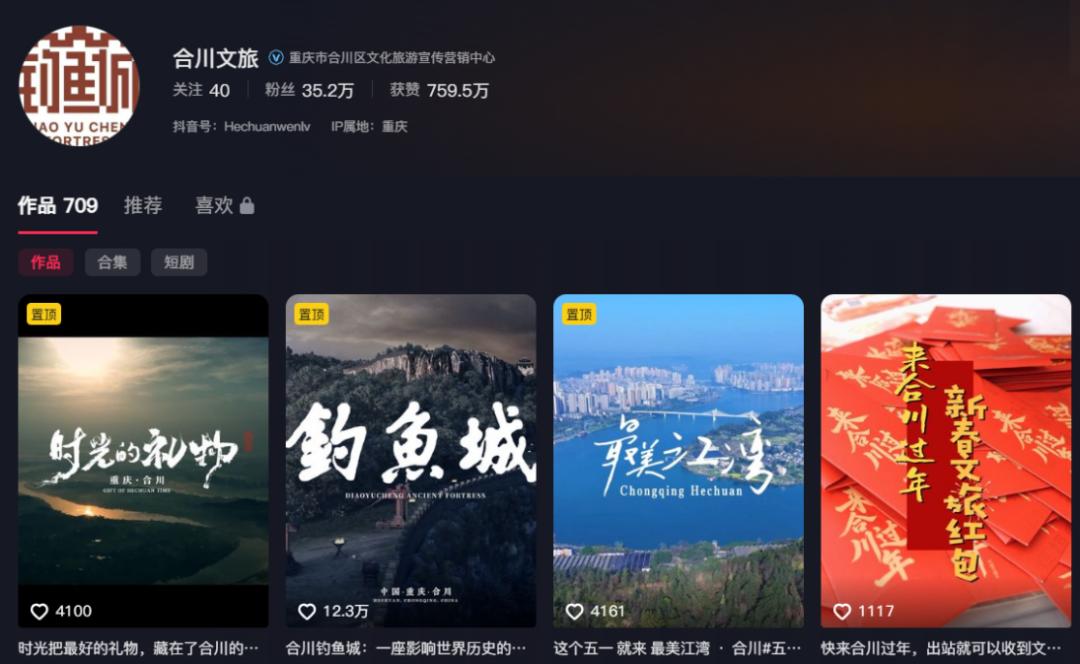
Core Insights - The unexpected popularity of the pig slaughter banquet in Chongqing has highlighted the flow anxiety and desire for breakthroughs in rural cultural tourism [1][2] - This event has transformed from a local tradition into a national template for rural tourism, with other regions quickly following suit [1][2] Group 1: Event Impact - The pig slaughter banquet attracted over 100,000 online viewers and led to a surge in local agritourism bookings, overwhelming local businesses [1] - The event coincided with the 2026 Spring Festival, a peak period for cultural tourism consumption, which further amplified its impact [2] Group 2: Response and Strategy - Following the banquet's success, local tourism authorities rapidly mobilized to promote the event, resulting in a significant increase in social media followers for the local tourism account, from 32,900 to 352,000 [4][6] - The focus has shifted towards creating unique rural IPs that reflect local culture and traditions, moving away from generic tourism offerings [6] Group 3: Broader Trends in Rural Tourism - The demand for rural tourism is increasing, with visitor numbers expected to exceed 4 billion in 2026, representing a 120% increase in orders [10] - Rural tourism is evolving into a key pillar of rural revitalization, accounting for 28.6% of total domestic tourism revenue [10] Group 4: Innovative Consumption Scenarios - New consumption scenarios in rural tourism are emerging, combining traditional experiences with modern consumer needs, such as immersive cultural experiences and high-quality leisure activities [12][13] - The integration of live streaming and AI technologies is being explored to enhance the rural tourism experience and facilitate product sales [16]
京东消费观察看“流动的年货”:异地年货订单同比增长近2倍,合肥、济南、东莞等地收到更多外省包裹
Zhong Jin Zai Xian· 2026-02-11 09:22
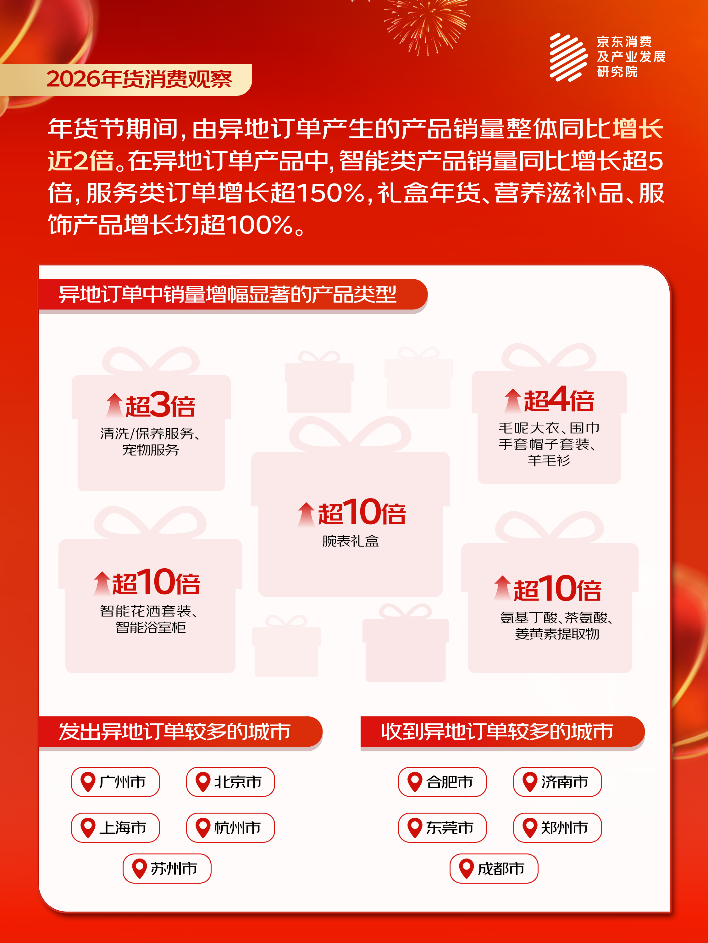
Core Insights - The article highlights the significant increase in cross-regional orders for traditional Chinese New Year goods, with overall sales growth of nearly 200% since the start of the festival season [4][6] - The trend reflects a shift in consumer behavior, where younger generations are sending not only traditional foods but also modern products and services to their families, indicating a blend of cultural heritage and contemporary lifestyle [2][8] Group 1: Cross-Regional Order Trends - Cross-regional orders have seen a nearly 200% increase in product sales, with specific regions like Tibet, Xinjiang, and Yunnan experiencing over 300% growth in order volume [4][6] - Major cities such as Guangzhou, Beijing, and Shanghai are the primary sources of these orders, while cities like Hefei, Jinan, and Zhengzhou are the main recipients [6][9] Group 2: Product Categories and Consumer Preferences - The diversity of products in cross-regional orders has expanded from traditional foods to include smart products and health supplements, with smart toilets and watch gift boxes seeing sales growth exceeding 1000% [2][8] - Local specialties have also gained traction, with overall sales growth of over 140%, particularly in Zhejiang, which saw a 571% increase [9][12] Group 3: Consumer Motivations and Cultural Significance - Consumers prioritize unique flavors and authenticity when selecting local specialties, with 56.6% emphasizing the importance of "authentic taste" [3][11] - The emotional connection to traditional foods and the desire to share these experiences with family are significant motivators for purchasing [15]

一碗朴素的刨猪汤,何以打动无数人心?
Xin Lang Cai Jing· 2026-01-24 20:40
Core Insights - The article highlights the rising trend of traditional Chinese cultural events, such as pig slaughter feasts, attracting significant tourist interest and participation, exemplified by a recent event in Chongqing's Hechuan district that drew thousands of visitors [1][2][4] Group 1: Event Impact and Participation - The pig slaughter feast in Chongqing's Qingfu Village became a viral sensation, with a video post garnering 80 million views and leading to over 10,000 live viewers during the event [1][2] - Similar events, like the "thousand-person banquet" in Sichuan, have attracted nearly 300,000 visitors and generated over 300 million yuan in tourism revenue [2] - The local government implemented a "flexible management + precise service" plan to handle the unexpected influx of tourists, ensuring public order and service quality [1][4] Group 2: Cultural and Emotional Connection - The appeal of these events lies in their ability to create emotional connections and provide immersive experiences rooted in local traditions, fulfilling modern desires for authenticity and social interaction [6] - Participants expressed that these gatherings serve as a form of "spiritual homecoming," emphasizing the importance of community and shared experiences [2][6] Group 3: Economic and Tourism Development - From January 11 to 16, the pig slaughter event led to the establishment of 27 experience points, receiving over 8,000 visitors daily and promoting local products, thus converting online traffic into tourism consumption [5] - The local tourism authority actively promoted the event by distributing free tickets to attractions and creating promotional materials, effectively leveraging the event to boost local tourism [4][5] Group 4: Challenges and Future Considerations - While many regions are eager to replicate the success of the Chongqing event, some have faced challenges such as overcrowding, food safety concerns, and inadequate emergency response capabilities, leading to cancellations [6] - Experts warn against blindly imitating successful events without understanding local cultural contexts, emphasizing the need for unique, sustainable, and engaging local activities to maintain visitor interest [6]
跨海来团圆 台胞打卡重庆赴“刨猪汤之约”
Xin Hua She· 2026-01-18 10:25
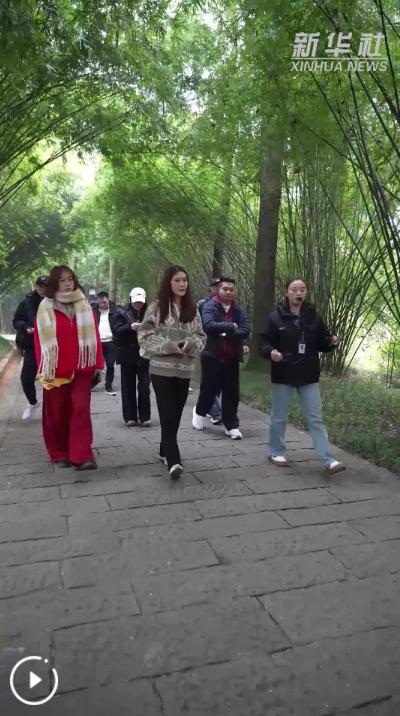
Group 1 - The event initiated by a video from a girl named "Dai Dai" in Chongqing, inviting people to help with a traditional pig slaughtering feast, gained nationwide attention, attracting thousands of participants [2] - The pig soup feast, symbolizing reunion, also caught the interest of Taiwanese netizens, leading to a warm response from the Taiwan Affairs Office, welcoming more Taiwanese to visit the mainland [2] - A group of 12 Taiwanese individuals, including internet influencer "Tai Mei Lulu," traveled to Chongqing to experience the local culture and traditions surrounding the pig soup [2][3] Group 2 - Upon arrival, the Taiwanese visitors brought Taiwanese specialties, such as pineapple cakes, to share with "Dai Dai," who explained that the pig soup is more than just a dish; it represents a family reunion during the New Year [3] - Although the Taiwanese group missed the actual pig soup event, they appreciated learning about the customs and traditions from "Dai Dai," which they considered a form of reunion [4] - The Taiwanese visitors also explored local attractions like Diaoyu City and participated in the pig soup banquet, highlighting the warmth and connection between the two sides of the Taiwan Strait [6]
台胞赴重庆合川体验“刨猪汤” 烟火气里享“团圆”
Xin Lang Cai Jing· 2026-01-17 03:18
Core Viewpoint - The article highlights the cultural exchange between Taiwanese visitors and local residents in Chongqing's Hechuan District, focusing on the experience of tasting "Braised Pig Soup" and the warmth of reunion culture [1][3][5]. Group 1: Cultural Exchange - Taiwanese visitors engaged in local customs by tasting "Braised Pig Soup," which is a significant dish representing reunion culture [1][3]. - The interaction between Taiwanese and local residents included sharing traditional foods and discussing cultural similarities, such as the Taiwanese "Pig Racing" custom [3][5]. Group 2: Culinary Experience - The visitors enjoyed a variety of local dishes, including "Twice-Cooked Pork," "Steamed Pork with Rice Flour," and "Braised Pork Intestines," showcasing the richness of Chongqing's culinary offerings [3][5]. - The experience of tasting "Braised Pig Soup" exceeded expectations, as it was more elaborate than anticipated, highlighting the depth of local cuisine [5]. Group 3: Community Engagement - The Taiwanese participants expressed a desire to share their experiences and the festive atmosphere of the mainland with their friends and family back in Taiwan [3][5]. - The warmth and hospitality of local residents were emphasized, with visitors feeling a sense of connection and familiarity during their stay [5].

人这一辈子,一定要去一趟合川!
Xin Lang Cai Jing· 2026-01-16 00:32
Group 1 - The article highlights the cultural and culinary significance of Hechuan, a district in Chongqing, where a local event featuring a traditional pig feast attracted numerous visitors, showcasing the region's rich heritage and community spirit [1][3][5] - Hechuan is described as a historical and cultural hub, known for its unique geographical features where three rivers converge, contributing to its historical importance and vibrant local culture [12][14][18] - The article emphasizes the development of Hechuan's tourism, particularly through the promotion of historical sites like Diaoyu City, which is undergoing efforts to enhance its cultural heritage and tourism appeal [18][20][36] Group 2 - Hechuan's economy is diversifying with a focus on modern industries, including the production of intelligent connected vehicle parts and hot pot ingredients, which are significant contributors to the local economy [50][54][60] - The district has established a complete industrial chain for hot pot ingredients, with over 100 processing enterprises generating an annual output value exceeding 5 billion yuan, highlighting its role as a key player in the regional food industry [54][56] - Hechuan is actively integrating into broader economic initiatives, such as the Chengdu-Chongqing economic circle and the Western Land-Sea New Corridor, aiming to enhance its connectivity and economic growth [60]
听·见|一封“按猪令”,热闹背后究竟是啥
Xin Lang Cai Jing· 2026-01-15 03:58
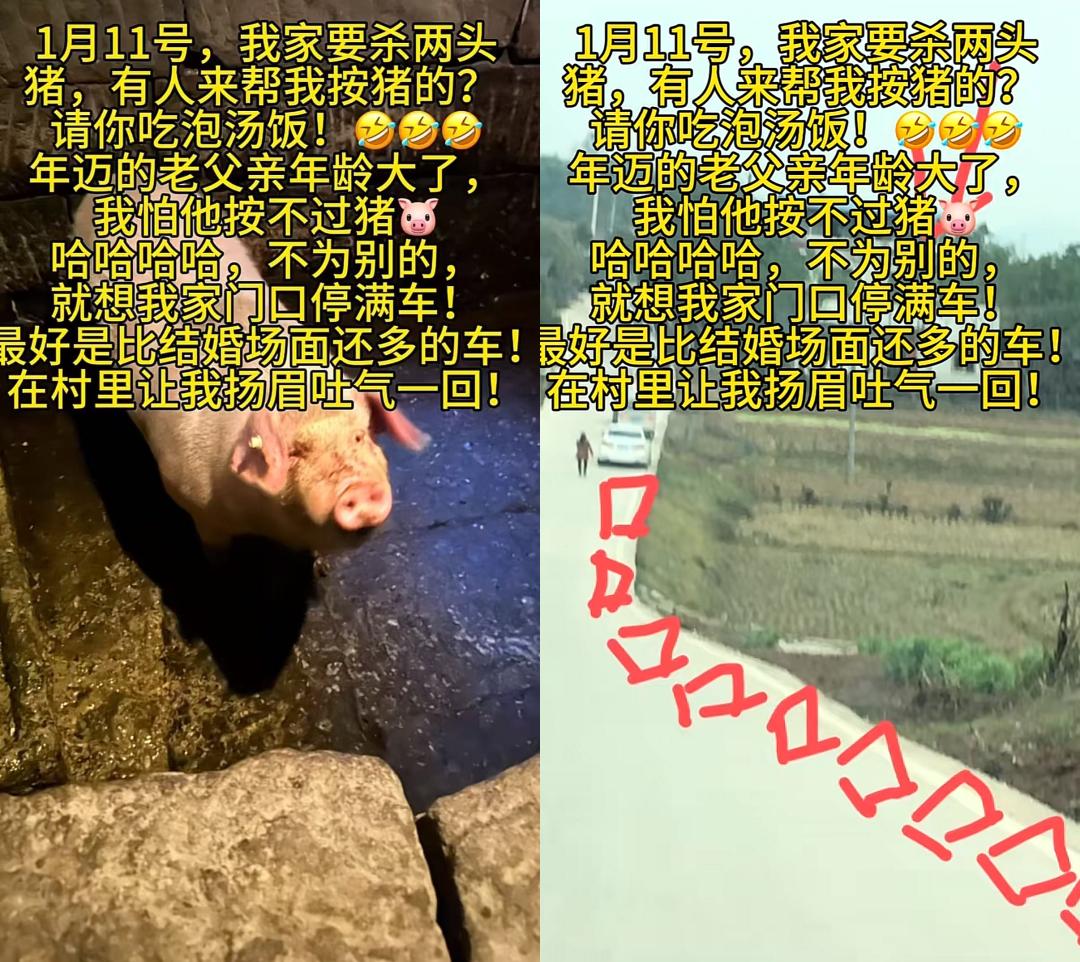
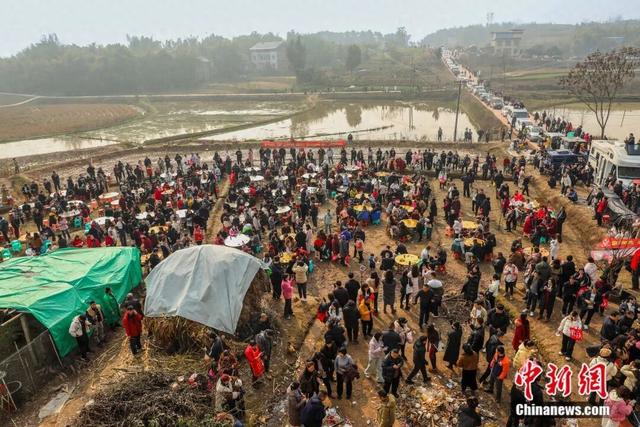
Core Viewpoint - The unexpected viral event surrounding the "pig slaughter soup" in Chongqing reflects a deep cultural connection and a collective yearning for tradition and community among people in modern society [1][2][3]. Group 1: Cultural Significance - The "pig slaughter soup" is a traditional custom in the Sichuan-Chongqing region, symbolizing the culmination of a year's hard work and the official start of the Spring Festival [1]. - The call for help to "press the pig" resonates with the emotional bond between the daughter and her elderly father, highlighting the importance of family and community support [2]. Group 2: Community Response - Approximately 3,000 netizens participated in the event, motivated by a sense of filial piety and community spirit, showcasing the inherent Chinese value of collective assistance [2]. - The local authorities and community members responded positively, transforming the event into a cultural festival, which included traffic management and promotional activities for local tourism [2][3]. Group 3: Tourism and Economic Impact - The event has the potential to serve as a catalyst for rural tourism development, with local tourism departments considering ways to promote traditional customs like pig slaughtering to attract visitors [3]. - The spontaneous gathering not only provided a unique experience for participants but also positioned Chongqing's Hechuan district in the spotlight, potentially boosting local economic activity through increased tourism [3].
3天涨粉200万,一顿杀猪饭凭什么火遍全网?
3 6 Ke· 2026-01-14 08:34
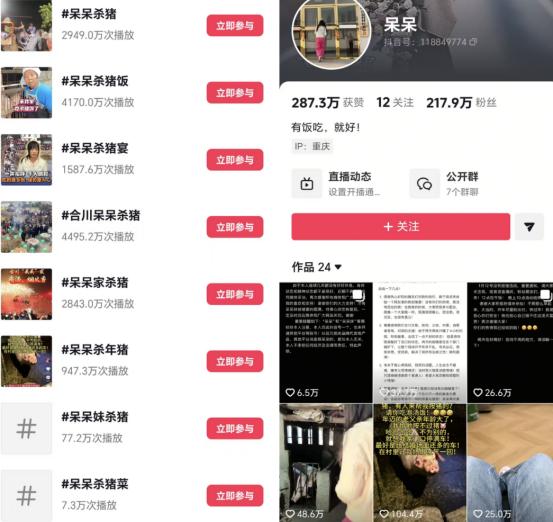
Core Insights - The event surrounding the "pig slaughter feast" in Chongqing's Hechuan district became a viral sensation, attracting thousands of visitors and highlighting the power of social media in connecting people through shared experiences [1][2][4][6] Group 1: Event Overview - The initial video posted by a local girl named "Dai Dai" seeking help for a pig slaughter led to a massive influx of visitors, with her follower count skyrocketing from under 500 to over 1.9 million in just three days [1][4] - On January 11, the event attracted a peak of 4,000 attendees, resulting in a 3-kilometer traffic jam as people walked to the village to participate in the feast [6][12] - Originally planned for two pigs, the event ended up slaughtering five pigs due to the overwhelming turnout, with three pigs sponsored by local businesses [6][12] Group 2: Cultural Significance - The event resonated with many as it evoked nostalgia for traditional rural customs and the warmth of community gatherings, with comments reflecting a longing for the "year flavor" associated with such feasts [9][10] - The simplicity and authenticity of the request for help, devoid of elaborate marketing, struck a chord with the audience, breaking through modern social media barriers [8][10] Group 3: Local Government Response - The local cultural and tourism department quickly adapted to the situation, transforming the event into a larger celebration by providing resources and organizing additional activities such as traditional performances [12][14] - The proactive involvement of local authorities not only ensured safety but also enhanced the overall experience, leading to positive feedback from attendees [14][15] Group 4: Future Implications - Following the success of the event, Hechuan district announced plans to establish a "Braised Pig Soup Folk Culture Season" and develop an annual "Cloud Pig Slaughter Festival" as a cultural IP [15] - The event has inspired other villages to host similar feasts, indicating a potential trend in rural tourism and community engagement [15][17]
杀猪一夜爆火,3000人赴宴,重庆这座小城突然红了
3 6 Ke· 2026-01-13 03:15
Core Viewpoint - The event of "helping to slaughter pigs" in Chongqing's Hechuan district has become a cultural phenomenon, attracting thousands and highlighting the region's rich culinary traditions and historical significance [1][3][24]. Group 1: Cultural Significance - The "刨猪汤" (Braised Pig Soup) is not just a dish but a cultural ritual that symbolizes family reunion and celebration, deeply rooted in the local customs of the Sichuan-Chongqing region [9][11]. - The event has transformed into a "刨猪汤民俗文化祭" (Braised Pig Soup Folk Culture Festival), showcasing the area's cultural heritage and attracting significant attention [5][6]. Group 2: Historical Context - Hechuan has a rich historical background, known for its strategic location at the confluence of three rivers, which has shaped its cultural and economic development over 2300 years [5][14]. - The region is also famous for the historical site of 钓鱼城 (Diaoyu City), which played a crucial role in the Mongol invasions and is recognized as one of the best-preserved ancient battlefields in China [18][19]. Group 3: Culinary Aspects - The preparation of "刨猪汤" involves a detailed process that reflects the local agricultural practices and the significance of pig farming in the region, with a history dating back over 2000 years [7][8]. - The event featured a variety of dishes, highlighting the culinary diversity of Hechuan, including 17 different styles of pork dishes, showcasing the local gastronomic culture [10][11].