哈啰单车

Search documents
哈啰!永安行吗?创始人杨磊亮相资本市场这一年
经济观察报· 2026-03-19 14:23
Core Viewpoint - The article highlights the recent exposure of violations in the operations of Hello Bike's electric vehicle rental business during the CCTV "3.15" gala, leading to significant scrutiny and potential repercussions for the company and its founder, Yang Lei [3][12]. Group 1: Violations and Company Response - On March 15, 2026, CCTV's "3.15" gala revealed multiple violations by Hello Bike, including unauthorized speed decoding, where vehicles were found to exceed the legal speed limit of 25 km/h, reaching up to 75 km/h [3]. - The company admitted to management oversights and initiated a special investigation, promising to rectify the issues, remove non-compliant vehicles, and enhance merchant oversight [3][6]. - Hello Bike's market share is significant, being one of the top players in the two-wheeled shared mobility sector alongside Yong'an Xing [3]. Group 2: Financial Performance and Control Changes - Yong'an Xing, under Yang Lei's control since 2025, has been experiencing continuous financial losses, with a projected net loss of between 160 million to 200 million yuan for 2025, following a loss of 147 million yuan in 2024 [7][8]. - The losses are attributed to fixed asset impairments and receivables [8]. - Yang Lei's acquisition of Yong'an Xing involved a significant financial commitment, totaling nearly 1.51 billion yuan for a 38.21% voting power stake [6]. Group 3: Competition and Future Plans - Yang Lei has made a written commitment to avoid conflicts of interest between Hello Bike and Yong'an Xing, which operate in overlapping sectors such as shared bicycles and rental services [10][11]. - Despite speculation about asset integration between Hello Bike and Yong'an Xing, Yang Lei clarified that there are no current plans for such arrangements [11]. - Following the "3.15" gala exposure, Yong'an Xing's stock experienced a slight decline, dropping from 20.25 yuan per share to 19.47 yuan, a decrease of 3.85% [13].



30岁已成“职场高龄”?哈啰的招聘红线,刺痛了谁
凤凰网财经· 2026-02-28 13:08
Core Viewpoint - The article discusses the recent controversy surrounding Hello's recruitment practices, particularly the age discrimination allegations, and examines the company's financial performance and strategic positioning in the competitive mobility service market [1][2][10]. Group 1: Recruitment Controversy - Hello's job posting for an "Operations Management" position included a strict age requirement, stating candidates should be born in 1998 or later, which sparked public outrage and accusations of age discrimination [2][5]. - The company's response indicated that recruitment practices are a matter of corporate discretion, and the local labor department stated that such practices could be reported if deemed discriminatory [2][9]. Group 2: Company Background and Market Position - Founded in September 2016, Hello started with bike-sharing and has expanded into various mobility services, including ride-hailing and Robotaxi, with over 800 million registered users [8]. - The company has strategically focused on lower-tier cities to avoid intense competition and has managed to survive in a challenging market where many competitors have failed [12][14]. Group 3: Financial Performance and Challenges - Hello has faced significant financial challenges, with cumulative losses exceeding 4.8 billion yuan from 2018 to 2020, and a failed IPO attempt in 2021 [15]. - The company is heavily reliant on its ride-sharing segment, which has been profitable since its inception, contributing significantly to overall revenue [17]. Group 4: Future Prospects and Innovations - Hello's ride-sharing service has shown strong growth, with a projected industry scale of over 600 billion yuan, aiming for over 50% market share in the future [18]. - The company is also exploring financial services to enhance profitability, although it has faced criticism regarding its lending practices and user privacy issues [18].

共享单车运维员有“秘籍”
Xin Lang Cai Jing· 2026-02-22 06:38
Group 1 - The article highlights the operational challenges and strategies employed by bike-sharing companies during peak travel periods, particularly during the Spring Festival in China [1] - The use of real-time data monitoring and intelligent dispatching systems is emphasized, showcasing how operational staff can respond quickly to vehicle density alerts [1] - The importance of on-ground inspections and proactive management is noted, with staff actively checking key locations to ensure smooth transportation for citizens [1] Group 2 - The article mentions the integration of the Beijing-Tianjin-Hebei region, facilitating easier travel for employees during holiday periods [1] - The commitment of operational staff, such as the individual highlighted in the article, to ensure customer convenience during busy times is underscored [1] - The operational strategy includes dividing the core area into multiple grids for better management and response to vehicle distribution [1]
出行经济的全球大航海时代悄然开始
3 6 Ke· 2026-02-13 04:20
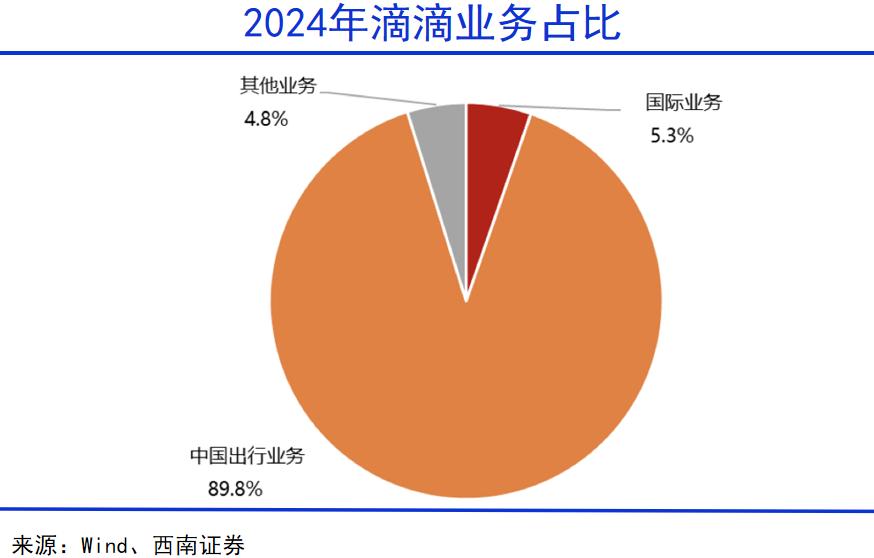
Core Insights - The article discusses the evolution and globalization of the Chinese mobility industry, highlighting key players like Didi and Cao Cao Mobility, and their strategies for international expansion [1][2][5][10]. Group 1: Didi's International Expansion - Didi began its international journey in 2015 by investing in various global ride-hailing platforms, including Grab and Lyft, and later focused on deeper market penetration in Latin America, particularly Brazil [2][5]. - By 2023, Didi had 55 million active users and 1.5 million drivers in Brazil, covering over 3,300 towns, marking a significant achievement in its international strategy [2]. - Didi's international business saw over 20% growth in Q3 2025, with a total order volume of 1.162 billion, indicating its status as a benchmark for Chinese mobility companies going global [8]. Group 2: Cao Cao Mobility's Strategy - Cao Cao Mobility, backed by Geely, achieved a Gross Transaction Value (GTV) of 17 billion yuan in 2024, making it the second-largest ride-hailing platform in China with a market share of 5.4% [9]. - The acquisition of Yao Mobility and Geely Business Travel expanded Cao Cao's service network to 12 international cities, enhancing its global footprint [9]. - Cao Cao's integration with Geely's ecosystem allows for localized operations and shared vehicle development capabilities, positioning it favorably against competitors [9][10]. Group 3: Autonomous Driving Expansion - The autonomous driving sector is a critical extension of the mobility industry, with companies like WeRide and Pony.ai aggressively pursuing global markets [11][16]. - WeRide received approval to operate a fully autonomous Robotaxi service in Abu Dhabi, marking a significant milestone in global autonomous driving commercialization [14][17]. - The competition in the autonomous driving space is intensifying, with companies like Waymo and Tesla also making significant advancements and investments [20][21]. Group 4: New Entrants and Market Dynamics - New players like Hello Mobility are expanding their business models to include two-wheeled and four-wheeled services, supported by Ant Group [21][23]. - The mobility industry in China is projected to reach 8 trillion yuan in 2024, with expectations to grow to 10 trillion yuan by 2029, indicating a robust market potential [21][25]. - The shift towards international markets is also seen in the mapping and location services sector, as companies adapt to new technological trends and consumer demands [24][25]. Group 5: Future Outlook - China's automotive exports reached 7.098 million units in 2025, solidifying its position as the world's largest automotive exporter for the third consecutive year [25]. - The article emphasizes the need for mobility companies to adapt their business models and technologies for international markets, particularly in autonomous driving and ecosystem development [25][26]. - The future of the global mobility economy is expected to be dynamic, with numerous companies vying for market share in an increasingly competitive landscape [26].
一涨再涨的哈啰单车不要成为低价背后的刺客
Mei Ri Shang Bao· 2025-12-03 23:07
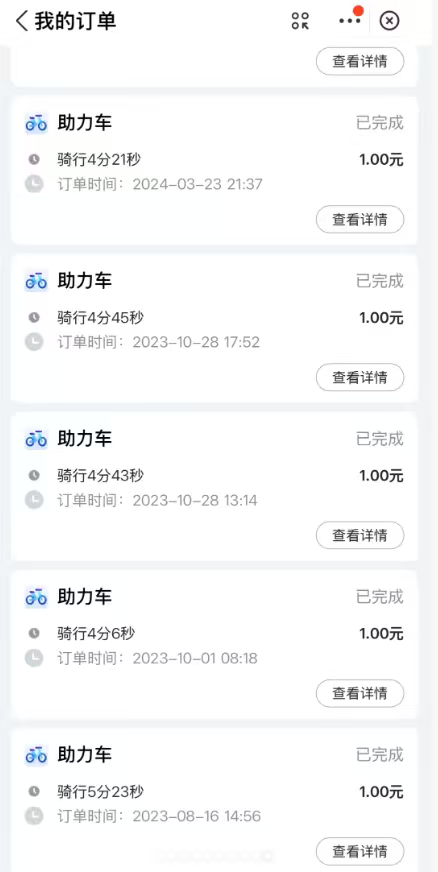
Core Insights - The price of shared bicycles, particularly 哈啰单车, has significantly increased over the past two years, leading to consumer dissatisfaction and a shift in commuting preferences [1][2][4] Pricing Trends - 哈啰单车's starting price has risen from 1 yuan to 1.8 yuan for the first 30 minutes, representing an 80% increase [2] - The hourly rate for 哈啰 has also increased, with the current charge being 1.8 yuan for every additional 30 minutes [2][3] - Other brands like 美团 and 青桔 have similar pricing structures, but 哈啰 remains the most expensive among them [3] Consumer Behavior - Many users have noticed the price hikes and are reconsidering their commuting options, often finding public transport to be more economical [4][6] - Users who frequently ride shared bicycles are opting for subscription plans, such as monthly or weekly passes, to mitigate costs [5][6] - Promotional offers on subscription plans, such as 美团's 0.1 yuan monthly card, are popular among users who ride short distances regularly [5] Market Competition - The competition among shared bicycle brands is evident, with varying pricing strategies and promotional offers aimed at attracting users [3][5] - Some users have turned to alternatives like 杭州小红车, which offers free rides for the first hour, although it has limited service points [6]
共享单车巨头哈啰推出电动车租赁业务“小北租车”
Sou Hu Cai Jing· 2025-11-15 00:17
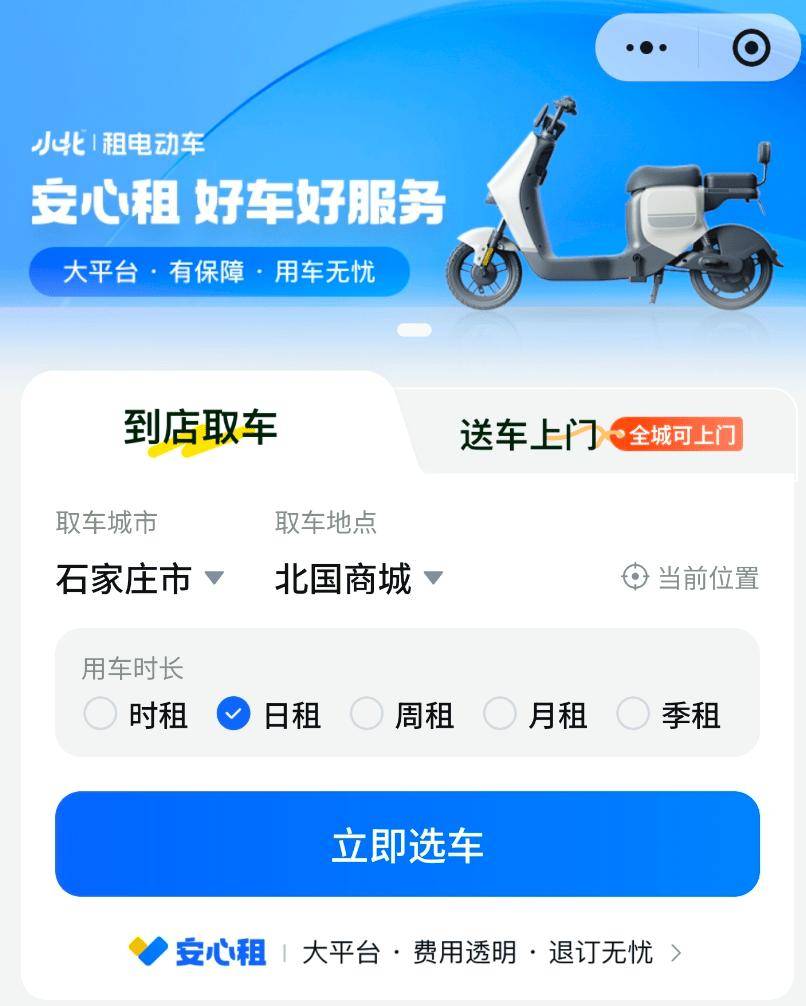
Core Insights - The domestic bike-sharing giant Hello has launched an electric vehicle rental service called "Xiao Bei Rent Car," while another player, Dalu Rent Car, is also testing the electric vehicle rental business [1][3] Group 1: Company Developments - Hello has expanded its electric vehicle rental business to major cities in China and is currently in the exploration and expansion phase [1] - The "Xiao Bei Rent Car" service was officially renamed on November 11, following the initial launch of bike rental services in January and the brand "Blueberry Cycling" in March [3] - The rental service has over 2,000 locations across the country, offering options such as hourly, daily, weekly, monthly, and quarterly rentals [3] Group 2: Service Features - Xiao Bei Rent Car offers a no-deposit rental model, with services available through a WeChat mini-program [3] - Users can choose between "pick up at store" and "delivery to door" services, with the latter requiring an additional service fee [3] Group 3: Company Background - Hello was established in September 2016 and is headquartered in Shanghai, initially starting with bike-sharing services [3] - The company now provides a range of mobility services, including two-wheeled and four-wheeled transportation, and has ventured into the Robotaxi sector [3] - Hello has accumulated over 800 million registered users to date [3]
哈啰上了一条大船?
虎嗅APP· 2025-09-30 09:28
Core Viewpoint - The article emphasizes that Hello's recent activities signify its ambition to transform from a simple transportation tool into a comprehensive travel service platform, integrating various modes of transportation to meet diverse user needs [3][6][14]. Group 1: Strategic Initiatives - Hello's "Hello Festival" serves as a strategic initiative to showcase its diverse transportation offerings, including bike-sharing, ride-hailing, and car rentals, effectively communicating its vision as a one-stop travel solution [11][12][14]. - The company aims to reshape user perceptions, encouraging users to associate Hello with a full range of travel services rather than just bike-sharing [14][15]. Group 2: Market Position and Growth - Hello's strategic evolution is supported by significant data, with its ride-hailing service covering over 300 cities and its car rental service operating in more than 680 cities, indicating strong market presence [16]. - The Chinese travel service market is projected to reach nearly 400 billion RMB by 2030, with a significant portion driven by ride-hailing and new "car-as-a-service" models, highlighting the importance of service integration [17]. Group 3: Technological Foundation - The article highlights Hello's robust technological foundation, which is crucial for managing complex operations during high-demand events like the "Hello Festival," ensuring efficient vehicle dispatch and user experience [19][20]. - Hello's recent advancements in autonomous driving technology, including the introduction of its end-to-end L4 technology system and plans for commercial Robotaxi operations, demonstrate its commitment to innovation [22]. Group 4: Operational Excellence - The company's operational capabilities are seen as a competitive advantage in the Robotaxi sector, where effective management of a large fleet is essential for success [25][26]. - Hello's experience in managing a vast network of shared bikes and vehicles positions it well to tackle the complexities of operating a Robotaxi fleet, emphasizing the importance of operational efficiency in the long term [26][27].

人在湖南却收到徐州哈啰单车90多笔骑行订单,哈啰曾要求当事人自证非本人骑行
Yang Zi Wan Bao Wang· 2025-09-23 09:50
Core Viewpoint - A user in Hunan discovered over 90 unauthorized orders on the Hello Bike app, all occurring in Xuzhou, Jiangsu, despite never having visited the city, raising concerns about account security and customer service response [1][4][10]. Group 1: User Experience - The user, Ms. Yao, has been living in Hunan since 2022 and has not used the Hello Bike app since 2021, yet found multiple transactions from 2023 to 2025 linked to her account [4][10]. - The unauthorized charges were processed through Alipay's automatic payment feature, which the user was unaware of until she checked her account [4][8]. Group 2: Company Response - Hello Bike's customer service suggested that the issue might be due to the previous owner of the phone number or account sharing, and they refused to provide IP address information citing privacy concerns [6][7]. - Despite the user's complaints, Hello Bike initially denied any system errors and did not offer a refund until later, when they acknowledged the issue and agreed to return the funds [10][12]. Group 3: User Advocacy - Ms. Yao's main request was not for compensation but for the company to investigate the issue and apologize, highlighting the need for users to disable automatic payments to prevent similar incidents [8][12]. - The user found that others had experienced similar unauthorized charges, indicating a potential systemic issue within the Hello Bike platform [8].
共享单车车筐“藏”垃圾?企业回应:“随见随清”
Zhong Guo Xin Wen Wang· 2025-09-20 01:33
Core Viewpoint - The article highlights the issue of garbage accumulation in shared bicycle baskets in certain areas of Beijing and the proactive measures taken by various shared bicycle companies to address this problem, ensuring a cleaner riding experience for citizens [1][2]. Group 1: Company Responses - Multiple shared bicycle companies have responded to the issue by incorporating basket cleaning into their standard operating procedures, implementing mechanisms like "clean as you see" to maintain vehicle cleanliness [1]. - Meituan Bicycle has established a "four must clean" operational standard, requiring maintenance personnel to clean baskets during vehicle dispatch, placement, and repair [1]. - Didi Qingju enforces a "must clean before handling" policy, ensuring each bicycle is cleaned before being dispatched or placed [1]. - Hello Bicycle has increased maintenance personnel in areas with frequent garbage accumulation and included cleaning performance in their management assessment system [1]. Group 2: Cleaning Tools and Procedures - Shared bicycle companies have equipped maintenance staff with professional cleaning tools, focusing on daily inspections in key areas such as transportation hubs and commercial districts [1]. - For stubborn dirt and oil stains that cannot be cleaned on-site, companies will recall affected bicycles to warehouses for thorough cleaning [1]. Group 3: Public Awareness and Cooperation - The Beijing Transportation Commission is collaborating with various departments to promote civilized riding and is considering placing signs on bicycles to discourage littering in baskets [1]. - The commission has issued an appeal to citizens to take care of shared bicycles and to remove personal items and trash after use, emphasizing that small actions contribute to a better city [2].
共享单车自动落锁致用户摔伤?哈啰单车、滴滴青桔否认存在技术问题
Xin Lang Cai Jing· 2025-09-12 19:25
Core Viewpoint - The incident involving a woman injured due to a shared bicycle suddenly locking has raised significant public concern regarding the safety of shared bicycles in China [1][3]. Company Responses - Both Didi Qingju and Hello Bike have stated that they found no software or technical flaws after investigation, suggesting that the incident may be due to chain malfunctions or user errors [3][6]. - Didi Qingju confirmed that they conducted hardware and software checks on the involved bicycles and identified potential issues with loose chains causing riding difficulties, but denied any software-related problems [6][8]. - Hello Bike explained that their locking mechanism prevents locking while the bicycle is moving faster than 0.5 m/s, and suggested that user error could lead to unintended locking [8]. Industry Context - Reports indicate that there have been at least 41 similar incidents of shared bicycles locking unexpectedly during rides, highlighting a persistent safety concern within the industry [5]. - The shared bicycle user base in China has surpassed 600 million as of 2024, indicating the growing importance of this mode of transportation [8]. - Media commentary suggests that reliance on self-inspection by companies is insufficient, advocating for government intervention and third-party investigations to ensure safety and transparency [9].